
Explainer: The Effective and Accountable Charities Act (Bill S-216) – what you need to know
This bill would provide much-needed changes to the outdated laws on charitable funding, proponents say.
Why It Matters
Many critics see the current regulations on funding non-charities as a colonial form of control over already marginalized groups. This new bill proposes changes that would shift the power from funders to people on the ground.
In the recently released 2022 federal budget, a seemingly small detail with no money attached to it was a very big deal in the charitable sector.
The Canadian government expressed support for amending the Income Tax Act (ITA) and “implement[ing] the spirit” of Bill S-216.
But what is Bill S-216? Future of Good explains what this bill is, and what the non-profit sector could look like if it is passed:
What is Bill S-216?
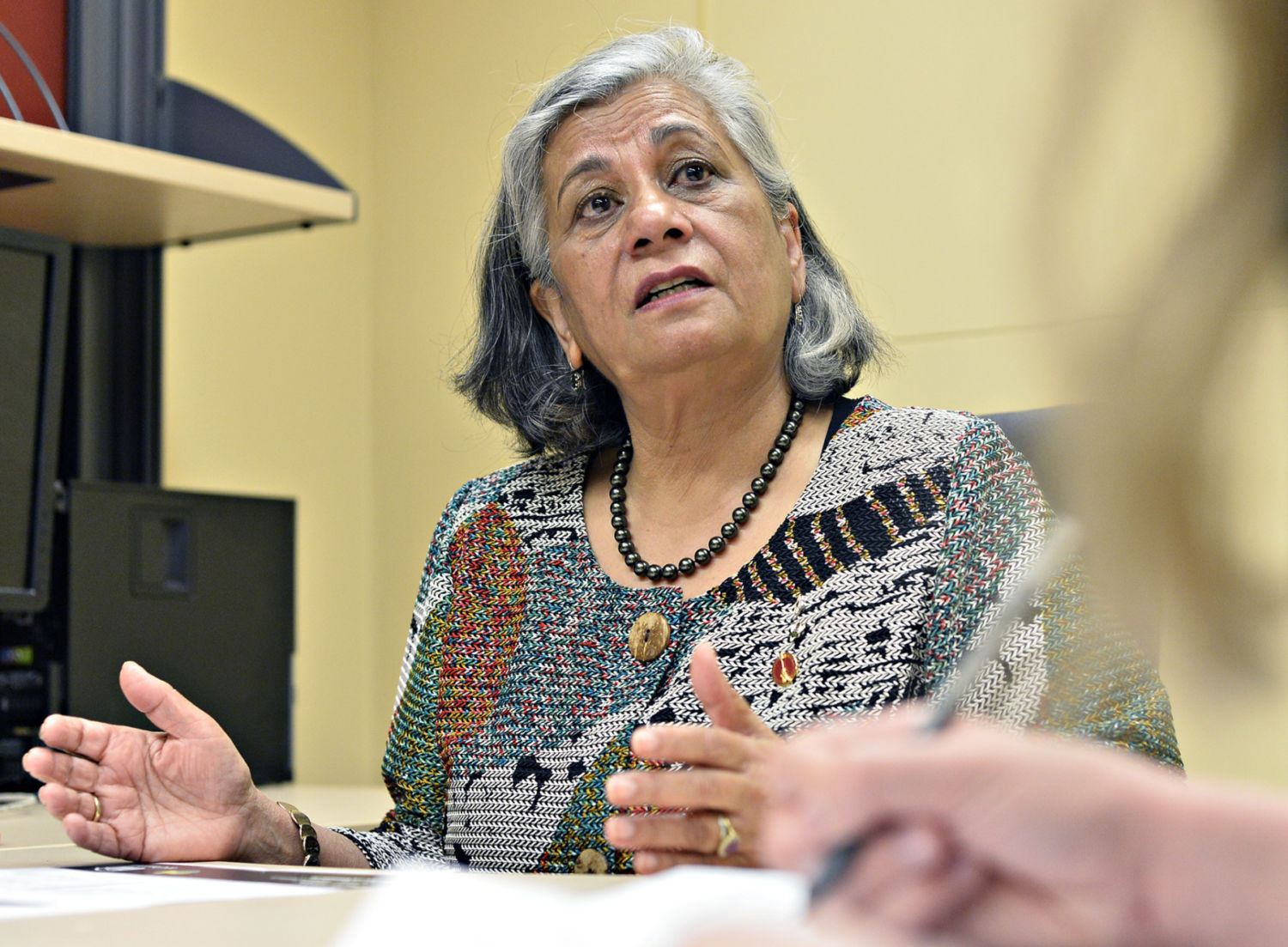
Ontario Senator Ratna Omidvar presented Bill S-216, or the Effective and Accountable Charities Act, in the Senate on November 22, 2021. It proposes amendments to the Income Tax Act on how a registered charity can use their financial resources.
In particular, the bill proposes to “permit charities to provide their resources to a person who is not a qualified donee, provided that they take reasonable steps to ensure those resources are used exclusively for a charitable purpose.
Simply put, this means that the bill would let charities and foundations give funding more easily to non-charities, if certain conditions are met.
What are the current regulations on funding “non-qualified donees”?
Picture this scenario: a small but robust Indigenous-led organization in a rural town is working to prevent school dropouts in their community. They have six dedicated employees who all speak the local language and have been working in this community for three decades. Their expertise and experience make them the best-placed actors to carry out this work.
However, they do not have a board of directors. They do not have the time or knowledge necessary to carry out onerous reporting tasks. Therefore, within the current regulations, they are considered “non-qualified donees” and not charities in Canada.
Most of the legislation that pertains to charities is embedded in the Income Tax Act. “Non-qualified donees” is the term the ITA uses to describe organizations, communities, and networks that do not have charitable status in Canada. This can include anything from a small community group to a large international organization that is recognized as a charity in its own country but is not registered as such in Canada.
Since the 1950s, the ITA has required that a charity exercise “full direction and control” over their “own activities”. This means that the organization is solely responsible for all charitable activities its donees carry out.
The only way, within the legislative framework, that non-qualified donees may receive charitable funding is if a registered charity, the funder, acts in essence as a parent. It must oversee and monitor the donees’ activities and is liable for any of their missteps.
The “direction and control” requirement has frustrated the charitable sector for some time, as these donees do important work within their respective fields, yet Canadian charities cannot freely provide them with funds. Some have criticized it as a colonial form of control over already marginalized groups. (More on this later.)
Why do some organizations that do charitable work not have charitable status?
There may be a number of reasons. Many grassroots organizations that have been working in their respective fields for years, if not decades, may be resistant to the institutionalization of their activism. For example, a community-led climate justice movement that organizes protests on the ground may not be particularly interested in achieving charitable status.
Others may want to register as charities, but do not have the resources required to track and provide the level of bookkeeping necessary to meet the stringent requirements of the Canada Revenue Agency (CRA). For instance, a small non-profit with a staff of four will likely not have a full-time accountant or someone who can dedicate themselves to this task. The burden of accounting and reporting could take away from the important and necessary activism these grassroots and community-level organizations undertake on the ground.
And still others are so far removed from the philanthropic world – in location or in knowledge – that the often complex, time-consuming, and cumbersome tasks required to obtain eligibility as a charity deters them from even starting the process of registration.
International organizations that were not established and incorporated in Canada are not considered under the current law to have charitable status either, even if they are recognized as such in their own countries. MitOst, for example, is one of the leading European organizations on the ground in Ukraine, and it would also be considered a non-qualified donee in Canada.
If the bill is passed, what will change?
According to proponents of Bill S-216, the “direction and control” requirement has made the charitable sector increasingly risk-averse — but the bill could change that.
“If a charity does not have experience working with a non-qualified donee, or have access to legal advice, the fear of making a mistake and ending up on the wrong side of the law can be a powerful disincentive,” Dan Clement, United Way Canada president and CEO, told The Philanthropist Journal. “The focus becomes risk avoidance and mitigation, and an impediment to doing good work for the community.”
This risk-avoidance mindset has also contributed to the underfunding of Indigenous organizations, as well as others serving marginalized communities. According to data provided by Omidvar, less than half of a percent of all charitable dollars are granted to Indigenous organizations and Indigenous-based activism.
The bill proposes to replace the wording “charitable activities carried out by itself” with simply “charitable activities”. This means the funder would have less oversight, and it would give non-qualified donees more autonomy over their work.
The passing of this bill into law would still give the funding charity financial control. However, there wouldn’t be the ongoing operational control that is currently required. Instead, the funder would need to ensure that the donee had the capacity to carry out the activity before it provided funding.
This would give the donee freedom to carry out their meaningful work, with fewer restrictions and red tape. It will more easily allow Canadian philanthropic dollars to be pooled with other international organizations’ funds on joint projects and activities, when there are less strict reporting and oversight requirements. And importantly, it will allow a stronger culture of partnership to be forged between donor and donee, when one is not under the direction and control of the other.
Relationships matter in the non-profit sector. And at the moment, critics say, the relationship of funder to donee is one akin to that of a parent and a child. This paternalistic modus operandi does not help to build trust and does not foster a spirit of reconciliation, proponents of the bill point out — particularly with Indigenous communities who should be able to autonomously lead activities that benefit them.
The passing of the bill by no means guarantees that funding will flow freely to Indigenous or other marginalized populations — as the bill doesn’t require such funding flows. Removing burdensome regulatory barriers, though, is the necessary first step, proponents say.
Who is against the bill?
There has not been widespread public opposition to the bill at this time. According to information provided to Future of Good by Carelle Mang-Benza, policy lead at Cooperation Canada, though, there may be some who are concerned over risks of terrorism financing due to the lower oversight requirements.
However, she notes that the bill “is in line with global frameworks for the prevention of terrorist financing and other global risk management strategies.”
Some voices in the non-profit sector haven’t specifically expressed opposition to the bill but are raising questions about the amendments it proposes.
Bob Wyatt, executive director of the Muttart Foundation, told the Philanthropist Journal that he wonders why more organizations don’t become charities. While acknowledging the current difficulties involved in registering as a charity in Canada, he also believes that some organizations “have made it clear that they don’t want to become charities because they don’t like the rules.”
Wyatt also believes that the bill “is unclear on who is accountable once money has been donated and funds are later determined to have been used for purposes other than charitable purposes.”
Mang-Benza says the bill “is in no way constraining the accountability of charitable funding” and it “does not propose anything other global actors have not already validated.”
Who is for the bill?
There is support for the bill in both the charitable sector and across the political spectrum. It received the Senate’s unanimous support on the third reading. Conservatives introduced the bill, while the NDP seconded it. And in the ruling Liberal Party’s recently released 2022 budget, the Canadian government stated that it will amend the ITA and that these changes are “intended to implement the spirit” of Bill S-216.
Charities, local community organizations, and international development actors have expressed support for the bill. In March, 42 charity lawyers also signed an open letter to voice support for the bill’s adoption.
Sara Krynitzki, policy and communications director at Philanthropic Foundations Canada (PFC), expressed in an interview with Future of Good the importance of creating “a more diverse and level playing field to better support non-profit groups that provide public benefit even if they do not formally have charitable status.”
Krynitzki also noted that it is necessary “to include – and to listen to – as many diverse voices as possible to make sure we are effectively supporting our communities. Many foundations are committed to addressing exclusion, injustice and inequity, but elements of the current policy regime make it difficult to form partnerships in ways that adequately consider the needs of those on the receiving end of the funding.”
Where is the bill now?
The first reading of the bill in the House of Commons was completed on February 3, 2022. It is scheduled for a second reading on May 13, 2022.
According to Omidvar, there appears to be broad support for the bill across all parties, so it may be passed before June.
However, there is a two-year consultation process, during which time the CRA will discuss new guidelines to replace the old ones with the charitable sector. So even after it receives royal assent, Bill S-216 will not come into force this year or next.
Related Articles

$65K raised for BC Children’s Hospital in support of Heated Rivalry star’s comments
A birthday fundraiser for actor Hudson Williams brought in $65,000 for BC Children’s Hospital.

‘Winnipeg Declaration’ calls on faith leaders to transform empty church land into affordable housing
A national call to action by Releven is asking leaders to repurpose their underutilized faith-based spaces and commit to solving homelessness by signing the Winnipeg Declaration.

Fighting predatory lending: West Coast credit unions join philanthropic effort
The DUCA Impact Lab has so far partnered with Ontario credit unions Kindred and Your Neighbourhood to fund its Escalator Loan program, which provides loans to people stuck in the payday loan cycle. Now, Vancity and Coast Capital will also be providing funding.