The social impact sector is “a microcosm of social exclusion,” says this founder
Why It Matters
With Black Lives Matter ushering in new momentum for racial justice, community builder Candies Kotchapaw says the non-profit sector requires an overhaul in leadership. In Canada, more than half of charities and non-profits do not gather data on employee diversity, according to a 2018 study. In order to truly serve marginalized Canadians, non-profits must prioritize racial diversity, particularly in management, says Kotchapaw.
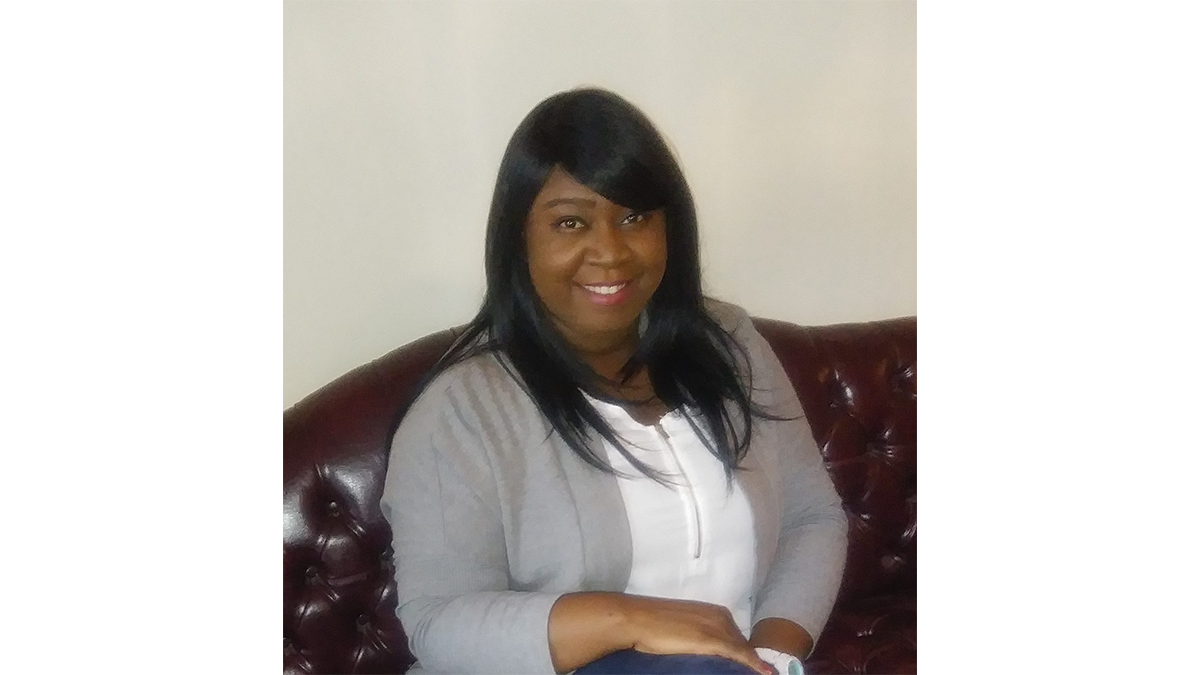
At age 14, Candies Kotchapaw immigrated from Jamaica to Canada and enrolled in high school — upon arrival, her new school required her to take an English language test. Though she didn’t have any academic challenges, the school encouraged her to take applied courses.
Entering the applied stream made Kotchapaw believe that she would not achieve academic or professional success in the future. “For me, college and university definitely wasn’t something that I saw myself being able to do. It seemed like an unrealistic possibility,” Kotchapaw, now the founder of an organization called Developing Young Leaders of Tomorrow Today (DYLOTT), shares. While she pursued college at her mother’s insistence, she struggled, feeling like she didn’t have a purpose.
According to Kotchapaw, systemic barriers such as academic streaming — a practice where Grade 9 students choose to pursue either an “academic” or “applied” track throughout high school — create challenges for Black students and set them up for a lifetime of socio-economic challenges. This month, the Ontario government announced it will eliminate streaming, found to negatively affect Black and low-income students’ graduation rates and chances of attending post-secondary institutions.
Now, Kotchapaw is determined to help other Black youth know their options despite these kinds of systemic barriers, and feel confident pursuing whichever career track they genuinely want. She founded Developing Young Leaders of Tomorrow Today (DYLOTT), a non-profit with a mandate to change the career trajectory of young Black professionals.
DYLOTT runs a mentorship program for youth and entry-level professionals, pairing them with established Black professionals and non-Black allies in their sector of interest.
Kotchapaw points to how organizations typically define youth as people under 30 years of age. “By the time you get to 29, you age out,” she says. “Most of us didn’t know these supports existed, and we found out at 32 when it was too late.”
Kotchapaw says that for Black people, these age limits to participating in programs by government, civil groups, and nonprofits, create further marginalization. “Even for me at 36, I’m still experiencing challenges, and to compare myself to somebody who is non-racialized and is 36, economically they’re far more advanced than I am.”
Working in high-priority neighbourhoods, Kotchapaw supports youth in the Rexdale and Etobicoke North neighbourhoods of Toronto. “I wanted to start in my own backyard and where I could see the impact right away,” she says.
Kotchapaw believes career trajectories can be influenced from a young age, which is why DYLOTT supports girls as young as eight years old, helping build their confidence although they may encounter barriers within the education system.
After graduating from college, Kotchapaw worked as a child and youth worker and also supported adults with developmental disabilities. For over a decade, Kotchapaw observed and experienced systemic discrimination in several workplaces. She says the vast majority of frontline workers delivering personal care are women and racialized, typically Black.
“Racialized workers on the frontline do not have the ability to make decisions that challenge discriminatory policies and procedures.”
“It was very, very rare to have a white colleague who was doing the care work. They were all more often in a supervisory role,” Kotchapaw says, explaining that racialized workers on the frontline do not have the ability to make decisions that challenge discriminatory policies and procedures.
In a 2018 survey of nearly 700 non-profits by the Senate of Canada, more than half said their organizations do not collect data on diversity of employees or senior management. At a board level, 12 percent of board members of Ontario nonprofits were visible minorities in a 2010 survey, compared to nearly 50 percent of the province’s population. In an op-ed for Future of Good, Ratna Omidvar, Independent Senator for Ontario, says these statistics “paint a picture of a sector that may talk the talk but is not that willing to walk it.”
This trend is recurring across Canada, with another survey revealing that 5 percent of senior management in Alberta’s non-profits are visible minorities, while minorities account for 11 percent of the province’s population.
Kotchapaw says front-line care workers are “fighting for their own survival in these institutions, facing systemic racism and microaggressions on a daily basis.” She adds that racialized individuals who have precarious work — exemplified by low wages, without job security, and an increased risk for verbal and physical violence — are less likely to speak out against unjust practices.
“In my experience, the social impact sector has been a microcosm of social exclusion,” she says.
For years as a front-line worker, Kotchapaw had precarious work and felt her livelihood was at risk. To this day, she still has a mark on her arm from a client who physically assaulted her. When she reported violence to her supervisors, she says they did not take action, but instead told her that these interactions should be expected.
After being denied a promotion despite a recommendation, Kotchapaw resigned. She decided to return to school, to obtain a bachelors and masters degree, and says she experienced racism in academia as well.
During her masters in social work, while scouting for an internship placement, Kotchapaw expressed her interest in policy positions, but the university office responsible for placements only offered her options for frontline work. After 12 years of being on the frontline, Kotchapaw wanted to transition to policy work, where she could make an institutional change. “I kept saying: This is not what I want to do… It was an unspoken unwritten rule that only certain students get certain placements.”
“I realized that racialized people doing policy work is not standard in Canada. Being told I need to work clinical and front line… it showed me that our [Black] perspective and expertise were not seen as valued or valuable.”
Kotchapaw was determined, and secured her own policy placement. “When I did, the [university’s internship] office told me that I was robbing someone else of that opportunity. Of course, the undertone to that was that you’re robbing white students from that.”
After several racist experiences in academia, Kotchapaw was inspired to start DYLOTT in 2016 to change outcomes for other Black youth.
“In my experience, the social impact sector has been a microcosm of social exclusion.”
During her studies, Kotchapaw traveled extensively to attend public policy conferences and noticed the absence of young Black people at these forums. “I thought: okay, this is another piece that I want to change.”
She says the young, non-Black people who show up at these events are “not afraid to show their perspective because they’ve been engaging in those spaces for years. They know the language or the behavior or the decorum that you need to function when you’re in those spaces and for Black youth, in a standardized way, we never had that opportunity.”
To change that, Kotchapaw incorporated model United Nations activities into DYLOTT, and has created opportunities for youth to attend summits as young diplomats. She says that while not every young person will be interested in diplomacy or policy, simply being in these spaces will instill confidence and encourage decision-makers to consider the perspectives of Black youth.
When starting DYLOTT, Kotchapaw launched an online crowd-funding campaign, and was surprised when a group of women reached out to her to learn more about the organization. Aside from financially supporting Kotchapaw’s vision, they began making helpful introductions, and using their platform to elevate her work.
“They gave my work visibility. They didn’t just throw money at a problem which is typical of a non-profit or even government organization… They asked: we’re not women of colour, but how can we help?”
Kotchapaw says this is essential to allyship. “If we’re talking about racism and microaggressions, we can’t just have conversations amongst ourselves. We have to engage people who work within the institutions, who hold privilege and have power.”
Sustaining this work is a challenge for Kotchapaw, who does not receive a salary from DYLOTT, despite working up to 14 hour days at times to ensure the organization’s mentorship and leadership programs make an impact.
At the back of her mind, she grapples with questions: “How am I going to pay my bills? Do I give up what I’m doing here and do another precarious job, or do I do this work and hope and wish and pray that someone will see the work I’m doing and financially invest in it?”
The questions linger, but Kotchapaw finds the energy to persist. “It’s tough, but this is why it’s so important.”
Tell us this made you smarter | Contact us | Report error