Data drives preventative care at queer and trans health clinic
After collecting a critical mass of data directly from patients, the HQ Toronto team is now ready to experiment with predictive models
Why It Matters
With a larger number of non-profits collecting, stewarding and analyzing information about marginalized communities, it’s critical they do it well, while upholding the privacy and dignity of vulnerable people.
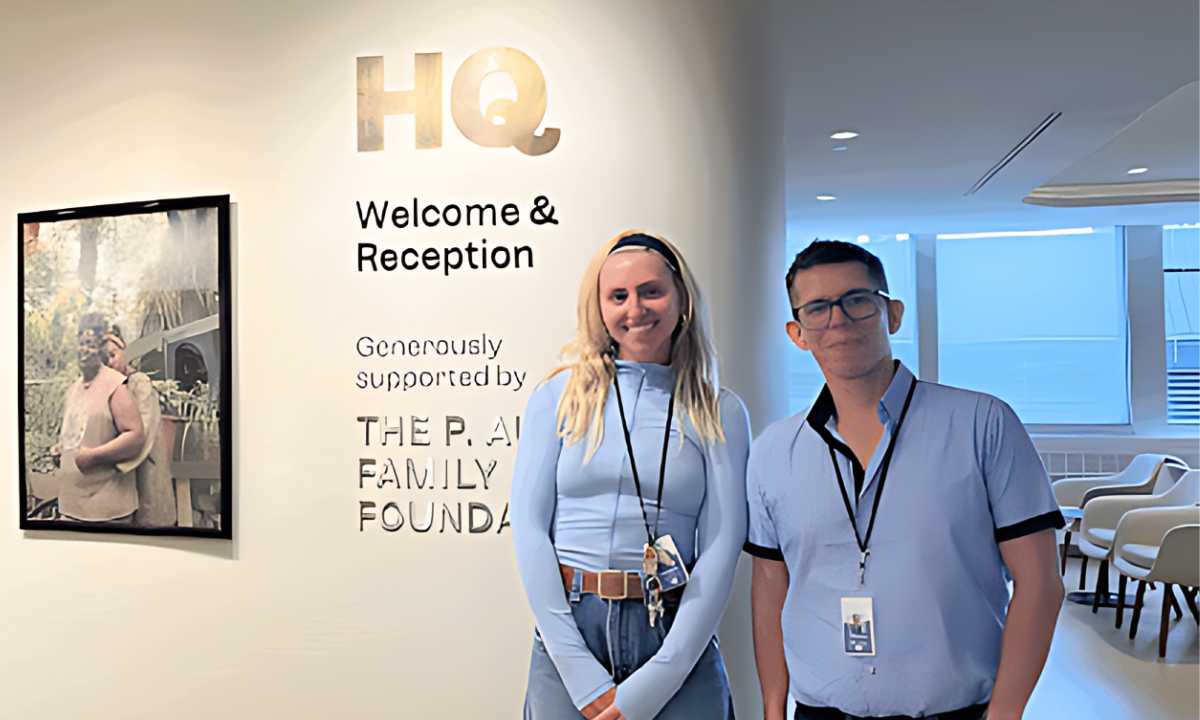
Olivia Gemmell and Victor Monroy are two of the members of the research team at HQ Toronto. (Sharlene Gandhi/Future of Good.)
Stepping through the doors, new patients find HQ Toronto is a bright and airy space downtown, complete with wood accent walls and minimalist interiors.
Returning patients are greeted by a private, digital sign-in system, where they can record and update information about their health – physical, sexual and mental – in 15 languages. The computer then generates a series of stickers for the tests that a patient needs to take, each of which is printed with a small emoji in the top-right corner.
Down the hall, in private rooms, patients are invited to take their samples. Video instructions are mounted on the wall for each type of self-administered test. In the computer system’s back end, the data the patient filled in has already been pinged to the appropriate health and support teams.
The HQ Toronto team – who serve gay and bisexual men and all trans, non-binary and two-spirit people – have put a great deal of care into how they collect, use and store this data, said Tim Guimond, HQ’s mental health services director, who has a background in psychiatry and biostatistics.
“Because it was so easy to test, people would test more frequently,” Guimond said. “If you test more frequently, you know sooner, and you can then get onto treatment or make some behavioural changes.”
The clinic aims to serve interconnected needs in the community: sexual healthcare, mental health, and substance use.
The work is emotionally heavy – there are high rates of suicide in this specific population, Guimond pointed out.
Despite that, he wants the experience of testing and receiving affirming healthcare to be “easy, welcoming and friendly,” especially given the stigma this community faces.
What data does for a caring patient experience
HQ Toronto doesn’t shy away from asking hard questions of their patients, especially when it comes to providing complete information about their sexual health history, mental health and substance use.
“We’ve learned that by asking people sensitive questions on a tablet, they’re more likely to be fully honest,” Guimond said, “which means we can actually adapt their care most appropriately to what they need.”
On a patient’s first visit to HQ, they are still greeted by a staff member and given more information about the process and community before filling in the relevant forms online.
That way, the initial visit doesn’t feel cold or impersonal, said Guimond and Olivia Gemmell, research coordinator.
These forms are the foundation for HQ Toronto’s extensive patient database. To ensure they were accessible and sensitive to people’s needs, the team met with eight service organizations across the city, including Black and Indigenous-led groups.
“We spent almost six months meeting with people who are in the community at the frontlines, family doctors, and therapists treating people with mental health problems, doing a needs assessment,” Guimond added.
Along with these frontline staff, HQ Toronto was able to understand which issues were most critical to the community and how their own language and phrasing in the forms resonated with diverse groups.
“We brought people [from service organizations] in for the first month, had them run through the whole experience and tell us what worked,” he said.
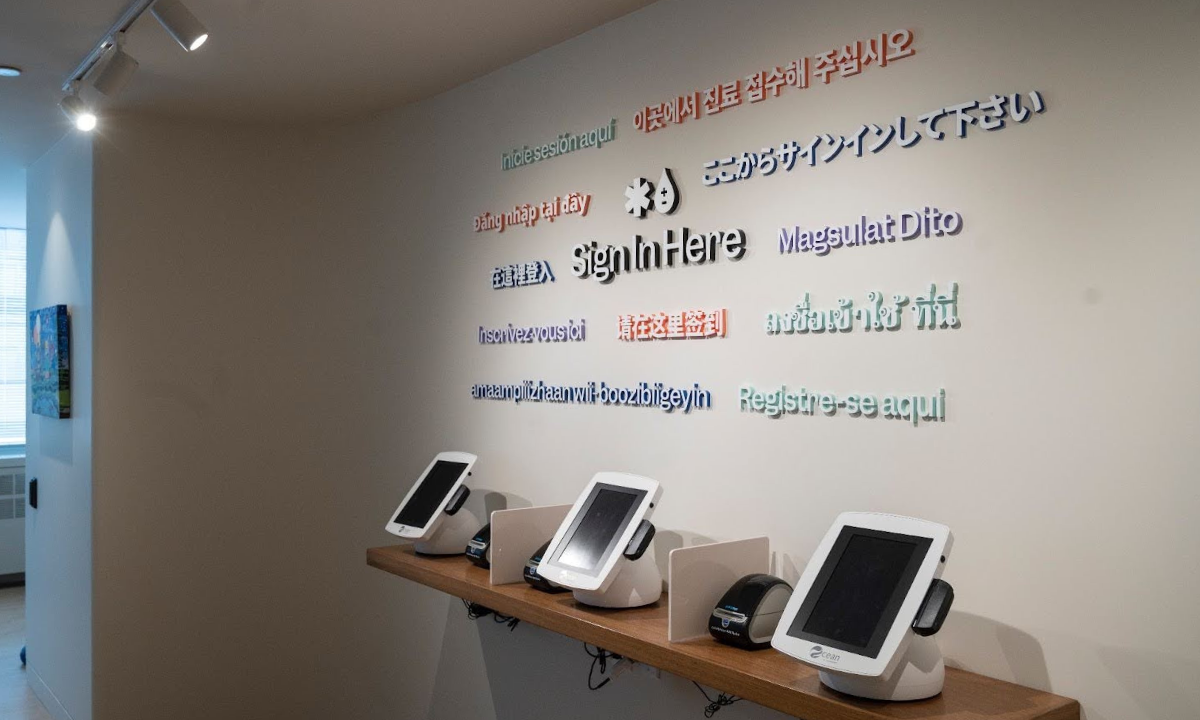
When a patient first comes to HQ Toronto, they fill out a digital form with their personal details and health needs. Now, with enough data points, the HQ team is ready to build predictive models (HQ Toronto/Supplied)
Specifically, they focused on comfort in answering questions in the way that they were phrased and on sensitivity to cultural needs.
For instance, on the sign-in tablet, patients are invited to record their preferred name alongside their legal name and Ontario health-recorded sex.
Naming the data field in this way feels less alienating to the community, as well as capturing vital information.
Another example came from the South American diaspora, added Victor Monroy, research analyst.
Not everybody from the South American continent identifies as part of the Latino community, he said.
Adding distinct categories for these demographic pieces of information meant that patients could fill in data that felt comfortable and authentic.
The forms are all built on conditional logic – in other words, depending on the patient’s input data, they are sent down a different route of questions based on what a clinician would typically ask.
If their responses to specific questions indicate that they might benefit from additional services they haven’t requested, they might also be encouraged to see other specialists.
Collecting enough data can help clinicians determine at-risk patients
The data that HQ Toronto has collected since its inception is highly sensitive, so the team spent a few months interviewing several electronic medical record (EMR) providers.
They then looked for a patient-facing portal that could interface with the EMR and transport the data between the two systems confidentially through their API.
“As a biostatistician, building all of this was also making the playground to build predictive models,” Guimond said. “Of course, for many of these models, you just need enough data over time.”
Currently, there are about 12,500 individual patient records, with many patients visiting multiple times.
The team can aggregate data about sexual health and mental health to monitor high-level trends when certain things are happening, and for whom.
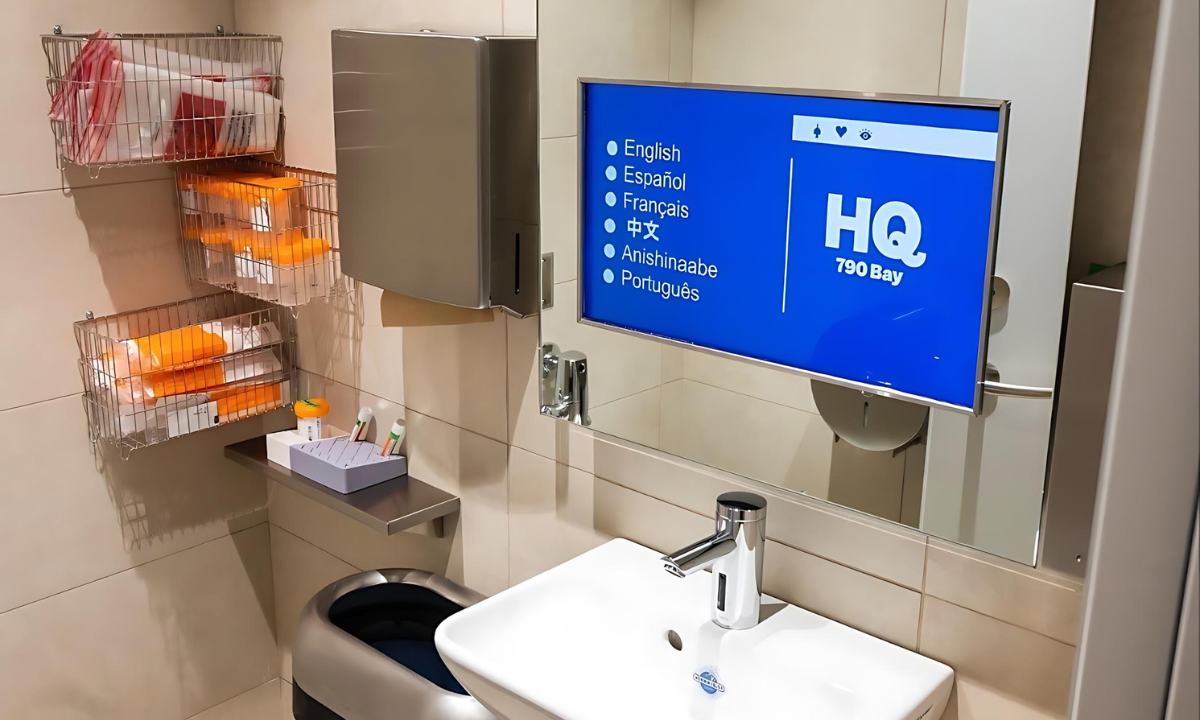
Private rooms with video instructions for testing and collecting samples (HQ Toronto / Supplied)
They can then respond by adapting their services and making sure they have enough staff on the ground as appropriate, he said.
Patterns in the longitudinal data collected over two years can also help nurses and doctors find people who might be at risk from a mental health or sexual health perspective.
“Prediction tools that are automated are only useful if someone isn’t already coming in and asking for help with something,” Guimond said.
“The bigger worry is that we’re finding something late because you didn’t think it was a problem early on.”
The automation can enable what the team calls “predictive care.” A medical professional could regularly check the EMR for patients who appear to be at-risk, a prediction made on data about their behaviours, medical history, and patterns detected in others’ medical history.
Medical staff can then directly communicate with these people to help them manage their health.
Data quality and accuracy are key to enabling these models to fulfill their purpose, which can be a challenge for the HQ Toronto team, given that patients themselves often input information.
“The more simple we make data entry for people, the less likely they are to make a mistake, and the faster they can do it,” Guimond said.
Your job. Your mission. Your news.
With your support, the sector you're building gets the journalism it deserves, and you get a tax receipt.

Author

Related Articles
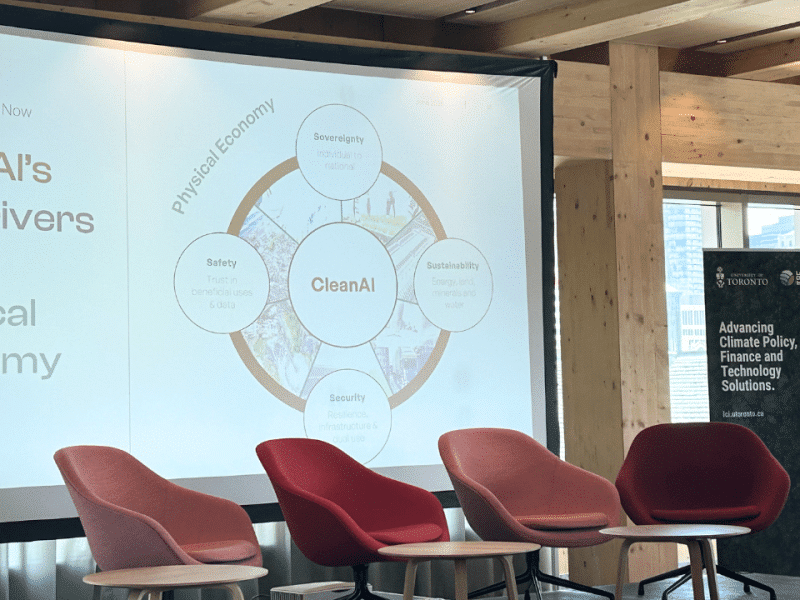
Quarter of all Canadian AI ventures could be categorized as ‘clean AI’: new research
At Toronto Climate Week, the global CleanAI Initiative shared research on the Canadian ecosystem, finding growing investment hubs in Vancouver, the GTA, and Kitchener-Waterloo.

Partnered Partnered content Non-profits are increasingly being targeted for cybercrime. Here’s how your organization can help protect itself
Being cybersecure doesn’t have to be daunting or expensive. A panel of experts discuss ways the non-profit and charitable sector can help protect itself in a constantly changing AI landscape.
Canadian astronaut, entrepreneur donates $15M to Concordia to launch new space school
Montreal’s Concordia University will be the home of the Mark Pathy Space Institute.
