Five ways Canadian non-profits used data in innovative ways in 2024
Beyond reporting impact to funders, non-profits are increasingly looking to data as a way to improve service quality in their communities.
Why It Matters
Good data practice can allow the non-profit sector to better exploit the opportunities offered by artificial intelligence and machine learning.

Charities and non-profits continue to increase their data maturity – a crucial piece of the puzzle when it comes to embracing machine learning and artificial intelligence (Joel Muniz / Unsplash)
Data and statistics have always been key to the non-profit sector, particularly when it comes to reporting back to funders, measuring impact, and making evidence-based applications for more resources and funding.
While good data is a crucial bedrock to embedding more complex technologies, such as machine learning and artificial intelligence, this year, we have also seen a more fundamental shift in the purpose behind collecting and analyzing data.
Instead of simply answering to funders, non-profits and community organizations are interested in leveraging data to iterate and improve service quality.
In 2024, Future of Good reported on several organizations and initiatives around Canada that used data creatively to serve vulnerable people and communities.
In other words, we saw plenty of examples of human-centric and non-extractive data collection and analysis.
We saw carefully crafted data processes that kept individuals’ privacy and data sovereignty at the centre of their work. We saw a specific drive to hire data-literate, technical talent or to advocate for building the right skills in-house.
Here are five of our favourite data innovation stories from 2024:
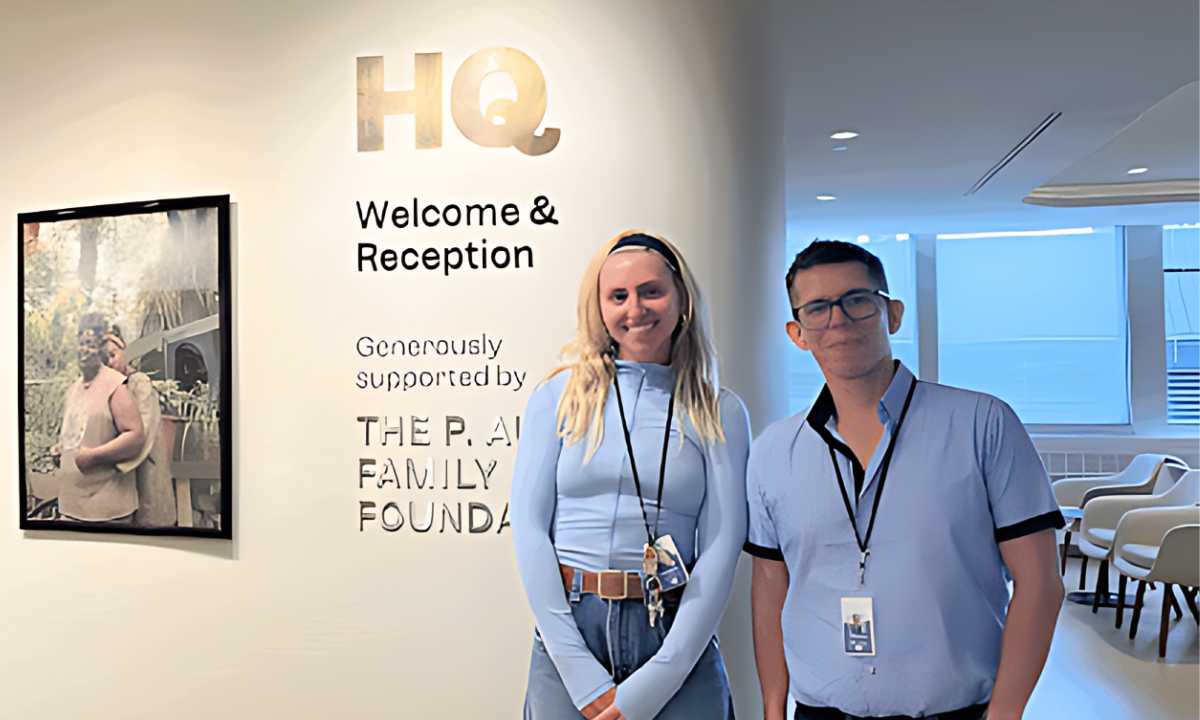
Olivia Gemmell and Victor Monroy are two of the members of the research team at HQ Toronto. (Sharlene Gandhi/Future of Good.)
IMPROVING USER EXPERIENCE: Data drives preventative care at queer and trans health clinic
Based in the heart of the city, HQ Toronto is a unique healthcare clinic. The team’s approach to data collection informs how smoothly a patient has access to the appropriate medical tests and health and social care.
Working with an already-vulnerable demographic – gay and bisexual men, trans men, and all non-binary and two-spirit people – the team have taken special care to make sure that their data-driven patient experience feels welcoming, rather than ‘cold’, the team said in an interview in June.
“We spent almost six months meeting with people who are in the community at the frontlines, family doctors, and therapists treating people with mental health problems, doing a needs assessment,” said Tim Guimond, mental health services director at HQ Toronto.
The result? Very precise language, data collection fields, and response options, taking into account the sensitivity of the information the clinic is asking for.

Montreal-based settlement agency Welcome Collective helps refugee claimants build new lives in the city by providing essential items, such as furniture, household goods, kitchenware and clothing. (Mario Melillo / Supplied)
SPEEDING UP CRITICAL SERVICES: How a small charity used forms and data to help 10,000 refugee claimants
Montreal-based Welcome Collective – or Collectif Bienvenue – only has 16 members of staff. And yet, their impact in the city has been colossal.
Earlier this year, Future of Good spoke to the charity’s director of development and impact, Rani Cruz, about how she and her team have developed a custom data flow that speeds up the pace at which refugee claimants and asylum seekers can access vital goods, such as winter clothing and basic furniture.
The information a client provides during their intake assessment triggers and notifies various team members, including social workers and logistics staff handling furniture delivery.
Cruz has not only taught herself to code but also used clever integrations between tools to produce a relatively inexpensive data flow. Next year, we’ll also release a live demo so you can learn exactly how Welcome Collective made this happen.

In 2023, Health Cities unveiled the Edmonton Community Data Warehouse, a project aimed at enabling social-serving agencies to share information about the individuals they assist in Edmonton. Although the initiative is still in its early phases of developing and testing the data infrastructure, it will soon be rebranded as Elevate. (Canva)
REDUCING RE-TRAUMATISATION: How to break service silos with data
In 2023, a group of non-profits in Edmonton banded together to launch a Community Data Warehouse: a centralized data repository of the clients that they all serve. The goal? To use data-sharing processes to better serve vulnerable people in Edmonton who are at risk of slipping through the cracks.
Now rebranding to Elevate, the group is testing what a robust data-sharing practice looks like, especially between multiple organizations: What technical infrastructure does it require? How do they ensure they are sharing relevant information that informs service quality for each non-profit and genuinely helps the person they are serving?
How do they communicate with – and get informed consent from – the people whose data they are sharing?
These non-profits not only feel that they are the first group trialling a repository of this sort in the social services sector but also that they need to build it slowly and deliberately. That will simultaneously ensure that they are doing right by their clients and help them scale later down the line.

Mifrah Abid, anti-Islamophobia educator at Coalition of Muslim Women KW (Supplied photo)
REDEFINING ‘MEANINGFUL’ DATA: Canadian community groups take hate-reporting data collection into their own hands
When your primary purpose for collecting and analyzing data is to report back to funders, you’re likely to focus on specific metrics – often quantitative, high-level numbers that provide a birds-eye view of your organization’s impact in the community. You’re also likely to focus on numbers that tell a positive story about the work your organization is doing in a bid to attract even more funding.
What often gets overlooked in this approach to data collection is a) qualitative data, such as lived experience, and b) metrics that the community themselves have determined to be important.
In early 2024, my colleague Anam Latif and I looked into examples of various community groups all over the country that were collecting data on hate-driven incidents. Many had noticed that despite the increase in racism in Canada, police were only focused on data around hate crimes rather than incidents of discrimination. In many cases, there was also historical mistrust between local police and communities.
So, community groups developed their own data collection mechanisms. Yes, they are more informal than rigorous statistical analysis, but they gave communities a space to record where such incidents had taken place and at what frequency—crucially, away from police scrutiny.

The new common standard could help non-profits and grantmakers alike avoid tedium and make it easier to track the impact of money spent. (Canva)
REMOVING THE REPORTING BURDEN: New ‘Common Impact Data Standard’ hopes to become Dewey Decimal System of impact measurement
The last data innovation story does, in fact, concern the power dynamics between grantmakers and grantees. Non-profit organizations spend a huge proportion of their time reporting their impact to multiple funders, who ask for a variety of metrics: in some cases, they are the same metrics with slight tweaks and, in some cases, entirely different information altogether.
The team at Common Approach to Impact Measurement has begun testing a solution that applies data science to impact measurement. They have developed a way of organizing the data—into what is known as an ontology—so that non-profits can aggregate multiple metrics and report metrics that are relevant to each particular funder.
For Kate Ruff, executive director and head of research at Common Approach to Impact Measurement, the next step to making this a reality was to integrate the data ontology into different impact measurement software platforms. Many have already amended their code to fit with this new way of organizing data.
This new way of codifying and organizing information will not only save non-profits time but also help impact investors better track the funding they hand out across multiple projects.
What we will look for next year:
Clean, robust and complete data is the first critical step before non-profits can begin developing custom machine-learning algorithms. We’re already seeing interesting applications of artificial intelligence: from Kids Help Phone’s partnership with the Vector Institute to better support frontline staff to CORDS, funded by Employment and Social Development Canada to connect youth to employment, education and social programs.
We’re also seeing tools that are specifically aimed at helping the non-profit sector become more efficient, from Navigator, an AI-based platform to help frontline workers design programs, to GrantOrb, a tool that populates grant applications within minutes.
There is no doubt that there is a desire – and now a capability – in the non-profit sector to embrace AI. However, next year will likely be full of ongoing questions about the ethics and drawbacks of automation – as well as a reckoning of how upcoming AI legislation will affect the social purpose sector.
Your job. Your mission. Your news.
With your support, the sector you're building gets the journalism it deserves, and you get a tax receipt.

Author

Related Articles
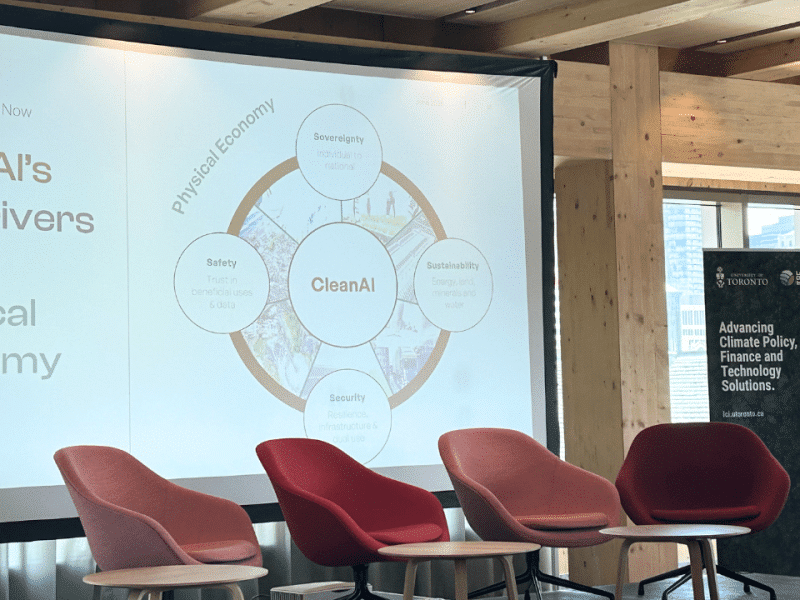
Quarter of all Canadian AI ventures could be categorized as ‘clean AI’: new research
At Toronto Climate Week, the global CleanAI Initiative shared research on the Canadian ecosystem, finding growing investment hubs in Vancouver, the GTA, and Kitchener-Waterloo.

Partnered Partnered content Non-profits are increasingly being targeted for cybercrime. Here’s how your organization can help protect itself
Being cybersecure doesn’t have to be daunting or expensive. A panel of experts discuss ways the non-profit and charitable sector can help protect itself in a constantly changing AI landscape.

Canadian astronaut, entrepreneur donates $15M to Concordia to launch new space school
Montreal’s Concordia University will be the home of the Mark Pathy Space Institute.
