How tax credits and social finance are building a healthy future for Nova Scotians
“There are social, green, brown and transition bonds … why not agriculture bonds?”
Why It Matters
Canada’s small-scale farmers and food producers face a myriad of challenges, including access to capital. Could community investment funds provide a solution, while also building resilient food systems and healthy people?

A Nova Scotia vineyard. Photo: Paul Illsley.
This independent journalism is made possible by the Future of Good editorial fellowship covering social finance, supported by the Suncor Energy Foundation. See our editorial ethics and standards here.
Charlie MacLean lives in the same house where his parents raised him in North Sydney, Nova Scotia. He inherited the house when his mother passed away; and just like his parents before him, he and his wife grow a fair amount of their own food.
Food has also been at the centre of MacLean’s long career. While studying at Acadia University, he worked in the school’s food service department to make ends meet. After graduating with a bachelor of business administration, he went onto head food services at a number of prominent hospitals and post-secondary institutions.
It’s a line of work that connected him with producers across the province and led to a crucial realization — farmers take all the risks. “And they have the least control over the marketplace and suffer at the whim of the food processors and wholesalers,” MacLean says.
“The federal government subsidizes farmers, but more support is needed to build resilient local food chains.”
But then he discovered a way to support farmers more directly — a community economic development investment co-operative called FarmWorks, which also offers investors generous provincial tax credits. Founded under the umbrella of the province’s community economic development investment funds in 2011, the for-profit co-operative has brought together more than 500 investors and provided farmers, food processors, markets and restaurants with more than $8.5 million in loans supporting the development of a strong local food network.
Nova Scotia, CEDIFs and SMEs
Community economic development investment funds (CEDIF) were created by the Government of Nova Scotia more than two decades ago to address the needs of small and medium-sized enterprises in search of capital. They provide an up-front, non-refundable equity tax credit of 35 per cent to FarmWorks investors, as well as all other CEDIF investors.
The province then provides an additional tax credit to the investors of 20 per cent and 10 per cent on the fifth and 10th anniversary of the initial investment; a structure designed to encourage investors to leave money in the fund as long as possible, something that generates ongoing revenues accessible to other small and medium-sized enterprises. Aside from receiving a tax credit for investing into FarmWorks, each investor can add the amount he invested to his total yearly RSSP investment, thus lowering its taxable revenue.
FarmWorks is just one of 77 such enterprises formed since the Nova Scotia government created Community Development Investment Funds in 1999, which allows Nova Scotians to purchase annual common shares in a diversified portfolio of businesses.
Now retired, MacLean has invested more than $100,000 in FarmWorks, which he discovered while searching for ways to lower his tax bill. He’d already invested in similar community finance ventures and the combination of tax credit and local social impact appealed to him. “I’m a firm believer in investing in your backyard,” he says.
FarmWorks founder Linda Best grew-up in the province’s Annapolis Valley and is motivated by concerns around sustainability, health and diminished local supply chains. In the 1960s, the small province had 6000 farms and produced 60 per cent of its own food. But when she returned home in the early 2000s after a career in microbiology, Nova Scotia was barely producing 15 per cent of the food its residents consumed.
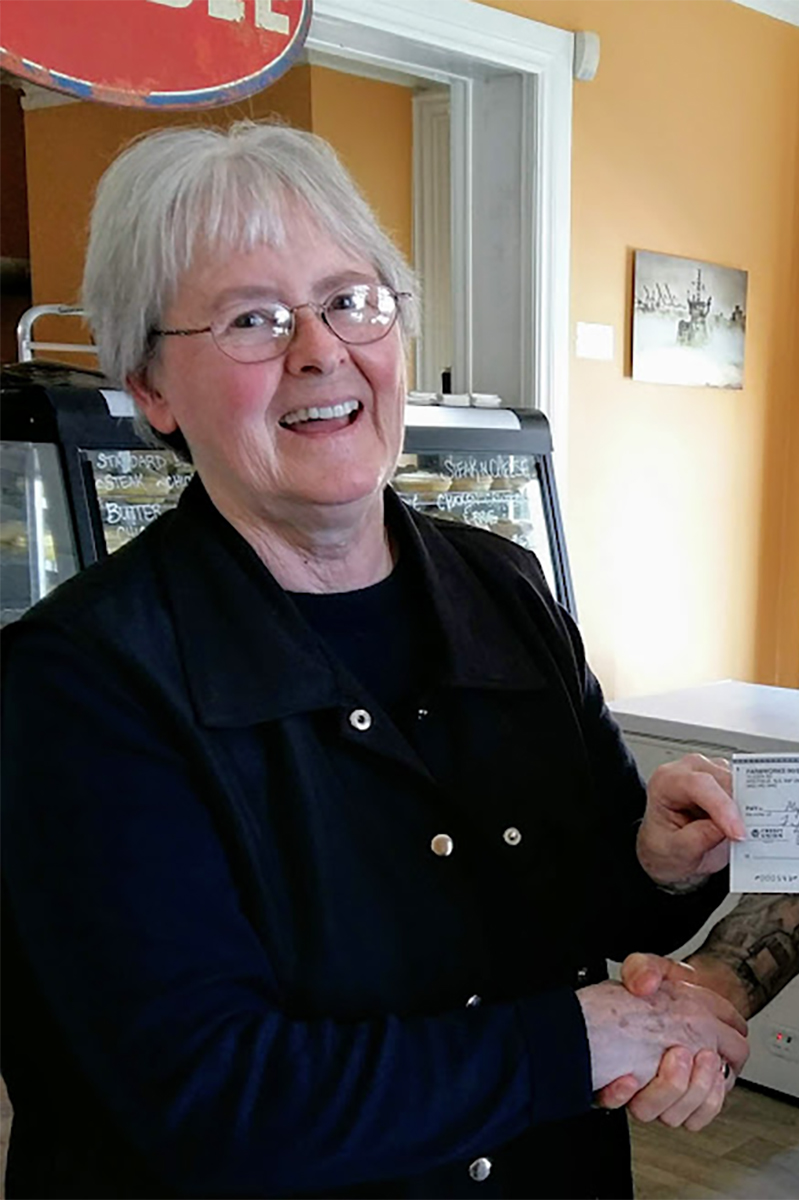 She points to a global supply chain focused on mega-corporations as part of the problem.
“We are sending $3 billion out of Nova Scotia when many of these foods could grow here,” says Best. “Eating mostly imported food affects our health. We consume a disproportionate amount of processed food.
Shipping food vast distances also creates environmental impacts, which could be averted if folks produced and consumed food locally, she says. Then there’s the toll on small communities — without a strong agricultural sector, many towns see their populations dwindle as food processors close their doors or farms consolidate.
So when she heard about community economic development investment funds, she immediately saw their potential to drive change in rural communities. “It’s a win-win formula,” Best says. “Citizens get to contribute to food security in their community and the government of Nova Scotia keeps some of the exported money in the province.”
500 Nova Scotians; 152 businesses
Since 2011, FarmWorks has issued 12 investment offers. An offer refers to the action of putting shares up for sale. Thus, every January, during RRSP season, Nova Scotians can buy shares in the FarmWorks fund, up to a maximum of $15,000 per person, per year. Each offer lasts 90 days.
The first year, 102 citizens invested a total of $224,200; an average of $2,198 per investor. In 2022, that amount climbed to more than $5000 per investor. Like MacLean, most investors are empty nesters with disposable income who see this type of investment as an act of solidarity.
As of this spring, Nova Scotians have invested $5.2 million in Farmworks, which has allowed it to lend a total of $8.5 million to food-related businesses across the province. Loans come with a six per cent interest rate and are repayable within five years. Almost all of the loans have been repaid on schedule.
Coywolf Farm and Canning Sauce Company is one of the many small businesses using a FarmWorks loan to expand. Founded by Kim and Steve Hatcher, who moved to Nova Scotia from British Columbia in 2012, the company got its start turning backyard peppers into hot sauce before expanding into bagged lettuce and garden produce in 2019.
They got off the ground without any outside investment, but didn’t think they could cover the cost of new packaging equipment out-of-pocket. So the Hatchers turned to FarmWorks for a $6000 loan.
Most FarmWorks clients don’t qualify for bank loans and a 2020 survey of loan recipients found 61 per cent of respondents wouldn’t have seen their business survive without receiving a FarmWorks loan.
Would Hatcher have preferred her business qualify for a bank loan? “That is a good question,” she says. “I feel there is a negative connotation of having debt with the bank. It is somewhat uncomfortable; you do not talk about the money you owe. I do not feel that way about FarmWorks. I see this giant Nova Scotian pot of money created by a group of people with the same ideals and desires for the province. And we are invited to dip into the pot when needed and contribute to it when possible.”
A transformative model
Phoebe Stephens, who studied FarmWorks for her 2021 thesis, Social Finance for Sustainable Food Systems, says the FarmWorks model isn’t just transformative — it’s radical. Comparing it to Slow Money Maine, a similar investment network in the U.S., she describes both as “relationship lending.”
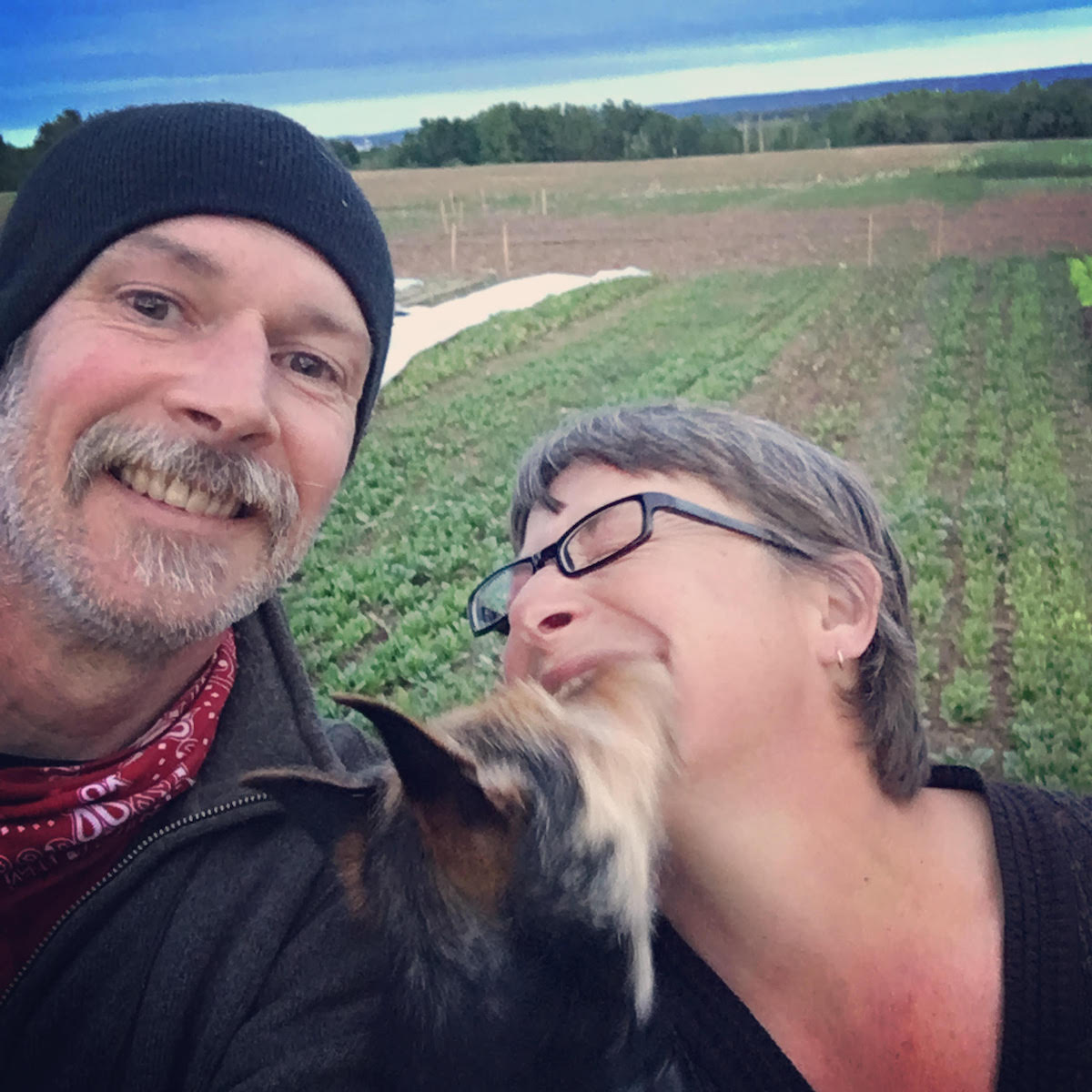
Kim and Steve Hatcher.
“They have less stringent requirements because of the close-knit relationship between the lender and the entrepreneur,” says Stephens, an associate professor at Dalhousie’s University faculty of agriculture. “And this close-knit relationship pays back as almost all loans are repaid.”
Linda Best visits Kim Hatcher every week to talk about both business and life. “I received more than a loan,” Hatcher says. “And I feel the moral obligation to repay it because I am part of a special community of investors and investees.”
Another piece of FarmWorks’ radical vision is its holistic lending strategy.
“FarmWorks, as well as Slow Money Maine, has a clear vision of the food system it wants,” says Stephens. “When they finance a business, they look for what is missing: will this farmer need a food processor? If so, how can they get one going, or can we finance a food processor expansion?”
But Stephens also thinks FarmWorks could work just as well without the tax credits. She notes that the Fair Finance Fund, a similar organization in Ontario, has been successful without providing investors with provincial tax credits.
FarmWorks estimates its total shareholder return to be around five per cent per year with the tax credit, while the Fair Finance Fund gives its investors a minimum return of two per cent.
“You need some kind of return, whether it is a tax credit, a dividend or interest,” says MacLean, who now sits on the FarmWorks board of directors. “Here is how folks investing in social finance think: I can put my money in a regular RRSP and have no idea where it goes. Or I can invest it in my backyard and know where it goes and what it is used for.”
An ambitious future and the limits of the impact
FarmWorks’ last offer raised nearly $6 million, which is the ceiling for investors getting a tax credit, says MacLean. There’s no limit on how much CEDIFs can collect during each offer period; but any investment over the $6 million threshold won’t receive a tax credit. FarmWorks is currently lobbying the provincial government to change this rule.
But raising the tax credit ceiling isn’t the only challenge FarmWorks is tackling.
The organization is also working to educate people about local food systems and their importance, says Best, adding people are most likely to invest in things they value. “Most people don’t have a clue,” she says. “We also need to raise awareness around the health and social benefits of good local food.”
Local food is often seen as a luxury rather than a necessity, says Best. That’s something she’d like to see change. With that in mind, FarmWorks organizes regular information sessions for both existing and potential investors and investees. FarmWorks recently hired its first paid employee to assist with events, communications and applicant evaluations.
“Community finance is one part of social finance,” says Stephens. “FarmWorks is a cool idea and it is doing an important job; I can see other communities replicate the model, if they find strong enough dedicated volunteers. But the Social Finance Fund recently announced by the federal government should also support local food initiatives in all provinces.”
FarmWorks’ founder agrees social finance could do more for local food systems with more government support. “There are social, green, brown, and transition bonds,” says Best. “Why not agriculture bonds?”
Financialization is touching farmland just like it has affected real estate, Stephens adds.
“Now, investors can buy a parcel of a farm just like they can buy a parcel of a building. There are farm investment real estate trusts,” she says. “They are located in the US but have Canadian farms in their portfolio. Financialization of farms contributes to raising prices of land and adds to the need for social finance to offer alternative financing avenues.”
Your job. Your mission. Your news.
With your support, the sector you're building gets the journalism it deserves, and you get a tax receipt.

Related Articles

First Bite Fund launches as Ottawa puts $1 billion behind domestic food processing
New revenue‑based loan fund aims to reach the 92% of food processors that conventional capital has overlooked

New database maps Canada’s $17.3 billion DAF landscape and where philanthropic wealth is concentrated
A new database is highlighting Canada’s donor-advised fund landscape in an effort to increase transparency, but not all sector leaders believe the tool will have that effect.

Edmonton housing fund uses values-aligned, blended financing to create affordable homes
The Housing Prosperity Fund combines values-aligned financing, community investment and family-focused housing to create a model it hopes can scale across Canada.
