Indigenous non-profits left “hurt” after being “blindsided” by Manitoba funding announcement
Social impact bond with aim of providing culturally appropriate care to Indigenous youth awarded to non-Indigenous organization with ties to Catholic Church
Why It Matters
Indigenous-led non-profits in Manitoba work tirelessly to address the inequities and direct barriers faced by Indigenous people, who make up 18 per cent of the province’s population. Access to predictable core funding would make that work easier to accomplish.
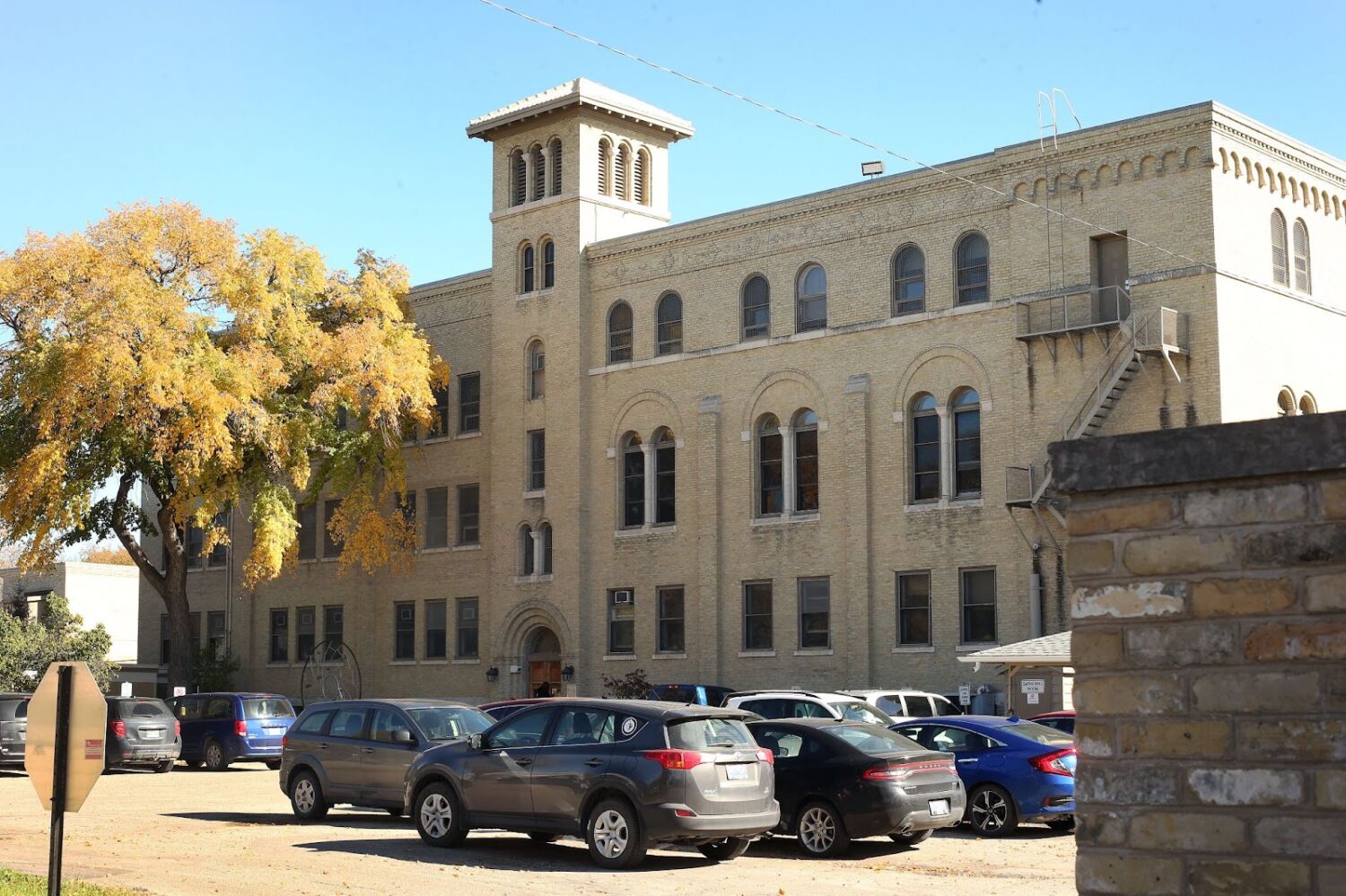
Marymound Inc. in Winnipeg, Manitoba on October 7, 2022. Photo: Shannon VanRaes
Indigenous organizations in Winnipeg are calling for answers after being “blindsided” by the province’s decision to grant a non-Indigenous organization funding to develop Indigenous justice programming.
“Hurt, I think that’s what people are feeling right now,” said Kendell Joiner, executive director of Native Clan, a non-profit agency that assists Indigenous people in exiting the justice system. “Especially, when there are Indigenous organizations in the field that are equipped to take something like this on.”
The recently announced Zaagiwe Oshinawe Inaakonigewin program will be funded through a social impact bond operated by Marymound Inc., with the support of nine investors, including the Reseau Compassion Network, Northpine Foundation, Laidlaw Foundation, Congregation of the Sisters of St. Joseph in Canada, Bealight Foundation and Loretto Sisters Canada.
Manitoba Premier Heather Stefanson was on-hand for the announcement and said her government was “committed to working collaboratively with Indigenous leaders, community and non-profit organizations, and the business community to find innovative ways to support those most in need.”
However, Indigenous leaders in Winnipeg said they weren’t consulted and only learned of the program after a press conference was held in the city.
“I’d like to see them reach out to us, first and foremost, to determine what is the best way to move forward with this kind of initiative,” said Damon Johnson, president of the Aboriginal Council of Winnipeg. “I’d like them to recognize the legitimacy of the capacity we’ve built.”
Not only do Indigenous-led organizations face disproportionate need in the communities they serve, they also face systemic underfunding, he said. A recently released study found that Indigenous-led charities and non-profits receive about $1 for every $178 received by non-Indigenous organizations.
It was also illegal for any individual or organization to give money to Indigenous people between 1884 until 1951. The first Indigenous Foundation was only established in 1979.
Joiner said the type of “out-of-the-box” funding Marymound was able to access just isn’t available to most Indigenous non-profits.
The Winnipeg Indigenous Executive Circle, which represents 32 Indigenous organizations, has called on the nine entities funding the social impact bond to come to Treaty One territory and the Homeland of the Metis Nation to discuss their concerns.
“What you may not be aware of are the extreme challenges for Indigenous-led non-profit organizations to constantly and unfairly and inequitably compete with non-Indigenous organizations,” reads a letter sent to Zaagiwe Oshinawe Inaakonigewin funders. “These actions only continue to perpetuate colonization of Indigenous people in Canada.”
It goes on to say that, going forward, Indigenous-led organizations must lead the healing, growth and development of Indigenous youth.
“Just days after the National Day for Truth and Reconciliation, we were shocked, concerned and saddened that yet another government and these foundations are handing over the administration of an Indigenous-focused program to a church-based organization,” said Dodie Jordaan, a member of the Executive Circle and executive director of Ka Ni Kanichihk. “This is a missed opportunity to renew efforts to reverse the lasting effects of residential schools.”
Janine Manning, president of the Laidlaw Foundation’s Board of directors has accepted the Indigenous Circle’s invitation and will travel to Winnipeg with other members of the organization’s leadership to discuss the issues that have been raised.
“We are grateful for the opportunity to be ‘called in’ and held accountable for our investment,” Manning said, adding the foundation’s support for Marymound was based on advice from Rally Assets, the impact investing advisory service Laidlaw has worked with for the past five years.
“We take full responsibility for not diving deeper and asking the necessary questions to unpack Marymound’s historical and current ties to the church,” she said. “We believe that Indigenous people have the solutions and strategies to their collective well-being and we thought we were supporting this. We believe in self-determination and Indigenous sovereignty, and we want to know how to support this from the urban context moving forward.”
Manning added the foundation will also take this as an opportunity to rethink the diligence process more broadly when it comes to social impact bonds, examining factors beyond financial viability.
Future of Good reached out to the Northpine Foundation and Loretto Sisters Canada, but did not receive a comment by the time of publication.
Marymound was established by the Sisters of the Good Shepherd, a Catholic order from Montreal, in 1911. An article published by the Manitoba Historical Society described its early decades as “an incarceration facility characterized by convent boarding school discipline,” including the use of solitary confinement.
Today it operates six group homes, a school, two “semi-secure living units” and numerous social service programs for youth and families in both Winnipeg and Thompson. When reached for comment, Marymound directed Future of Good to the provincial government.
In a press release, the province said the goal of the new youth justice program is to “provide culturally safe and supportive programming to help reduce the disproportionate number of Indigenous youth in custody and on probation.” Once operational, it will aim to serve a minimum of 45 youth, 30 in Winnipeg and 15 in Thompson, over three years.
The return on investment is based on the reduction of days in custody for Indigenous youth. Under this model, if outcomes are met or exceeded, Marymound will receive $2.25 million from the Manitoba government.
It’s a funding model that comes with its own set of concerns.
“That’s not a valid metric to us,” said Joiner, who also serves as co-chair of the Executive Circle. He said Native Clan regularly extends the residencies of its clients so they can continue to access supports.
This type of return on investment risks incentivising the premature release of youth, he said. “If they’re just not ready, just not in a spiritual place to enter community, are they going to get kicked out then to hit these objectives?”
It would be more effective for the government to provide core funding to Indigenous organizations and allow them to use their own metrics, such as healthy living and re-entry into community, to evaluate success, he said.
Future of Good reached out to Kelvin Goertzen, Manitoba’s Justice Minister and Attorney General, for comment but were told he was “not available.” An unattributed statement provided by Manitoba Justice said “two calls for Expressions of Interest were undertaken in effort to seek community support in launching the program with the province giving careful consideration through Indigenous consultation and representation in selecting an organization.”
The Winnipeg Indigenous Executive Circle has asked the Manitoba government to review its decision to provide funding to Marymound.
“They just are lost in the old ways of doing things,” Johnson said. “I don’t want to take a brush and say it’s all bad, but we’re not anywhere near where we need to be yet. If truth and reconciliation is to be real, for all of us, we need to see a demonstration by government, doesn’t matter what political strip, that they are truly hearing what we are saying and willing to change.”
Your job. Your mission. Your news.
With your support, the sector you're building gets the journalism it deserves, and you get a tax receipt.

Related Articles

First Bite Fund launches as Ottawa puts $1 billion behind domestic food processing
New revenue‑based loan fund aims to reach the 92% of food processors that conventional capital has overlooked

New database maps Canada’s $17.3 billion DAF landscape and where philanthropic wealth is concentrated
A new database is highlighting Canada’s donor-advised fund landscape in an effort to increase transparency, but not all sector leaders believe the tool will have that effect.

Edmonton housing fund uses values-aligned, blended financing to create affordable homes
The Housing Prosperity Fund combines values-aligned financing, community investment and family-focused housing to create a model it hopes can scale across Canada.
