Five ways social impact organizations can build resilient local communities post-pandemic
Why It Matters
Amid the COVID-19 pandemic, communities are taking a fresh look at the importance of localization of everything from procurement to tourism. This is difficult in a highly globalized world where corporations and capital are rarely rooted in a single community.
This story is in partnership with the TELUS Pollinator Fund for Good.
If the word of 2020 was ‘unprecedented,’ the word of 2021, as we begin to move into recovery from the pandemic in North America, might just be ‘localization.’
COVID-19 has revealed how unsustainable a deeply globalized world is. From supply chain breaks for essentials to the thousands of small businesses closing, unable to compete with Amazon and the like.
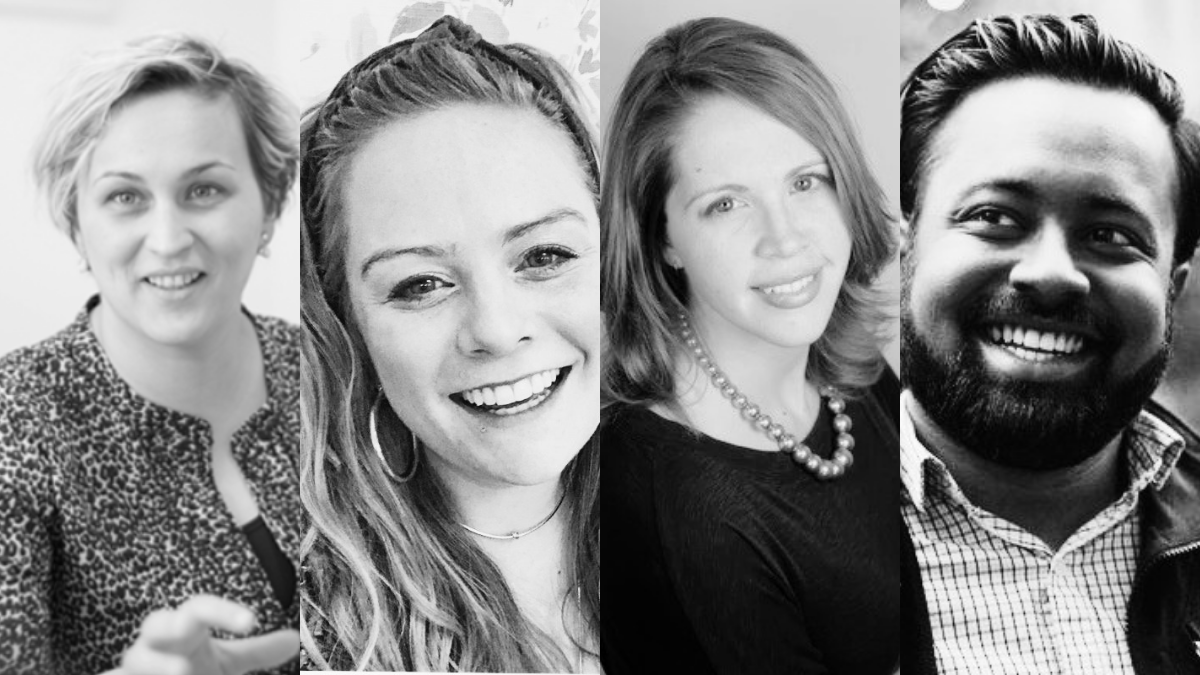
With the support of the TELUS Pollinator Fund for Good – TELUS’s $100 million corporate impact fund that invests in startups furthering social innovation for community resilience – Future of Good hosted a digital conversation all about localization in a post-pandemic world. Four speakers talked about what it means to build local, community resilience post-pandemic, and what the social impact sector should contribute to this notion.
The theme — think global, act local — was also inspired in part by TELUS’s Pollinator Fund for Good, particularly “the push and the imperative to launch the fund as soon as possible. During COVID, a lot of corporate programs have been shelved and a retrenchment of pulling back on local programs. Telus went the other way,” said Blair Miller, the fund’s managing partner during the conversation.
Here are five key lessons the speakers shared with us.
Look for global solutions in your own backyard
“When we’re thinking about a product or service or partnership, let’s look at our own backyard,” said Ayon Shahed, director of business development and strategy at Seafair Capital. “Let’s start with our neighbours. Diane Hodgins, COO at Shorefast Foundation agreed. Looking for ideas in one’s own backyard can have a “tremendous ripple effect” that moves from a local community to the global stage.
Shorefast is leveraging the unique culture of Fogo Island, a tiny community of roughly 2,200 people off the coast of Newfoundland and Labrador, to do just that. Everything a tourist buys or experiences on the island should be as authentic to the community as possible, Hodgins explains. “That is, I think, how you’re going to be able to compete on a global level — to be world class, but to be very specific,” she said.
Localization needs to be unique for every context
“Localization is not the same as translating,” said Kiersten Hanley, experimental program lead at Shopify. Quebec City and Paris may both have predominantly French-speaking populations, she said, but the two cities have very different cultures and contexts. “I think that sometimes we get wrapped up in language when it comes to translating and internationalizing rather than actually focusing on what localizing means,” Hanley said.
Shorefast is experimenting with the idea of community-owned assets as unique local solutions that could not only generate income for local communities — and keep profits close to home — but improve productivity. Hodgins said community-owned assets could also act as local nodes in a globalized web of other similarly-minded communities. “Each community isn’t going to be the same or offer the same product or service or value to other places, but how do we find ways to hold onto the specifics of each, invest in the local, but then share in a network of ideas?” Hodgins said.
Get politically active — that’s how old systems change
“I hear a lot of social entrepreneurs wanting to stay away from the politics side,” said Gabriela Gandel, executive director at the global Impact Hub Network. “We can’t. We need to be part of the politics and civic action because they will define whether the frameworks in which we operate change.” She argues that social impact organizations need to be more involved in political processes, rather than sticking to claims of non-partisanship.
This doesn’t just need to happen in government. Gandel said sector leaders should also push for accountability around financial transparency and accountability, call for better short- and long-term impact indicators, and, yes, that would include involvement in electoral politics. “It is difficult. It is not fun, I agree,” Gandel said. “But if we don’t do that, who is going to change the system of how we do accounting and what we report?”
Local organizations can be more accountable to communities
Our globalized economy allows us to order products from halfway around the world without ever leaving our neighbourhoods. But Hodgins argues this is separating two very key aspects of our lives. “There’s a major transition from how our economic lives integrated with our ‘neighbourhood lives,’” she explains. “In many cases, they’ve divided, and I really think we have to find ways to make sure that we bring those back.”
Capital is not necessarily rooted in place or community, she adds: it can move quite quickly around the world without any ties to place or people. Gandel agrees. If communities want to consider what Gandel calls a “translocal” model, one where the economies of vibrant local communities all around the world are connected to each other and transcend the sum of their parts, keeping corporations with no clear ties to a locality honest could be tricky. “Our global governance is actually not super strong,” Gandel said.
Hanley said transparency is a key ingredient in holding corporations accountable to local communities. Even global corporations that insist they are making products in North America, she adds, are always manufactured somewhere else. Getting clear answers is tough, but essential. “If we don’t hold businesses accountable to those answers, they’re just going to continue operating the way they are,” Hanley said.
Community leaders need to bring in diverse perspectives — especially ones they don’t agree with
Leaders looking to pioneer a local-to-global connection need to bring in a variety of perspectives. Communities are not a monolith. If leaders aren’t seeing any discontent or pushback on new ideas, Hodgins said, that is a serious problem. “That means we probably don’t have the right people at the table,” she said.
But the sense of community offered at the local level can offset even tense or difficult conversations. “Trust travels so much faster locally and there’s such reciprocity built in,” Shahid said. “Even when it gets messy, there’s this shared understanding that we want to fix this — and local gives us the benefit to get back quicker and get back faster.”
Tell us this made you smarter | Contact us | Report error