McConnell Foundation is creating $2 million in funds for a post-pandemic world
Emergency response and long-term support
Why It Matters
Access to emergency funding has been a top priority for many in the social impact sector over the past two weeks. But the sector will feel the impacts of COVID-19 long after social distancing ends. Here’s how the McConnell Foundation is already working on funding for a post-pandemic world.
As the COVID-19 pandemic continues to spread across Canada, the effects it is already having on communities, from increased demand on services to fewer donations to reduced staff, have left the social impact sector concerned.
Fortunately, Canada’s $82 billion stimulus package does include support for non-profits, social enterprises, and charities. But Canadian foundations are now stepping up to support the field as well — one being Montreal-based McConnell Foundation, which announced a $2 million fund to assist non-profits’ COVID-19 response on Tuesday.
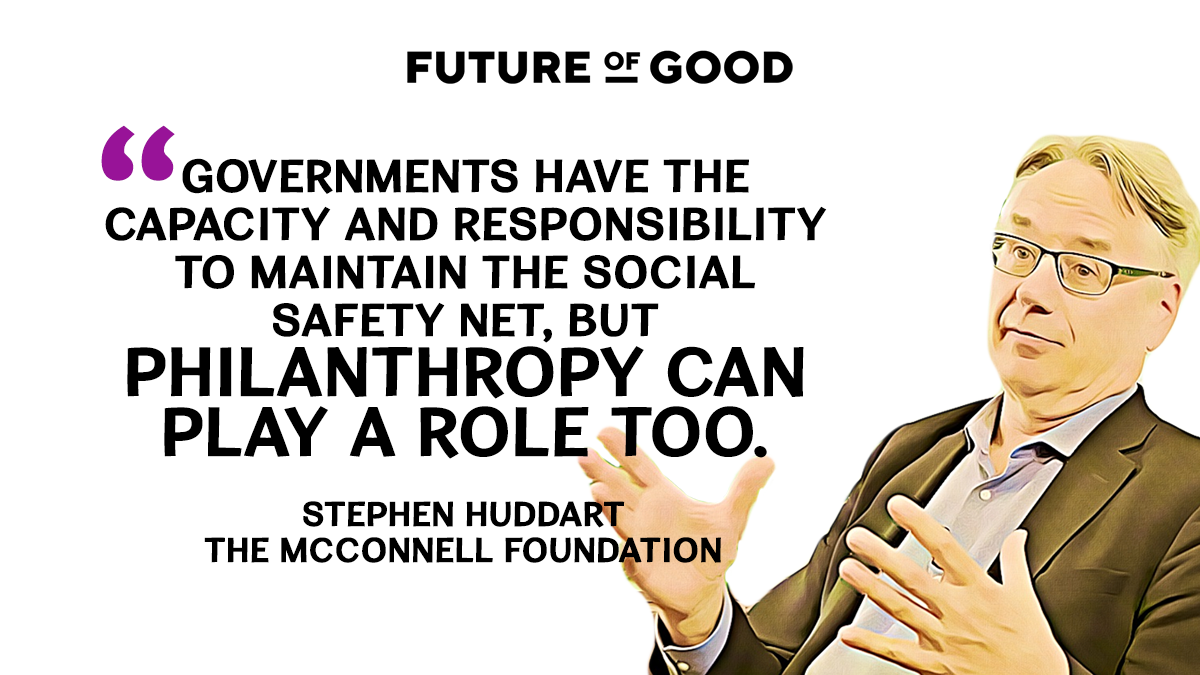
“There are so many places where demand may outstrip capacity – around children’s mental health, women’s shelters, Meals on Wheels services, and so on,” says Stephen Huddart, president and CEO of the McConnell Foundation. “Ultimately, governments have the capacity and responsibility to maintain the social safety net, but philanthropy can play a role too.”
Huddart broke down the foundation’s new funding into three areas where he sees a critical need for support.
Initial emergency response
As a foundation based in Quebec — the province with the most confirmed COVID-19 cases so far — the McConnell Foundation will disburse $1 million to community organizations in Montreal whose projects support urgent basic needs, from housing to mental health.
The foundation will offer emergency funding directly to several shelters, and to Centraide Montreal and La Fondation du Grand Montréal, where other organizations providing social services can access funding as well.
The foundation will also be disbursing a COVID-19 Food Security Fund of $500,000 to organizations providing Canadians with food, with the Breakfast Clubs of Canada receiving an initial grant of $300,000. A further $200,000 grant will be allocated in the near future.
When it comes to emergency responses, the foundation plans to remain flexible and learn as it goes. “There is more work to be done in this area — to learn from what worked and didn’t in the COVID-19 response so that we are better prepared next time,” Huddart says.
Strengthening organizations’ capacity to operate in an emergency
The COVID-19 pandemic is already challenging organizations on several levels, and the McConnell Foundation aims to help them adapt to the crisis.
“At the same time as charities are experiencing increased demands for their services, many are dealing with a loss of capacity to respond — whether through a decline in donations, loss of volunteer support, or having staff unable to go to work,” Huddart says.
The McConnell Foundation will put $100,000 towards helping organizations adapt to the new normal. On April 6, the Innoweave platform (established by the McConnell Foundation and partners) will host a webinar on leading through crisis, the first of a planned webinar series. Innoweave has also curated a collection of Crisis Leadership Resources, and the McConnell Foundation has budgeted to pair up to 1,000 organizations with online crisis mentors.
The foundation doesn’t plan to only support organizations through the immediate effects of the crisis, either. “Looking ahead, post COVID-19, we anticipate a need to assist in getting organizations back on their feet,” Huddart says.
To respond to that need, the McConnell Foundation has created a $100,000 COVID-19 Community Wealth Sharing Model — which will see the creation of an online platform that allows residents of a community to donate to and pre-purchase goods and services from local businesses, helping them through the current economic crunch. The foundation plans to carry out pilots in three cities in the coming weeks.
Maximizing the opportunity to accelerate long-term change
Looking beyond the next few months, the McConnell Foundation’s EmergencE Room fund of $300,000 plans to zero in on the lessons learned from the COVID-19 crisis to help solve emerging global challenges.
“There are going to be some things that will never be the same again after COVID-19 — and that could be a good thing,” says Huddart. “How do we transpose the sense of social solidarity [experienced during the pandemic] to solving problems like climate change or inequality?”
The EmergencE fund will be used to create a cross-sector collaborative that works on global challenges with the same urgency as we’ve seen during the COVID-19 crisis.
“Clearly, this is work that transcends the capacity of any one funder or even one sector,” says Huddart. “But the deeper learning from COVID-19 is that this kind of disruptive disaster can strike at any time, and contending with this kind of problem requires new forms of collaboration.”
Our team is working around the clock to deliver insightful stories, analysis, and commentary on the effects of COVID-19 on the social impact world. If you like our content, please consider becoming a member. Start a 14-day free trial now.
Your job. Your mission. Your news.
With your support, the sector you're building gets the journalism it deserves, and you get a tax receipt.

Related Articles
Imagine Canada launches visual tool to ‘see’ non-profit funding landscape
A new data visualization tool designed to let funders, non-profits and researchers understand the entire non-profit funding ecosystem
Ottawa chooses Canadian Housing Acquisition Fund to manage $1.5 billion affordable housing money
The massive new fund will help grant Indigenous, cooperative and non-profit housing providers easier access to capital to help buy and develop homes for lower-income Canadians.

New donation platform to help communities directly pay down mosque debt
Own Your Masjid is a project of boutique marketing agency Process Plus Marketing
