How the CEO of one of Canada’s biggest food retailers is rallying community during COVID-19
Paramount CEO Mohamad Fakih is calling on business leaders who have the financial means to step up and give back
Why It Matters
While small businesses are facing unprecedented challenges, those in the business community who do have the means to contribute to relief efforts have an important opportunity to help mitigate some of the virus’s effects on society, says Mohamad Fakih, founder of the Fakih Foundation, Paramount Fine Foods, and the Canada Strong campaign.
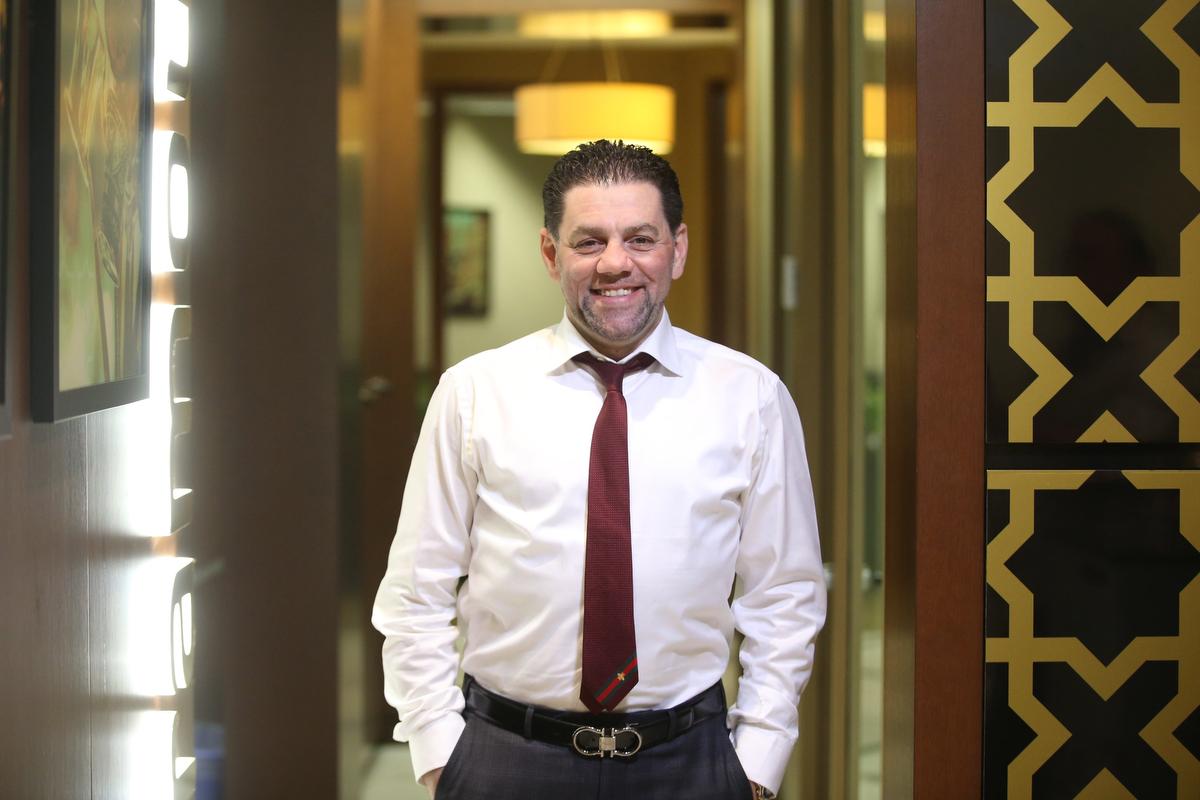
As the situation with COVID-19 continues to unfold in Canada and around the world, many businesses are struggling to stay afloat.
For Mohamad Fakih, Lebanese-Canadian businessperson and philanthropist, now is the most critical time for business owners to mobilize their communities — customers, staff and the neighbourhoods they operate in — to do good.
Fakih is the founder, CEO and President of Paramount Fine Foods, an 80-franchise Middle Eastern restaurant chain bridging cultures and correcting misperceptions through the sharing of food. He’s also the founder of the Fakih Foundation, a non-for-profit dedicated to generating positive social change by empowering the most vulnerable individuals and communities. Fakih is also the founder of the Canada Strong Campaign, which raised over 1.7 million for the families of those who died on Flight 752 in January 2020.
Fakih’s team at Paramount have been taking a number of steps to deal with COVID-19, including: converting all locations to offer curb-side take-out, restaurant kitchens remaining open to meet the needs of shelters, and their hospital locations remaining open to serve front-line medical staff with a 50 percent discount.
“We need real leadership that is less about politics and publicity,” says Fakih. “Leadership that worries less about the bottom line and more about humanity and purpose. [Paramount] put out a [social media] post asking food banks to collaborate with us. I’m receiving people daily who want to come out and volunteer.”
For Fakih, economic impact is just one part of the concern with COVID-19 — the other is psychological. “This is the first time we are faced with something like [social distancing],” he says. “[During the civil war in Lebanon], when we were sent to bunkers with my family, we used to look forward to watching a movie, telling each other stories. This is not available anymore because we need to be away from our loved ones — but we do not need to be away [from them in] our hearts. As much as we are always against social media, using social media could help to send a lot of love and community strength.”
In Canada, COVID-19 has forced several restaurants to shut down for the foreseeable future — which means a lot of food in freezers going bad. “Why don’t we get the restaurant staff to cook for their local community members?” Fakih suggests. “We’re putting a shout-out for all restaurants and businesses in the food industry to use all the food that’s close to expiry, to give it to the shelters, food banks, to the Red Cross and [similar] organizations.”
This is the second time in 2020 that Fakih has empowered his community — whether that’s his patrons or the people of Toronto and its suburbs — to drive meaningful social change in response to global calamities. In February 2020, he collaborated with the Toronto Foundation to start the Canada Strong Campaign. The Canadian government matched funds up to $1.5 million to provide longer-term support for the families affected by the tragedy.
“What we found when we did the Canada Strong Campaign, and what I believe is also happening now, is that people need someone to tell them how to help,” Fakih says. “Human beings are generous, but sometimes they don’t know the best way to go about [giving back].”
Fakih says he saw some pushback during the Canada Strong campaign, from those who thought the campaign should support only Canadian citizens, not the families of the permanent residents on the flight. “Some people said, ‘No, let’s keep it to only Canadians.’ I don’t think that’s a Canadian approach.”
Fakih grew up in Beirut during the Lebanese civil war, and came to Canada as a refugee. He believes that, for many immigrants, coming to a new country in search of a better life means also giving back to that community when you’re able to do so. This is a value he also sees in Canadians. “[When I arrived in Canada], Canadians were standing beside me, immediately making me feel more like a Canadian than an immigrant,” he says.
Fakih says that business leaders who are in the position to give back should do so. When it comes to COVID-19, “we don’t know who’s going to get ill and we don’t know who’s going to stay rich after this. But what we [will find out] is who’s going to be maintaining our Canadian values during one of the worst times for humanity.”
Those are the very values that Fakih has spent 12 years building into his company. “Today we have our kitchens open, [staff] leaving their families and loved ones to cook for shelters when they could think of this as a time to be at home,” he says.
Fakih says it’s also been important to him to step up and support Paramount’s staff. “We also put a call-out to the leaders to talk to the grocery stores’ head offices,” Fakih continued, “because grocery stores are hoping for staff, so maybe we can actually find jobs for our team members we have to let go of because of the lack of business and hours.”
Fakih explained how important it is for business owners to write their best practices for handling a crisis now, and track how they’re dealing with the COVID-19 situation for future reference, should another unexpected crisis arise. “We need to really be careful about saving our health first, and not to overspend because we don’t know how long this will take. But while we’re worrying about our savings, whatever we have should be shared with those that don’t have it. We need to think about everyone so we can be a good neighbour.”
Looking to the future, Fakih says, “Let’s work at spreading positivity because there’s enough negativity out there. It’s going to get worse before it gets better, but we are going to get better. We will all get better at it until we come out of it together.”
Our team is working around the clock to deliver insightful stories, analysis, and commentary on the effects of COVID-19 on the social impact world. If you like our content, please consider becoming a member. Start a 14-day free trial now.
Your job. Your mission. Your news.
With your support, the sector you're building gets the journalism it deserves, and you get a tax receipt.

Related Articles

New donation platform to help communities directly pay down mosque debt
Own Your Masjid is a project of boutique marketing agency Process Plus Marketing

Explainer: The divergent fix-it paths of Ontario and B.C.’s condo oversupply problem
Both provinces have too many tiny, shoebox condos, but both are taking different approaches to fixing it.

Elbows up: Spring Impact Capital calls for a giant spreadsheet of available early-stage Canadian capital
The Vancouver impact investor wants to crowd-source a free, national directory
