Multicultural, but anti-Black: Systemic racism in the settlement sector
This former settlement professional says the sector’s service delivery deprioritizes African newcomers
Why It Matters
More than half of Canada’s Black population is first-generation, meaning born outside of the country. Combatting anti-Black systemic racism requires the settlement sector’s participation.
All the signs of the contradictions in the settlement sector should have been obvious to me from the start, but I was dazzled by my naivete and my first real job.
The all-white hiring committee, the all-white leadership in the organizations should have been my first indication. Then, the conferences purporting to celebrate diversity, where I would be the only Black person in the space. Where all the speakers on multiculturalism were all white. All the leading experts, the policy shapers, the executive directors and the leaders of the industry were white.
Early in my settlement career, an executive director made a comment to me, saying that it was unfortunate the organization could not hire a real African. I stared at her in confusion, and she went on to clarify with, Oh you know, the kind who wears head dresses and the colourful clothes. A real African.
Africa is a continent, with 53 countries and thousands of cultures and languages. Africa is the second largest land mass in the world. It is resource rich, technologically advanced and an economically bustling continent.
This insulting and reductionist perception of Africans is an ongoing theme in the sector. The casual anti-Black racism in the multiculturalism sector is as commonplace as its many potlucks and festivals.
The settlement sector seems to have an unspoken hierarchy of preferred immigration categories: the lowest ranking in the hierarchy are those who arrive as refugees and the lowest ranking of the refugees arriving are those arriving from the African continent.
Africans are viewed as one thing only: recipients of services. They are treated as quotas for funder targets, and asked to show up for photo opportunities. Even the exceptions who rise above the invisible barriers must clear Olympic-level hurdles to be slightly acknowledged- and even then, they are dispossessed of their own stories as these then become the property of the settlement organisations who churn the stories out to support their much needed narratives of diversity and inclusion. .
Black Lives do not matter in the multiculturalism landscape.
The year was 2016. Our very cool and compassionate Prime Minister announced the arrival of more than 26,000 refugees in Canada and the settlement sector was a buzz with possibilities. It was the coolest space to be part of almost instantly.
I sat through meeting after meeting, wide eyed with ideas and what ifs community groups offered free yearly bus passes, free recreation cards, free membership fees to sports teams, sports equipment, all free and for newcomers. I mean, Hallelujah!
Then things started to get real.
As the Syrian families were arriving, the African families were arriving too. While the Syrian families were welcomed with pomp and circumstance (which, of course, they deserved), the African families (who deserved just as warm a welcome) were quickly and quietly shuffled through their resettlement stages and moved to substandard houses, where they were left to sort themselves out.
Contributions were pouring into the organization at a rate that No one could have imagined. Businesses, individuals, governments were giving generously – and tying every single donation only to Syrians.
My white-led organization would accept and in turn do media appearances pushing for more donations for Syrians — and the community responded.
All organizational resources were on Syrian families. The media did a great job sharing stories about the families arriving and so naturally, community volunteers who showed up preferred to be matched with Syrian families. The volunteers who were matched with African families seemed almost disappointed — many barely showed up to connect with the families and most grumbled about the families lack of engagement with them.
Remember those free bus passes, sports equipment and programs the city and organization offered – those were all also strictly for Syrians. The government had made the decision to forgive the transportation loans that refugees carry with them upon arrival in Canada — again, only for the Syrian community. Private businesses would donate items exclusively for Syrians. $200 grocery cards, financial support to help with housing costs, and more all went to only Syrians.
The media and community response to Syrian experience rendered all other communities invisible and hopelessly under resourced. The organization’s executive director made an effort to go and meet each and every family, meeting their children and visiting their homes – a relationship with them that allowed her to value this community deeply and use her position, power and privilege to advocate for them in incredible ways.
This ED never once met a single African family who arrived in the community. She erased them and their needs and only saw them as one thing: a quota.
I remember a single mother of four from an African country was having a hard time meeting her financial commitments. Her child tax benefit had not started to come in and she was trying to make rent, groceries, bills and all other expenses on a $1200 monthly check. Her rent alone was $800. I went to ask for an emergency loan for this mother from the executive director, who told me to go and ask church groups and other organizations in the community to help this mother as the resources that were available were all tied to Syrian families only.
I bumped into a colleague later that day and expressed my frustration to her about the situation. She was surprised and said she had spoken to the executive director that day about a Syrian single mother she was working with, who needed an emergency loan and the ED had instructed the accounting team to get the cheque ready for this mom on that day.
African immigrants are expected to bear their suffering — make do with little and never complain- the expectation is that they have been through much worse and should be grateful to be in Canada. The expectation of Black front-line workers to be the enactors of racist policies shields whiteness in multiculturalism from grappling with its racism.
As Black front line workers, there is no safe space for us to address what we see in these spaces- to do so means while we open ourselves up to be bullied, gaslit, undermined and harassed. Our work will always be diminished, and our accomplishments ignored while other mainly white staff are groomed and celebrated constantly. Goal posts will be shifted arbitrarily to keep us questioning and therefore supplicant and our job security will always be up for debate as we are excluded from meetings and openly criticized in front of colleagues and subordinates. These spaces are committed to maintaining superficial diversity and demand absolute loyalty and complicitness. This is white supremacy in action. As Black workers we have to recognize this harm, name it and prepare our defense.
These white gatekeepers shape the narrative of multiculturalism. They believe their leadership, research, observations, and focus groups fully grasp the complex immigrant experience. Funders, service providers and organizations lap this up and regurgitate this as gospel truth. The erasure of Black immigrants from the multiculturalism landscape – from leadership to the valuing of our knowledge- serves the existing structures as it allows them to continue to benefit in power, position and diversity cookies at the expense of Black bodies.
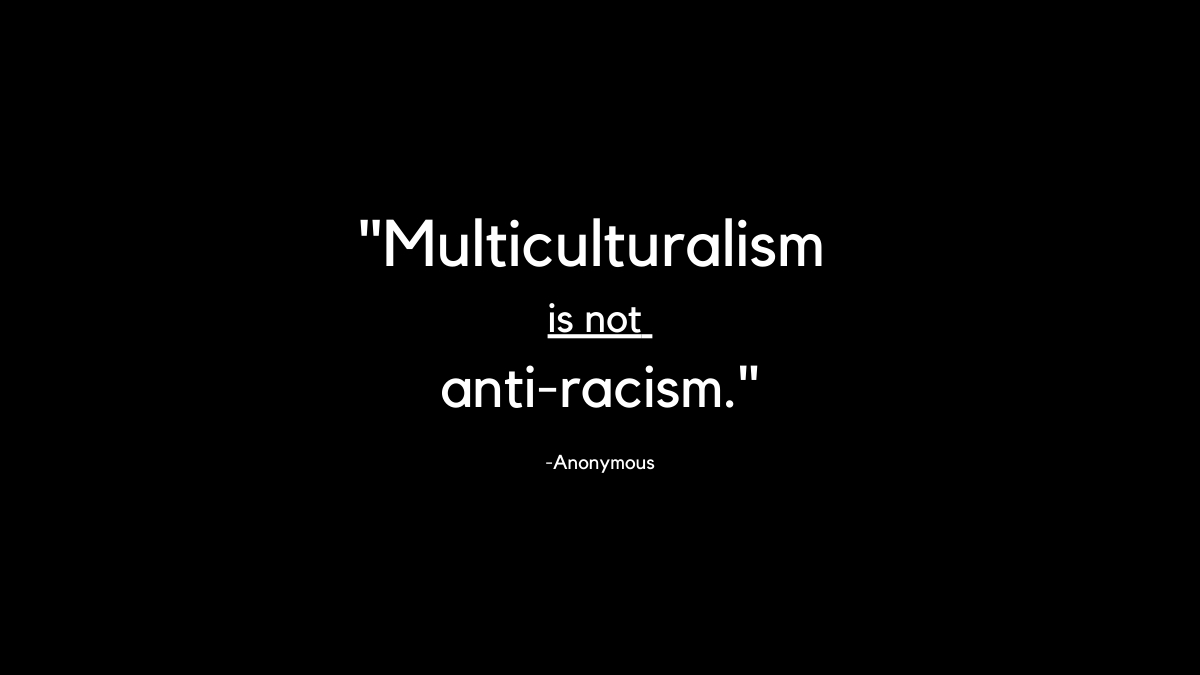
It is past time for a reckoning in this sector. Multiculturalism is not anti-racism. It certainly does not fight against anti-Black or anti-Indigenous racism. Multiculturalism is inherently flawed in its functioning. It centres white comfort over the well-being of Black immigrants – creating hierarchies by unfair distribution of resources. In its current iteration, the settlement sector is a vanity project for white folk who need to perform wokeness. It is white saviorism in a colourful headdress and kente cloth, carrying a drum.
Your job. Your mission. Your news.
With your support, the sector you're building gets the journalism it deserves, and you get a tax receipt.

Related Articles

Caste, corruption, and the collective: Crow’s Theatre’s A Fine Balance confronts India’s enduring inequities with humour and heartbreak
The Giller Prize-winning novel explores the realities of caste violence in India, which has been adapted into a powerful stage production in Toronto.
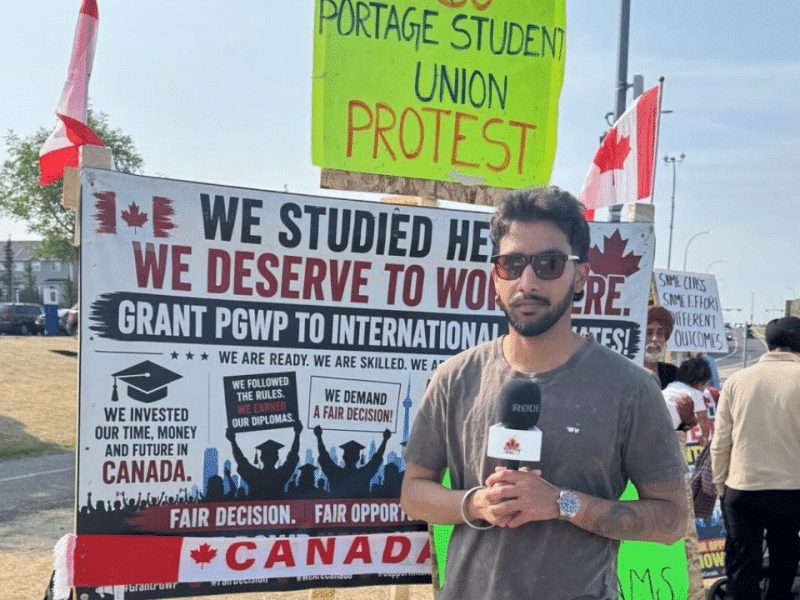
‘Canada must not go down that road’: More than 250 organizations demand investigation into CBSA after student protesters issued exclusion orders
The students were protesting after being denied post-graduation work permits they say they were eligible for when they enrolled at Portage College.

Half of Filipino immigrants to Canada are overqualified for their jobs: StatCan
‘For the relationship that Canada has with the Philippines, it seems like it’s lopsided.’
