What’s missing from the Ontario election platforms? 14 Northern and rural-based community leaders weigh in.
Why It Matters
The social issues that the political parties promise to address may not be meeting the needs of all Ontarians. As each party releases their platform, communities from all over the province will see who deserves their vote.
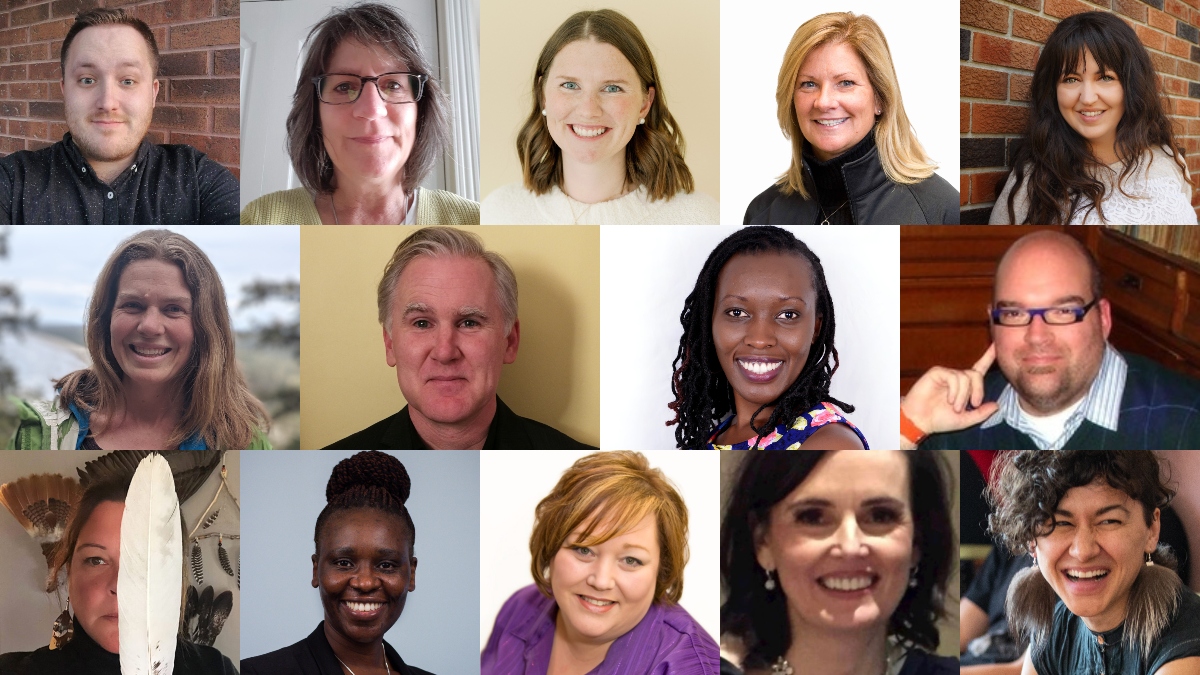
The election in what’s colonially known as Ontario, is approaching. Political parties across the province are making their campaign platforms public and showing Ontarians which issues they believe are most important.
But are certain communities being left out of the discussion? Future of Good asked 14 leaders from organizations that serve rural communities in northern and southern Ontario, the territory of Indigenous peoples such as the Anishinaabeg, the Mississaugas of the Credit, the Haudenosaunee, and more, for their thoughts.
Respondents explained which social issues they thought were missing from the various parties’ current election platforms, as well as which issues the party that comes into power should focus on post-election. Here’s what they had to say.
What social issues are missing from current election platforms?
Some responses have been edited for length and clarity.
Support for LGBTQ2S+ people in rural Ontario
“Each of the major political parties have some level of actions in their platform to support the LGBTQ2S+ community. One aspect that Stratford-Perth Pride would like to see is a commitment to supporting the LGBTQ2S+ in rural Ontario – not just queer people in urban centres. Rural Ontario has little-to-no supports for the queer community and many existing health and social services lack proper education and general acceptance of queer people and our needs.
As one of the few queer organizations in rural Southwestern Ontario, Stratford-Perth Pride often receives messages and emails asking for support. We function almost like a social worker trying to direct folks to the services they need. However, we often have to direct them to nearby cities like Waterloo or London. Ensuring queer people don’t have to travel to the city to get basic care and support will be a life-saving move by the next Government of Ontario.” – AJ Adams, president, Stratford-Perth Pride
Inequality between northern and southern Ontario
“Residents in Northern Ontario face massive inequalities in regards to health care access, mental health services, outmigration from our communities, and economic, infrastructure, housing and financial challenges that are different from those seen in southern Ontario. Residents of Northern Ontario want to feel like the issues we face are a priority for our government. There needs to be more care and attention paid to those differences, and we should see more platforms that consider the issues facing the North when creating policies and solutions.” – Amanda Kingsley Malo, founder, PoliticsNOW
Alarming rates of food insecurity — and the under-the-radar impacts and solutions
“One in eight households in Ontario can’t afford food. Not being able to afford food is called household food insecurity. This problem will grow with rising inflation and food costs jumping an extra $966 this year for a family of four. Of those who are household food insecure, 63 [percent] relied on wages and salaries, and 59 [percent] of social assistance recipients experienced this problem. Individuals who are BIPOC, LGBTQ2S+, and/or disabled are disproportionately impacted. And the consequences are telling. Household food insecurity is associated with up to 121 [percent] higher healthcare costs, hospitalizations due to mental health problems, pain-related ER visits, and a greater risk for depression and suicidal ideation in our children.” – Courtney O’Neill, community coordinator, Simcoe County Food Council
“While all of the parties have some elements of poverty reduction policies in their platforms, they could all benefit from more ambitious plans that are centerpieces of campaigns. We know that food bank use has been rising every year, that poverty costs Ontario between $27-33 billion per year, that hunger and poverty has significant negative impacts on the health and wellness of individuals and communities – there are lots of reasons we should be treating this as an emergency, but we are not. Food banks were founded in the 80s as a temporary, band-aid measure and were never meant to make up for inadequate social security systems, but unfortunately our failure to act for the last few decades has meant we’re still needed.” – Debbie Marson, executive director, North Bay Food Bank
“Teaching students how to grow, cook, eat, and value food helps them learn about healthy, local, and culturally appropriate food. These lessons play a critical role in promoting health and reducing chronic disease while strengthening Ontario’s economy and supporting its agri-food sector. Through hands-on food literacy education, children and youth can learn how their food is grown, raised and produced, how to be good stewards of the land and water, the importance of cultural diversity, and the value of collaboration. With proper support for teacher training and infrastructure, these lessons could be integrated into the curriculum in all grades and across a variety of subjects. Experiential learning opportunities also bring community members and partners together, including local food providers, chefs, families, seniors, Elders and Knowledge Keepers, and socially excluded or vulnerable groups to create relationships, build skills, and support community well-being.” – Carolyn Webb, Edible Education Network coordinator, Sustain Ontario
Addressing systemic racism
“A recognition of the unique living experience of people of African descent in Ontario and concrete action on how to address systemic racism that excludes African Canadian children, youth, and families from participating fully in the society. Anti-Black racism has a detrimental impact on Black communities across all areas of their lives from how they access and experience healthcare, education, housing, loans for their businesses, and how they interact with the child and youth welfare system.” – Minnie Karanja, director, government relations and public policy, Network for the Advancement of Black Communities (NABC)
“Anti-racism and anti-oppression interventions are nowhere, yet white supremacy and polarization have never been more dangerous than today. And a full commitment to the London Family Act [is needed] as well as anti-black racism, IDAHOBIT, and LGBTQ2S interventions globally and anti-Asian racism [interventions] Ontario-wide, while simultaneously supporting and demanding a national and a similar global strategy.” – Emily Kovacs, executive director and CEO, Niagara Folk Arts Multicultural Centre
A kinder approach to politics
“Kindness. Candidates are teaching us that insulting, belittling, and bullying is a way to win. In the past, we used to watch American politics and we were all disgusted at how they insulted each other – we were grateful that Canadian politics was civil – until now. We are no better and we learn from the south. This includes the new and very visible disease of racism, the conspiracy theories, and the divisive language that is destroying our country. Sometimes we expect the Conservatives to come out with fists, but I’m gravely disappointed in the language of [Andrea] Horwath, [Steven] Del Duca and sadly, we even hear it from Jagmeet [Singh]. It is gravely disappointing – it is angry and retaliatory. So much time insulting, no time left in the interview for explaining what they’ll do to better lives for Ontarians.
We watch a lot of news in our house and I’ve not heard any mention of Indigenous issues – which is not surprising. For a population that wasn’t even considered civil enough to vote until the [sixties], it is no wonder that we are never a part of the conversation. There was a flame of hope that when Canadians learned about our thousands of dead and missing children, that people would turn an activated eye and ask us what we need, or acknowledge what they know we need – but no, we and our dead children are being ghosted again.
If you are asking me as an Indigenous woman, founder of a challenged non-profit, owner of a small business – I will always have the same answer…What is missing is inclusivity, equality and a concern to how you can better the lives of those you marginalize. A true sense of ‘othering’ has spread. Canadians are marginalizing Indigenous peoples as ‘affected’. We are being ghosted – new language for the same old racism. It’s no one’s land and the Earth is teaching you this now, but you can’t see it.” – Dawn Iehstoseranón:nha (she keeps the feathers) Setford, president and founder, Indigenous Arts Collective of Canada
Embracing restorative justice
“Reimagining the justice system, where restorative justice is the predominant modus operandi. Stop building jails, build recovery centres that are human-rights-based and with full support to rebuild individuals’ trust with society. The legal justice system as a profession should also be redesigned where feminist principles of mediation and reconciliation are emphasized over the current binary focus of win-lose scenarios.” – Emily Kovacs, executive director and CEO, Niagara Folk Arts Multicultural Centre
Affordable, accessible, supportive housing — including for people with disabilities
“Right now, there are more than 5,000 people with disabilities under age 65 living in long-term care facilities – more than 700 are under age 50. We feel strongly that LTC facilities should be a last resort even for older people – and they are completely inappropriate for younger adults.
This is happening because there is a lack of affordable, accessible, supportive housing in Ontario – and particularly in northern and rural Ontario. While all of the parties are making campaign promises related to housing, there has been surprisingly little mention of people with disabilities, and people with developmental disabilities in particular.” – Shawn Pegg, director of social policy and strategic initiatives, Community Living Ontario
“Housing is a human right: homelessness interventions cannot be eligibility-based and rapid rehousing principles with peer models and focusing on recovery is to be applied for the person’s lifetime… Agencies not focusing on human-rights-based approaches [should] be defunded, as they are perpetrators of the same system individuals run from.” – Emily Kovacs, executive director and CEO, Niagara Folk Arts Multicultural Centre
Closing the gap between federal and provincial funding
“For smaller areas [of Ontario], especially those areas where you are just getting funding provincially, not federally, we would require some kind of parity in terms of funding. We want it to be comparable. Every time somebody is talking from the federal side… it seems as if it’s two different programs, and yet they’re supposed to work in collaboration with each other. The way it’s set up right now is as if one is more important than the other one. So I don’t know, in the elections, what all these parties want and how they [will] address situations like that. But there has to be some parity with funding. That’s my number one [issue].” – Janet Madume, executive director, Welland Heritage Council
Justice for migrant workers
“I want to speak about migrant workers… I know they deserve to be given a better pathway to permanent residence – for those that would desire it…That’s so important. Every year, some workers illegally break their contract to remain in Canada, [including] women outside of the agricultural sector… So as the younger generation obtains an opportunity to work through this program, we are really fearful that [breaking contracts] will soon venture into other areas, simply because they see no incentive or no future in the [migrant workers’] program. If Canada continues to attract skilled agricultural workers, which we really heavily depend on in our area, especially the Niagara on the Lake area, there have to be better incentives for the sacrifice they make. They are leaving their loved ones behind for at least a good eight months to a year. [So they need] …that permanent residency leeway.” – Janet Madume, executive director, Welland Heritage Council
Indigenous Peoples’ self-determination and collective rights
“It is important that platforms are culturally sensitive and respect Indigenous Peoples’ self-determination and collective rights. While parties seem to have included commitments to Indigenous peoples, they do not often reflect Indigenous definitions of well-being. For example, while investments are proposed regarding shortages and access to health care, parties aren’t also considering the specific barriers that Indigenous peoples face, including structural racism, when it comes to finding quality care. And while many parties have made promises regarding economic development and the environment, they are not taking into consideration things like environmental racism, and how clean energy projects still encroach on Indigenous lands and territories (e.g. the mining required for the batteries needed to power the new wave of electric vehicles). For any party to truly honor the relationship and responsibilities to Indigenous Nations, relationship building, alongside implementation of the TRC Calls to Action and UNDRIP, must be embedded within legislation and policy at all levels of colonial government.” – Jessica Bolduc, executive director, 4Rs Youth Movement
Supports for children with special needs
“Investment in special needs supports and resources is needed to ensure that more children with special needs can fully participate in child care. About one in every nine children in Ontario has special needs. A better investment for special needs support in child care improves the experience of every child.” – Karen Pulla, vice president, YMCA of Simcoe/Muskoka
Access to safe, reliable, and affordable transportation in Northern Ontario
“I believe all parties have missed the mark when it comes to the importance of safe, reliable and affordable transportation in Northern Ontario. There was mention of lowering fees to $1 per ride, and this simple solution may work for large urban cities but not for those living in the North. It will only increase the challenges to sustain public transportation to travel from one small city to the next. Also, the price of gasoline has skyrocketed to $2.20 per litre in Sudbury, making automotive transportation an option for only those in upper income brackets.
Research demonstrates that access to safe and affordable transportation can mediate and prevent experiences of violence, housing insecurity, and wellbeing in the lives of women and girls. This means that we need to take transit seriously.” – Marlene Gorman, executive director, YWCA Sudbury
Targeted operational funding to support community museums
“Ontario’s community museums build vibrant and vital places for Ontarians to live, work, visit and invest. Museums and other community assets are part of the hardest hit arts, culture, heritage, and tourism sectors that will take the longest to recover and are essential to our province’s economic and social recovery. Targeted financial support to core operations is needed to stabilize the sector so the wide variety of museums in Ontario can build upon the successes of in-person visits and their important expanded digital engagement over the past two years. Museums’ role as trusted institutions has grown to help society address critical issues, especially as we strive for greater inclusion and learn more truths regarding the treatment of Indigenous peoples. With learning these truths, museums need to be at the forefront of engaging with their local Indigenous leaders towards reconciliation. Specific operational funding to support the ongoing recovery, truth-telling, and digital transformation of Ontario’s community museums has been a clear message from our sector throughout the pandemic and should be a priority of all levels of government.” – Michael Rikley-Lancaster, executive director and curator, Mississippi Valley Textile Museum
Tell us this made you smarter | Contact us | Report error