What you missed: Six bold takeaways from the 2020 Future of Good Summit
Why It Matters
The social impact world is at a crossroads: rebuild in the image of a pre-pandemic sector, or use this moment to reimagine its very purpose, how it's funded, and how it operates. The 2020 Future of Good Summit brought together purpose-oriented professionals and entrepreneurs from across Canada to explore exactly how to make it happen.
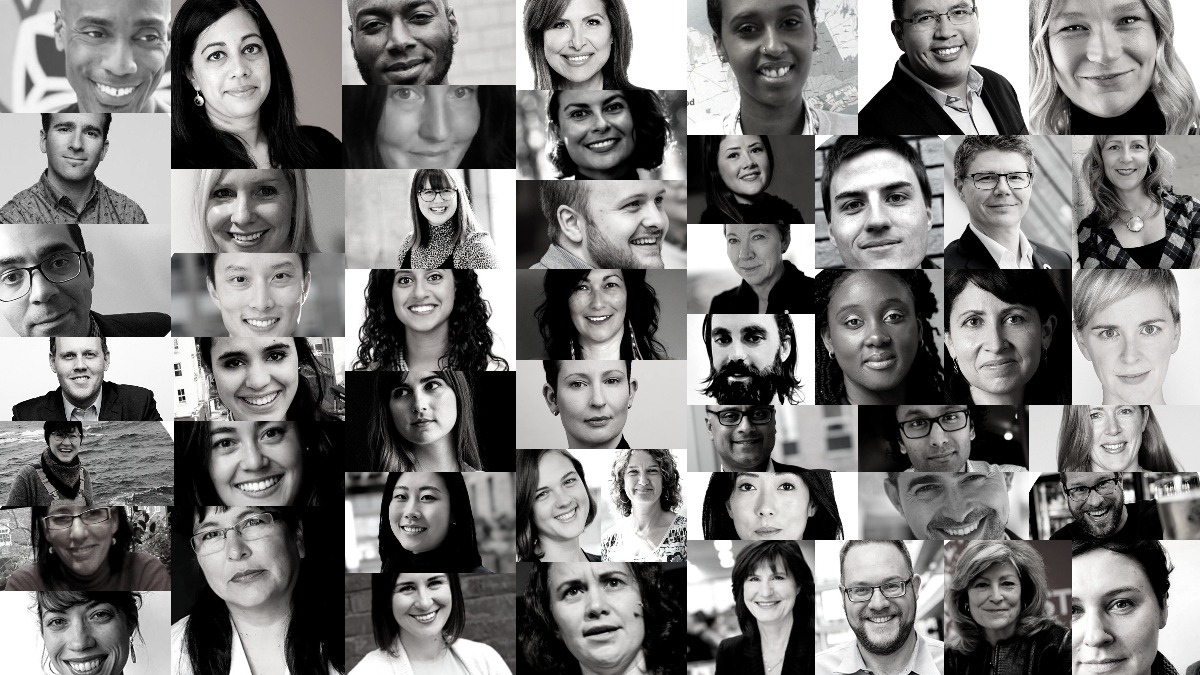
From elder care to climate action, we explored big and pressing social transformations at the 2020 Future of Good Summit. Speakers came from an array of backgrounds, from public policy to research to frontline social services. The audience came from across Canada — from Vancouver Island and Yukon to Sault Ste Marie and Newfoundland. They were from the federal public service, philanthropic foundations, corporate citizenship teams, social service agencies, impact investing firms, post-secondary institutions, social enterprises, co-operatives, and nonprofits of various kinds. This mix mirrors the major takeaway: cross-sector collaboration is the only way the social impact world — and by extension, communities — will build back better from the pandemic. And speakers emphasized the urgent imperative of acting now to use this historical moment to transform the sector.
To break it down even further, here are six bold ways the social impact world can enable a forward-looking recovery and transform post-pandemic, as told by Summit speakers:
Recognize the internet as a utility
“We have to stop thinking of the internet as a commodity,” said Fiona McKean, founder and chair of Thistledown Foundation. “It isn’t a car.” Everyone at the Fixing The Digital Disparity plenary agreed the internet must be considered an essential service for anyone to participate fully in a democracy. Kamau Bobb, global lead of diversity strategy and research at Google, went so far as to call it a human right. “Without the internet, you can’t participate. You’re relegated to second class,” he told the audience.
“Without the internet, you can’t participate. You’re relegated to second class.”
Canada needs to do its part by formally recognizing the internet as a utility and providing high-speed broadband for all, especially as the COVID-19 pandemic forces everyone to rely on digital services. “One in 10 households does not have access to an internet connection,” said Laura Tribe, executive director of OpenMedia. “In rural areas, it’s 40 percent.” Indigenous communities fare even worse: a recent government report suggested just 29 percent of on-reserve households have Internet access.
From an engineering perspective, connecting Canada with reliable, fast, robust fibre-optic communications is totally possible. What is lacking at the moment is the political will to make this universal internet access happen fast. “Technologically, we know how to build the internet. We know the answers,” Tribe said. “We just have to prioritize them.”
Stop isolating seniors in care facilities
Across Asia, Europe, Africa, and South America, elderly people remain active in their communities until well into old age. Many reside in multi-generational homes with their children, grandchildren, and even extended family. This isn’t the norm in Canada, where seniors are often consigned to long-term care facilities the moment they are unable to live independently. That a healthcare response to aging is the default is a shame, speakers in the Reimagining Elder Care plenary agreed. “We isolate and silo our elders ‘over there’” in the healthcare system, said Diane Roussin, project director at The Winnipeg Boldness Project. “We don’t have them interconnected in everyday life.” Everyone at the Reimagining Elder Care plenary agreed that elder care providers cannot simply warehouse seniors if they wish to provide the best care possible.
Aging is a natural part of the human experience. Yet the Canadian healthcare system often sees it as a problem to be solved. Shirlee Sharkey, CEO of SE Health, says the right approach involves a combination of family support, home care, and healthcare, but said there has been an overwhelming focus on hospitals, especially during the COVID-19 pandemic. “Life care became the lowest priority,” Sharkey said, “and people died and suffered because of that.”
“Life care became the lowest priority.”
Dr. Sarah Schulman, the founder and social impact lead of InWithForward, said care providers must also do a better job of listening to elders. “How do folks who are aging interact with the community at large, not just those who are paid to interact with them?” she asked. Ultimately, Roussin said, seniors in care – be that a long-term care home or at home with their families – know what their needs are. “The rest of us have a role in helping them get there,” she said.
Use tech to enhance social purpose organizations
Back in March, seemingly overnight, a majority of social impact organizations migrated all of their work online. Many have struggled to make this transition, and to maintain the same processes and practices that worked for them pre-pandemic.
But speakers in the Building a Tech and Data-Savvy Social Sector said that if organizations are having trouble recreating their work in the online realm, that’s because they’re taking the wrong approach. Digital transformation must be about more than just moving a social impact organization’s processes online, they said. “We are reimagining the way that we can reach people,” said Robert Opp, chief digital officer at the United Nations Development Programme. “It’s not just a matter of taking the same process you did on paper and turning it into a PDF.” Other organizations, too, should consider a total structural transformation — reimagining their purpose, approach, and connection to communities in this new digital-first era.
Anchor the digital transformation in the organization’s purpose.
And if an organization is struggling to get its team on board with this kind of complete technological overhaul, Poya Kherghehpoush, vice president of strategy and transformation at United Way Centraide Canada had some key reflections. Kherghehpoush said there are three key ways to get everyone on the same page: anchor the digital transformation in the organization’s purpose — make clear how it will enable more effective work toward the mission; have leadership demonstrate a commitment to the digital transformation; and design the transformation with input from all team members, including and especially those on the front-lines or in entry-level positions.
Rebuild capitalism’s relationship with money and community
“We have seen inequalities exacerbated and the gap between the richest and the poorest rise to historic levels” during this pandemic, said Antonio Zappulla, CEO of the Thompson Reuters Foundation, on the Building a New Kind of Capitalism plenary. Closing that gap means reimagining the ways capitalism functions, speakers agreed.
“The way we do business — the human relationship with money — is so reductionist and mechanistic that what we have been doing, in effect, is using money to kill life,” said Zita Cobb, founder of Shorefast. Shorefast is a charity whose mission is to “build cultural and economic resilience on Fogo Island,” a remote island off the coast of Newfoundland and Labrador. Cobb’s philosophy on a more just and equitable capitalism is that it should be closely aligned with physical, place-based communities, she said. While we reimagine capitalism and push for localism and decentralization, for instance, big box franchises should in the meantime develop meaningful relationships with the communities in which they operate. Businesses must also commit to becoming radically transparent about where a buyer’s money goes, Cobb said. “Every single citizen should be aware of where every single penny they spend goes… that’s how we take back the economy.”
“The way we do business — the human relationship with money — is so reductionist and mechanistic.”
YWCA Canada CEO Maya Roy also shared points from her organization’s proposed feminist economic recovery plan, a blueprint for all levels of government to use to ensure that the most marginalized and vulnerable populations are prioritized in recovery efforts. She said any conversation about a new kind of capitalism needs to start from a place of recognizing that capitalism fosters inequality. “Yes, we’re all in the same boats, but some of them are leaking,” she said.
Recognize that every social issue is dependent on climate
And as such, speakers at the Climate Leadership for the Decade plenary agreed, a whole-of-society response is imperative. The social impact world must step up, they said. “We need more leaders and less politicians,” said Kluane Adamek, Yukon Chief for the Assembly of First Nations. That’s not to let governments off the hook, though. Dale Beugin, vice-president of research at The Canadian Institute for Climate Choices, said setting good climate policy is crucial. “It’s about policy that has the teeth to achieve the objectives we’ve set for ourselves,” he said, pointing to Canada’s long history of setting ambitious environmental targets without much success.
The reason this kind of no-holds-barred approach is necessary, speakers agreed, is because climate change is not just an environmental crisis. It’s a social crisis, too. Failing to respond to climate and biodiversity crises will accelerate (and is already accelerating) devastating social problems like food insecurity, forced migration, gender inequity, and more. “This isn’t an environmental problem. This is really a people problem,” said Adamek. Addressing it will require an all-encompassing approach that considers Indigenous rights, racial justice, and income inequality as part of a multi-layered approach.
Provide individualized and intersectional mental health support
Before COVID-19 struck, young people in Canada were already experiencing crisis-level rates of mental illness. Sociopolitical factors were exacerbators. Kathy Hay, CEO of Kids Help Phone said in the Youth, Mental Health and Social Impact work plenary that her organization was responding to calls about anxieties and fears around climate change after the Australian wildfires, for instance. And Kids Help Phone data shows that kids experiencing racism were most likely to speak about suicide.
Factors don’t disappear when young people enter the workforce
These factors don’t disappear when young people enter the workforce, speakers agreed, so social impact organizations need to be prepared to offer intersectional mental health support that takes into account the ways systemic oppression harms people’s wellbeing. Youth entering social purpose careers “want to make sure that they’re being heard when they’re expressing concerns and they want that empathy to be addressed,” said Gladys Okine-Ahovi, executive lead at the Canadian Council for Youth Prosperity. And organizations should make sure not to exclude frontline (oftentimes part-time or casual) workers, who are statistically more likely to be racialized people, from this mental health support, speakers said.
Want to watch recordings of all the plenaries and workshops from the Future of Good Summit? Click here to get access if you attended the summit. Click here to buy a ticket for the recordings.
Tell us this made you smarter | Contact us | Report error