Soaring property prices keeping land trusts from protecting critical Ontario habitats: conservation groups
Why It Matters
Nature conservation provides habitats for threatened plants and wildlife, but rising land values are putting the brakes on conservation in some regions where it’s needed most.
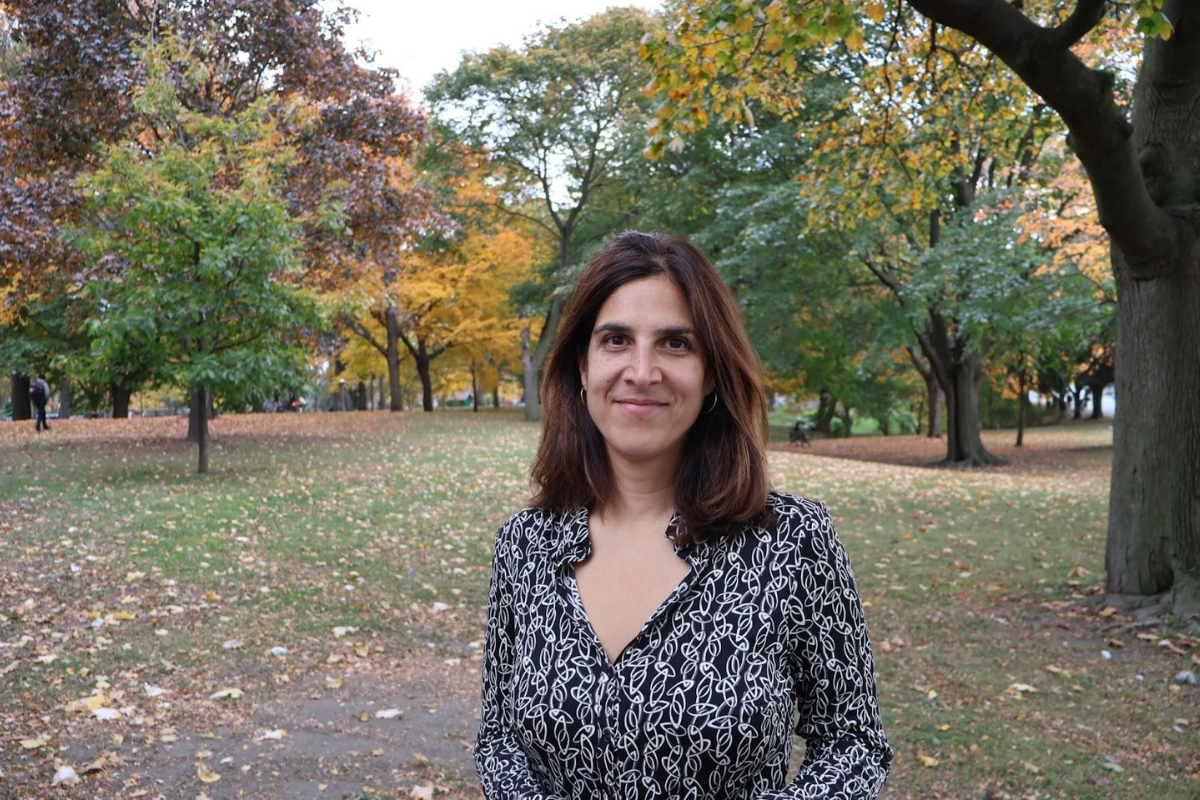
In early October, Saba Ahmad got some bad news: Another party outbid her organization’s attempt to purchase and permanently conserve a 65-acre property in southern Ontario near St. Catherines.
The loss disappointed the board chair and interim CEO of the Escarpment Biosphere Conservancy, one of Ontario’s largest conservation land trusts. The property was purchased by an individual buyer, placing it at greater risk for redevelopment in the future, Ahmad said.
Though all land is valuable, the property has particular significance — it’s in the strip of territory between Lake Ontario and Lake Erie, which monarch butterflies pass over when migrating to Mexico, she said.
“If it’s all paved, then you’re not going to have anywhere for them to stop.”
The land is also home to a mature deciduous forest — dense with oak, flowering dogwood and maples — and the site of a provincially significant wetland.
But for many years, the price of properties like this one in many parts of Ontario have been rising, said Ahmad, making them less affordable and pushing the conservancy to acquire less costly land in northern Ontario.
While these properties, too, have conservation value, they’re less at risk for development.
“You wonder: Are we really conserving it? Was it really going to be developed?” she said.
“You can only really conserve land when it’s at risk of development — and as soon as it’s at risk of development is too expensive.”
While not all parts of the province have seen rising prices in recent years, Daria Koscinski, executive director of the Thames Talbot Land Trust near London, Ont. said there’s substantial overlap between high prices and the province’s most “urgent and critical needs for protection.”
More development pressure means less space for plants and animals, she said. “So some of the most valuable lands we need to protect are going to be the most expensive to protect.”
When it comes to preservation of wild spaces, the federal government has the most capacity, working with Indigenous partners and provinces to preserve public land, said Chris Rider, national director of conservation for Canadian Parks and Wilderness Society. But conservation charities and land trusts play an important role, too, working with private landowners to acquire and protect ecologically sensitive tracts and create wildlife corridors, he said.
For most of Ontario’s 50-odd conservation charities and land trusts, donations of land are the primary acquisition strategy, not purchases.
In 1995, the federal government created the ecological gifts program, which offers a tax receipt for the total appraised value of environmentally sensitive land and eliminates capital gains tax on the transaction. Since then, it’s spurred the donation of more than 1,800 properties, protecting over 225,000 hectares of land, according to government data.
But while donations are crucial, land trust executives and board members say they are a more “reactive” approach than purchasing land. Several also say rising land prices in many parts of the province push more purchases out of reach — shifting acquisitions from the most important properties to the most affordable within budget.
Once you pave it over, it’s gone
Just west of Orillia lies the Oro Moraine, a 35,000-acre patch of ecologically significant land that collects, filters and stores water that replenishes local aquifers for the surrounding region.
In recent years, residents have raised concerns about the scale of new residential development on Oro Moraine land, which has capitalized on proximity to Horseshoe Resort, among other amenities.
The land is a conservation priority for the Couchiching Conservancy, the area’s local land trust. However, purchasing property there is now “out of the question,” said the organization’s executive director, Dorthea Hangaard.
“Our dollar doesn’t go nearly as far as it did 20 years ago.”
In more remote parts of the conservancy’s region, Hangaard said land prices have quadrupled in 20 years — from $500 per acre to $2,000 at the height of the pandemic.
This means the land trust has had to rely on donations of moraine land to protect it and instead focus their fundraising for proactive acquisitions on other parts of their region where land is cheaper.
The story is similar for the Thames Talbot Land Trust. While properties close to London were always too expensive for purchase, recent price increases have also put farmland conservation out of reach.
“Every time we consider a parcel that has any farmland, we’re a lot less likely to complete these projects because of the price,” said Koscinski.
“We’ve been around since 2000, and I don’t think we’ve ever seen prices rising this fast.”
Because of the value of home sales, residential developers will always be able to outbid farmers or conservation charities, she said.
But while development is important, there are repercussions for agriculture.
“It’s very hard to return land back to food production or natural heritage once it’s been converted to industrial [uses] or housing,” said Koscinski.
Government programs help but require matching funds
To support conservation charities in acquiring more land through purchasing, the federal and Ontario governments have boosted support in recent years.
In June 2023, the Ontario government announced an additional $14 million for the Greenlands Conservation Partnership Program, which offers funding to conservation charities to purchase land — the announcement built upon the government’s $38 million investment in the program since 2020.
The federal government has also invested more than $440 million in supporting conservation organizations to purchase land through the Natural Heritage Conservation Program, among other initiatives.
While government grants are crucial in helping land trusts buy property, they often require matching private funds, some up to 150 per cent of the grant amount.
To acquire a million-dollar property in Haliburton, the Haliburton Highlands Land Trust would still have to raise $500,000, said founding board member Sheila Zeiman, a challenging prospect in a working-class community. (In Haliburton County, the 2020 median income in 2020 was $32,000 — $5,000 below the provincial average, according to county data.)
Rising prices are not all bad news
But though rising property prices have meant some land trusts have had to shift where they buy, some executives believe higher prices also increase donations.
When prices go up dramatically, property owners face a larger capital gains tax, making the charitable tax receipt from a gift of land more attractive, said Peter Hannah, former board chair of the Rideau Waterway Land Trust.
Between the Kingston and Ottawa corridor, where Hannah’s charity operates, the organization’s reduced capacity to purchase has been mostly “offset” by the increased number of donations, he said.
The Escarpment Biosphere Conservancy has also seen more land gifts in southern Ontario as donors have sought to promote conservation and minimize capital gains tax, said Ahmad.
So, too, is the Couchiching Conservancy seeing an increased number of gifts of land.
“While we are working harder to purchase smaller acreages, it’s also true that our supporters are feeling a strong sense of urgency,” said Hangaard. “Donors are increasingly generous, and private landowners who have been thinking of donating their land for years are realizing the time to act is now.”
But while the boost has been welcome, resource constraints mean after processing donations, many Ontario land trusts have little capacity left over for proactive purchases.
Resource constraints hamper conservation
In the past 20 years, eight of the ten properties acquired by the Prince Edward Hastings Land Trust have been donations, said board chair Stewart Murray.
While each property the charity receives is free, the land trust still has to raise funds to cover the property’s appraisal, legal costs and long-term stewardship — commonly budgeted at 20 per cent of the property’s appraised value. They must also coordinate the transaction’s moving parts, including liaising with the owner, lawyers and donors.
As an all-volunteer operation, those activities “keep us quite busy enough,” Murray said. “We will do purchasing, but it’s a challenge to find money to purchase.”
Murray’s charity is not alone in facing these constraints.
Existing government programs mainly provide dollars for projects, not human resources, said Koscinski and donors, too, are often more inclined to give to support specific land acquisitions, according to Ahmad.
As a result of these and other barriers, more than a dozen of the province’s charitable land trusts had no full-time staff in 2021, according to a Future of Good analysis of Canada Revenue Agency data, and even some of the province’s largest conservation charities run lean.
Since their executive director left in March, Ahmad has been working unpaid as the interim CEO of the Escarpment Biosphere Conservancy — an organization with $36 million in assets.
Scrappy sector survives on a shoestring
Despite the challenges facing conservation charities, what the sector has managed to accomplish should not be ignored, said Alison Howson, executive director of the Ontario Land Trust Alliance, the province’s association of conservation land trusts.
In the last 20 years, these 50-odd organizations have engaged over 50,000 members, volunteers and donors to conserve over 900 properties covering over 100,000 acres, according to the OLTA.
“This is an essential community, grassroots effort, which is really making a difference,” she said.
Still, in the face of rising land prices and the increasing frequency of climate change-related natural weather events, Ahmad and others say there is a need for increased support from governments and private donors to ensure Ontario’s most sensitive land is protected.
“We’re the Lorax,” she said, referring to the famous Dr. Seuss story. “We benefit everyone, even if you’ve never hiked on a trail.”
Tell us this made you smarter | Contact us | Report error