What does 2024 hold for technology and data in the non-profit sector?
What we’ve learned about how change-makers are using technology to innovate and improve service delivery.
Why It Matters
In a time of fast-moving technological changes and increased policymaking driven by data, non-profits need to know where to invest their resources – whether in new technology or professional development.

Ethical collection of data and the decolonization of data-sharing practices are trends Future of Good will be watching in 2024. (Canva/Supplied)
In late 2022, I came on board as Future of Good’s first editorial fellow dedicated to digital transformation in the sector. I had initially assumed that in this role, I would cover how the non-profit and philanthropic sectors have used technology and data in their service provision. While that has been a large part of the coverage in the past year, non-profits’ challenges and opportunities in the technology and data space are multifold.
Non-profits are adopting technology much faster than before, be it generative AI tools to increase efficiency or GIS mapping software that gives them a more location-specific view of an issue.
Alongside that, they’re dealing with peripheral issues around technology and the technology sector itself: they have to watch out for regulatory changes, new frameworks on the responsible use of specific technologies, and ongoing conversations about the ethics of embedding technology and data into service provision.
Simultaneously, we still see that non-profits are struggling to find and justify the funding for technology, cybersecurity and other infrastructural costs required to sustain the organization in the long term but aren’t immediately linked to a particular project or programme. The impact of these pieces of infrastructure also isn’t directly quantifiable and measurable, which can make them a hard sell to funders.
In 2024, we predict that non-profits will become a more confident voice in the broader and ongoing discussions around technology and data. In doing so, the non-profit sector is more likely to sit at the table in regulatory discussions and participate more actively in developing mutually beneficial partnerships with the technology sector. Here are four trends to watch as we begin the new year.
-
Non-profits will start to get more creative and smarter about generative AI
It’s hard to believe that ChatGPT has only recently celebrated its first birthday as a public platform. Since then, generative AI has been the talk of the town at many events I have attended this year, from government technology conference FWD50 to the Annual Data Summit hosted by the Charity Insights Canada Project at Carleton University. Foundation Magazine also hosted the first Canadian AI in Philanthropy Conference in Toronto.
In our first article on how the non-profit sector uses ChatGPT, we mainly found that leaders and staff were using it to speed up internal processes that needed vast amounts of writing, editing and research. That included writing emails, marketing content, social media copy, grant applications and job descriptions.
Since then, some non-profits have delved into more innovative platform uses, including developing and correcting code, generating images, and analyzing data. In many conversations, non-profits also ask critical questions about data ethics and bias in generative AI and how they can mitigate these issues.
It’s clear that there is curiosity in the sector about this technology but a lot of risk aversion and fear of “getting it wrong.” Where federal regulation lags, non-profits are stepping up and creating frameworks, policies and guardrails around generative AI. One great example is Furniture Bank’s Responsible AI Manifesto, released in May this year.
-
Non-profits will have more peripheral conversations about data collection and research ethics.
Data is everywhere: the bedrock of generative AI is data; data and evidence are increasingly driving policymaking, and organizations in the social purpose sector are increasingly sharing data between them to fill critical information gaps.
Grassroots groups are also developing projects that rely on crowdsourced data to get a real-time view of a particular issue. For example, we reported on This Should Be Housing, which allows Halifax residents to mark vacant buildings on a digital map and highlight that they could be redeveloped into homes. More recently, the Rental Registry has asked Ontario and Quebec residents to add data about the rent they pay into an online database, which they plan to analyze.
While the sector is maturing in its use of data to gather information, over the next year, we’ll also see valuable conversations about the limitations of traditional data collection methods. Vancouver Foundation ran an internal survey to understand equity and wellbeing among staff members better and took several steps to ensure the survey was as accessible as possible: the team made it clear why specific questions were asked; respondents were encouraged to give open-ended answers rather than choose between predetermined checkboxes; and the Foundation made sure to share results with staff.
At this year’s Black Leadership Summit, we hosted a critical conversation about anti-racist research and community engagement. Panelists Hildah Juma, Patrick Makokoro and Rudayna Bahubeshi spoke about how research and data collection have historically been extracted from Black communities without their consent and how to recentre research questions and methodologies away from a predetermined hypothesis.
-
Indigenous data sovereignty will become mainstream, allowing communities to hold organizations to account.
One of our most well-read pieces this year featured Animikii, an Indigenous technology company. They recently launched a new technology product to allow Indigenous communities and organizations to create, own and manage their data and released an e-book called #DataBack. Animikii impact strategist Jeff Doctor said he wants to get Indigenous communities excited about data: he encourages them to consider what data sovereignty has to do with “having clean drinking water? Have a safe and cozy place to live? Having healthy food, sacred medicines, loving relationships?”
While Indigenous communities know that their data is being exploited for commercial gain, they don’t necessarily know what they can do with that data, Doctor said. A tangible example of Indigenous communities using data for their benefit came from the Indigenous Mapping Collective, which told Future of Good about using data and GIS mapping to identify environmental risks, burn severity and flood risks on their land.
More recently, the launch of the Pehta Foundation and the Indigenous Community Benefit Disclosure Framework have also signified that data and metrics can be applied to impact measurement in First Nations communities. The Framework, developed in partnership with First Nations on Treaty 6 Territory, measures several metrics that Indigenous communities have themselves specified are important to their progress and development.
Next year, we’ll look to see the outcome of some of these measurement frameworks and whether organizations are fulfilling their pledges to Indigenous communities.
-
Non-profits will be able to understand their cybersecurity needs better and bargain with technology vendors.
For many reasons, non-profits are particularly susceptible to cyber-attacks and data breaches. Not only are they receiving low-cost or donated technology that often no longer receives security patches, but the shift to remote working has also meant staff access files on shared computers or mobile devices.
For non-profits, cybersecurity is both crucial and challenging to implement. On the one hand, organizations often handle clients’ sensitive personal information and donors’ financial information. On the other hand, there is little funding available for operational costs like cybersecurity training and software.
Organizations are increasingly carrying out internal cybersecurity audits: for instance, the Islamic Family & Social Services Association built a cybersecurity policy in partnership with its frontline social workers, which removed the need for overly technical implementations or policies and gave staff simple responsibilities on how they could contribute to a secure workplace.
Going forward, I believe more organizations will be able to understand their strengths, weaknesses and needs when it comes to cybersecurity. As a result, non-profits will be able to better negotiate with technology vendors and insurance providers. They’ll also be able to advocate for funders to make capital available for operating costs like cybersecurity, which aren’t tied to specific projects but are still critical to the overall effectiveness of an organization.
Your job. Your mission. Your news.
With your support, the sector you're building gets the journalism it deserves, and you get a tax receipt.

Author

Related Articles
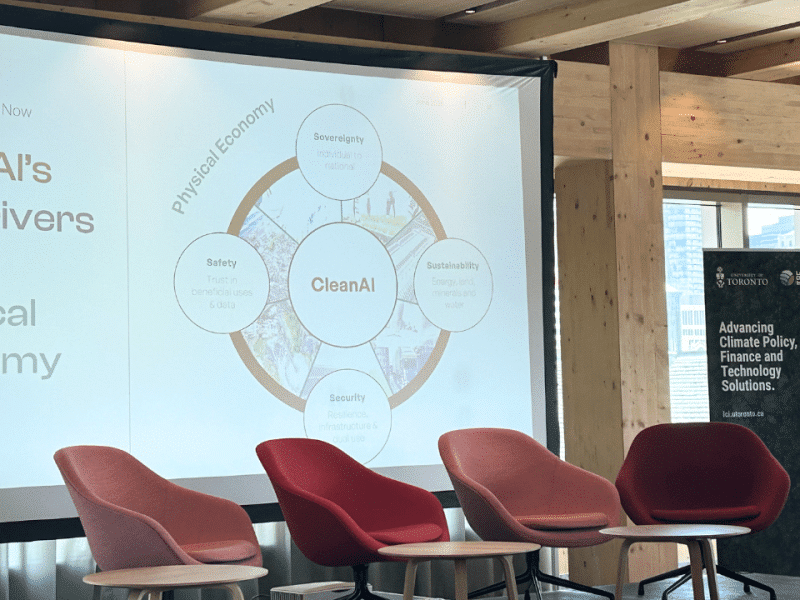
Quarter of all Canadian AI ventures could be categorized as ‘clean AI’: new research
At Toronto Climate Week, the global CleanAI Initiative shared research on the Canadian ecosystem, finding growing investment hubs in Vancouver, the GTA, and Kitchener-Waterloo.

Partnered Partnered content Non-profits are increasingly being targeted for cybercrime. Here’s how your organization can help protect itself
Being cybersecure doesn’t have to be daunting or expensive. A panel of experts discuss ways the non-profit and charitable sector can help protect itself in a constantly changing AI landscape.

Canadian astronaut, entrepreneur donates $15M to Concordia to launch new space school
Montreal’s Concordia University will be the home of the Mark Pathy Space Institute.
