Beyond tokenism: Here’s how non-profits can take action to honour truth and reconciliation
Why It Matters
Truth and Reconciliation Day is Sept. 30, and this year marks the 10-year anniversary of the publication of the recommendations of the Truth and Reconciliation report. Most of the actions recommended in the report have yet to be realized.
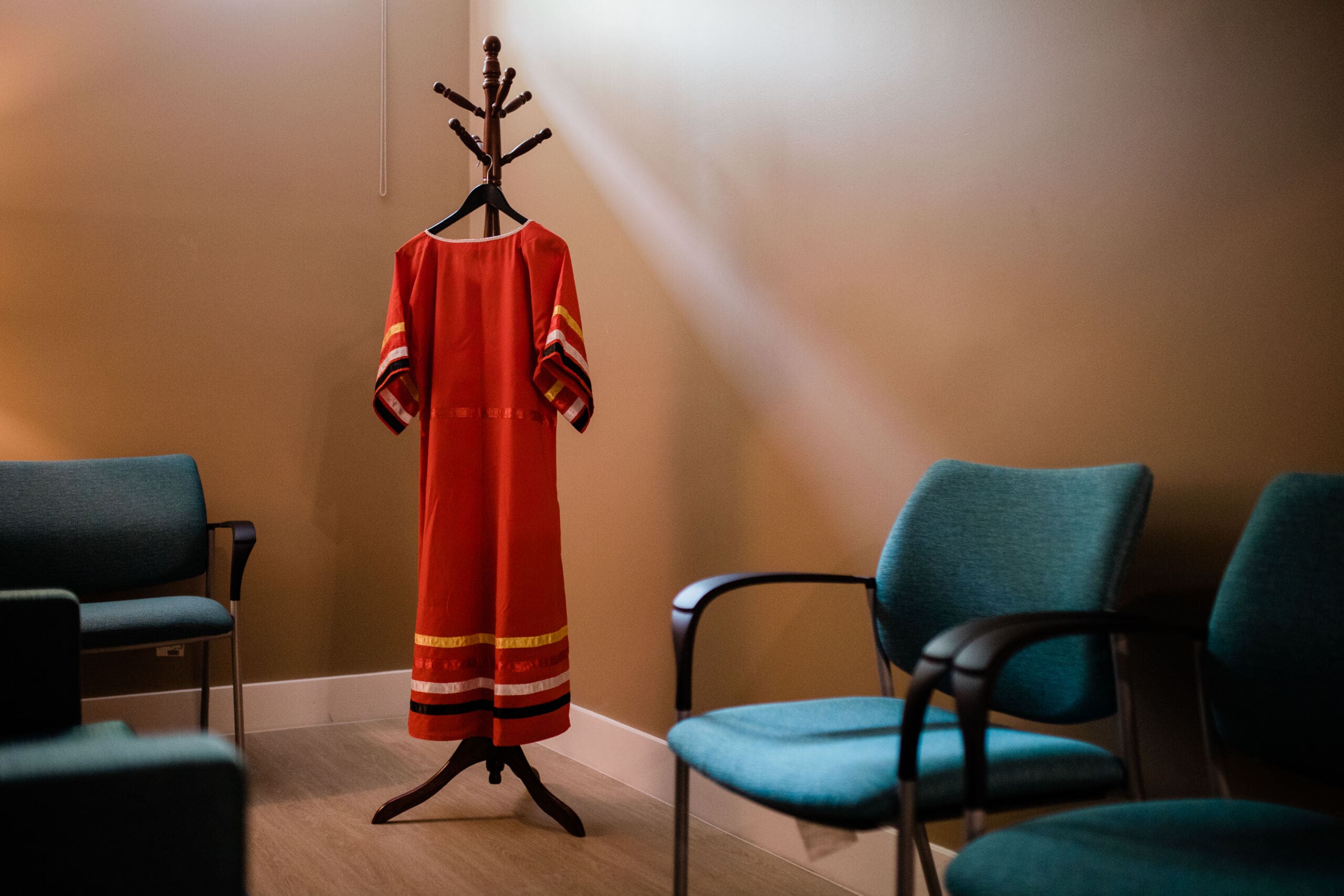
At Union Gospel Mission in Vancouver, every event begins with a land acknowledgement.
It’s an important tradition the non-profit incorporated years ago, but for Nicole Mucci, it was clear that simply reading a scripted statement didn’t go far enough.
“Reconciliation is not a singular practice, it’s not a one-off. Land acknowledgments in particular are really not meant to be a platitude,” said Mucci, the manager of media relations and communications at Union Gospel Mission (UGM).
UGM provides services to those struggling with homelessness and addiction, particularly in the city’s downtown Eastside.
The organization now encourages staff to create their own personalized land acknowledgment.
“Doing the work to understand what land you’re on, perhaps learning about some of the history of the land, what your impact is, and truly coming into it with a fresh perspective and sharing that really from the heart,” said Mucci.
The approach inspires deeper reflection, authenticity, and a more meaningful connection to reconciliation, Mucci said.
The number of people who self-identified as Indigenous and experiencing homelessness in Metro-Vancouver more than doubled from 515 in 2005 to 1,068 in the most recent homeless count.
That represented about 34 per cent of the unhoused population in Metro-Vancouver.
The number underscores the need to approach their work through an Indigenous lens, Mucci said.
“We really work diligently to have a very trauma-informed lens when it comes to developing our programming and then of course, the need to have equitable practices built within our programming.”
Indigenous teachings and cultural practices are woven into staff development and community programming.
“I think Indigenous teachings and experiences are an important part of how we support staff and they’re also an important part of our recovery and community programming,” said Mucci.
“Which means that our staff have to understand them in order to be able to support the programming itself.”
UGM’s Indigenous Relations and Cultural Safety Team, led by an on-staff Elder, creates space for local Elders to speak at staff sessions, lead territorial welcomes and prayers at gatherings, and guide weekly reflection circles focused on reconciliation.
It also employs Indigenous peer support workers and an Indigenous doula as part of its Women and Families Team, to make sure spiritual and cultural practices are integrated into care.
Workplaces rooted in reconciliation
Moving beyond land acknowledgements and into meaningful action for Indigenous communities is a key focus for Indigenous Works, which supports non-profits and businesses in creating meaningful change.
“The vision and purpose of our organization is to create space for Indigenous inclusion in the workforce,” said Kathleen Sawdo, director of Indigenous Works.
“To be that bridge to help Indigenous folks find sustainable and really good employment and also be that partner with non-Indigenous companies, organizations to find Indigenous talent to realize inclusion is important for everyone.”
Indigenous Works uses a partnership model to observe organizations’ Indigenous engagement and create strategies to promote inclusion.
For organizations just beginning this journey, Sawdo recommends starting with a reconciliation action plan.
“What can you do looking at a phased approach? Short, medium and long term. What’s the long term goal? And how can you get there to make sure your plan is sustainable and remains alive?”
Indigenous Works is collaborating with several non-profits that have secured funding specifically to develop reconciliation plans.
“I know, especially in the non-profit world, it’s a tough go. Funding may be limited,” she said.
For those who don’t have the resources, she suggests starting with small, manageable steps.
Sawdo recommends organizations conduct policy reviews, such as their training programs, to ensure they align with reconciliation, and long-term planning.
Change begins with children
The Truth and Reconciliation Commission’s Calls to Action 62 to 65 focus on education.
It calls on governments and institutions to integrate Indigenous knowledge and perspectives into school curriculum and improve teacher training.
This call drives the work of Winnipeg’s Community Education Development Association (CEDA).
The non-profit focuses on supporting Indigenous youth through culturally responsive education and mentorship.
“Non-profits are almost like the white blood cells of the body,” said Jordan Bighorn, executive director of CEDA.
It’s up to non-profits to fill systemic gaps like healthcare, justice, and housing with more personal, human-centred care, he added, noting systemic change toward reconciliation often begins with the next generation, and that means working with youth and students.
“Integrating that work through an Indigenous lens isn’t just about serving Indigenous clients better, it’s also about reshaping how non-profits think, hire, and operate,” said Bighorn.
Nearly one in four youth in Manitoba identify as Indigenous, according to Statistics Canada.
CEDA supports about 330 students between grades 8 and 12 to help ensure they graduate.
“When you engage in environments and communities of social economic challenge where instability, insecurity, disruption is just so commonplace that it becomes an expectation in a young person’s life and in a family’s life that there’ll be some impact to never mind in your own life, but multi-generational progress,” said Bighorn.
He acknowledged the concern about tokenism and “checking the box,” noting that historically, some efforts like land acknowledgements have fallen into that pattern.
But he believes there have been improvements.
“When a non-profit or a group who are historically non-Indigenous say, ‘Okay, we want to advance in what we understand to be reconciliation and we’re going to put on an orange shirt and we’re going to go out to the march on Tuesday. It’s a mindset of we are going to change.
“This experience is going to change us. And if we’re willing to accept that, that’s the checkbox we’re marking. Not so much we have a land-off acknowledgement now, and now we have orange shirts. It’s that we’ve … consciously or subconsciously accepted to change..”
Tell us this made you smarter | Contact us | Report error