How West Bank Palestinians navigate Israeli checkpoints through Telegram
Why It Matters
Grassroots digital innovation is transforming daily survival in one of the world’s most restricted regions. Ordinary Palestinians—drivers, journalists, and tech-savvy citizens—are using Telegram to reclaim mobility, dignity, and community in the face of systemic barriers - a prime example of the intersection of technology, resilience, and social impact.

By Aseel Mafarjeh – Ramallah, West Bank July 15, 2025
It was still dark when Fathi Budair reached for his phone, his eyes barely open. No alarm clock needed – this was routine, and part of that morning ritual meant that the 30-year-old driver from Far’un village, West Bank, had learned to check his Telegram groups first thing every morning.
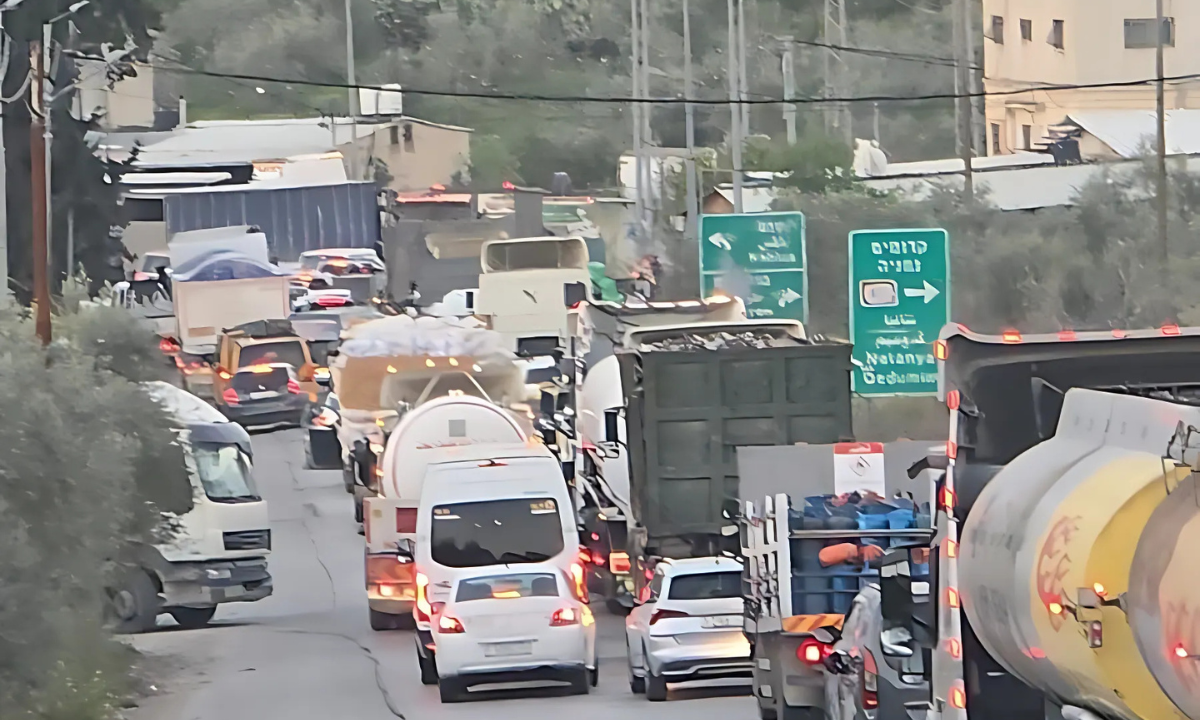
Years of driving the Tulkarm-Ramallah route had taught him that the difference between a smooth trip and hours stranded at a checkpoint often came down to knowing which groups had the most reliable updates.
He had discovered the Ahwal al-Toroq – “conditions of the road” – group on Telegram five years earlier. At the time, repeated Israeli incursions were causing increased road closures around Nablus, and neighboring Tulkarm governorate was suffering the same disruptions.
“No less than 99 percent of drivers have the Telegram app. The one percent who don’t have it are elderly drivers, and they’re prepared to stay at a checkpoint for four or five hours,” he tells Future of Good.
Across the West Bank’s 5,800 square kilometers, more than 898 barriers and obstacles now control Palestinian movement between cities that were once just 20 minutes apart by car. Since Oct. 7, 2023, these restrictions have intensified, transforming routine journeys into multi-hour ordeals and severing the economic lifelines for millions of Palestinians. 18 iron gates have been erected since the beginning of 2025, while 146 iron gates were installed after October 7, 2023, according to the Anti-Wall and Settlement Commission, which documents violations related to the occupation and their impact on Palestinian citizens’ lives.
In response, Palestinians have turned to Telegram as their primary tool for navigating this maze of checkpoints, creating digital communities that have become essential for daily survival.
Unlikely heroes
The story of how Telegram became Palestine’s unofficial traffic management system begins with Anas Hatab, a telecommunications engineer and journalist at Al-Ayyam newspaper in Nablus. The then 29-year-old regularly navigated the narrow roads between Tulkarm and Jericho, often spending hours figuring out which checkpoints were open, which routes were blocked, and how to avoid the sudden closures that could strand drivers for the entire day.
What began as a small initiative to help neighbours soon grew into something much larger. The group, titled Ahwal al-Toroq, was the first of its kind, and today, it boasts over 300,000 subscribers, representing roughly 12 percent of the West Bank’s entire population.
“I never expected the group to grow this large, which shows people’s urgent need for a reliable source that provides accurate information about road conditions,” Hatab reflects. “This responsibility became part of my life, where I provide a service that benefits the people of my homeland.”
As the group grew, he realized he could not manage it alone. He recruited ten moderators from different governorates, each responsible for documenting road conditions in their area. These supervisors traveled between cities, sharing videos and photos to keep the group updated in real time.
But maintaining this level of service came at a steep personal cost. Hatab suffered severe knee and back pain from constant driving, while the financial burden weighed heavily on all the moderators. He felt the number of supervisors was insufficient and that the operation needed better management and modern techniques to keep up with demand. Eventually, some relief came as ordinary users began helping by sending their own evidence about road conditions, which eased the financial burden on the admins.
Despite seeking support from government institutions, Hatab says he received “little help.”
“I didn’t get what I needed,” he explains. “But the challenges only increased my determination to continue providing a service that benefits the people.”
Ibrahim Ahmed, a delivery driver from Hebron, founded another major group after the Gaza war when the number of checkpoints and gates between governorates increased dramatically. His group, “Road Conditions and West Bank and Jerusalem Checkpoints,” now has over 100,000 followers and employs 16 moderators across different governorates.
“The idea of establishing this group comes from the urgent need to facilitate news transmission between people, especially during times of crisis,” Ibrahim explains. “I realized that effective communication could help save time and reduce tension that might result from moving between checkpoints.”
What distinguishes his group is its requirement for evidence; every piece of information published must be accompanied by videos showing actual road and checkpoint conditions, ensuring information credibility and speed of delivery to members.
Recognition and broader impact
Jihad Yassin, a self-identified road conditions activist, has seen firsthand how crucial Telegram has become.
“There are many groups that many people subscribe to, but there are also a larger number of non-subscribers,” he says, as he sits at his small office in Ramallah, old newspapers scattered across his desk. “This is because the Israeli army sometimes confiscates citizens’ phones and opens Telegram to know what news they follow, and so some prefer to leave these groups to protect themselves.”
He adds that his work depends completely on information from drivers and people constantly on the roads. But the information he receives is not always accurate.
“People need information even if they do not know its source,” he explains, “but I try to make sure to verify accuracy before sharing it with my network.”
The Palestinian government has taken notice of these grassroots efforts. Mohammed Hamdan, Deputy Minister of Transportation, expressed appreciation for the work of Telegram groups.
“There is great dependence on some Telegram groups to help citizens. These platforms are considered an important link in providing information quickly and reliably,” he said.
Hamdan highlighted the importance of local media in these efforts, noting that the ministry also releases bulletins on local radio stations to disseminate road information and raise citizen awareness.
He also expressed particular trust in the “Road Conditions and Occupation Checkpoints” group, which he uses personally, praising the young people behind it for their dedication to serving their community, though he acknowledged that the ministry wished it could provide them with more support.
A lifeline for daily survival
For Palestinians like Lina Amro, a seasoned media professional who travels constantly between governorates, these Telegram groups have become indispensable.
“They are my window to the outside world, especially since I move constantly,” she tells Future of Good. “The first thing I do is check those groups to know the entrances and exits of the cities I visit.”
“Often the information is updated regularly, and there are groups that allow subscribers to ask questions about road conditions,” Amro adds. “This interaction allows me to be reassured, the information isn’t just data, but living experiences that people share.”
Conditions can shift “dramatically,” she explains, especially with the presence of checkpoints like the Container checkpoint, which significantly impacts movement in the region. But the economic cost was what hurt her the most.
“Transportation costs have doubled since Oct. 7,” she says. “What once cost 50 shekels now costs 100 shekels per trip.”
“As a result, I agreed with my manager to reduce my working days to three instead of five, in an attempt to relieve financial pressure,” Amro adds. Her parents had refused to let her rent accommodation in another governorate, even for work, unlike male colleagues who live in group housing to save on costs and long commutes.

This situation has affected drivers like Budair, who are now forced to take long and difficult alternative routes. The increased transportation costs of these long drives have led to a decline in passengers, as many people opt to rent accommodation near their workplaces rather than pay for costly daily commutes.
“The situation has become financially exhausting,” he explains. “Our movements cost more, we have fewer passengers, and our livelihoods are threatened.”
“But what can we do about it?” he asked. “At the end of the day, it’s my job. When a road is closed, I have to find another way…even if that route is difficult. In the end, my responsibility as a driver is to get people to their workplaces.”
By evening, after successfully delivering his passengers despite three unexpected checkpoint closures, he updates the Telegram group one final time.
“Tulkarm to Ramallah route clear. Stay safe, everyone.”
Tomorrow, he will wake before dawn and check the groups again.
This article is published in collaboration with Egab.
Tell us this made you smarter | Contact us | Report error