While it may have been a turbulent year for many working in social impact, our curated collection of esteemed leaders’ lessons offers inspiration heading into 2024.
A common theme in these tips quickly emerged: A renewed focus on empathy, trust and hope.
We anticipate this list will provide a thoughtful spark for your planning as you consider the year ahead.
Deep respect for local context
In navigating the complexities of 2023, the paramount leadership lesson I’ve embraced is the power of decisiveness, especially within the humanitarian and international development realm.
Leaders must act swiftly yet thoughtfully, merging diverse perspectives into actionable strategies.
At IDRF, we’ve seen that such clarity in decision-making, combined with a deep respect for local context, propels our mission forward and uplifts the communities we serve.
Empowering local leadership ensures our actions are prompt and resonate deeply, fostering sustainable progress.
This practice of localizing decisiveness, I’ve learned, isn’t just a strategy; it’s a cornerstone for impactful leadership that respects and elevates the communities we aim to serve.
Nabil Ali, Chief Operations Officer, International Development and Relief Foundation (IDRF).
Listen deeply with empathy
In a world that seemed to be dominated by greater polarization, anger, and incessant noise in 2023, I learned that the mere act of listening deeply — from a position of genuine curiosity and empathy has never been more critical.
Asking questions about the “Why” is a more powerful way to connect to our shared humanity than any proclamations we might make. While this is not a new insight, its power can only be realized in the doing, not the observing.
How can we claim to be changing systems that drive social injustice and inequality if we cannot start by changing ourselves? – by more asking and less telling!
Trust is at the core of any drive for change. Building connections that enable trust is the critical first step on any new journey.
It’s reciprocal — people need to trust you, your credibility, and your motivations so that you have their back.
But equally important is that you trust others to do their part — because, most times, they do, and it’s magic.
Andrea Barrack, Senior Vice President, Corporate Citizenship and ESG, Royal Bank of Canada.
Give the funders mandate and tools
Within the context of believing there is no such thing as a “social good” sector, rather a relentless optimism that anyone from any industry can pursue a social purpose mission in their way, the essential unlearning is that “funders” typically siloed to be grantors can be unique and innovative impact financiers if given the mandate, tools, and skills to do so (no CRA rule changes required).
Money is a resource that can/should be tailored accordingly to fuel impact models to best serve the communities we care about.
Invest in your team leaders closest to caring about the community with the diversity of financial tools society offers. Support them on the applied learning journey as they exercise such tools.
The result is people who are mandated to be accountable for the community’s outcomes can effectively connect with all of society to tackle the challenges and opportunities for these communities from many different angles.
Alhamdulillah (thank God), I have been blessed to have the most amazing impact directors on my team, who inspire me daily to do just that for the communities we care about.
My leadership lesson this year is ruthless prioritization.
I have found that, as a sector, we are here to tackle some of the biggest challenges our society faces, and we tend to want to get involved in all of them.
We can’t each be “Everything Everywhere All At Once.”
We need to focus and prioritize the things that will lift our organizations and our missions – whether it is doing fewer programs but doing them really well, investing in digital transformation, or better impact measurements and reporting.
Leaders need to be cautious of stretching their organizations too thin. It’s OK to say no.
As CEO of a Crown corporation responsible for supporting a vibrant and diverse arts sector, my biggest lesson this year has been the importance of meaningful engagement with our stakeholders.
As a leader, I need to be engaged in dialogue and willing to learn from the people on the ground while also explaining our context and priorities.
Only by really listening, connecting, and working together can we bring forward solutions that will respond to the needs and realities of the arts sector.
En tant que directrice d’une société d’État chargée de soutenir un secteur artistique dynamique et diversifié, ma plus grande leçon de cette année est l’importance des échanges significatifs avec nos parties prenantes.
Comme dirigeante, je dois m’engager dans le dialogue et de me montrer ouverte à apprendre des gens sur le terrain, tout en expliquant notre contexte et nos priorités.
C’est par l’écoute, l’établissement de liens et la collaboration véritable que nous arriverons à mettre en place des solutions qui répondent aux besoins et aux réalités du secteur des arts.
Michelle Chawla, Director and CEO, Canada Council for the Arts.
Co-opt leadership
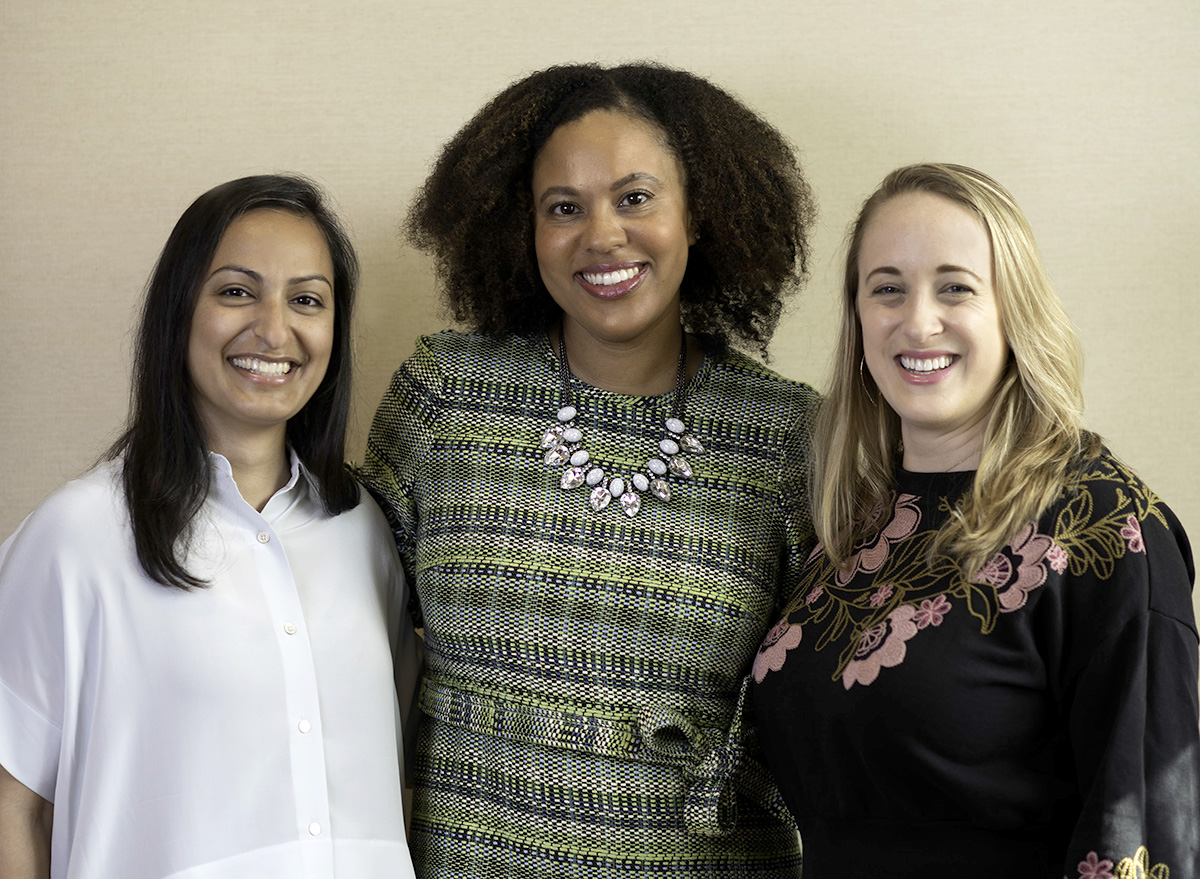
This year, Common Future shifted from a single CEO leadership model to a co-leadership structure with three co-CEOs collectively directing the organization’s vision, mission and strategy.
In the first six months of our tenure, we’ve had to navigate a few challenges impacting our sector, including a shifting and uncertain economic environment and ongoing and repeated attacks on programs and organizations that seek to address racial inequities alongside softening funder interest in racial justice.
Throughout this process, we were reaffirmed in our decision to lean into shared leadership.
The co-leadership structure enabled us to leverage diverse perspectives to bring creative solutions, exercise collective care to enable individual sustainability, and demonstrate how sharing power can lead to more intentional decision-making and greater accountability.
Realizing economic and racial justice is long-term work that needs to be sustained by building regenerative systems and structures.
Shared leadership will bring about sustainability and strength in our solutions to take us the distance needed for this work.
I took a 10-day course at Harvard Kennedy School on Global Leadership for the 21st century this year.
We unpacked a few definitions of leadership and what leadership looks like in various global scenarios. While I appreciated the tools gained and information provided through this program, ultimately, I learned that as a leader, the answers will never come from the outside in.
Many things inform my abilities as a leader. Still, success is how well I guide my team through unexpected or generally unwanted changes, ensuring voice and agency throughout the process and providing structure and clarity.
Jocelyn W. Formsma, Chief Executive Officer, National Association of Friendship Centres.
Bring joy and hope
The biggest leadership lesson I have learned this year — that I maybe should’ve known already — is that, in a world of compounding crises, with doom and gloom in the air, we need leaders who bring hope and joy into their work.
It’s easy and reasonable to feel deflated and defeated, but acquiescing to such feelings does our opposition’s work for them.
We’re trying to move mountains. Our work is hard. Change isn’t immediate. But by remembering the future we’re fighting for and reminding ourselves of the change our movements have already made, we can find the strength to keep going.
Given all the crazy spin and disinformation out there, it feels like authenticity as a leader is more critical and demanded than ever.
And so… if we are truly real, we have had to make space for grief – in how we meet, share and plan.
Given what we know about climate, nature, or the profound injustices and, therefore, all who are deeply suffering, we can’t only lead from a place of solutions or anger.
I’ve learned we need to transparently own that there is, sadly, much to mourn.
By doing that, we’re better at realizing our shared humanity. And frankly, isn’t that what this work is really all about?
The Disability Without Poverty journey has been filled with lessons for me every step of the way.
The biggest lesson for this year is to “take nothing for granted” and “keep believing parliamentarians and public servants want to do good for the nation.”
The Canada Disability Benefit Act passed Royal Assent in June. We thought we were finally heading to the light at the end of the tunnel. Politics threw us a sudden curveball, a cabinet shuffle.
We lost our champ at the table. Rather than celebrating a semifinal, we needed a new game plan to support the new Minister to continue to have a champion at the table.
We have to keep building relationships and trust with all players to empower Ottawa to co-create regulations, budget an adequate amount and fast-track the CDB to get support to the people with disabilities living in poverty quickly by constantly reminding them of our shared Canadian values.
Rabia Khedr, MA (she/her), National Director, Disability Without Poverty/Le handicap sans pauvreté.
Unlearning ‘certainties’
As corporate purpose leaders, the past few years have been all about finding our voices, picking our positions and making bold statements.
We’ve spoken out on human rights, social justice, racial equity, climate, and more. This year, all of that had to be unlearned.
With so many new and complex issues confronting us — whether it was the sudden explosion in AI and all of the ethical questions surrounding it or the deeply divisive Israel-Hamas war — it has become painfully clear that there are no hard truths or certainties.
This year has me questioning whether we really need more statements, more opinions or even more information.
I realized we need more listeners, observers and quiet yet committed changemakers.
In a world where everyone is making noise, the silent ones may just be the ones who are busy getting things done.
To make impactful and lasting change to a system, make sure that you and your team take the time to really understand the system or business sector you are trying to disrupt. That will add credibility and implement ability to your team’s ideas.
This past year has seen a lot of volatility and a near-constant stream of news regarding the macroeconomic climate.
Navigating this environment taught me an important lesson — that my role as CEO is to drive organizational focus.
As CEO, I have to cut out the noise, be less reactive and focus on what we can control. Every person, every team, and every department in the organization will have a different strategy and approach to solving challenges — my job is to ensure that we are aligned, prioritizing effectively, and rowing in the same direction.
This year’s volatility also taught me the importance of being practical and transparent about what is required for our long-term success, even when it’s uncomfortable.
Proactively elevating the team’s business acumen has helped people identify what is in their control and what is not, driving focus and reducing distraction.
As activists, we always dream of the big wins we can achieve for people and the planet – more justice, more peace, more equality.
But 2023 has been such a devastating year, with virulent pushback against women’s rights and conflict and climate disasters pushing so many people further into poverty.
If there is one thing this turbulent and heartbreaking year has taught me, it’s the humility to recognize that – at times – simply holding ground is an accomplishment worth celebrating.
We all want to race towards a better future, and treading water sure doesn’t feel great. But if you can still see the horizon, then there is cause for hope.
One particular lesson I learned this year is that when you work in the social purpose world, it is hard for people to tell you what they truly feel – and they often feel the need to blow smoke up your rear end.
It’s important to develop that radar and assess when you feel the need to push back and call people out on what they say and the actions they may or may not take.
Leading or being involved in a social purpose organization has meant that I often have to create situations of discomfort. Still, true leadership means we turn that discomfort into meaningful action and true allyship when it matters the most.
Tackling complex systemic issues requires bold vision and a focus on seeking long-term results, thinking big and long-term.
This year, I learned that thinking big is important, but implementation is the most important. It’s like running a marathon: registering for the race is the visioning or big idea, whereas the daily running training and running the race itself is the actual implementation.
Real work starts in implementing social purpose initiatives, so I remind myself this year to keep a steady pace, stay focused, not overdo yourself, and forget to laugh and have fun.
Eric St-Pierre, Executive Director / Directeur général, Trottier Family Foundation / Fondation familiale Trottier.
Rediscover sense of solidarity
This year’s most significant lessons are around more focused solidarity between communities and looking at what’s happening globally and internally within our communities.
We need to amplify each other’s voices and our needs. There’s still such a growing disparity between the haves and the have-nots. We’re starting to see an influx of this impact, especially with a potential new wave of government that will challenge the work being done on the ground and the Liberal government’s commitments to the Truth and Reconciliation Commission calls for action.
My most prominent teaching is to listen to the grassroots movement and how we can start dismantling any gatekeeping of the distribution of funds so the non-profit sector can flourish.
We’ll also have to step in when we see the distribution of federal funding being displaced into other areas that haven’t been highlighted by the government.
Hillory Tenute, former executive director, Indigenous Youth Roots.
John is the managing editor at Future of Good. He brings more than 30 years of experience in communications, including stints as the digital editor at the Winnipeg Free Press, Edmonton Journal and Fintech Nexus. He was also the CEO of two digital news startups. He graduated with honours from the Creative Communications program at Red River Polytech in Winnipeg.