Dispatch from Ivory Coast: Chocolate and child labour
Good morning from West Africa.
If you read my last dispatch, you’d know I was heading to Ivory Coast after spending two weeks in Senegal. I am currently in Kumasi, Ghana. But before I tell you about my trip to Ghana, I want to share some impressions from Ivory Coast.
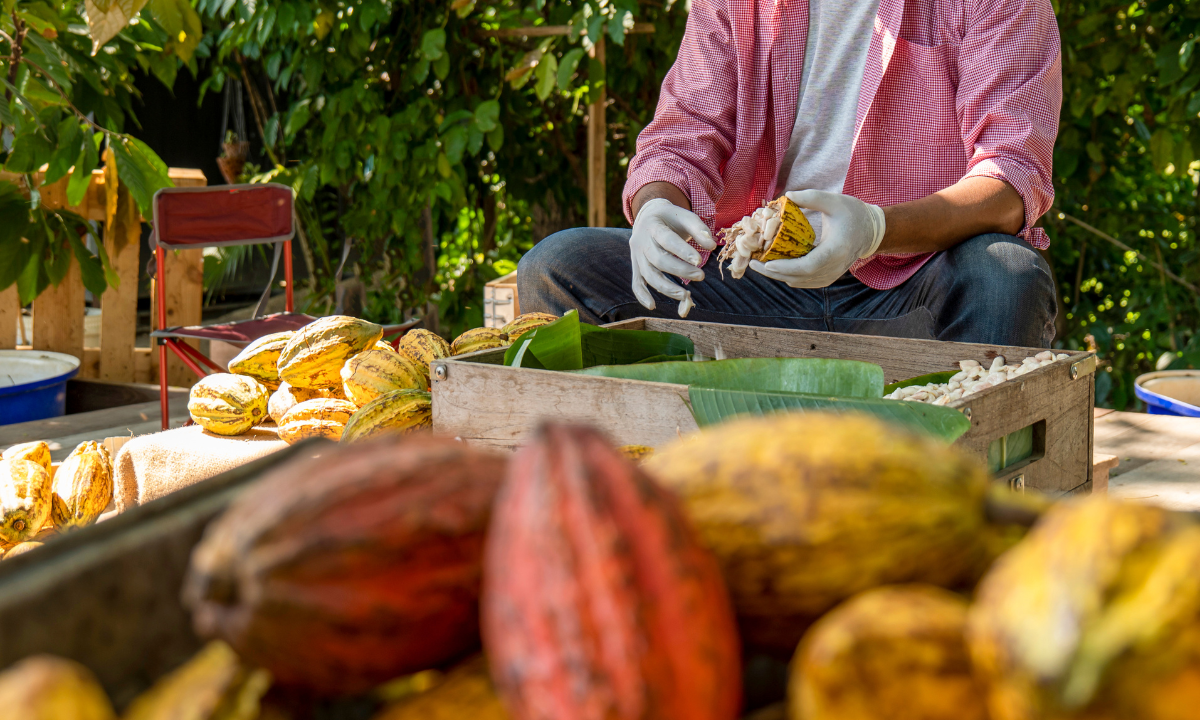
I spent a week in and around Daloa and Soubré, visiting remote villages to learn about child labour in the cocoa sector and efforts to combat the worst forms of it. Ivory Coast is the biggest exporter of cacao in the world, so if you have ever had chocolate, there’s a strong chance it was made from Ivorian cacao.
There’s also a strong chance the cacao was produced using child labour, as children’s work is central to cacao production in the country.
There are two reasons for this. First, parents see involving children in farm work as initiating their kids in an activity central to household income. The family’s wellbeing is in taking care of the land, and there are no trade schools where children can get trained later in life.
Teaching children how to farm is a form of knowledge transfer and passing on of inheritance.
The second is poverty—the cause not of child labour itself, but of its worst forms. Initiating children into farm work does not translate to child exploitation and harm. Children can observe their parents tending to cocoa trees while helping them with unharmful tasks such as cleaning, gathering, and keeping farm animals from the harvest.
However, extreme poverty pushes children into dangerous work.
Ivorian cocoa producers produce 40 per cent of the country’s GDP and are the backbone of the $119 billion international chocolate industry, yet live in destitute conditions.
Most parents don’t have the resources to manage farms without making children do harmful work. Children are free labour; you need money to replace free work with the paid work of adults.Failing that, parents rely on children to undertake tasks such as clearing land with chemicals, maintaining crops with pesticides, lifting heavy bags, and cutting cacao pods with machetes. These activities are harmful and increase children’s labour hours, depriving them of school time.
The solution to the worst forms of child labour is to increase household income so farmers can hire adults to do adult work. This is a matter not of charity but of political economy and equitable profit-sharing.
Development initiatives can only go so far when African countries like the Ivory Coast are continuously reduced to providing cheap raw materials for European and North American corporations.The solution to poverty in Ivory Coast is not so much in creative development interventions in the country, but in the capitals of Belgium and Switzerland, where the major chocolate companies are based.
More conventional solutions, like paying more taxes, higher wages and fairer prices for cacao, would be more impactful.
Tell us this made you smarter | Contact us | Report error