Bread, Calgary’s emergency food search platform, rolls out nationally
Why It Matters
A partnership between two Canadian social impact technology platforms has the potential to exponentially increase the amount of data collected about emergency food needs and provisions, offering a blueprint for data-informed service delivery, dignity-first design, and national impact.
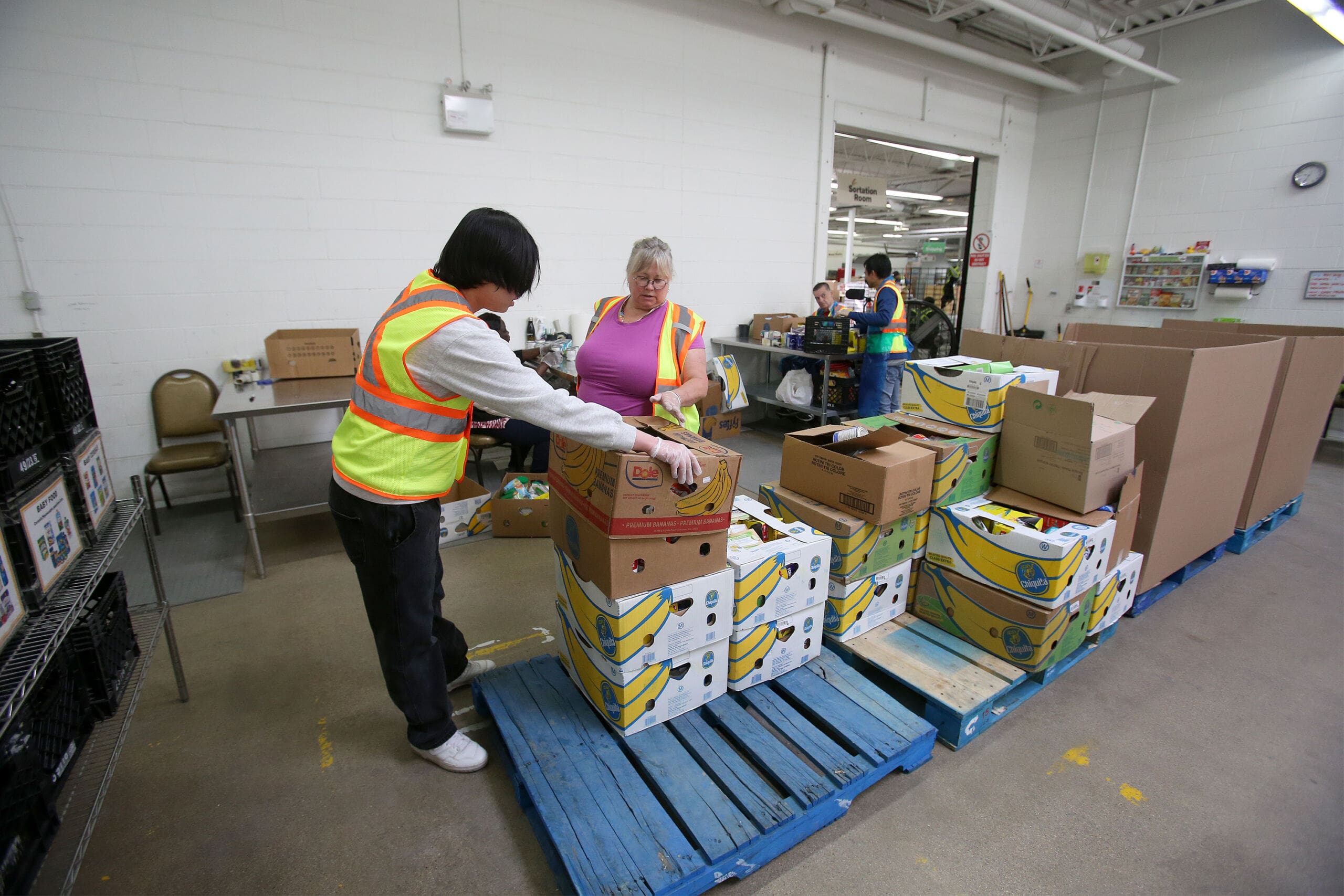
A Calgary-based platform that helps people find food in an emergency is going national.
Bread was first conceptualized by Vibrant Communities Calgary and Technology Helps. The teams have since conducted two years of on-the-ground research with organizations providing food assistance or access to low-cost food in the city.
They consulted with food banks, other meal service providers, and informal, volunteer-led services, such as those running out of places of worship and community associations.
@futureofgood There’s a new way to find emergency food in Canada. #nonprofitsoftiktok #foodbanks #nonprofits #groceries ♬ original sound – Future of Good
Now, with the help of data from 211 and a platform called CORDS (Contextual Opportunities and Resources Distribution System), Bread can map food provision services all over the country.
The data that will emerge from how users find food on Bread could also inform a national food policy agenda, said Charles Buchanan, founder and CEO of Technology Helps.
“[Data from Bread] helps overall needs identification across the system,” Buchanan said. “Who do we share that with? We are still at the table with the YYC Food Collaborative [in Calgary], but now there is a need for us to be at national tables.”
Data verification as a community process
The idea of Bread was born at the end of 2022, when Vibrant Communities’ then-Executive Director, Meaghon Reid, spotted a massive increase in the number of emergency food providers dotted around Calgary.
At the time, she noted that many did not have an internet presence or a website, and several still relied on paper-based and other manual methods to track their inventory and clients.
For Buchanan, it was of utmost importance that the Bread site’s design and user interface be “designed for dignity”: in other words, there would be no intrusive or unnecessary data collection about individuals, and the platform would have to be easy to navigate.
An extensive consultation period with these emergency food providers followed to capture vital information: their full suite of services, contact details, eligibility requirements, any fees or application processes for clients, and wait periods.
The Bread team also collected information about the diets that each food provider catered to, whether it was transit—or car-accessible, and whether it was a free or paid-for service.
“It was a painstaking process, almost going door-to-door to confirm that these agencies are real, that they have food, and what kind of food they have,” Buchanan said, who envisions a team of volunteers to carry out a regular data collection and verification exercise to keep Bread up-to-date.
Nationalizing a local platform
It would have been impossible to scale nationally using the method the team used in Calgary, Buchanan said.
While going national was always an ambition for Bread – even when it was just a concept a couple of years ago – they simply couldn’t verify and augment data about every emergency food provider in the country beyond the basic information they already had.
With the help of 211 data housed on CORDS, users from anywhere in Canada can now access basic information about food services in any location.
211’s database does not contain some of the more refined information that Technology Helps collected about Calgary’s emergency food providers, such as the diets they can serve and transit accessibility. Buchanan still envisions having a nationwide team of data collectors and validators to continue refining the data.
Funded by the Government of Canada’s Youth Employment and Skills (YESS) program, CORDS aggregates data from various national social service providers. It uses natural language processing to direct users towards relevant and adjacent services.
Alongside 211, data partners include Mentor Canada, Magnet, Prosper Canada and Volunteer Canada.
Each data partner commits to providing relevant, timely and valid data about their particular areas of expertise to then flow into CORDS, be those mentoring opportunities, assistance programs, or employment, said Adrian Kaats, a partner at KRAK Consultants.
Three of the data partners also form the CORDS Consortium and are responsible for the platform’s ongoing finance and governance.
CORDS can also be integrated into existing websites through a prototyped WordPress API. If a user cannot find a service that is relevant to their needs on one organization’s website, the API can direct the user to other, similar services in their area: what CORDS refers to as the “no wrong door” approach.
Disclaimer: Charles Buchanan is one of the board of directors at Future of Good.
Tell us this made you smarter | Contact us | Report error