
How an art installation changed the mental models of addiction
Why It Matters
Governments of all levels have struggled to address the high rates of opioid misuse and addiction and the startling number of opioid-related deaths in Canada. There are innovative approaches gaining traction that could hold the key to making advancements in communities.
Over the past three years, governments of all levels have struggled to address the high rates of opioid misuse and addiction and the startling number of opioid-related deaths across Canada. In 2018, 4,460 apparent opioid-related deaths were reported — 775 of which occurred in Alberta alone.
Since 2013, Strathcona County in Alberta has seen a 166% increase in the number of drug-related emergency room visits – 80% of these visits were attributed to opioid use.
We wanted to address this issue in a new way. We convened a Community Drug Strategy Committee to act, with a membership drawn from 16 community partners, including Alberta Health Services, our local primary care network, law enforcement staff from the RCMP, and grassroots addictions and community organizations.
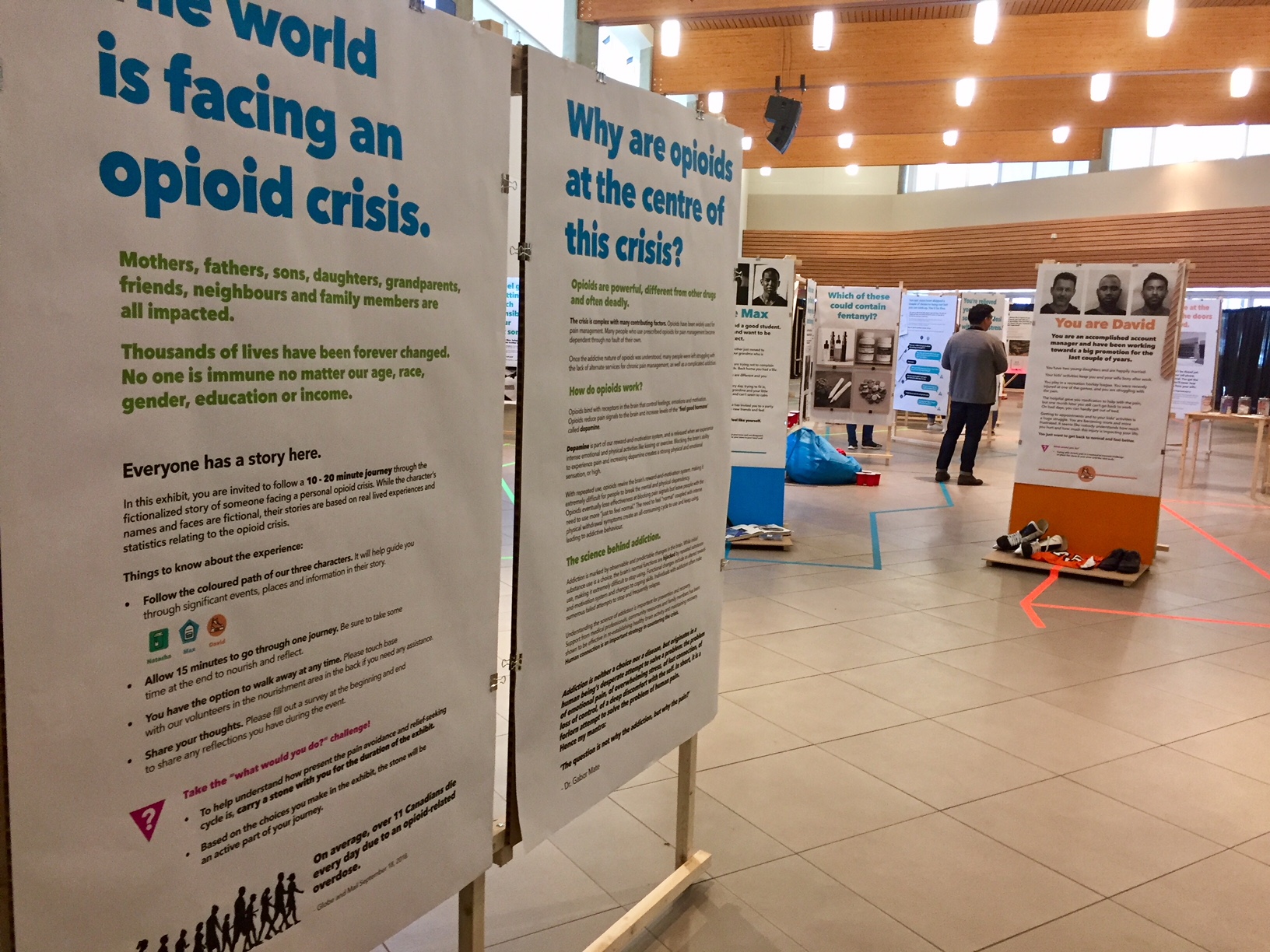
We aimed to do something beyond traditional awareness-building information campaigns. We wanted to take a very different look at the crisis going on in our community and around the country. And so we harnessed the power of story to build empathy and begin conversations in our community about opioid use.
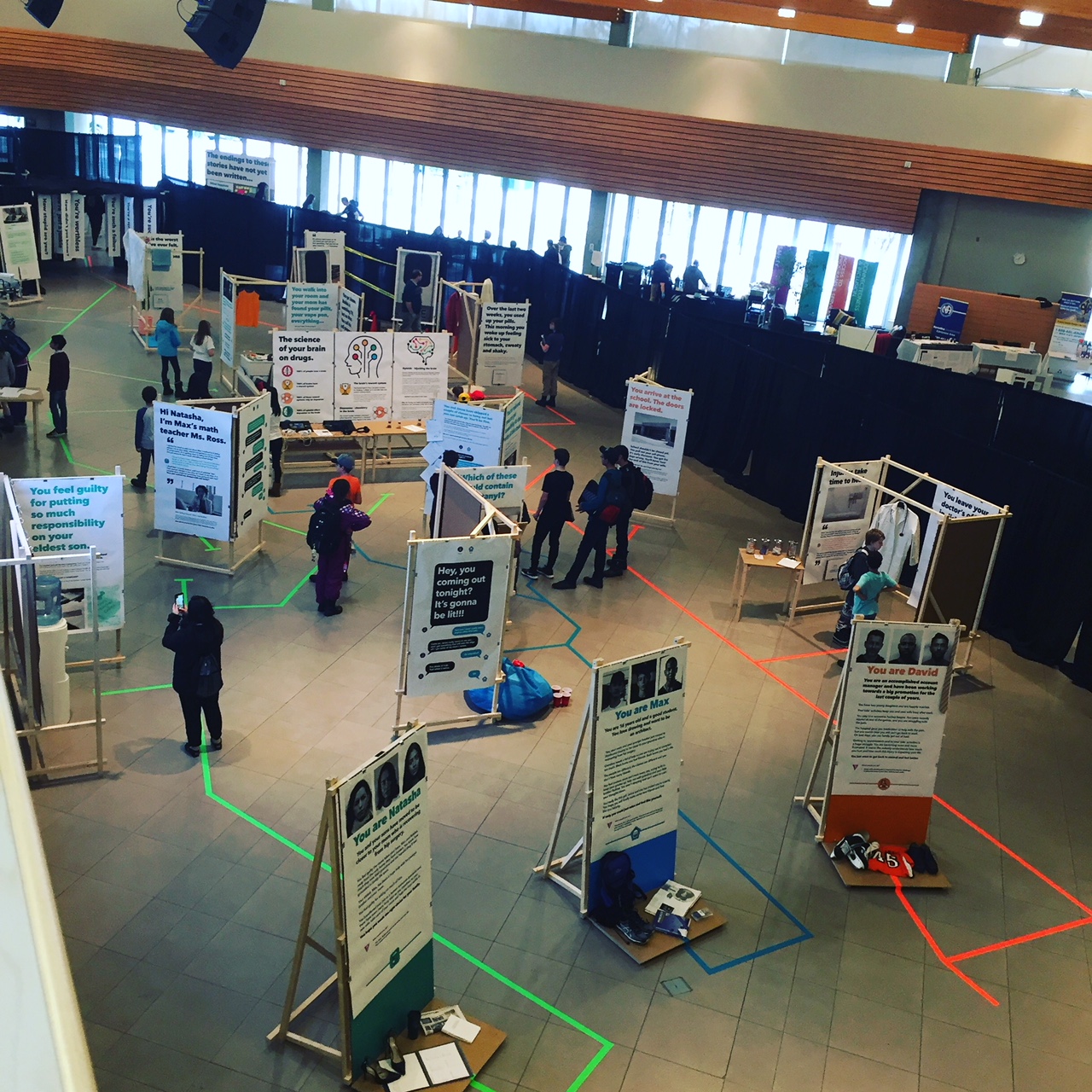
Opioids Don’t Discriminate: An Interactive Experience (ODD) welcomed approximately 1,200 visitors in its two viewings in November 2018 and from April 30 to May 3, 2019. The art installation profiled local statistics, opioid information and local support organizations, such as Hope in Strathcona and Moms Stop the Harm, while immersing participants in an interactive journey through the stories of three fictionalized characters: Natasha, David and Max. As they went through the exhibition, participants learned about the science of addiction, the impact of opioids and how the crisis is affecting people locally, provincially and nationally. In the interactive art installation, visitors walked the paths, the real storylines, of each of our characters.
David, Max, and Natasha were created based on the real-life experiences of people who have been negatively impacted by opioid use. When people entered the exhibit, they chose a character and walked through their journey. There was information to read, listen to and physically touch to better understand what each character was thinking and feeling.
Breaking down stigma for those living in the opioid crisis is about humanizing the experience of those living in the crisis. The tricky thing about attempts to build empathy is that they often involve wading into uncomfortable waters. Empathy grows from getting close to somebody — understanding and humanizing their experiences — and it comes from facing the skeletons living in closets … both others’ and our own.
Why we built an interactive empathy-building exhibit
When people feel comfortable enough, they can (sometimes) talk about addiction with somebody – but most of the time, that’s asking a lot. There are few things in the social consciousness more loaded with misunderstanding, judgement, fear, disgust, and frustration than addictions.
However, not all addictions are treated equally. Take alcohol misuse, for example. Unless the user’s behaviour is offensive, abusive, or dangerous, on a regular basis, families, peers, and even employers will often say nothing, and the person who is living with a substance use disorder continues about their business.
But what about those addicts? You know the ones. On the street, dishevelled, gaunt, often ranting or passing out. You see them on the way to work or school. If you’re walking at street level, you probably care about their well being, but maintain a safe distance.
You could keep building this addict persona for an entire afternoon. Yet the truth is that that persona misses the mark for pretty much every single addict. The folks seen on the streets are in the minority.
“Mental models are deeply held internal images of how the world works, images that limit us to familiar ways of thinking and acting. Very often, we are not consciously aware of our mental models or the effects they have on our behaviour”
When it comes to addictions and addicts, our mental models are woefully flawed. And it’s not just everyday people who have a hard time separating fact from stereotype: healthcare professionals, addictions researchers, people running detox and recovery facilities, the media, and popular culture are all rife with the myths of addictive personalities, often inaccurately attributing addiction to heredity and genetics.
Upbringing and how the nature/nurture relationship takes shape in an infant, child, and adolescent does play a role, but even the research dealing with the interaction of a person’s genes with their environment, known as epigenetics, does not suggest that the interaction between a person’s genes and their environment are the sole determining factor in whether they will develop an addiction. Many other factors are at play.
Brain science and epigenetics played a major role in the research that informed Opioids Don’t Discriminate: An Interactive Experience, as what we attempted to do with the exhibit went beyond animating spaces to debating addictions science and public health policy.
Framing the Experience
To build our interactive experience, we thought about the different people that live with addiction, but the exhibit was about more than just understanding and describing the experiences behind addiction’s many faces. It was also about stigma, empathy, and changing our mental models about addiction. Our aspiration for people who experienced ODD was to reflect on what they believed and, better still, what they felt about addiction, the opioid crisis, and people who find themselves addicted to substances.
In other words, we wanted them to reflect on what they felt about the addict. Our goal was that they leave with the knowledge that the mental models about addiction that persist in our culture do not stand up to the science — or people’s lived experiences.
Our new mental model is based on collective ownership. The opioid crisis is happening in our backyard and we needed to acknowledge that the stigma of addiction and lack of compassion for drug users contributes to our current situation. As a community, we have a handprint in this crisis.
Learnings and Impact
The ODD model is a journey-based approach to address the root causes of stigma, and it recognizes that recovery happens at the individual, family, and community levels. It is based on the understanding that addiction does not discriminate and that “the opposite of addiction is not sobriety — it is connection.” Research shows that people require social connection for optimal brain development and that children who grow up in safe, caring, developmentally rich environments have better coping and problem-solving skills and are less likely to become addicted to alcohol or drugs.
Approaching problems as complex as addiction, especially opioid addiction, requires careful attention and the use of tools that allow society to approach these issues systemically.
To cultivate empathy, particularly around issues as broad and sensitive as addictions and mental health, we must be courageous enough to believe in the power of the lived experience.
Visitors were asked to complete pre- and post-exhibit surveys. When asked, “What is one thing you will take away from this experience?” participants responded:
- “It would be great to see thousands of people visit this exhibit.”
- “Everyone has their own struggles and it is hard to know what they are on a superficial level. Be kind and be empathetic.”
- “Opioids addiction can start from anywhere. It’s not your fault, seek help!”
The success of ODD shows how the integration of data, research, lived experience and story can provide powerful ways of building empathy in the dark and complex space of addiction and the opioid crisis.
What’s Next?
Many exhibit visitors and people who have found us online have asked if they could use our exhibit in their own communities. This is fantastic, but the exhibit was not designed for repeated use. Instead, earlier this year we began working on a Do-it-Yourself Kit to help would-be exhibitors understand how we created ODD and what they might want to try at a scale that makes sense for them.
Stay tuned to Future of Good for an update on the status of the DIY Kit and its launch date.
Tell us this made you smarter | Contact us | Report error
