Peel charities fear service disruption in wake of municipality changes
Region has one of the highest concentrations of newcomers in Ontario
Why It Matters
While the Ontario government has said they will no longer dissolve the Peel Region into three distinct municipalities, the area’s non-profits worry their vulnerable populations will be forced out or under-resourced when other changes happen.
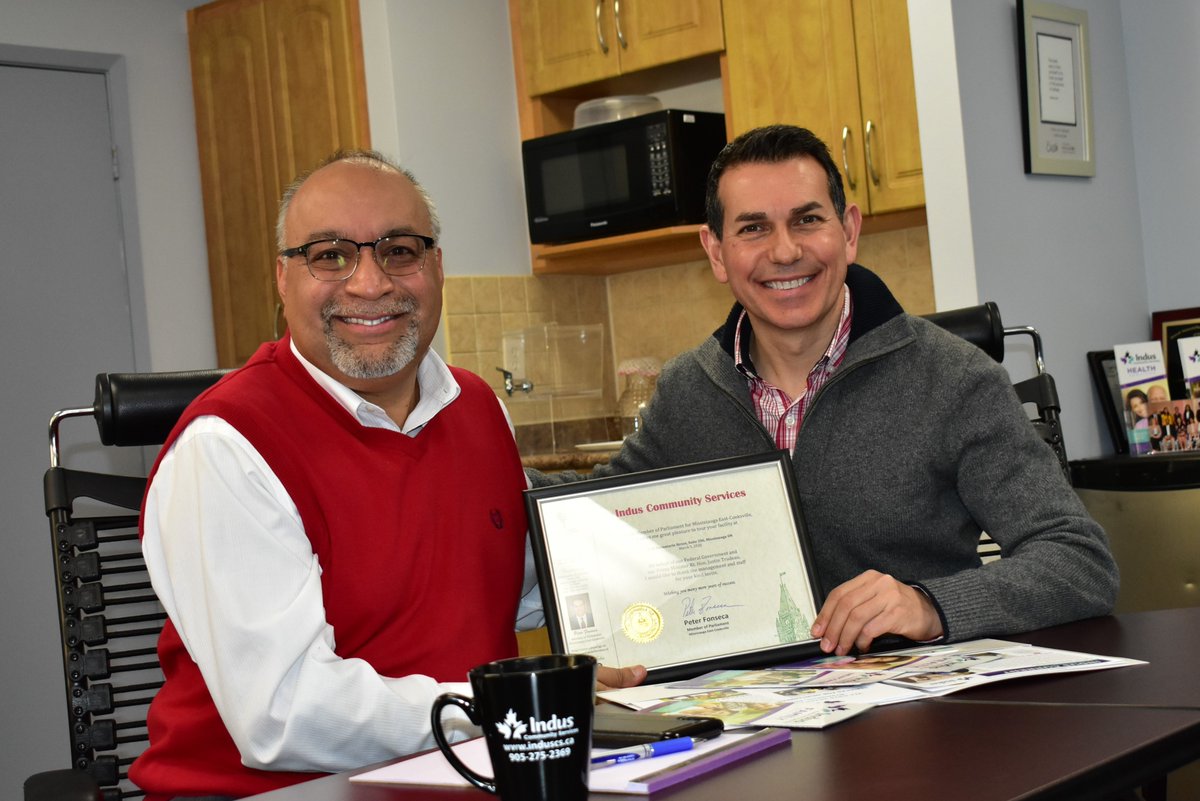
Gurpreet Malhotra poses with MP Peter Fonseca. (Gurpreet Malhotra/X)
Gurpreet Malhotra’s face shifts behind his metallic glasses as he walks through the Cooksville neighbourhood of Mississauga.
From one moment to another, the CEO of the Peel non-profit settlement agency, Indus Community Services, moves from disappointment to pridefulness, from frustration to optimism.
It all depends on what he’s looking at.
There are signs of development everywhere, from the streets mired with construction related to the incoming Metrolinx LRT to the new condo towers visible in all directions.
Cooksville has one of the highest concentrations of newcomers in the Region, said Malhotra.
Yet the neighbourhood’s largest city resource “is that library – the dinkiest library that I’ve seen in the Mississauga system.”
His tone changes as he passes a strip of restaurants and businesses – an Egyptian place and an Afro-Caribbean one right next door. His favourite is Charlie’s, a West Indian spot with veggie and non-veggie options.
“You see,” he said, brightness animating his gravelly voice, “how everything is from everywhere.”
In the spring of 2023, Ontario’s PC government introduced a Bill to dissolve the Region of Peel into three separate single-tier municipalities by Jan. 1, 2025.
The dissolution was long advocated for by then-Mississauga mayor Bonnie Crombie, who then left and won the leadership race for the Ontario Liberal Party.
Premier Doug Ford then announced that the province was abandoning the dissolution.
Much of the Peel non-profit sector watched the process with bated breath, said Malhotra, adding Peel is already underfunded and under-resourced.
Non-profits like his end up shouldering much of the burden, plugging the gaps left by governmental policy, he said.
To these organizations providing such vital services, dissolution represented just one thing: disruption.
Non-profits and collaboration
“In Canada, the non-profit system was set up so that government didn’t have to do the settlement work, the woman counselling, the health promotion, [all] by itself [with] government employees,” said Malhotra.
Malhotra’s Indus Community Services received 42 per cent of its 2023 revenue from the federal government and another 42 per cent from the province.
Governments allow themselves greater flexibility by funding external agencies rather than expanding operations internally, said Malhotra. If they decide a project is no longer worth pursuing, they can just cut funding and move on without the headaches of eliminating government jobs.
It’s a symbiotic relationship. The government and the non-profit sector work together, both collaboratively and in parallel to one another, to meet the needs of the populations that they serve.
However, people needing social services can have difficulty accessing the complex and siloed system.
Helping clients navigate government and non-profit service providers is vital, said Sharon Mayne, executive director of Catholic Family Services of Peel and Dufferin.
Her agency helps victims of domestic abuse navigate services, and most require up to eight, she said.
“The navigator will be the one to make sure to get the appointments [the client] needs with other partners,” she said.
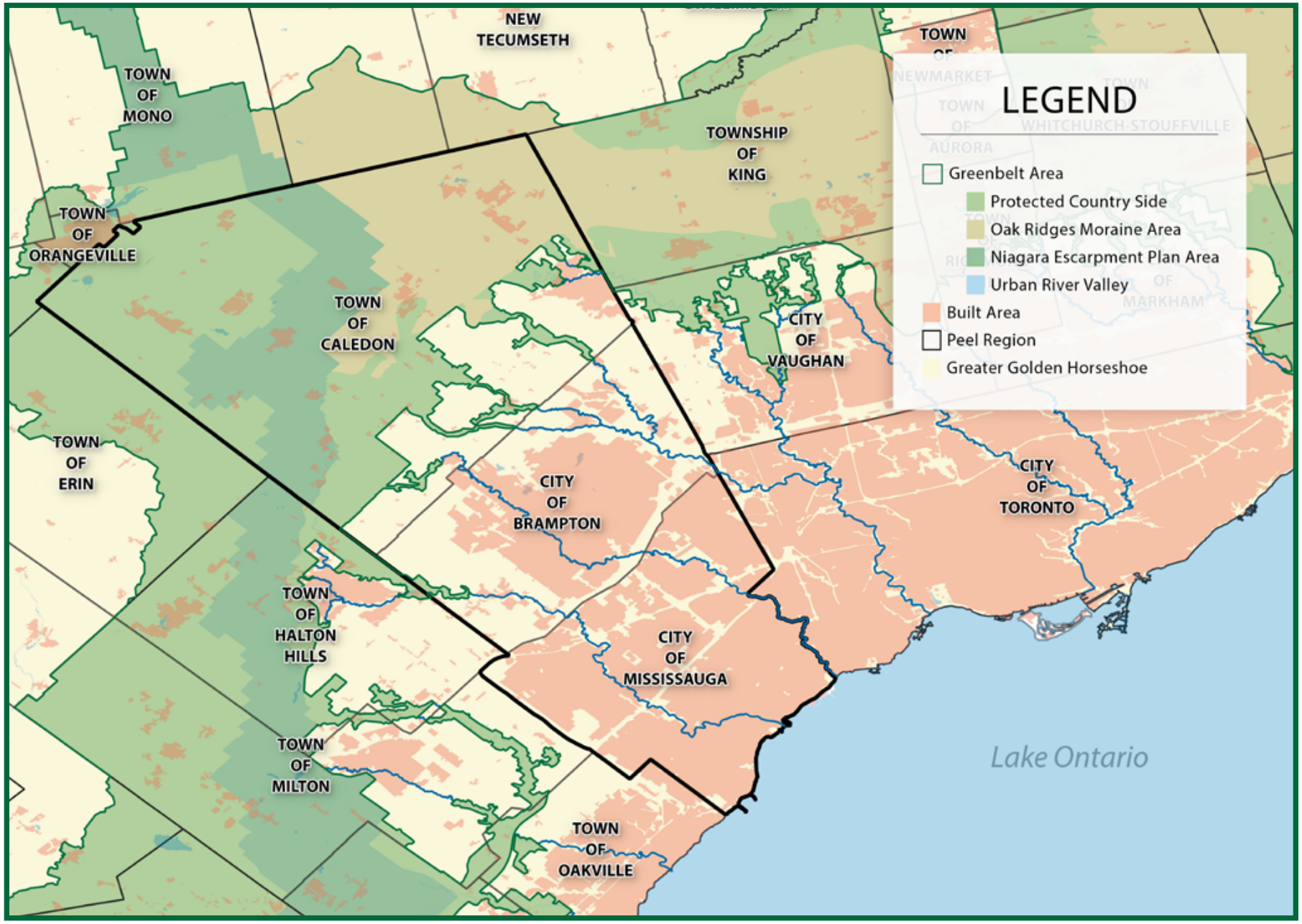
The Peel Region consists of Brampton, Mississauga, and the Town of Caledon. (The Green Belt newsletter/Supplied)
Given this melding of services and logistics, the Peel non-profit sector feared the quick timeline of dissolution would throw those relationships into chaos and make navigating the systems far more complex.
“Uncertainty was a large thing dominating our minds when [the dissolution] was announced,” said Arvind Krishendeholl, Board Director of Roots Community Services Inc.
Other concerns centred around funding for organizations serving the entire region if the responsibility for that funding was downloaded to the three new municipalities, said Raymond Applebaum, CEO of Peel Senior Link
“What if somebody lives across the street and they’re not in Mississauga, and they’re in Brampton?” Applebaum asked.
“Who’s going to take care of her?”
Non-profits were further worried about how dissolution would impact the social services provided directly by the Region, said Krishendeholl. A lot of his clients, he said, rely on both governmental and nonprofit services to meet their needs. A dip in what’s provided by one, for any length of time, would increase the burden on the other.
“There are some things,” Malhotra added, “you can’t turn off – wait – then turn on again.”
Unique needs
Like every municipality, Peel has unique cultural and material needs. The Region is home to an array of cultures and racialized communities.
Eighteen per cent of Ontario immigrants live in Peel, the highest proportion of immigrants in the province.
Malhotra and other non-profit workers said government investment in Peel has not kept up with its swelling population.
For example, the province funded Peel Region at $34 per capita in 2022 for public health services. Toronto, Hamilton and Ottawa received $49, $49, and $39 per capita, respectively, according to a report commissioned by Peel Region.
The shortage of public health funding was inescapable during the early stages of the COVID-19 pandemic, where Peel’s non-profit sector stretched itself to compensate for the lack of resources available to the community.
The region has been “underfunded in key categories for a significant length of time,” Malhotra said, another reason why organizations in Peel protested the potential dissolution.
The Metamorphosis Network, a collection of non-profits headed by Applebaum, re-oriented itself around salvaging Peel’s social services amidst the potential transition.
The network met regularly with the Transition Board and others involved to educate them on how the dissolution would impact “the vulnerable population that we all serve,” said Applebaum.
The Transition Board was receptive to their input, and their advocacy had an impact, he added.
“We would like to believe,” he said, that the work of his network was one of “a number of advocacy strategies that turned the Premier around.”

A park in front of Mississauga City Hall. (Canva)
In December, the Ontario Government announced they would introduce legislation in the new year that would “recalibrate the mandate of the Peel Region Transition Board.”
“While we originally thought that the best way to achieve our goals of better services and lower taxes was through dissolution,” stated Paul Calandra, Minister of Municipal Affairs and Housing.
“We’ve since heard loud and clear from municipal leaders and stakeholders that full dissolution would lead to significant tax hikes and disruption to critical services the people of Peel Region depend on.”
The announcement was a relief to the non-profit sector, said Malhotra.
Pivot, not a reversal
However, the provincial government has framed the decision to abandon dissolution as a pivot rather than a reversal. Calandra wrote a widely reported letter on Jan. 24, directing the Transition board to shift its mandate.
The board is now tasked with making recommendations concerning land planning, water and wastewater, regional roads and waste management, which will still transition to local control, according to reporting by the Pointer.
For the non-profits who advocated against dissolution, this less drastic transition period represents a chance to fight for their community’s services.
“There’s still an opportunity, we believe, to leverage all the goodwill that we’ve created… with the transition board, the Region and other partners,” said Applebaum.
“Now we’re saying, ‘Hey, how can we create a new deal for the Region of Peel?’”
The Metamorphosis Network has partnered with the City Institute at York University, and Malhotra said they are currently gathering information on the inequities in Peel and what services are needed.
The proposal and subsequent abandonment of dissolution may have helped clarify the needs of the respective municipalities, said Mayne.
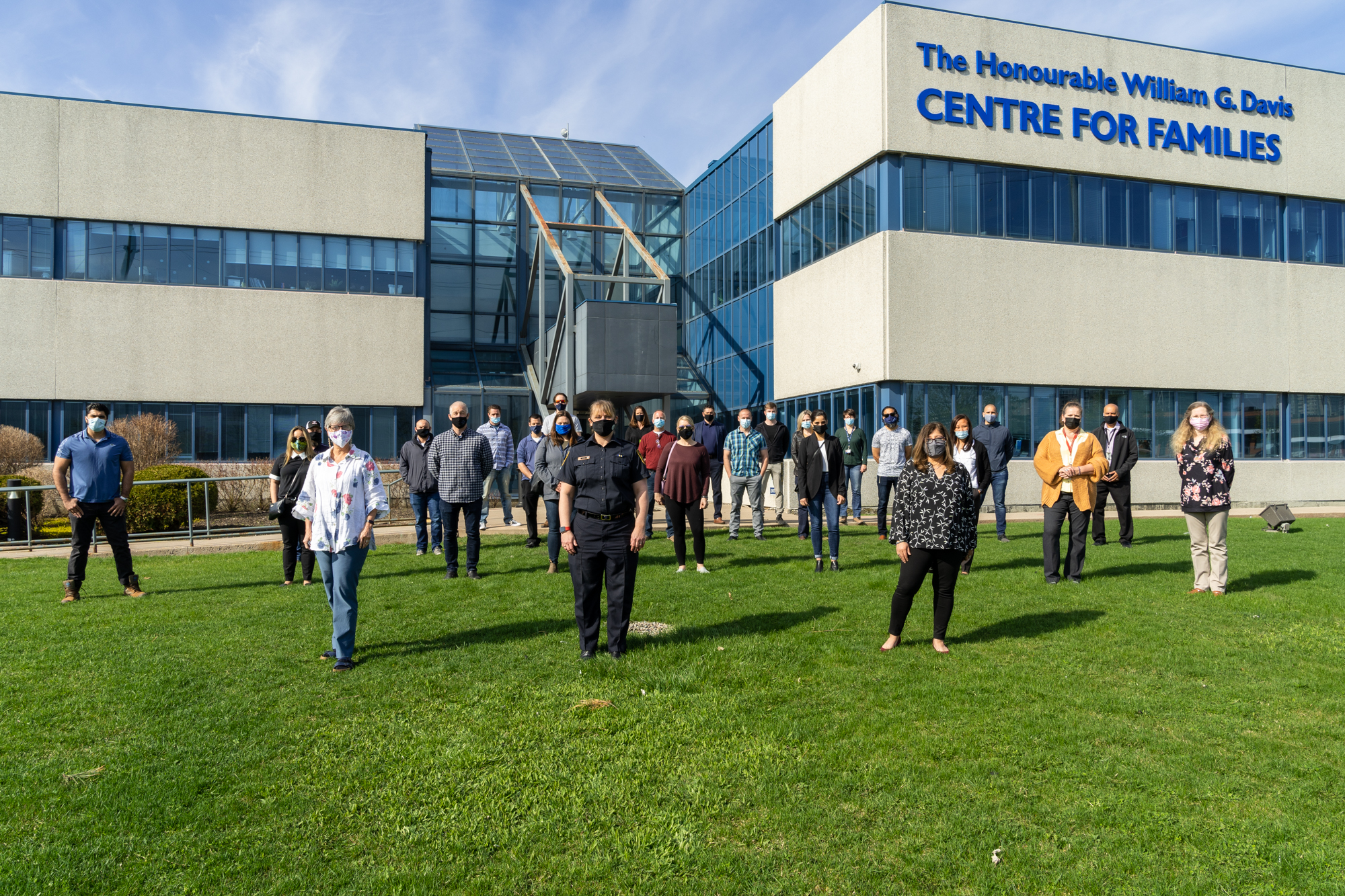
The Safe Centre of Peel is inside the Honourable William G Davis Centre for Families in Brampton. (Peel Regional Police/Supplied)
The region of Peel’s only Safe Centre for families affected by intimate partner violence is located in Brampton, Mayne said as an example.
If the three municipalities were to each be made whole, as promised by the Province, that would have meant creating two more Safe Centres for each Caledon and Mississauga, she said.
“The bottom line is we should have three Safe Centres” in Peel, she said.
“The issues are the issues in this community, whether you have three independent cities or a two-tier government system.”
To Malhotra, advocating for a new deal means asking tough questions about how the Region has been treated.
“We’re the most racialized jurisdiction,” he noted. “Are [the] two linked?”
Amidst the clatter of construction filling the Cooksville neighbourhood that his non-profit agency calls home, Malhotra explained why the right kind of change is difficult.
“There are so many newcomers here, and they’re so busy trying to get food on the table,” he said, adding politicians assume people in Peel don’t vote.
That is not to say that Peel has been left alone. Change is happening, said Malhotra.
“The library will get bigger and better, the transit will be better, everything will get better.”
He’s just worried that change will come after the people who needed it have been pushed out.
Your job. Your mission. Your news.
With your support, the sector you're building gets the journalism it deserves, and you get a tax receipt.

Related Articles

Edmonton launches $2M program to help faith groups convert empty churches, extra land to affordable housing
A new $2 million program will help Edmonton’s faith-based charities assess the feasibility of developing affordable housing and mixed-market housing on their land. Churches, temples and mosques have already expressed interest.

Canada’s largest trauma centre launches massive $1 billion fundraising campaign
As demand grows, Sunnybrook Hospital Foundation says they want to ensure the hospital can meet it.

Transformed Vancouver church reopens its doors as massive housing and support services centre
First United transformed its former church site in response to changing community needs, to prioritize essential support services over traditional religious activities in the neighbourhood.
