The Taliban’s ban on Afghan women working at NGOs will plunge many more families into poverty, aid agencies say
Amid a deepening humanitarian crisis, aid organizations struggle to find a path forward in Afghanistan
Why It Matters
Afghanistan’s return to Taliban rule was followed by economic upheaval and repressive policies, many of which targeted women, but without female staff, NGOs can’t reach those in need of assistance. Canadian aid organizations need clarity on what the ban means to move forward.
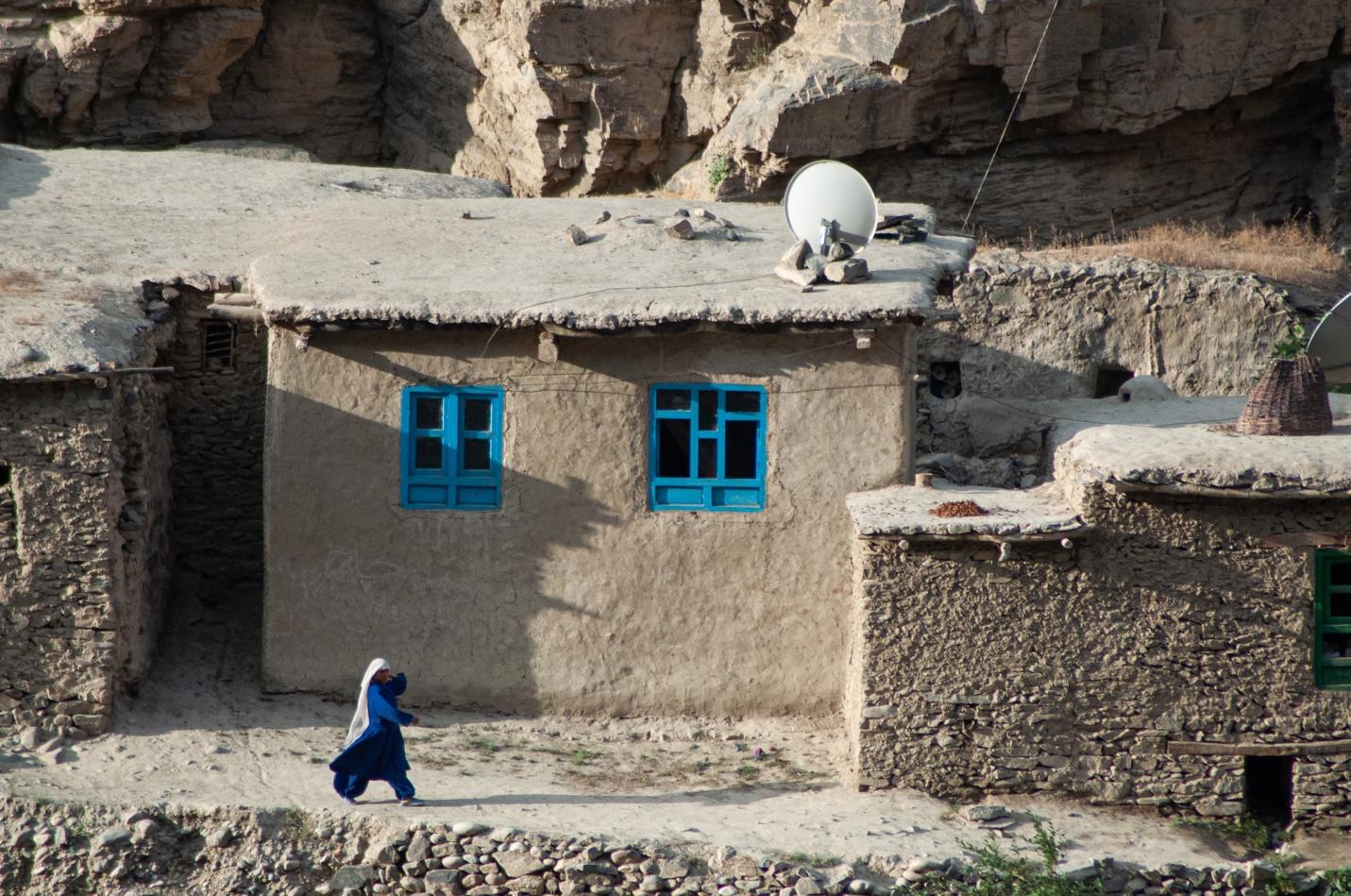
A woman walks past a house in Badakhshan, Afghanistan. (Photo: Joel Heard)
Canadian aid organizations continue to seek clarity following an announcement by Afghanistan’s Taliban administration, which bars Afghan women from working at NGOs in that country.
“There’s a lot of confusion around the ban,” said Reyhana Patel, director of communications and government relations at Islamic Relief Canada. “I’ve just been hearing that the ban doesn’t apply to (United Nations) staff, but I don’t know if that’s true or not. We just don’t have a lot of clarity.”
Taliban officials announced the ban on December 24, 2022, via a letter from Economy Minister Qari Din Mohammed Hanif. According to reports from the Associated Press, the reason given for the restrictive edict was “serious complaints” about hijabs worn by NGO staff who did not comply with the Taliban’s oppressive interpretations of modesty.
In response, Islamic Relief Canada has temporarily suspended non-life saving operations in Afghanistan. Local women make up about 30 per cent of the organization’s staff in the country.
Patel said pausing programming will give them time to assess the situation, but said aid providers won’t be able to reach women and girls without female staff.
“They know the communities better and they’re also able to access communities. They’re able to talk to women and girls, they’re able to go into homes, they’re able to have more conversations, they’re able to deliver aid,” Patel said. “Just looking at the humanitarian situation, it’s the worst that it’s ever been … and this is only going to make it worse.”
Other international aid organizations with Canadian contingents have also suspended work in Afghanistan, including Save The Children, CARE International and the International Rescue Committee.
Canadian Women for Women in Afghanistan, or CW4WAfghan, said their work simply isn’t possible without the involvement of local women. The organization has called on the Taliban to reverse its decision.
“This decision, particularly at a time when millions of Afghans are facing famine, and the country is in a devastating humanitarian crisis, will have deadly consequences for millions of Afghans who rely on the work of organizations delivering essential services that the current authorities have been unable or unwilling to deliver,” said CW4WAfghan senior director Murwarid Ziayee.
She added Afghanistan is one of the most aid-dependent countries in the world, noting a significant portion of its economy is based on foreign assistance. It’s estimated the Taliban’s ban on women working outside the home has cost the Afghan economy at least $1 billion USD since 2021.
With unemployment soaring, the ban on female personnel at NGOs and resulting job losses will only plunge more families into poverty, said Lauryn Oats, CW4WAfghan’s executive director.
“This latest restriction against women’s freedom is catastrophic not only for the women cut off from their incomes – often the breadwinners of their families – but also for the millions of people depending on the assistance the NGO community in Afghanistan delivers,” she said.
Humanity & Inclusion has been operating in Afghanistan since 1987, providing healthcare services with a focus on those living with disabilities — nearly 79 per cent of the country’s adult population. About 40 per cent of the organization’s staff is comprised of Afghan women, who are often employed as physiotherapists and social workers.
“Delivering humanitarian assistance without women is neither acceptable as a principle nor possible in practice,” said Thomas Hugonnier, Middle East geographic director for the Humanity & Inclusion Federation.
In the interest of safety, the organization immediately suspended operations once the ban on women workers was announced. However, after 10 days of negotiations with Taliban officials, the aid organization has received guarantees that female healthcare providers can safely return to work.
“We have now decided to resume activities,” Hugonnier said, but added negotiations will continue until all women are allowed to return to humanitarian work, including support staff not engaged in frontline healthcare. “We know the political dynamics are very complex and we have to accept it.”
Governments around the world, as well as the United Nations and other prominent humanitarian organizations, continue to press the Taliban administration to reconsider the ban.
The foreign ministers of Australia, Canada, Denmark, France, Germany, Italy, Japan, Norway, Switzerland, the Netherlands, the United Kingdom, the United States and the European Union issued a joint statement soon after the ban was announced, urging the Taliban to reverse its decision.
“Women are absolutely central to humanitarian and basic needs operations. Unless they participate in aid delivery in Afghanistan, NGOs will be unable to reach the country’s most vulnerable people to provide food, medicine, winterization, and other materials and services they need to live,” the statement reads. “This would also affect the humanitarian assistance provided by international organizations, as international organizations utilize NGOs to deliver such materials and services.”
Patel said international calls for the Taliban to rescind its decision are helpful, but added the Canadian Government could also ease pressure on aid agencies by revisiting anti-terrorism financing provisions under the criminal code, to ensure they don’t restrict humanitarian aid.
The House of Commons Special Committee Report on Afghanistan and Canada’s Anti-Terrorism Legislation made several recommendations, including making exemptions under anti-terror legislation to allow aid to flow to Afghanistan without fear of prosecution, which have yet to be implemented.
“We’ve been advocating for changes to that … and I think the need is stronger than ever right now,” she said.
Your job. Your mission. Your news.
With your support, the sector you're building gets the journalism it deserves, and you get a tax receipt.

Related Articles

Caste, corruption, and the collective: Crow’s Theatre’s A Fine Balance confronts India’s enduring inequities with humour and heartbreak
The Giller Prize-winning novel explores the realities of caste violence in India, which has been adapted into a powerful stage production in Toronto.
‘Canada must not go down that road’: More than 250 organizations demand investigation into CBSA after student protesters issued exclusion orders
The students were protesting after being denied post-graduation work permits they say they were eligible for when they enrolled at Portage College.
Half of Filipino immigrants to Canada are overqualified for their jobs: StatCan
‘For the relationship that Canada has with the Philippines, it seems like it’s lopsided.’
