The Surprising Story Behind Canada’s Declining Leadership in Foreign Aid
Experts weigh in on the need to recommit to foreign aid targets
Why It Matters
The Pearson Commission’s breakthrough report on foreign aid, delivered in September of 1969, which set the global Official Development Assistance (ODA) target of 0.7%, was a Canadian-led innovation. 50 years later, experts weigh in on the significance of this target to Canada’s global leadership in the next decade.
Quick history lesson: Fifty years ago, Canadians helped spearhead the now widely-adopted international target to provide foreign aid equal to 0.7% of Gross National Income in economically advanced countries. It was a remarkable Canadian innovation but something most people knew very little about. Today, Canada’s contribution to foreign aid falls short of this target and is declining. On the anniversary of the Pearson Commission on International Development, led by former Prime Minister Lester B. Pearson, experts say Canada needs to recommit to meeting the Official Development Assistance (ODA) target.
According to the 1969 report by the commission, which was taken up in a UN resolution, the 0.7% target was ideally to be met by 1975. Years later, the deadline was extended to 2015. Almost fifty years after the initial commitment, and five years after the new deadline, Canada has yet to meet the target.
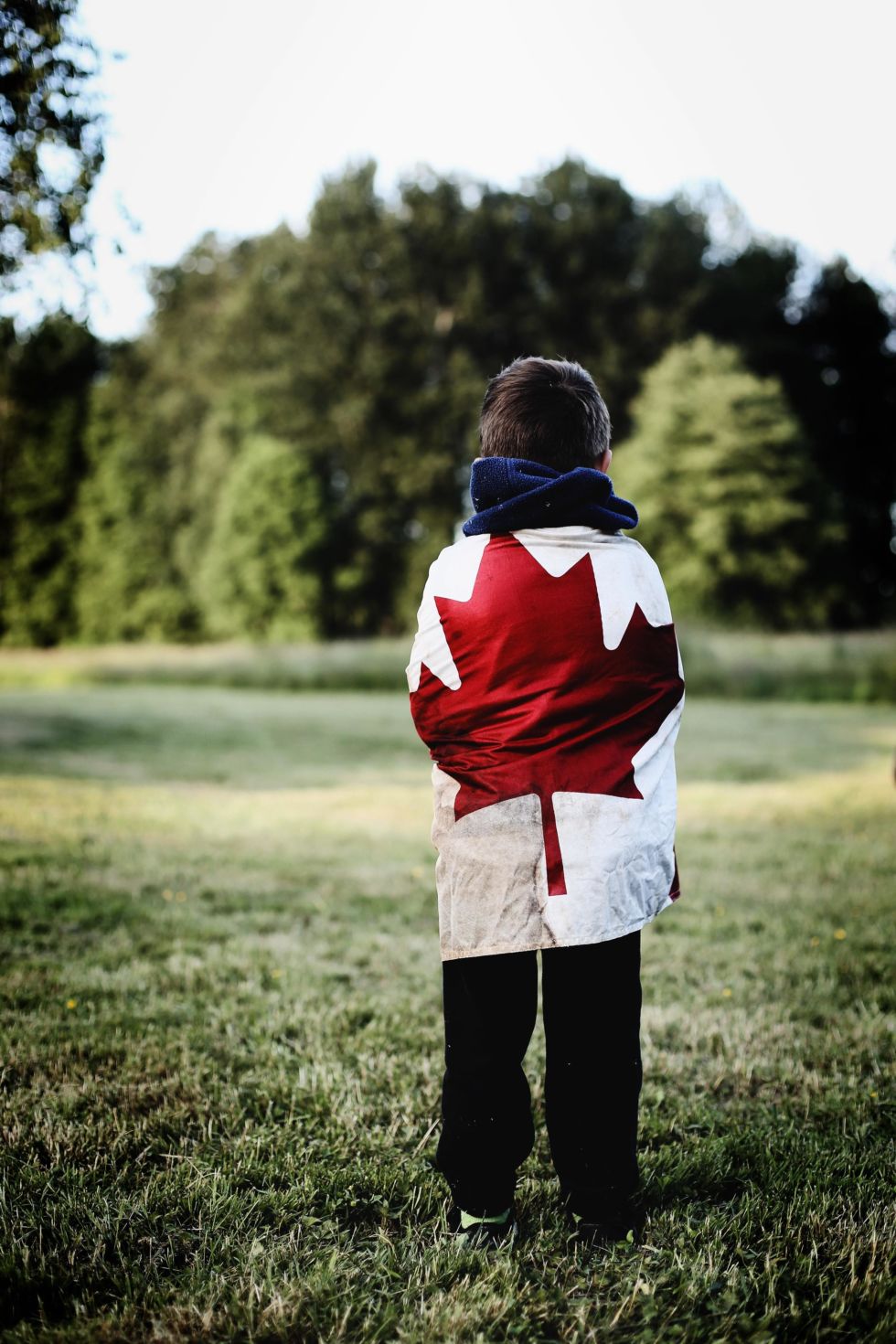
Canada’s Track Record on Aid
Although the ODA target was established in a different social and political climate, experts agree on its relevance for the next decade. “The values that influenced the report still remain today, particularly in our Canadian identity,” says Nicolas Moyer, CEO of the Canadian Council for International Cooperation (CCIC).
However, he speculated that over the years, the debate around Canada’s moral obligation to support developing countries has been a distraction, leading to the decline of aid. In 1987, Canada reached a peak of 0.5% in ODA. Now, that number has nearly been cut in half, to 0.28%. Despite that, polling by CCIC shows Canadians think 10% of the country’s gross national income is directed to foreign aid.
Robert Greenhill, the Executive Chairman of Global Canada, says this disconnect is problematic, and likely due to the perception that Canada is a leader in global citizenship. “The Canadian government is stronger in its rhetoric than it has ever been, and is worse in its resources than it has ever been,” he reflects.
While the ODA target is voluntary, countries such as Norway and Luxembourg have surpassed it, and others such as the United Kingdom have met the target in recent years.
“The reality of our government’s spending does not match our perceptions of our generosity as Canadians. Are Canadians half as generous as the British?” asks Boris Martin, CEO of Engineers Without Borders Canada (EWB), a nod to the UK contributing more than double Canada’s ODA. The nonprofit, alongside civil society partners, has campaigned for greater development assistance, proposing a timeline of gradual increases to reach the target by 2030.
In recent years, decisions on foreign aid — from the Thrive Agenda, which invests in global health, to the Feminist International Assistance Policy — have made headlines, “but this hasn’t translated into new money,” says Moyer. “How can we celebrate this and not let the government off the hook of contributing our fair share?”
Alternative Ways to Measure Canada’s Global Impact
While a country’s ODA demonstrates financial commitment, it does not speak to the effectiveness or impact of aid, says Logan Cochrane, Assistant Professor at Carleton University’s Global and International Studies program. To understand impact, one must look at reporting by Global Affairs Canada and the organizations it funds.
Using a singular measure to reflect development assistance is difficult given that some objectives, such as changing social norms, are trickier to measure in comparison with supporting vaccinations. He says it’s important to consider how aid funding is used and whether it abides by international agreements on best practices for development assistance. “This ensures we consider not just the amount but also how solidarity and collaboration are operationalized,” Logan says.
Beyond this, development experts agree on the need to consider Canadian private sector impact, social enterprise, investments, and multilateral influence on policy when considering global impact. For example, Martin notes that Canada is a giant in the mining sector and these operations undoubtedly have an impact on local communities which come into play.
Looking Forward
There is no question that development aid works. At a global scale, over 1 billion fewer people are living in poverty than in 1990. South Korea, which was one of the biggest recipients of Canadian development assistance 40 years ago, went from being a low to middle income country and today, trades heavily with Canada.
And it’s in Canada’s self-interest, too. Development experts say the safety, stability, and prosperity of other countries has an overall positive impact on Canada.
So, why isn’t Canada increasing its development assistance?
EWB’s Martin says when lobbying politicians, there is cross-partisan support for increasing Canada’s ODA. And CCIC’s Moyer says although “commitments were made in prior years… the money hasn’t followed.” Political will and civic pressure still lack.
Last year, the Canadian government established a fund in partnership with several organizations, including The MATCH International Women’s Fund, to fund gender equality and women’s empowerment locally and abroad.
Jess Tomlin, President and CEO of MATCH, says, “While ODA plays a key and irreplaceable role, we’re also keen to look at how other sources of funding can be brought to the table.” She says the organization believes in new ways to mobilize philanthropy and investment capital — expanding beyond the traditional funding sources to further their mission.
This has been echoed by others, including leadership at CCIC who in November, will co-host the first summit on Canada’s global leadership to bring together various actors, such as trade and security, with the aim of creating a more coherent approach to Canada’s role in the world. The summit, timed after the national election, hopes to ignite a renewed sense of commitment to increase ODA for the incoming government.
This conversation is particularly relevant as Canada publicly grapples with issues such as trade negotiations, and aspires for a seat on the UN Security Council. “Politicians are fond of saying ‘the world needs more Canada,’” Martin says. It’s important to consider what this really means.
Your job. Your mission. Your news.
With your support, the sector you're building gets the journalism it deserves, and you get a tax receipt.

Related Articles
Trailblazing Iraqi-Canadian activist Yanar Mohammed killed outside Baghdad home
The feminist leader’s death is a devastating loss for women’s rights movements in Iraq and around the world, say advocates.
Humanitarian aid groups granted interim injunction to continue working in Gaza
Aid organizations from around the world came together to launch a formal petition to the Israeli High Court earlier this week.
