Protecting rural housing: Saltbox Fund founder on the power of lending circles
KJ Conyers-Steede is piloting a peer-to-peer community financing model that can be scaled and replicated across rural Canada.
Why It Matters
According to Conyers-Steede, community lending democratizes the finance sector. Having raised initial funding to start and grow a local lending pool, he hopes to show that “the rural way of life is worth financing.”
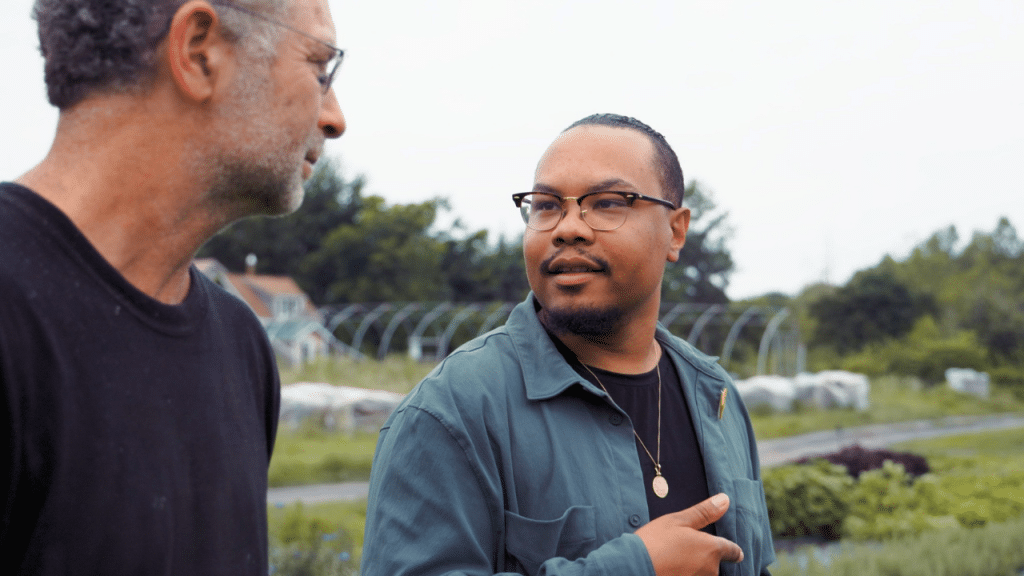
A social lending practice with roots in the Caribbean is coming to rural Nova Scotia and will help homeowners make their properties resilient in the face of climate change.
The Saltbox Fund, launched by Future Civics’ founder and CEO Kjeld Mizpah (KJ) Conyers-Steede, blends principles of peer-to-peer lending with capital from philanthropic, government and other funders.
The pilot fund – named after a type of house commonly found in Atlantic Canada – will support homeowners in the province who need capital to carry out energy-saving retrofits, a demographic he calls “equity-stable but liquidity-constrained.”
The blended finance approach is an experiment that incorporates elements of community bonds, while at the same time positioning the Saltbox Fund as a social finance intermediary, Conyers-Steede said.
The ambition, he said, is to create a rolling, growing pot of funds for the community to use on critical retrofitting projects.
What matters to rural and small communities?
The Saltbox Fund draws on the model of gift clubs, pools of money raised by and for the community in Bermuda, where Conyers-Steede grew up.
“[…] I watched relatives quietly steward pools of community money, build co-ops, and build affordable housing collectives,” he wrote.
“Not as bankers and economists, but as neighbours, mentors and citizens trying to make sure everyone could get through the year.”
“The idea of building our capacity to understand how to manage community wealth within Atlantic Canada has roots in a gift club rooted in an island’s historical approach to provide equality for black communities, which brings a sense of pride and nervousness to me.”
Conyers-Steede has raised just under $40,000 in grant funding from Halifax Climate Investment, Innovation and Impact (HCi3). That grant will kickstart the loans given out to community members.
Although the grant itself is not repayable, Conyers-Steede would like borrowers to act as though it is, such that it can start a repayment cycle into a common pool, and others can benefit from borrowing from that pool in the future.
The pilot will run with ten families, with the primary success metrics being the loan payback rate, which in turn determines how much funding can be returned to the community pool.
“People laugh me out the room,” Conyers-Steede said when asked about the community’s reactions to a peer-to-peer lending model.
But to him, the problem is persistent: homeowners in rural communities need relatively small amounts of capital to undertake what he calls “entry-level” home retrofitting. In the absence of other sources of capital, there is a risk that those homeowners turn to predatory lenders charging high interest rates.
Conyers-Steede recognizes that, as an intermediary, the Saltbox Fund/Future Civics will also need to keep its own lights on.
However, he is certain that this model can do so without resorting to predatory practices or needing to match market rates of return on loans.
“For example, you miss your first payment. We reach out and say: ‘How are you doing? Walk us through this.’”
If a borrower misses a second payment, there is an opportunity to join a re-education program, and only when a third payment is missed is there a conversation about collections.
Climate resilience in rural Canada
With the loans ringfenced around retrofitting projects and localized climate resilience, Conyers-Steede also hopes that the model, once tested, can scale up and be replicated in other communities across Canada.
“We want to showcase to individuals that the rural way of life is worth financing,” he said, adding that a community lending model can de-risk access to capital.
Funded until the end of the year, Conyers-Steede is considering the Saltbox Fund as an experiment that could be spent down if it does not work as expected. “If our money runs out, we’re still gonna tell the story of this experiment that we do.”
The Saltbox Fund is currently looking for families to join the pilot, as well as interested parties in the construction sector who understand retrofits.
Your job. Your mission. Your news.
With your support, the sector you're building gets the journalism it deserves, and you get a tax receipt.

Author

Related Articles
How governments can help Indigenous communities disproportionately impacted by wildfires
Why wildfire evacuations keep failing Indigenous communities — and what governments can fix now

Lessons learned after Victoriaville backs off on its canopy charge for residents
The Quebec community had proposed a tax on trees being cut down – which stuck – but residents didn’t like a tax on yards with little tree cover.

How countries in the Americas can act to protect the environment without the United States
As the U.S. retreats from environmental oversight, countries across the Americas have a chance to build a stronger, more independent accountability system.