Why ‘safe spaces’ at work fail – and how to fix it
Fostering belonging isn’t difficult, but it does take some understanding of how people’s brains work and how we are likely to interact with each other.
Why It Matters
Workplaces often assume that declaring a space “safe” is enough, but our bodies and brains don’t operate on declarations. Belonging is built through signals of trust, care, and transparency — and organizations that understand this create teams that feel grounded, connected, and able to contribute fully.
The concept of creating ‘safe spaces’ at work is fraught with challenges.
No amount of telling someone that they are safe can make their bodies accept it, if that is not how they feel.
Instead of focusing on ‘safe spaces’, workplaces need to focus on actively creating belonging.
Humans are categorized as social creatures. From the dawn of our existence, we have depended on one another for care and survival.
Recent neuroscience has taught us that the social brain has two big questions: the Right Brain asks, “Do I trust you?” and the Left Brain asks, “Do you like me?”
These two questions together ask one bigger question: AM I SAFE?
Safety is different for everyone
‘Safety’ means something different for every person. Based on lived experiences, people have valid and different stimuli that make or break safety. For some people, seeing the police in their neighbourhood makes them feel safe and protected. For others, the police represent a threat. There are valid reasons for both reactions, and both reactions impact our bodies.
In his book The Polyvagal Theory, Steven Porges writes: “The brain makes instant decisions about whom to trust – even with those we have just met. This is the first step to a social bond.”
When you join something new (a new job, a new school, a new neighbourhood) belonging is either fostered or broken, and it happens fast. We scan spaces for things we trust: familiar faces, gender, race, ability, clothes – something that makes us feel connected to a group of strangers to see if we fit in.
If we feel like the only one in any particular category, we are dealing with a version of otherness that does not feel good. By the time we hit middle school, most of us know what it feels like not to belong in some form or another – and it does not feel good.
To avoid that, our brains start asking questions before entering a new space to try to determine whether it will meet our needs and what defence mechanisms we may need to employ for safety.
Once the defence mechanisms are up, belonging is that much harder to foster.
When we are trying to make people feel safe, we are trying to convince the ‘Do I trust you?’ right part of the brain that we are, in fact, trustworthy.
Instead, approach belonging from the ‘Do you like Me?’ left side of the brain.
When you feel liked by someone, you believe that they want to meet your needs. It is therefore easier to believe that if your needs aren’t met, for whatever reason, that it is an accident and not a slight. You are still safe with them.
When you like someone, you listen to them. You praise them. You’re inquisitive about them, are willing to see their point of view, and their individual worth.
When people feel praised, seen, heard, cared about and valued, they feel liked.
Here are three tangible steps that organizations can take to make people feel liked and build belonging in the workplace.
Start people off on the right foot
When someone joins your team, do they know exactly where to go, how to dress and who to direct questions to, before their first day?
Think of starting a new job like being back in middle school and guessing at how to seem cool. Onboarding needs to include as much information as possible. You cannot focus on your new job if you are worried about where the bathroom is.
For example, send new employees pictures of the space, highlight things like what elevators to take, bathroom location, what’s in the fridge, etc, or connect new employees via email with an office buddy to show them around and that they can ask questions to – not about the job, but about the work environment. Help your new hires out, and be willing to slow down your productivity to make them feel part of the team.
Show your work
Leaders need to provide their teams with as much information as possible about how and why decisions are made. Invite people into your brain. This is helpful for small things, like if you are a caffeine addict and people shouldn’t talk to you until you’ve fueled up, and for large things like how you came to programming decisions.
Why? It shows that you are aware that your behaviour impacts their teams. That impact could be that you are surly in the morning and not that you are mad at them, or it could be them understanding why you’re asking them to take on a new task or relinquish an old one.
We are wired to take decisions personally. So let people know and see you as much as possible so that they know it’s not them, it’s you.
Not everyone will agree with the decision, but understanding the why or the how help them feel that they belong on the team.
Focus on unstructured time and find opportunities to foster real connections
During the day-to-day, be attuned to times when structure is absent. Researchers confirm that the biggest opportunities for ‘unbelonging’ to occur at schools are at lunch, recess, at the start and end of the day, and when switching classes.
These are all moments with less structure, which, for many of us, make us feel less safe.
Lack of structure leads to discomfort, which in turn leads to overcompensation. This overcompensation usually manifests as assumptions, generalizations, and reliance on old patterns.
The result? “You don’t like me. I don’t trust you.” A lack of belonging is instantly sensed. Leaders and HR need to be hyper-aware of unstructured time and build bridges.
A real-world example
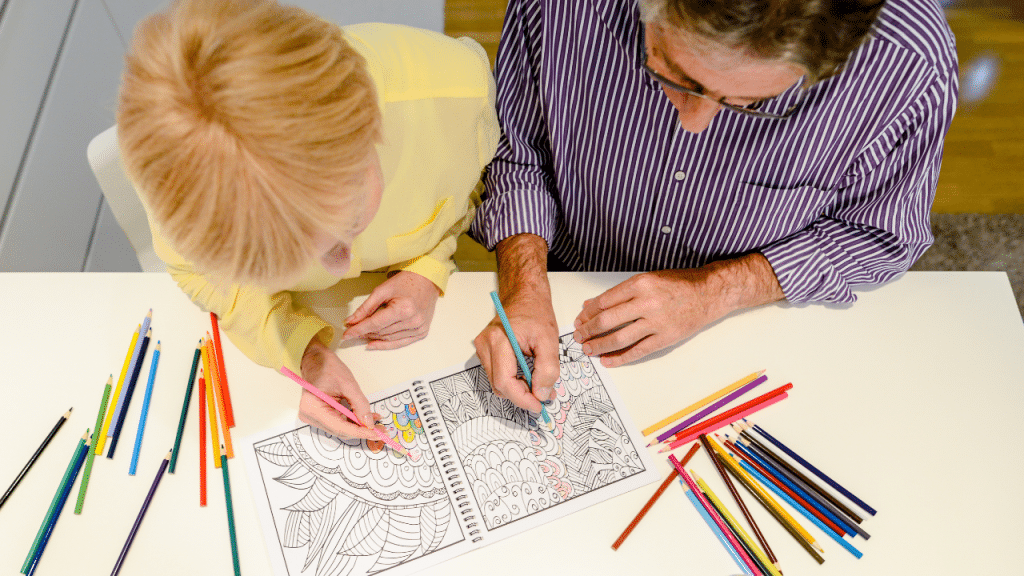
You’re attending a workshop where you don’t know anyone. You show up 10 minutes early and find a table with a giant roll of adult colouring and markers. Shortly after arriving, the facilitator says they are going to hold for an extra 10 minutes because the weather is bad, and invites everyone to sit and colour together while you drink coffee and wait to start.
Now imagine the same scenario, but no colouring. You now have 20 minutes from when you arrived to wait until something happens. What do you do? Do you make small talk? Do you leave to ‘do something quick’ and come back? Do you sit on your own? Do you dive into your phone to avoid other people?
This example may seem small, but the impacts can be big. The colouring scenario may not perfectly foster belonging for everyone, but it does foster the potential for a few things to happen:
We don’t size each other up in the same way. Having something to do helps us drop our masks. We go outward not inward. We get out of our own heads and become more present with each other. Our phones are a safe distraction, but hey, so is colouring..
We meet each other. Most of the time, icebreakers don’t work. Small talk is more natural with something in our hands. Doing something low-stakes and tactile lets people find commonalities.
It literally lets you belong to a task. It subtly says “if you can colour, you belong here.” Talking, not talking, being an expert, or a novice or anything in between is welcome. The space has been curated to support you before it asks something of you.
Much like providing accessible entrances, snacks, drinks, and clean washrooms, curating belonging signals to your brain to let go of its historical baggage and bring all your ideas, thoughts, questions, and humanity into the room.
It is not hard to do, but it does take thought and care to do it well. So next time you are starting a meeting, or teaching a course, or onboarding a new employee, take the time to think about where and how you are inviting them in.
Your job. Your mission. Your news.
With your support, the sector you're building gets the journalism it deserves, and you get a tax receipt.

Author

Related Articles

When non-profit trust isn’t a given: Clarity early, or doubt wins
In a crowded, skeptical landscape, clarity—not volume—is now the defining factor in donor trust.

Montréal shooting spotlights growing public safety threat of online radicalization
Montreal attack shows why Canada needs stronger systems to detect, disrupt, and prevent online radicalization before it turns violent.
