
This story was produced thanks to a partnership between Future of Good and RBC. RBC is proud to support a broad range of community initiatives through donations, community investments and employee volunteer activities. See how at rbc.com/peopleandplanet. See FOG’s editorial ethics and standards here.
Partnered Partnered content RBC commits $8 million to help grow Canadian non-profit capacity amid economic pressures
From talent retention to digital resilience, RBC says its new Stronger Nonprofits Program aims to help support that work.
Why It Matters
Canada’s non-profit sector is facing growing pressure as organizations respond to rising community needs while navigating workforce shortages, funding instability and economic uncertainty. Efforts to strengthen sector capacity, including leadership development and digital resilience, are becoming essential to sustaining long-term community support and services.
Key takeaways:
- Economic pressures such as rising living costs, housing affordability challenges, and financial strains are increasing demand for non-profit services across Canada.
- Non-profit organizations are facing significant operational challenges, including staffing shortages, employee burnout, rising costs, and declining volunteer participation.
- The non-profit sector is a major contributor to Canada’s economy, generating more than $200 billion annually.
- RBC is investing in the long-term resilience of the sector through its Stronger Nonprofits Program, which provides funding and resources to help organizations strengthen leadership, workforce capacity, and financial stability.
- Building stronger leadership, fostering collaboration across sectors, and advancing digital transformation are priorities for strengthening the non-profit sector’s future.
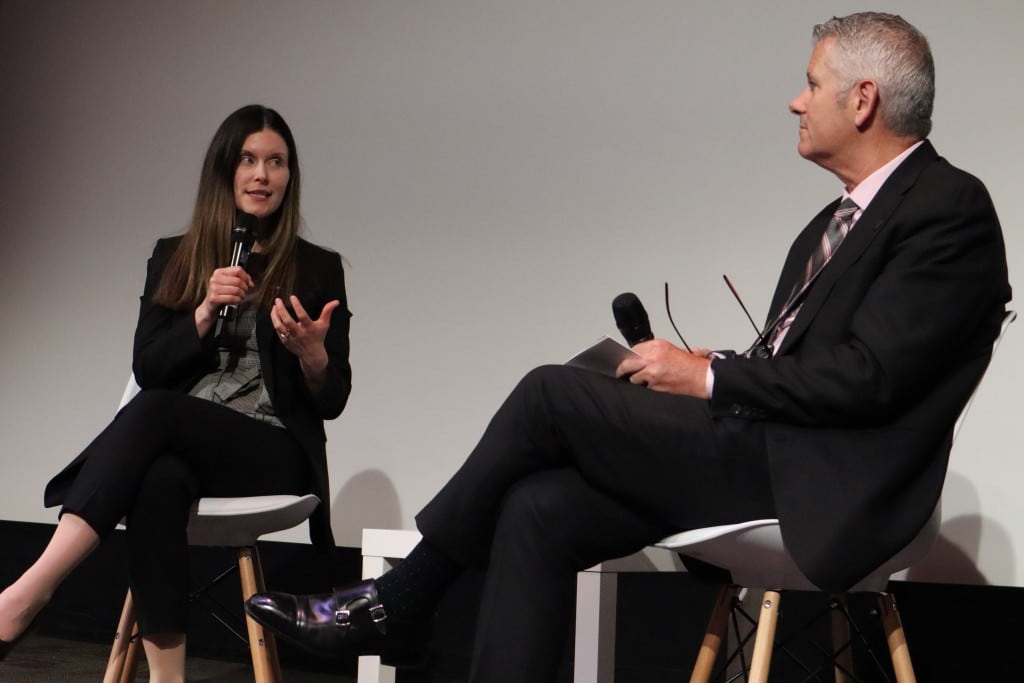
Economic impacts are unfolding unevenly across Canadian communities, and experts say non-profits are experiencing that uncertainty differently than in other sectors.
The instability is disproportionately impacting lower-income households, leading to an increased reliance on community services, said Cynthia Leach, assistant chief economist at RBC.
“Not everyone is going to experience the same economy,” said Cynthia during RBC’s non-profit sector convening event in Vancouver last month.
More than 100 non-profit and charity leaders in Vancouver joined RBC to discuss the economic impacts on the sector.
“We still have high unemployment. We have job losses in certain sectors.”
Population growth, housing affordability challenges and lingering financial strain from the pandemic continue to put pressure on non-profits, she said.
“At the lower end, what we see is consumption being propped up by high essential inflation, more usage of food banks and other social services,” she said.
Still, Canada’s economic outlook should be viewed with “cautious optimism,” she said.
“The economy is actually a lot more resilient at the national level than a lot of people are appreciating and overall, we’re moving in the right direction,” said Cynthia.
“The contribution of the non-profit sector is not just the jobs or the GDP, it’s how it improves people’s lives and well-being,” she added.
Non-profits, increasingly asked to meet those growing community needs, are also managing their own staffing shortages, rising operational costs and uncertainty around future funding.
The non-profit sector contributes more than $200 billion annually to the Canadian economy, employing more Canadians than any other sector, according to data from Imagine Canada.
Sector leaders say building resilience with funding stability and leadership capacity is critical to sustain operations.
In response, RBC is focusing on community investment and sector support to help non-profits navigate a quickly changing environment.
A part of that effort is through the RBC Stronger Nonprofits Program and new online resource hub designed to support organizations with leadership, talent resilience and digital skills development.
RBC committed more than $8 million over the next three years to the program and is supporting 23 Canadian non-profits in addressing workforce burnout, digital skills gaps and financial instability.
“Whether it’s declining volunteerism or retaining their employees or adopting AI to help do more with less, leaders just need support right now. We’ve seen the data points. And most importantly, we’ve heard it from our partners,” said Jennifer Leach, vice president of operations and engagement on the sustainability and impact team at RBC.
“If our partners are not equipped to deliver their programs, then we’re never going to have the impact that we want to have in society,” she said.
The new online hub will connect non-profits with capacity-building resources and programs to help organizations continue to make an impact on their communities.
“It’s really around enabling our partners to achieve their mission,” said Jennifer.
Building leadership and sector resilience
The RBC Stronger Nonprofits Program name and online hub were unveiled at the Greater Purpose Conference in Vancouver on May 11.
Sector leaders and innovators gathered for the two-day event to connect and discuss solutions for improving outcomes across the sector.
“Co-creation, to me, will help us get to the solutions that we need in the community,” said Zhara Ismail, CEO of Vantage Point in B.C.
Ismail was part of RBC’s panel at the conference discussing how social impact leaders can strengthen the sector’s capacity.
It’s an issue, she said, that needs immediate and urgent focus.
“Benefits from COVID are gone and it continues to decline. I think that a lot of folks were hoping [the pandemic] would be a temporary period,” said Ismail.
“But instead, there’s been a gradual decline in revenue, meanwhile, the demand [for services] is increasing.”
Targeted support from organizations like RBC plays a significant role in strengthening sector capacity.
“Through their funding, we’ve been able to engage with people from four regions in B.C. to learn what their needs are. And then we’ve designed the training programs to respond to those needs that non-profit leaders have told us that they’re looking for,” said Ismail.
“It has made a huge difference in our sector,” she added.
Alberta’s perspective was also represented on the panel, with the Nonprofit Chamber emphasizing the importance of collaboration.
“RBC saw the systemic issue, not just one piece of it,” said Angie Gelinas, president and CEO of the Nonprofit Chamber.
With RBC’s support, the non-profit created leadership and peer-learning programs to strengthen retention and resilience in the sector.
“They’re giving us room to explore, figure it out, and treat this year as a proof of concept,” she said.
Non-profits are often excluded from economic policy conversations, she said, despite the sector’s role in supporting communities, pointing to federal tariff relief programs as an example where non-profits were not included in eligibility frameworks.
“To make sure we’re getting a seat at the table, it’s through partnerships and through showing up in such a way that our private sector colleagues and our government colleagues go, ‘Oh, they’ve got great data, they’re here to support the sector’,” she said.
Retention remains a significant challenge in the sector, driven by workload, compensation pressures and burnout, Gelinas added.
Through cohort-based leadership training supported by RBC, non-profit workers are developing skills in communication, feedback, and team support to strengthen engagement and morale.
Strengthening digital capacity
Beyond leadership and retention, RBC’s program also focuses on helping non-profits strengthen their digital capacity as organizations navigate an evolving technology landscape.
Vancouver-based Goodbot is helping non-profit leaders better understand how to adopt artificial intelligence (AI) responsibly within their organizations, with support from RBC.
Many non-profits are hesitant to adopt AI, not because they lack innovation, but because they lack the resources, said Renee Black, Goodbot’s founder.
“The problem is a lack of trust and a lack of confidence and capacity to feel like you can make good decisions that are consistent with your organization’s values,” said Black during the conference.
Goodbot is developing training to help organizations assess how AI tools can support their work while remaining aligned with community needs and public values.
“Chatbots can be a really effective way of doing that… to give people access to links and resources when you can’t be available 24 hours a day,” she suggested.
RBC’s funding support comes at a critical time, RBC’s Assistant Chief Economist highlighted, as Canada’s economy is seeing uneven impacts across communities.
“The health of this country, the health of our economy, the health of our businesses depends a lot on the non-profit sector,” said Cynthia.
“It’s with that kind of mindset shift and framing that we can use it as a foundation for future partnerships,” she said.
Bringing partners together connects economic insight with on-the-ground realities of the non-profit sector, she added.
This collaborative approach supports more coordinated responses to growing demand, aiming to create a more resilient and responsive social sector.
To learn more, visit the RBC Stronger Nonprofits Program online hub.
Your job. Your mission. Your news.
With your support, the sector you're building gets the journalism it deserves, and you get a tax receipt.

At RBC, we believe that thriving communities can create opportunities for all. With urgent environment needs, a rapidly changing workforce and growing inequalities in our society, RBC aims to tackle today’s challenges head-on. That’s why RBC is supporting the transition to a net-zero economy, equipping people with future-ready skills, and driving inclusive opportunities for greater prosperity. In collaboration with Future of Good, we’re showcasing those efforts and the stories accompanying them.
This article is intended as general information only and is not to be relied upon as constituting legal, financial or other professional advice. A professional advisor should be consulted regarding your specific situation. The information presented is believed to be factual and up-to-date but we do not guarantee its accuracy and it should not be regarded as a complete analysis of the subjects discussed. All expressions of opinion reflect the judgment of the authors as of the date of publication and are subject to change. No endorsement of any third parties or their advice, opinions, information, products or services is expressly given or implied by Royal Bank of Canada or any of its affiliates.
Author

Related Articles

Fires and floods: How Canada’s non-profits are responding to summer disasters
Several organizations have set up ways Canadians can help as more than 900 wildfires burn across the country

New “endings” hotline to help the social sector with closures, insolvency and succession
Ever / Was is run by a collective of navigators seeking to destigmatize closures and endings in the Canadian social purpose sector.

Should B.C.’s condo buyout be an opportunity to grow housing through non-profits?
The federal and B.C. governments plan to buy thousands of unsold condos to expand homeownership, but some housing advocates say the units would have a greater long-term impact if they were transferred to non-profit providers.
