‘The need is endless’: Food insecurity highest in Canada’s Black, Arab and Indigenous communities
Food insecurity gaps aren’t closing, so community organizations across Canada are trying new ways to help beyond just providing food.
Why It Matters
Recent national data about food insecurity reveals how racism, colonialism, and income inequality shape access to basic necessities in Canada. As governments roll out new benefits and school food programs, community-led, culturally grounded solutions remain essential to closing the gap.
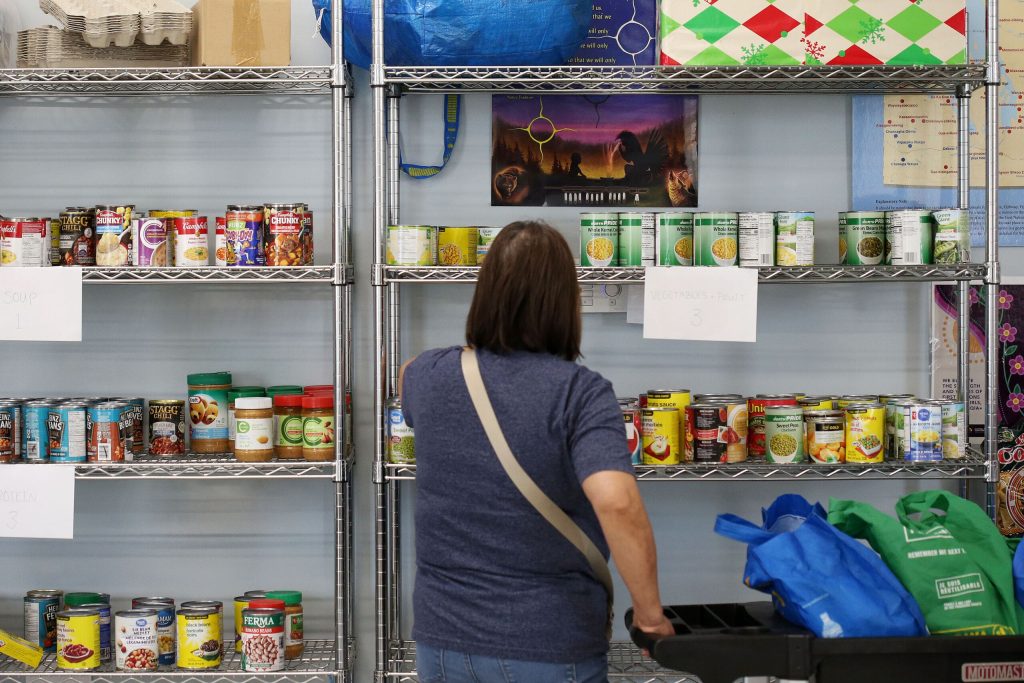
While Canadians continue to struggle with food costs rising above inflation, data shows three racialized groups face disproportionately high levels of food insecurity.
Recent data from Statistics Canada shows Black, Arab, and Indigenous populations are most at risk of going without basic necessities.
Nearly 10 million people experience food insecurity. This includes 41 per cent of Black people, 37 per cent of Arabs, and 35 per cent of Indigenous peoples living off-reserve.
While the data is based on the 2024 Canadian Income Survey, the disparities remain fairly consistent over time.
Food insecurity is the “inability to acquire or consume an adequate diet quality or sufficient quantity of food in socially acceptable ways, or the uncertainty that one will be able to do so,” according to the federal government.
StatCan uses three categories to measure this. Marginally food-insecure households worry about running out of food or have a limited selection due to financial constraints. A moderately insecure household compromises in the quality or quantity of food due to a lack of money. Severely insecure households miss meals, reduce their food intake, or go days without eating.
“Food is a visible symptom of deeper issues,” said Anick Silencieux, founder and executive director of Support Black Charities (SBC). Housing, income, employment, and other systemic barriers all contribute to whether a person can access nutritious food, and by extension, a healthy lifestyle.
Data shows that low-income households are at greater risk of severe insecurity. Coupled with the fact that poverty disproportionately affects Black and other racialized communities, it becomes clear that simply distributing food isn’t enough to tackle the problem adequately, Silencieux explains.
“More and more, you see working families [that] still cannot afford three meals a day. The poverty line is changing,” she said.
A history of colonialism, discrimination and the “big R word,” as she puts it, keeps people stuck in harmful cycles.
A 2023 StatCan report, for example, showed racialized people start their careers with lower incomes than their white counterparts. They were also less likely to hold unionized jobs or benefit from pension coverage.
How much someone makes affects where they can afford to live, and lower-income neighbourhoods tend to have fewer grocery stores offering healthy options.
The numbers become even more bleak when considering the most vulnerable. In 2022, 46 per cent of Black children lived in food-insecure households.
“That’s a high number. That’s our future, the future of the Black community,” said Silencieux. It’s also part of what motivates her, she added.
Silencieux’s organization launched the Food Security Fund pilot program during Black Philanthropy Month in August 2025. Serving as a fundraising initiative to build infrastructure and support existing organizations focused on Black food security, the fund is meant to “help the helpers.”
Black-led charities are historically underfunded, she said. Keeping up with increasing demand while being confined to rigid non-profit funding cycles certainly doesn’t help, especially in urgent situations like a fridge or a food-transportation vehicle breaking down.
Silencieux and her team have identified five Toronto-based organizations with widely attended food programs that they can support.
Their plan has four steps: build the foundation of the program with trucks, storage, kitchens, and staff; launch a pilot at one community centre and scale their food program, documenting what works; assess real-time needs in Black areas to identify next steps; and expand across the Greater Toronto Area by replicating the model and tailoring it to suit one neighbourhood at a time.
Meanwhile, she praises efforts like the recently announced Canada Groceries and Essentials Benefit and the newly passed National School Food Program Act, which will provide healthy meals to hundreds of thousands of students across the country.
“There’s been a lot of progress, but sometimes I’m still reminded that there’s still so much to do,” Silencieux said.
Not just food, but familiar food
Another part of the food security puzzle is accessing nutritious, culturally appropriate food.
A 2024 study led by McMaster University public health researcher Sarah Elshahat examined the complexity of nutrition and food in relation to mental health among Arab immigrants and refugees living in Canada.
Of the 60 participants in their study, 65 per cent experienced food insecurity.
While that’s a high rate, Elshahat, who is also the principal investigator at CAN-HEAL, said she wasn’t entirely surprised.
“I know that this population faces really complex issues,” she explained. “It’s heartbreaking because you hear those stories and you [see] behind the scenes … This is not just a number; this number carries lots of stories.”
The same factors contributing to food insecurity for Black people in Canada, like income and accessibility, apply to Arabs as well. Racism, discrimination, and Islamophobia also play a role, says Elshahat. As Muslims account for a large percentage of the population in Arab countries, having access to halal food becomes a necessity. This means being able to get halal food in grocery stores, food banks, shelters, and more.
Elshahat recalled a participant in her study who requested a halal meal during a workplace-provided lunch. They were given a meal and told it was “halal pork.” Muslims are expressly forbidden from consuming pig.
She said lack of knowledge is one thing, but consistently being met with ignorance, indifference, or even hostility from service providers regarding religious dietary requirements can dissuade people from using resources that are supposed to help them.
Then there’s the lack of guidance around using certain Canadian produce that newcomers might receive at food banks, said Elshahat
“Sometimes there are foods that they don’t consume as part of their culture. For example, some vegetables here in Canada, some grains and so on, people don’t know about that as food. They perceive it as something to maybe give to birds … this is an offense for them. That’s okay. Educate them, provide them with humane, culturally appropriate education that this can be eaten,” Elshahat said.
For people trying to make dishes from their home country, being unable to find products they need, especially in smaller cities, can be discouraging, she said. Using ingredients participants knew and could easily find helped honour their identities as both an Arab and a Canadian and improved wellbeing.
Study participants brought up the stigma of using food banks or feeling shame because they couldn’t provide for their families.
To help with that, Elshahat said she spent time with participants to build trust, adding that a similar approach to help further research and advocacy is needed. When serving racialized communities, ideally, one person on the team should share a common heritage with participants to foster a sense of comfort and safety, she said.
And while food banks are important, she notes it’s crucial to help people have some agency over their lives. This looks like increased funding for advocacy efforts or for supporting small Arab businesses that provide cultural goods. Service providers should be trained in the nuances and complexities of the demographics they serve.
Providing nutrition and food literacy education to newcomers can help them incorporate healthy foods into their diets.
The difference between colonial and Indigenous food sovereignties
Many racialized groups advocate for greater food sovereignty to combat food insecurity, including expanding community gardens, supporting culturally relevant businesses, and strengthening local infrastructure to ensure the needs of diverse populations are met.
All of these methods are part of decolonial solidarity, which ultimately traces back to Indigenous peoples in Canada. But there is a difference, said Shirley Thompson, associate professor at the University of Manitoba’s Natural Resources Institute.
“Food sovereignty looks more at a community level, or regional level, or national level. Indigenous food sovereignty and food sovereignty are quite different because we live in a colonial state,” she said.
“Colonial food sovereignty has extracted the resources from Indigenous communities, creating a resource curse or food security curse. This means that development that occurs is unbalanced and favours—because of rules and systemic and institutional systems—settler society.”
While StatCan ranks Indigenous food insecurity as the third highest in Canada, people living on reserves or other Indigenous settlements in the provinces are excluded from the Canadian Income Survey, from which this data is based.
Because of this, there is an incomplete picture of how many Indigenous peoples living in total experience food insecurity across the country, said Thompson.
But there is other data to help fill the gaps, she said.
Thompson, whose research largely focuses on reserves, points to a 2023 paper she co-authored on food insecurity in northern Canada. It shows people living on reserves making less than $20,000 or living in remote areas with no road access have the highest rates of severe food insecurity. First Nation households living on reserves and experiencing moderate to severe food insecurity at the time were 51 per cent, while those living in urban centres were around 44 per cent.
There are many historical reasons why these numbers are so high. Some residential schools, for example, conducted unethical nutrition experiments on Indigenous children in the 1940s and ‘50s. After suffering government-imposed starvation, children were used as controls to test for food safety and malnutrition.
The long-term impact of those experiments affected not only those children but also their descendants. To this day, survivors of residential schools and their progeny have significantly higher food insecurity, Thompson said.
Eliminating barriers
Barriers to agriculture, like limiting or banning traditional food gathering practices, which not only suppress cultural identity, are also ways the government has continued to mandate nutritional deficiencies for Indigenous peoples.
In Winnipeg, where they face the highest risk of moderate to severe food insecurity, a local group is taking a step forward towards eliminating it.
“We have the largest urban Indigenous population in Canada, [so] it’s huge for us,” said Rachel Sansregret, community project lead for non-profit Ma Mawi Chi Itata Centre’s new Asihcikan Project.
In partnership with Harvest Manitoba, the project will provide a welcoming space for community members to gather and access food and support.
”Asihcikan is going to be a community care site that continues on the legacy of work that Ma Mawi is doing with the extended capacity of a socially minded grocery store [that is] free of cost to [Indigenous] community members,” Sansregret said.
In addition to feeding folks, the hope is that they can use the grocery store as a point of contact with residents and learn more about the factors contributing to their food insecurity.
“We want to help people build a pathway out of poverty, so we’re looking at stuff like, how much are you paying for housing? Is your housing safe? Is it equitable? How much is childcare costing you? What kind of barriers are you facing in terms of possible employment and training? Basically, we’re trying to use Asihcikan as a place where we can provide the staple items to meet the immediate needs of families, also as a way to say, ‘how can we help you no longer need us?’”
Sansregret and her team drew inspiration from initiatives across the country doing similar work, namely the Regina Food Bank’s Asahtowikamik Community Food Hub and the Winkler and District Food Cupboard in southern Manitoba.
Sansregret said she appreciated how Asahtowikamik was dignity-focused.
“It’s one thing to have to come and line up outside of a food bank, right? It’s not a very dignified experience. You feel the way you feel when that happens. So we really want this to be something where people can come in and have a regular shopping experience,” she said.
While the Food Cupboard in Winkler doesn’t focus primarily on Indigenous clientele, it has a similar model and a community kitchen. Sansregret plans to have a teaching kitchen at Asihcikan so shoppers can learn how to prepare meals with the ingredients on site.
She said the project was born from seeing how many went hungry during the height of COVID.
“Ma Mawi was doing approximately 400 hampers a day for people, and those were being delivered to homes [in addition] to meal kits for single people … When we saw the scope of food insecurity facing families, we realized we needed to continue initiatives focused on food insecurity after the pandemic.”
She anticipates that Asihcikan will be very busy, and their greatest challenge will be ensuring their supply meets demand.
“We need money for food. We need donations. We need supply,” said Sasregret.
“The need is endless. I cannot stress that enough.”
This story series was made possible through the financial support of the Canadian Race Relations Foundation. The foundation is a federal Crown corporation mandated to raise public awareness of the causes and manifestations of racism in Canada. The CRRF has no involvement in story selection, editorial decisions, or interview choices. All journalism is produced independently by Future of Good.
Your job. Your mission. Your news.
With your support, the sector you're building gets the journalism it deserves, and you get a tax receipt.

Related Articles

Caste, corruption, and the collective: Crow’s Theatre’s A Fine Balance confronts India’s enduring inequities with humour and heartbreak
The Giller Prize-winning novel explores the realities of caste violence in India, which has been adapted into a powerful stage production in Toronto.

‘Canada must not go down that road’: More than 250 organizations demand investigation into CBSA after student protesters issued exclusion orders
The students were protesting after being denied post-graduation work permits they say they were eligible for when they enrolled at Portage College.
Half of Filipino immigrants to Canada are overqualified for their jobs: StatCan
‘For the relationship that Canada has with the Philippines, it seems like it’s lopsided.’
