Food bank vending machine launches in 2 Vancouver SkyTrain stations
A new food preservation system is helping the Greater Vancouver Food Bank turn excess fruit into new funding.
Why It Matters
Nearly half of all food in Canada is wasted every year. This new pilot shows how ‘into-the-box’ solutions can support both food waste prevention and the Greater Vancouver Food Bank’s operations.
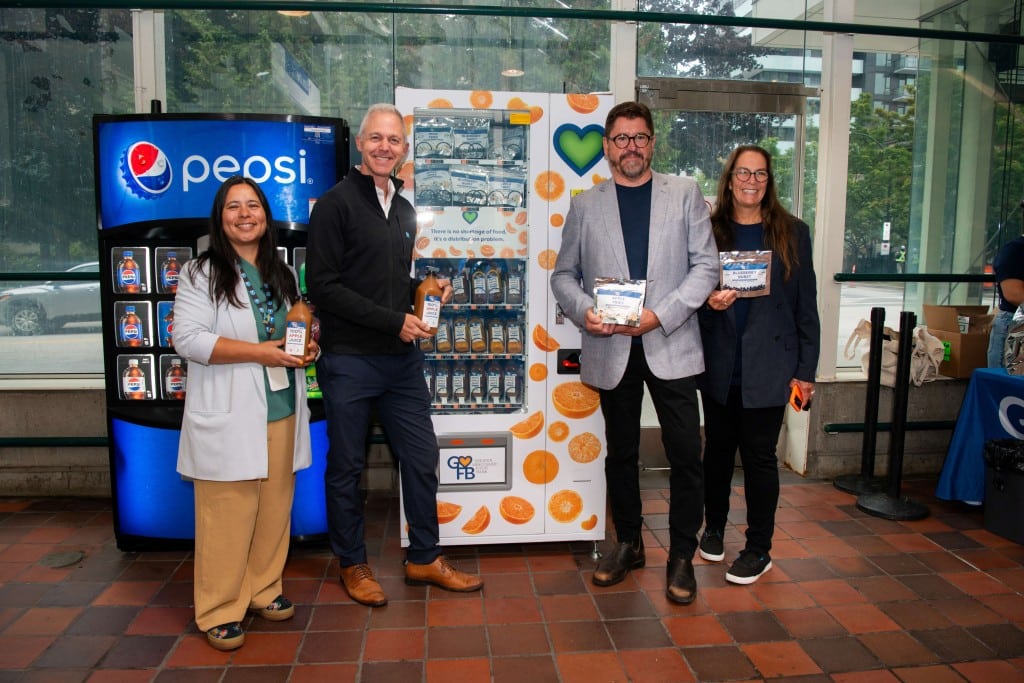
The Greater Vancouver Food Bank (GVFB) has found an innovative solution to its growing surplus of extra fruit that would otherwise go to waste.
@futureofgood Food bank vending machine launches in Vancouver. #nonprofitsoftiktok #Vancouver #foodbank #skytrain ♬ original sound – Future of Good
Using a new food preservation system, the non-profit freeze-dries and juices excess fruit, giving it a longer shelf life and new purpose.
The newly repurposed fruit is sold through its social enterprise model through a pilot vending machine at two Vancouver SkyTrain stations.
Revenue generated by the vending machines will be reinvested into the GVFB to support its programs and services.
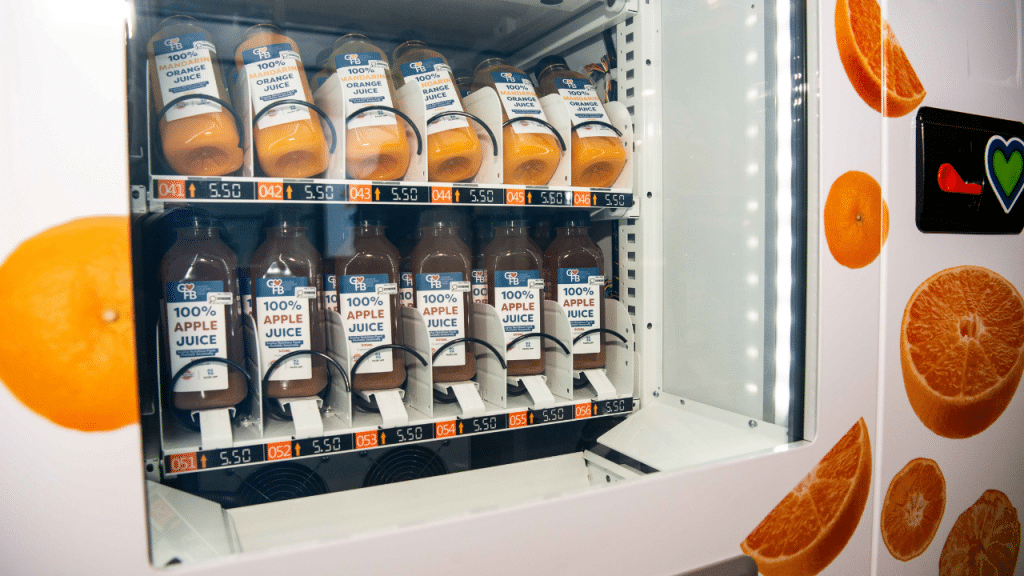
One of the vending machines is located at Joyce–Collingwood station, where TransLink recorded nearly 5 million boardings in 2025, making it the seventh-busiest SkyTrain station. (Greater Vancouver Food Bank)
According to the non-profit, a typical 340-kg bin of apples can make about 238 litres of juice.
While most of that is distributed to clients and agencies, the food bank says the excess will no longer need to be thrown out.
In Canada, more than 46 per cent of all food is wasted every year, according to a 2024 Second Harvest report.
Excess produce has long been an issue that the GVFB has been working to solve.
Earlier this month, it sent more than 29,000 pounds of B.C.-grown carrots, corn, parsley and kale to the Regina Food Bank after sending produce to its regular client and agency distributions to prevent food waste.
The GVFB says it hopes to see future vending machines in schools and communities.
Your job. Your mission. Your news.
With your support, the sector you're building gets the journalism it deserves, and you get a tax receipt.

Author

Related Articles

Food-rescue groups turn to processing facilities to respond to waste and insecurity
New facilities in Ontario and Manitoba aim to turn surplus food into repurposed products while expanding access to food assistance.

Partnered Partnered content How construction contracts became the blueprint for social change in Manitoba
Manitoba is a leader in social procurement, with decades of partnerships among government, businesses and social enterprises that have shaped a model other communities can learn from.
Fires and floods: How Canada’s non-profits are responding to summer disasters
Several organizations have set up ways Canadians can help as more than 900 wildfires burn across the country
