How Indigenous youth are pushing the clean energy transition ahead
Why It Matters

This story was produced thanks to a partnership between Future of Good and RBC. RBC is proud to support a broad range of community initiatives through donations, community investments and employee volunteer activities. See how at rbc.com/peopleandplanet. See FOG’s editorial ethics and standards here.
When Bohdana Chiupka-Innes started working with the ImaGENation program at Indigenous Clean Energy in 2022, her goal was to design a net-zero house in her home of Moose Cree First Nation.
With a background in architecture, Chiupka-Innes is specifically interested in building affordable and environmentally sustainable homes in Moose Cree First Nation, where there is an ongoing housing crisis. The community has many houses with issues like poor insulation and air leakage problems, which have a steady negative impact on residents. Building a net-zero home means making a sustainable model of energy-efficient and independent housing.
Chiupka-Innes started at the ImaGENation program with this idea, and three years ago, she was given funding to map out the project design and begin a community engagement process. Since then, the project has taken off, and she’s acquired more funding to further this idea into a reality for her community.
Similarly, Indigenous Clean Energy has been where many Indigenous youth can find their footing in the clean energy sector. With capacity-building programs like ImaGENation, which funds and supports Indigenous youth-led clean energy projects across the country, and mentorship programs, the organization is instrumental in empowering Indigenous youth within this industry.
Alexandra Thomson, director of youth programs at Indigenous Clean Energy, explains that the program wants to walk alongside youth on their projects and help them feel more comfortable in the clean energy industry.
“I do notice the young people are very passionate about food sovereignty, net-zero greenhouse projects, and smaller scale solar projects,” said Thomson, referring to the types of initiatives youth are working on within the ImaGENation program. “Some youth will install solar panels on the high schools within their communities just to raise awareness, or they’ll install solar panels in land camps, where Indigenous people are reclaiming their connection to the land.”
While there has been a ton of dialogue in the last few years about the youth labour gap in the energy sector, Thomson points out that what often gets sidestepped in these conversations is that Indigenous youth are very much the “main movers and shakers within this sector.”
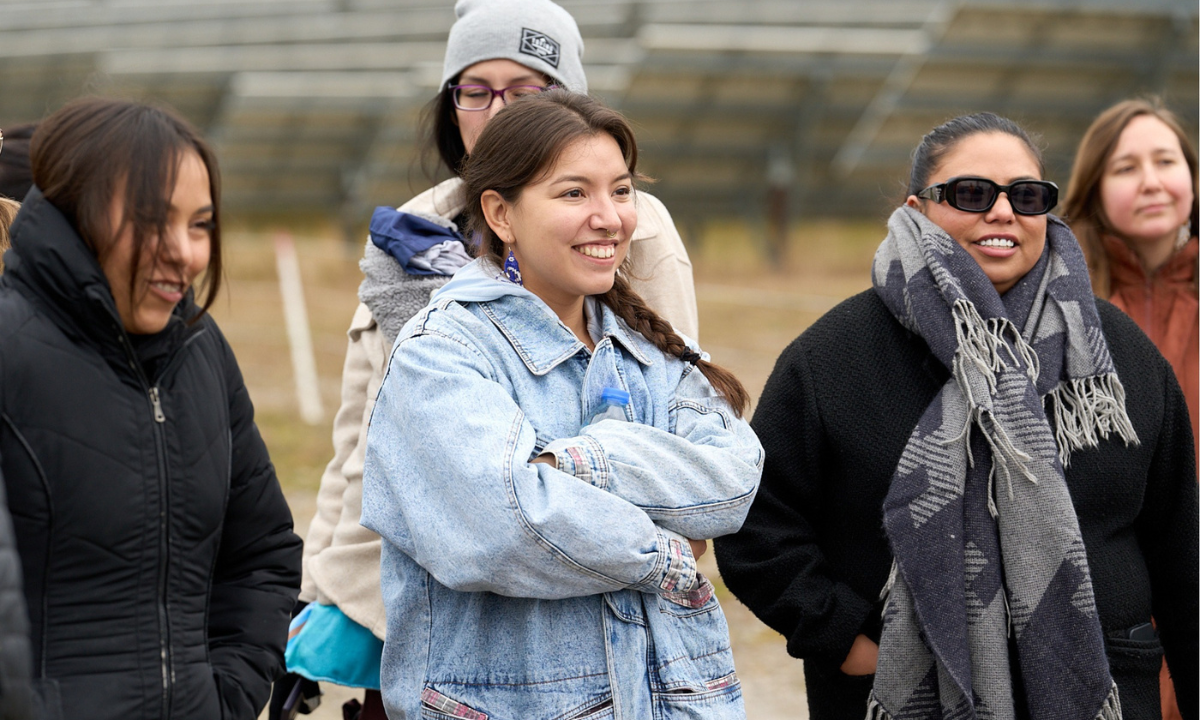
Indigenous young people have been more involved in clean energy transition conversations at the federal, utility, and community levels. They are pushing the envelope and asking important questions about ownership, policies on decision-making, and how they are impacting Indigenous land.
Community engagement is a big focus point for Indigenous Clean Energy’s youth programming. This means placing youth within their own communities, where they already have an understanding of the relevant issues at hand and a connection with the land and the people.
While it differs from community to community, youth within the ImaGENation program often host various sessions to raise awareness locally about clean energy transition and start the conversation about what energy issues are present within the community.
For instance, some northern Indigenous communities are mostly reliant on diesel for their homes, which is very expensive, causes a lot of noise pollution, and is high-emitting. Also, as some of those older homes (similar to those in Moose Cree First Nation) aren’t well insulated, there can be consistent energy leakage problems.
“Once you start having these conversations, you can understand how our community members are experiencing really high utility bills,” said Thomson, adding that some homes within her community in Cega’Kin (Carry the Kettle) First Nation on Treaty 4 Territory in Saskatchewan can see energy bills up to $2,000 a month.
Community engagement is an important step in this process of “really understanding the issues impacting people and bringing to light some of the solutions that can be brought in to alleviate that.”
Luisa Da Silva, executive director at Iron and Earth, has similarly rooted her organization in the importance of community engagement. Iron and Earth was founded in 2016 by fossil fuel workers who wanted to share their skills and knowledge within the renewable energy sector to advance the clean energy transition. Now, almost a decade later, their focus lies in creating programs to help people, especially marginalized folks who are often left out of the conversation, gain access to the clean energy sector.
One of Iron and Earth’s main initiatives is their Community Talks — where they go to different communities and engage with them about where they’re at in the energy transition, what their fears are, what their hopes are, and what they want to see for their community. It’s also community-led. “This is a very important step in giving autonomy to communities so that it’s very much done by them and for them,” said Da Silva.
At their community talk with the Otipemisiwak Métis Nation in Alberta, members were interested in learning more about financial support for retrofits and utilities and access to grants, incentives, and renewable and energy efficiency retrofits.
They also wanted continuous and rigorous engagement and consultation about energy-related projects from governmental bodies and energy companies.
In support of youth specifically, Iron and Earth has a Climate Career Portal on its website to make it easy for people to find and apply for jobs within the clean energy sector.
Da Silva notes that “all career paths must be themselves as part of the transition to a more sustainable world. And that’s a really powerful thing, because what that means is that moving towards a sustainable world treads through everything. It’s not just one industry.”
They also deliver training for youth through the Outland Youth Employment Program to give Indigenous youth real-life experience in the clean energy sector. Some of the training includes hands-on work with solar energy or wind turbine installations.
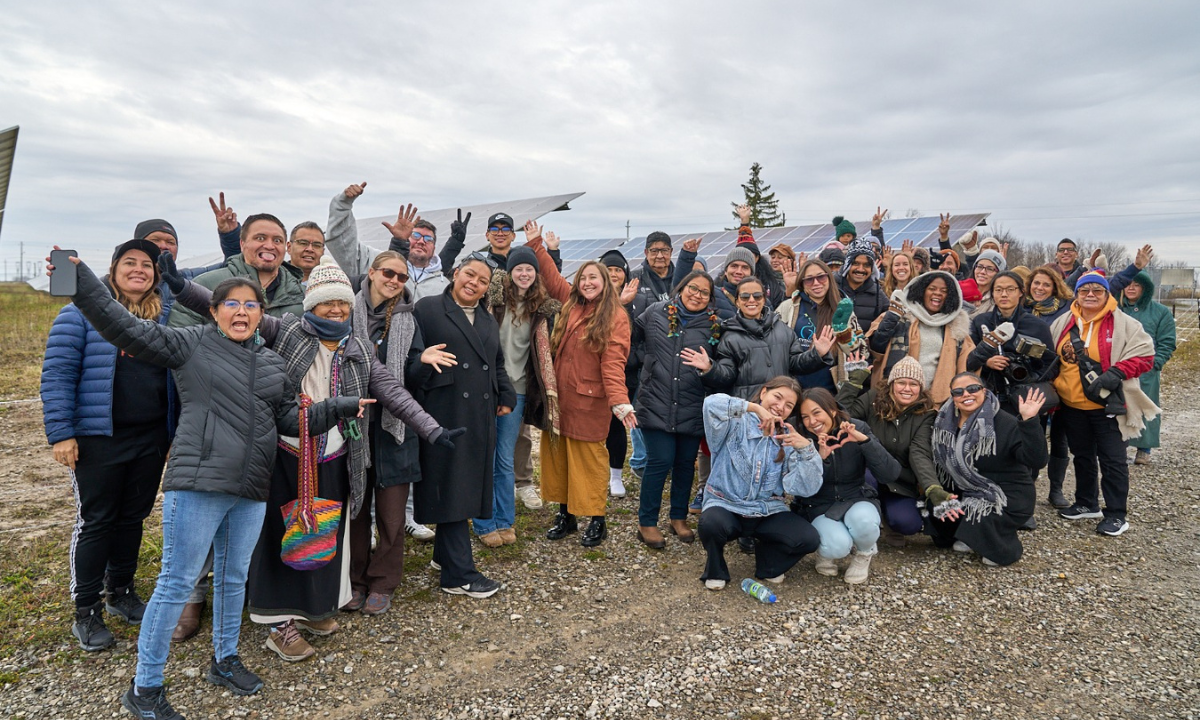
At Indigenous Clean Energy, a large part of their programming is holistic support for youth. Rather than just having one mentor for everything, youth have different people they can rely on for support depending on their needs. Some mentors can provide information about the technical side of clean energy, guiding them about what technology would be best for their location, situation, and budget. There are mentors who help with the partnerships and fundraising, as well as others for accessing grants.
They also have a mentor called the ‘Auntie-in-Residence’ who is there for cultural and moral support.
“She gives quarterly sessions where she’ll talk about different Indigenous teachings and just be that listening ear and be outside of the [Indigenous Clean Energy] decision makers on project funding and all of that. So we want to dismantle that hierarchy type dynamic by offering that space,” said Thomson.
Thomson also values guiding youth into the clean energy sector in a way that aligns with Indigenous values and knowledge. Connecting with communities and land is key.
“I think for the program moving forward, specifically for the project-based program, we’re talking about integrating energy literacy training and project management training with land camps so that Indigenous young people can go out onto the land, reconnect with their culture, reconnect with nature, and maybe even learn the teachings of another community, and really understand how Indigenous traditional ways of being can intersect with energy,” said Thomson.
Land-based learning has always been a core part of Robert Burns’s youth programming. Burns is the manager at SevenGen Energy, which supports Indigenous youth in the energy and sustainability sector. Since 2019, they have hosted three SevenGen Summits, gathering hundreds of Indigenous youth across Canada to advance their role in the clean energy movement.
Burns has worked with many Indigenous youth in urban environments, helping them build a stronger connection to the land. There are many distractions in the city, and pulling youth out of that space and prompting them to think about things like how waterways work, sustaining themselves with food on the land, or building emergency shelters is a powerful way for youth to start building a relationship to the land, he said.
“You start to realize how much land is like an equalizer. I will always describe land as a great teacher, healer and provider,” said Burns.
According to Thomson, building a strong connection to land is also a way for Indigenous youth to understand what they are trying to protect as rights holders in this country.
Indigenous communities have the right to get free, prior, and informed consent about any decisions being made to their land. Unfortunately, there are many instances when energy companies and corporations neglect to consult and involve communities in decisions that will significantly impact them.
Da Silva explains that it’s in an organization’s best interest to get the local Indigenous community involved in the planning and decision-making process of whatever energy project they are planning to set up because they know what the best use of their land is, the current challenges, and what is and isn’t realistic. Free prior and informed consent implicitly honours their decision.
Thomson notes that currently, Indigenous communities own 20 per cent of electricity-generating infrastructure in Canada. In Ontario, 450 renewable energy projects are owned or run in partnership with Indigenous communities. ‘
In British Columbia, BC Hydro said all new clean energy projects need to be at least 25 per cent Indigenous-owned — and eight of the nine successful energy projects have 51 per cent equity ownership by First Nations.
“Indigenous people have been at the forefront starting with renewable energy even 20 years ago, So I don’t think it’s anything new, but I feel like the pace is going to increase just because there is more demand for [clean] electricity now and Indigenous people are becoming stronger,” said Thomson.
“I think the landscape is actually changing, and it’s not going to be possible to move ahead with the old way of doing things.”
Tell us this made you smarter | Contact us | Report error