Here’s what you missed at Future of Good’s Dismantling Digital Barriers Summit
Why It Matters
Social-impact organizations are fighting two simultaneous battles: the first is trying to bridge the digital divide for demographics who lack access, and the second is working to build and grow their own digital infrastructure as an organization. Proper support is needed now more than ever through collaboration, funding, and policy change.
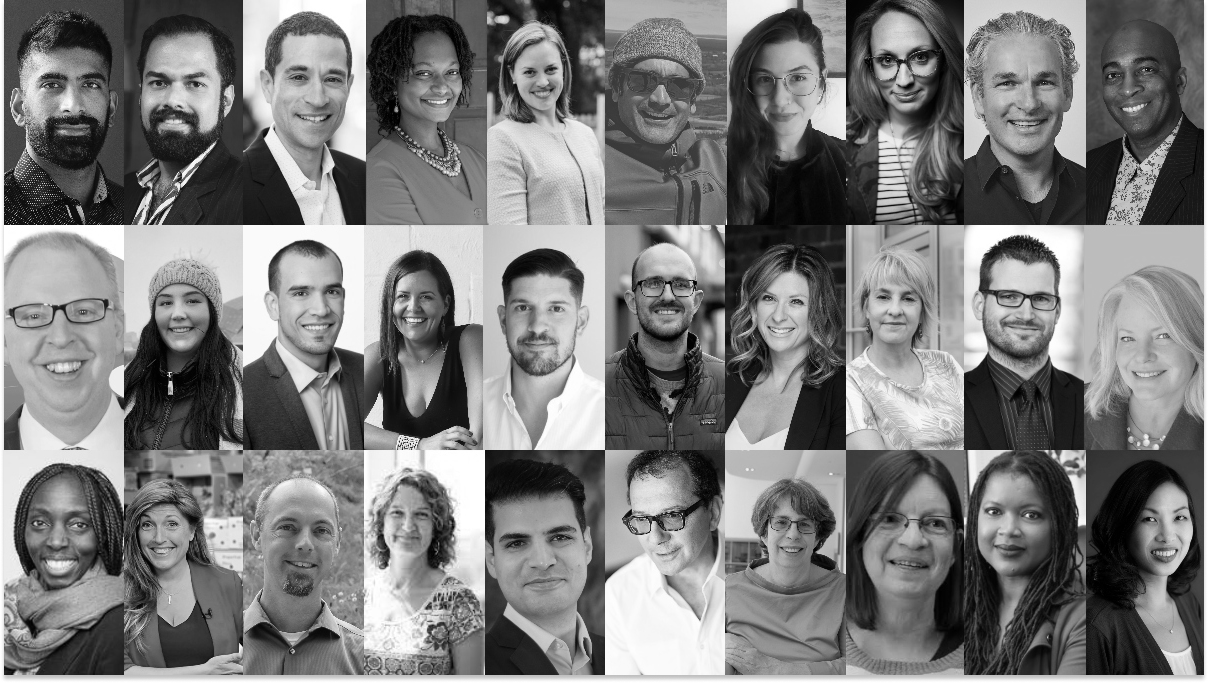
In an increasingly online world, digital equity is a crucial conversation. Future of Good’s Dismantling Digital Barriers, in partnership with CIRA, dove fully into this topic to understand: what is digital equity? Who is left behind? And how do we close that gap?
“What we’re seeing is an increasingly digital world where the bar is being set higher every day with technology — and then that inability to meet those standards is really holding organizations and people behind,” said Charles Buchanan, CEO of Technology Helps, an organization that helps non-profits make digital transitions.
There were three plenaries. The first one, “What is Digital Equity?” was moderated by Charles F. Milton, CEO of Bursity, who spoke to five speakers from the non-profit and tech world in discussing specifically what are the digital barriers. The second panel, “Social Impact Going Digital” was moderated by Kylie Adair, editor at Future of Good, which highlighted some organizations’ experience in reshaping their system to be more digital. Finally, the third panel, “Funding Digital Connectivity and Capacity” was moderated by Future of Good’s CEO and Publisher Vinod Rajasekaran, and explored the topic of how funders need to shift their approach to funding for the digital world.
Though the discussions were across a full spectrum of this topic, here are five key takeaways:
Designing for — and by — historically underserved and marginalized communities
Erin Knight, digital rights campaigner at OpenMedia, who is from a small community in Manitoba, said there are a lot of different intersecting demographics who are kept on the wrong side of the digital divide. This includes remote communities with a lack of internet access, elders who don’t have a certain level of digital literacy, and marginalized communities.
When organizations who are looking to bridge the digital gap, they must come from understanding the perspective of those who they are trying to serve. Louise Adongo, CEO of Inspiring Communities, gave an example by asking how someone (like her mother) who only uses cash will be able to access services that require you to order online with a credit card.
“We want to surface all the obstacles — but I think if we centre the people that are impacted, we can meet the key needs, and we can actually evolve over some of these hurdles. I think that we need to think about what we’re doing differently from the ground level,” said Adongo. In other words, centre the people who are most impacted by the digital divide in any solutions design, and accessibility will naturally follow.
Adapting to digital is hard work — but necessary work
The shift to a more digital operation has been a move for a number of organizations well before the pandemic. However, the global crisis definitely forced many more to adapt quickly to how they operate — and it’s important not to forget that this transition has been difficult for many.
Surrana Sandy, CEO at Skills for Change explained that her organization went through a massive transformation. “Myself and our leaders were worried about the capacity of our organization to carry out our mission and to handle the crisis both on our staff, and the communities and clients that we serve,” said Sandy.
At the same time, this digital transformation within the non-profit sector is an integral part of ensuring that an organization’s services can reach those in need. Maureen James, community investment manager at CIRA, said, “No matter what your number one issue is as an organization and social impact sector, you need to deliver and you need to know that [digitizing your work is] central to making positive social change in communities.”
Digital capacity is not overhead, and shouldn’t be funded this way
While more than 80 percent of social-impact organizations are working towards the shift to digitizing their organizations, more than half of these organizations lack the funding needed to acquire digital tools.
It’s common for organizations to file digital transition costs as overhead or operating costs, which can be difficult to get funded, since much of the available philanthropic funding is earmarked for programs and services. The understanding, however, is now shifting to look at digital infrastructure as core to organizations’ missions, the speakers said.
“We need to actually support the work around trust-based [philanthropy] and how we build relationships with funders in ways so that we can get on with the critical work and be pivoting in moments of disruption,” said Joanna Kerr, CEO of MakeWay.
Kerr also explained that at the start and through COVID-19, many funders gave organizations more leeway and freedom as to how they use the funding, allowing where those resources are needed the most — in many cases, digitizing their work.
However, she added that, “some of that is slipping backwards, which is unfortunate because we really wanted that moment to be where much more core, flexible, trust-based funding can actually be part of the philanthropic world in Canada.”
Organizations need to collaborate for digital justice
There needs to be a paradigm shift in how the sector approaches digital equity — treating it like a movement, explained Kerr. “We actually have to collectively build a movement towards digital justice, digital transformation, and spectrum rights.”
Instead of asking questions like, ‘How much tech hardware is needed in a particular rural or Indigenous community?’, Kerr said funders and organizations need to be asking, “What is the movement that needs to be funded? What is the system that needs to be transformed through an ecosystem of different organizations creating digital access?”
At the same time, Jennifer Flanagan, CEO at Actua, said that their approach is to zoom into the issue and take it “one kid at a time.” While she appreciates Kerr’s perspective on movement building as a whole, “for us, a Chromebook in a kid’s hand is actually massively transformative.”
Still, by collaborating with each other, organizations within the sector can work together in finding innovative ways to digitally transform. Lori Nikkel, CEO at Second Harvest, said that, “any kind of digital change should be open source so everybody can access it, and collaborate with as many people as possible…data is king and getting more data is only going to help our sector with this.”
Real digital equity can’t be achieved without policy and legislation change
As much as organizations and individuals can work towards adapting to the digital world, some speakers in the summit said tangible policy change is needed for digital barriers to be truly broken down in a meaningful way. “We can try to take down digital barriers brick by brick, with programs and projects, but the barriers are being built up faster than we can take them down,” said Knight.
“We need to start talking within the sector about structural systemic issues in Canada that are perpetuating digital barriers,” Knight continued. “In terms of digital systemic issues, which I work on, we need to be talking more about our true lack of national connectivity strategy in Canada; we need to be talking about the policy and public dollars that are propping up telecom oligopolies.”
Within the summit of over 200 attendees from all over the country, the medium through which the discussion was held echoed the point further in terms of the sheer importance of connectivity.
“Never before has this cause been more personal or pervasive in organizations or individual’s lives. We understand now that this environment that we’re accessing is essential to not just work, but connection, community, and prosperity,” said Cait Brenchley, director of fund development at Canada Learning Code.
Roger Simard, chief digital product officer at Canadian Red Cross, agreed: “If there was only one thing that I hope that this crisis showed us it would be to make access to the Internet a human fundamental right.”
PLENARY: WHAT IS DIGITAL EQUITY? WHO’S LEFT OUT?
PLENARY: SOCIAL IMPACT GOING DIGITAL: WHAT DOES IT LOOK LIKE ON THE GROUND?
PLENARY: FUNDING DIGITAL CONNECTIVITY AND CAPACITY
Tell us this made you smarter | Contact us | Report error