“Organizations are fearless, but funders are not,” when it comes to the digital transformation: report
Non-profits and charities are doing their best to adapt digitally, experts say – why aren’t their funders doing the same?
Why It Matters
Many funders in Canada are well aware of the need for a sector-wide digital transformation; still, their lack of knowledge on digital issues means that they aren’t funding digital projects for nonprofits and charities that are trying to serve their communities in an increasingly digital world.
 This story is in partnership with Technovate, a multi-sector collaborative formed to address technological and digital needs of the non-profit sector. See our editorial ethics and standards here.
When Maureen James started at the Canadian Internet Registration Authority (CIRA) about four years ago, she was in charge of the granting program, and it didn’t take long for her to notice the gaps in digital funding.
“I started to look around and realized there were very few other funders in this space that weren’t government,” she says. “Other organizations that have money to give away, or to help the social impact sector do its work were not funding anything digital, not explicitly digital.”
Four years later, the situation for digital funding hasn’t changed much, she says: though there are significantly more conversations about the digital divide and the social impact sector’s role in bridging the gap, there’s been little action from philanthropic funders granting to nonprofits and charities.
CIRA’s Getting Connected report dives into why this gap in funding digital still exists, and finds that funders are facing three main barriers: they have a lack of knowledge about digital issues; they don’t have a network of funders to learn from each other about funding digital; and many shy away from issues such as improving internet access because they view it as the government’s responsibility.
“The report really identified that funders see the connection between digital equity and social justice — they just don’t know how to get into the space. It’s unfamiliar territory, they don’t know who’s in it and they ask themselves, ‘How do we fund this space?’” says James.
The work for funders, James explains, is to build awareness of their own gaps and help gain some momentum and understanding around what social impact organizations need, to be able to operate well in a digital-first environment. And that can include funders considering core support for digital approaches to social impact work.
To encourage funders to take action, CIRA used the findings in the ‘Getting Connected’ report to develop a how-to guide for funders considering funding digital equity. In October, CIRA released “How to Fund Digital Equity in Canada – A Guide for Funders, a short booklet designed to break down the barriers funders have identified, and help them move into funding digital.
Funders are struggling to understand the nuts and bolts of digital projects
Shelley Robinson is the executive director at National Capital FreeNet (NCF), a not-for-profit internet service provider, has been working to advocate for cheaper and safer internet access for years.
Robinson recalls that when COVID-19 first hit, their organization, along with many others, were able to secure funding for digital projects. “There was an influx of money for organizations that aren’t usually perceived as being tech-based organizations, like community health centres, to help [them] serve their clients online.”
Though the digital divide existed well before the pandemic, COVID-19 highlighted digital inequities, making them more visible than ever. Now, that visibility and urgency to support digital projects has faded. “Even though we’re not fully out of COVID yet, that [funding] has entirely dried up,” says Robinson.
Tech-focused organizations like NCF are often forced to apply for funding through general funding calls (that aren’t specific to tech projects), often alongside other non-tech projects that may seem more straightforward. This makes it difficult for NCF to get funding, especially when funders aren’t as quick to understand tech projects.
“When organizations take their programming and present proposals that say, ‘We really want to shift how we do things, to do them digitally, many funders feel they aren’t equipped to understand those projects,” explains James. “And to me, that’s been a big issue — organizations are fearless and funders are not. Funders can be risk-averse, and they hold back.”
For instance, at NCF, Robinson and her team have been working on building a community network to provide free public wifi around the Ottawa community housing tower and the Lowertown Community Resource Centre. But seeking funding for this project in a general funding pool has proven to be quite challenging because the project is conceptually complicated.
“How do you compare somebody who’s trying to build a community network and somebody who’s trying to build a playground in the same funding call?” says Robinson, “one of those is a lot more tangible and easier to understand than the other.”
And at the same time, Robinson explains “there’s no such thing anymore as an organization that doesn’t include tech. So yes, [NCF is] tech-focused, but the rest of them are all tech-facilitated.”
In her experience, Robinson has had the most success getting funding for things like digital literacy workshops, because it’s a concept that funders can easily get behind. The more difficult projects to acquire funding for are for projects like capital investments or training for staff.
It’s the responsibility of funders to expand their knowledge on digital transformation
James says she’s heard from many funders who are saying they need to come together as a community committed to learning more about funding digital transformation projects. In Canada, this kind of gathering space for funders is lacking, she says, though Technovate — a multi-sector collaborative formed to address technological and digital needs of the non-profit sector — has been playing an important role bringing funders together.
The U.S. has NetGain, which brings together a number of big foundations and focuses on the issue of digital rights. In Europe, there are also funders who focus on specific digital topics such as the European Artificial Intelligence Fund, a philanthropic organization working to shape the future of AI.
“I think Technovate has been a really important space for funders to demystify [funding digitally] for themselves. What are the issues? Where can we best put our resources? As a group of funders, what’s the best role for us to play?” says James.
There’s also a growing pool of resources for funders to understand the breadth of the digital disparity across Canada as well as the funding gaps. CIRA’s report, along with documentation about digital equity from CanadaHelps and the Canadian Centre for Nonprofit Digital Resilience have given the sector tangible reference points.
The purpose of having a community of practice for funders, James says, is to look “honestly at funder practices, which can be pretty opaque to the outside world, as well as thinking about how to raise awareness among other funders more broadly and about the need and value of supporting digital transformation and digital equity.”
Risks needs to be encouraged and supported to accelerate digital transformation
Pushing boundaries and finding solutions for digital equity often means trying methods that are new, and thus have not yet been tested. And yet, Robinson says very few funders are willing to stick their necks out for non-profits and charities taking on risks.
“In the for-profit space, it’s like there’s this sense of — greater risk equals greater reward, and there’s some tolerance for risk. But there’s very limited tolerance for risk in traditional funding [for non-profits],” says Robinson.
But Robinson says risks are necessary to maintain momentum on the social impact sector’s digital transformation.
“I think that [funders], reasonably, want to seem to be good stewards of money. But I think that can sometimes lead to a preference for doing things the way they’ve always been done. And so what starts out looking like it’s smart stewardship, in fact, is kind of stultifying,” says Robinson.
And even if a project doesn’t pan out as planned, Robinson says it shouldn’t be seen as a failure — there is a ton of learning to take away from those kinds of projects, and they are still moving digital transformation forward.
“[Funders are] often looking for big answers. And big answers are important, but in the meantime, you can do the small things while you’re figuring out what your big answer as a foundation might be,” says James. “Don’t let the perfect be the enemy of the good: you can experiment, you can do pilots, you can do a few partnership projects, so you’re making it happen, at the same time as you’re learning, and developing the digital theory of change.”
Your job. Your mission. Your news.
With your support, the sector you're building gets the journalism it deserves, and you get a tax receipt.

Related Articles

Texting with a stranger beats a chatbot at easing loneliness: Canadian study
UBC-led study challenges the idea that an always-available AI companion can substitute for a human connection.
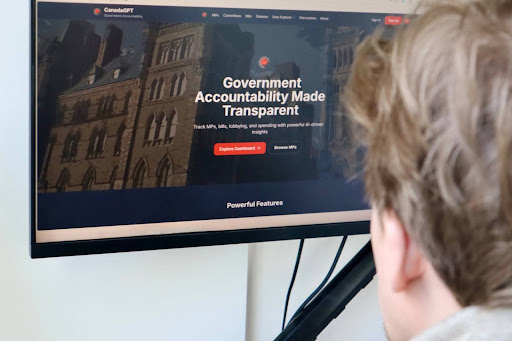
New AI tool aims to make federal politics easier to track
“CanadaGPT” is designed to simplify complex government activity by giving users a clear understanding of what’s happening in Ottawa.
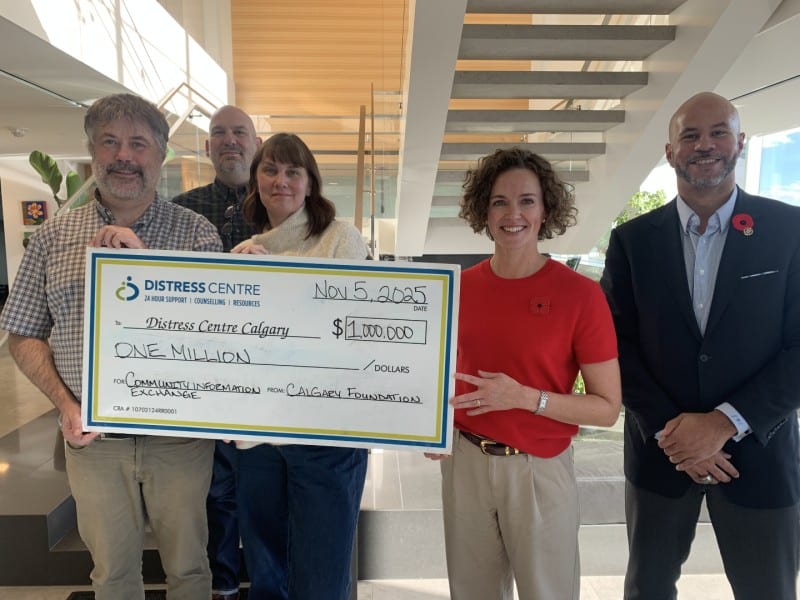
Calgary community services to begin sharing data, promising ‘more reliable support’ to vulnerable clients
Distress Centre Calgary has been piloting a Community Information Exchange (CIE) in the city in partnership with other non-profits and public sector services. It would allow organizations working with the same individuals to enter and view data about that person’s journey through various frontline systems.
