UPDATED: Artscape crowdfunds for operational funding as receivership deadline shifts to October
Open letter from former workers receives over 700 signatures
Why It Matters
After failing to receive offers for its $22.5 development, Toronto Artscape is insolvent and in receivership. Hundreds in the arts community could lose access to premium spaces and sustainable industry support.
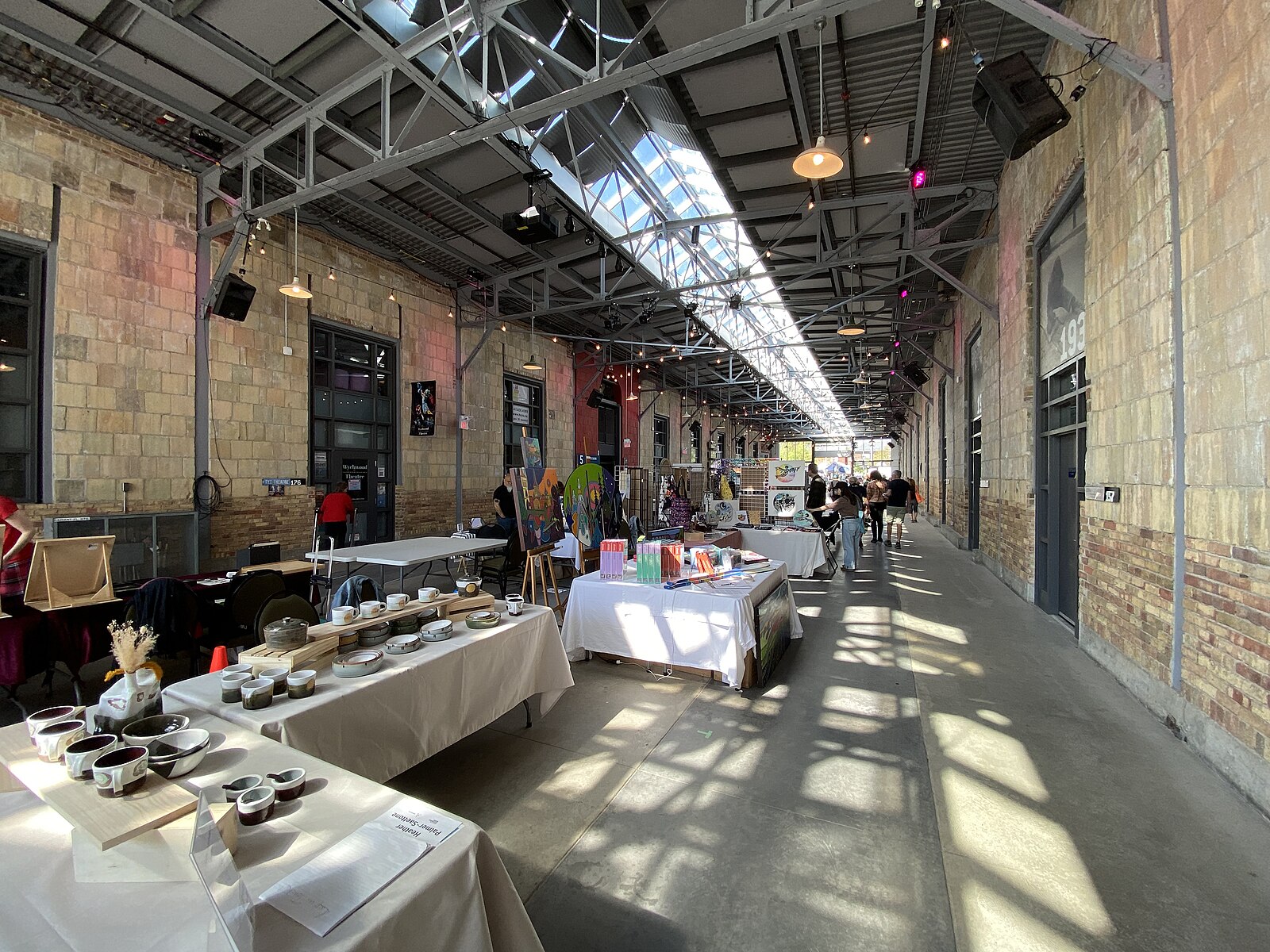
Artscape Wychwood Barns Interior. Author: Canmenwalker
The embattled Toronto cultural organization Artscape has launched an online fundraiser to “continue operations” after it received a funding extension that will delay its receivership until October, as former workers say it is “unacceptable” for the non-profit to stop paying them.
Artscape announced last month that it would be placed into receivership after failing to secure bids for its newly built Daniels Launchpad development on the Toronto waterfront. The organization had hoped selling the $22.5 million project would allow it to partially recoup the $36 million debt it had acquired over the pandemic.
Receivership occurs when an organization can no longer repay its lenders and is taken into trust by a third party, which controls all business operations and liquidates assets to cover debts. Unlike a bankruptcy filing, it is an open-ended agreement between an organization and its lenders that leads to a number of different outcomes. If an organization returns to profitability, it may survive post-receivership, but the receiver may decide to wind down the business entirely.
Brooke Duval wrote to tenants on Sept. 12 to share an online fundraiser. As of 3 p.m., Sept 13, at least $6,580 had been donated through the CanadaHelps platform.
Duval did not clarify what exactly donations would be used for but said Artscape was committed to continuing operations, maintaining an interim skeleton crew, and ensuring laid-off staff were compensated. Laid-off staff had already released an open letter demanding severance pay.
The City of Toronto had recently allowed Toronto Dominion Bank to extend its $5-million line of credit to Artscape by a further $1.5 million. But when Artscape’s “primary lender” could not secure a favourable deal with the City, the organization became insolvent, Chief Operating Officer Kelly Rintoul said in a letter to Artscape tenants in late August.
Although neither Artscape nor TD Bank have publicly confirmed whether TD was the primary lender in question, both Rintoul’s letter and a statement from Toronto’s mayor, Olivia Chow, indicate it is.
Chow confirmed that Artscape’s receivership had been delayed until Oct. 1 with “support from TD and the City of Toronto” in a post on X (formerly Twitter).
“Artscape is a vital source of affordable living and working space for Toronto’s arts and culture community. Our city needs more, not less, affordable spaces for artists,” the post concluded.
Former Artscape workers also released an open letter to Chow, Artscape, and TD Bank with their demands. They had been considering a union drive after layoffs earlier this spring when the receivership news suddenly left them unemployed.
The letter claims that workers have not been granted a seat at the table for negotiations to preserve a skeleton crew of essential staff during the wind down. Workers demand to be included in these discussions and seek a meeting with Chow.
“We perform(ed) essential work while watching those in charge make risky and unaccountable decisions. Many of us offered warnings, to little avail.”
Workers also demand two months of wages per year worked, in addition to lieu and vacation time, and priority for ex-employees should re-hiring occur. As of 3 p.m., Sept. 13, over 730 artists, tenants and supporters had signed the letter.
For non-tenants, signing the letter is not just about supporting colleagues but demanding respect for artists in general, said Toronto filmmaker and Artscape-user Dylan Mitro. They were completing a residency at Artscape’s Toronto Island development when news of the receivership broke and saw how the community coalesced around the laid-off workers.
To raise awareness of the community’s plight, Mitro put together an impromptu art project using an Artscape-branded life preserver on the island. A series of cyanotype photographs frame the life preserver in bright blue and stark black-and-white. To Mitro, the display stands in for the island’s space.
“Artscape as a whole is about the community it nourishes… At the higher-end level, they’re really not listening to that community and seeing how they can support it.”
How did we get here?
 The housing and working spaces developer for Toronto artists announced in late August it could not sell its recently built Daniels Launchpad development on the city’s waterfront and is under receivership after serving the city for 37 years.
The receivership also comes as Artscape workers were operating a union drive following the layoffs of eight employees to cut costs. Workers demanded a $23 per hour liveable wage, seniority-based layoffs, and more transparency on future job losses.
In July, Future of Good reported that the cash-strapped Artscape was cutting its losses on the $22.5 million Daniels Launchpad development it had hoped would boost its post-pandemic recovery. CEO Grace Lee Reynolds said the organization held $36 million in debt, and a lack of interest in the Launchpad’s retail and artist working spaces during COVID had forced a sale.
Artscape operates 14 sites in Toronto, some in partnership or through lease agreements with the City government, and houses almost 400 people across 265 affordable housing and working spaces, in addition to 125 commercial tenancy spaces. The City also recently granted permission for Toronto Dominion Bank to extend its $5 million line of credit to Artscape by a further $1.5 million, which Coun. Shelley Carrol said was “essential” for the city’s cultural scene.
“Artscape was instrumental in helping a generation of creatives in Toronto access premium arts spaces at a time they were becoming terminally scarce,” film editor and director Patrick de Sousa Lahey wrote by email.
“While many are no doubt wondering about the complex financial situation that led to this regrettable announcement, no one can reasonably be in doubt what fate awaits these prestige (sic) downtown spaces once they are surrendered to the avaricious market.”
In a statement issued following the receivership news, a City spokesperson said “the lender sought to put additional conditions on the line of credit that extended beyond the scope approved by Council, and as such, the City was unable to provide the guarantee.”
What happens to tenants?
In her letter to tenants announcing the receivership, Chief Operating Officer Rintoul wrote that while tenants and owners would continue to have access to their spaces for now, the receiver would assume ownership of Artscape-owned units and second mortgages and “determine the path forward for all existing Artscape contracts.”
In an update a few days later, Rintoul confirmed no changes would be made to rent or lease agreements for September but did not address what would happen in October.
“I recognize that the uncertainty of this moment and the lack of clarity on next steps is unsettling, as it is for us too,” Rintoul wrote. “We are committed to providing as much transparency as possible with our community and will share updates as we receive them.”
As of publication time, it was unclear whether the City would be willing to sell the assets it had leased to or jointly operated with Artscape. Speaking anonymously because they were not authorized to discuss the receivership, a person with knowledge of the situation said it was likely the receiver is bound to honour the contracts Artscape had signed with the City.
Henry Faber, president of the Toronto Media Arts Centre and a longtime presence in the city’s film scene, said there was “mass confusion” from current Artscape tenants. “The people that are the most scared right now are people that live at live-work spaces.”
Your job. Your mission. Your news.
With your support, the sector you're building gets the journalism it deserves, and you get a tax receipt.

Related Articles

Explainer: Quebec’s pension fund stopped investing in oil and made $4B more in green energy. Now politicians and Canada’s pension sector need to get the memo
Quebec’s pension giant proves renewables can outperform oil — and exposes how far behind the rest of Canada’s funds really are.
Explainer: A new tool to hold real estate investors accountable on housing
A new disclosure framework gives Canadian investors their first standardized way to assess whether their real estate portfolios align with the human right to housing.

Explainer: Why this new Nova-Scotia platform could solve a major community investing problem
Backr could solve a big barrier to local investing: the lack of infrastructure connecting everyday Canadians to community finance tools.
