
This article was produced in partnership with SVX. You can read our full editorial standards here.
Partnered Partnered content The dirt on cleaner farms: Regenerative agriculture reshaping Canada’s farming future
Farmers see higher profits and healthier soil when moving to regenerative practices, but face financial and policy barriers to making the transition.
Why It Matters
Regenerative agriculture improves soil resilience, profitability, and long-term farm viability, especially for small operations squeezed by rising costs and climate change. But without policy and financial systems that share the risk of transition, many farmers remain locked into conventional models that can worsen ecosystems.
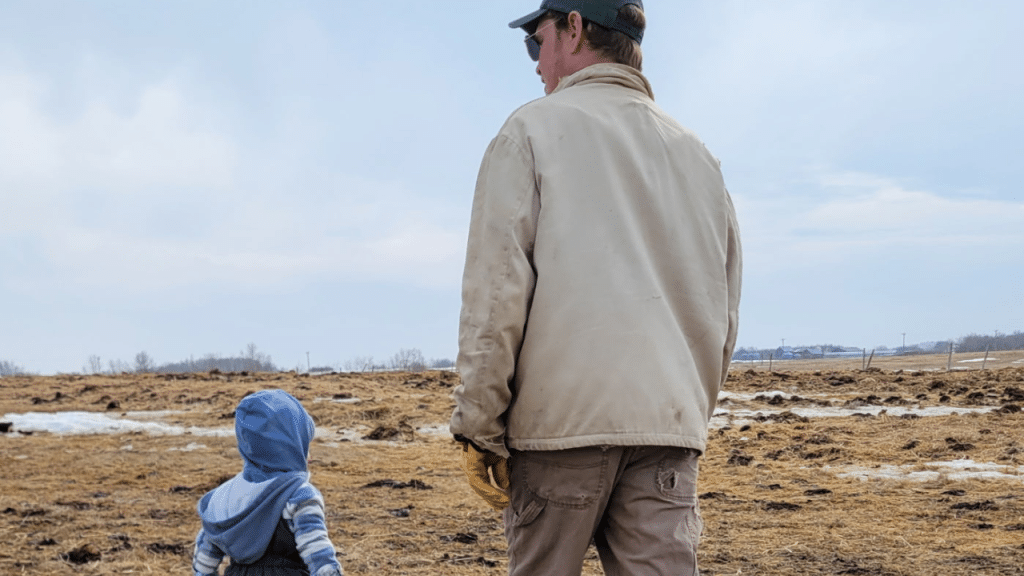
Outside a small rural Manitoba community of about 700 people, Zack Koscielny decided to try something different on his farm.
With an interest in the environment, he came across regenerative agriculture, an approach that focuses on restoring soil health and working with natural systems.
“Initially the draw around regenerative agriculture for me was working with nature and restoring degraded land,” said Koscielny, the owner of Green Beach Farm and Food in Strathclair.
Regenerative farming is a way of growing food that focuses on restoring soil and ecosystems damaged by conventional agriculture.
It creates healthier, more resilient land through practices such as composting, cover cropping, crop rotation, mixed farming, limited or reduced tilling and integrating livestock.
As a cattle farmer, Koscielny began making changes to his pasture management and improving the diversity of his crops.
“I just kept hearing over and over, people who had gone down the regenerative path and lo and behold, they were making way more money than they had been prior to implementing regenerative practices,” he said.
“That resonated with me because we’re a pretty small operation, so the margin per acre is a pretty big deal.”
For smaller farms in particular, improving margins without increasing acreage can be key to staying financially viable.
From 2001 to 2021, the number of farms in Canada decreased by 23 per cent, from 246,923 to 189,874, according to Statistics Canada.
“It’s definitely disappointing to watch more farm yards turn up empty every year,” said Koscielny.
“I absolutely believe regenerative agriculture could play a role in keeping at least some of them around. From what I have seen so far, farmers that have switched to regenerative style management are more profitable and resilient, both ecologically and economically. Improving a business in those areas can’t hurt long term viability.”
However, it’s not just the profit that’s beneficial to farmers; it’s the broader impact on the food system, according to Sarah Day Levesque, founder and managing director of Regenerative Food Systems Investment (RFSI).
“What’s happening on the farm influences outcomes across the entire food system,” said Day Levesque.
Interest in regenerative agriculture has increased in the past decade due to the pressures of climate change, supply chain disruptions, and rising costs of traditional farming, she said.
“What used to be a fringe conversation is now being taken seriously because those risks are no longer theoretical.”
Financial risk setback
The transition to regenerative practices can be financially difficult for farmers.
“In many cases, it’s still up to the farmer or rancher to take on all the risk of changing their practices, changing the way their businesses run, finding new markets, experimenting with different practices than they’re used to on the farm,” according to Rex Raimond, director of Transformational Investing in Food Systems (TIFS).
A 2023 study by Queen’s University found that supply chains are largely structured around conventional models, leaving farmers financially vulnerable when shifting to regenerative practices.
“That risk is concentrated at the farmer level, and it takes multiple interventions to start spreading that risk and sharing that risk,” he said.
“The systems of policy, markets, finance, inputs, technical assistance, knowledge, it’s all geared towards and slanted in favour of an incumbent system.”
The same Queen’s study found that a systems shift is required to address the sector’s ecological crises, build more land resilient to climate change, and improve long-term sustainability.
Financial barriers are among the biggest challenges farmers face when adopting regenerative practices, said Day Levesque.
“We saw trillions of dollars going into conventional agriculture, while farmers working toward regenerative outcomes and the systems around them weren’t seeing even a fraction of that same investment,” said Day Levesque.
She founded her organization in 2018 to help coordinate networking and education opportunities to increase investment in regenerative agriculture.
“Our mission is to catalyze capital and connections to move investment into regenerative and resilient agriculture and food systems,” said Day Levesque.
Call for policy changes
Current policy and financing structures make it difficult for farmers to take on the financial risk of transitioning to regenerative practices, Day Levesque said.
Restructuring things like agriculture lending programs, farm subsidies, and crop insurance could help encourage farmers to move towards the new model, she added.
According to Agriculture and Agri-Food Canada (AAFC), it is supporting the shift toward regenerative farming through a range of funding programs that encourage practices such as cover cropping, reduced tillage, crop diversity, and wetland restoration.
The AAFC pointed to initiatives such as the On-Farm Climate Action Fund, the Agricultural Clean Technology Program, as well as its Sustainable Canadian Agricultural Partnership that provided $3.5 billion in federal, provincial, and territorial funding from 2023 to 2028 to help farmers adopt beneficial management practices and improve climate resilience, including through the Resilient Agricultural Landscape Program.
For Koscielny, lowering insurance premiums for farmers who actively manage and improve soil health would be a major incentive.
“I think that while it is beneficial on the farm, and that’s our reason for doing it, there is a broader implication that’s beneficial to everyone else from these practices,” he said.
“Farms that are improving soil, holding more water, slowing runoff and erosion and keeping nutrients on their land because they’re not having as much runoff – these are all societal benefits. They’re going to improve the water quality of our recreational water bodies.”
“If we had a ton of people invested in improving their infiltration rates or retaining wetlands on their land, maybe we wouldn’t flood so badly in the wet years, too,” he added.
The AgriInsurance Program is delivered provincially to producers and is responsible for setting premiums.
Koscielny’s move into regenerative agriculture was made possible by connecting with others and exchanging ideas, something he said was invaluable.
Farmers and leaders will have a chance to do just that in Winnipeg later this month at the Regenerative Food Systems Investment Canada summit.
The national event, focused on the role diverse capital can play in shaping a more resilient future of agriculture and food systems, is set to take place May 26 to 27, bringing together investors, policymakers and industry leaders to jumpstart the transition.
The event is sponsored by a number of institutional players and funds like Farm Credit Canada and Fondaction’s new Value Nature Fund, signalling investor interest in the movement.
“We can’t invest in and solve for systems transformation in a silo,” said Day Levesque.
“We really see this as a seeding ground for not just many more of these convenings, but also some real tangible collaborative work to move projects and desired outcomes forward.”
It will mark the first time the event is held in person in Canada, offering a space for the kinds of conversations Koscielny says are critical to advancing regenerative agriculture.
Your job. Your mission. Your news.
With your support, the sector you're building gets the journalism it deserves, and you get a tax receipt.

SVX’s mission is to advance social, environmental and economic justice through impact investing. As a nonprofit, diversified financial services firm, SVX works with investors, funds, enterprises, and institutions to help them take the first step or next step on their impact journey.
Author

Related Articles

Partnered Partnered content Les microcours ont pour but d’aider les Canadiens à acquérir des compétences professionnelles sans frais
Dans le cadre de l’ambition de RBC de doter les gens des aptitudes nécessaires pour réussir, nous aidons les Canadiens à s’adapter à l’évolution du marché du travail en leur offrant gratuitement des microcours et des outils de perfectionnement.

Partnered Partnered content Microcourses aim to help equip Canadians with job-ready skills at no cost
As part of RBC’s ambition to equip people with the skills for a thriving future, the financial institution is helping Canadians adapt to the changing job market with microcourses and upskilling tools at no cost.

How I experimented with games to change the world
Responsible investment, carbon footprint, and DEI, as well as other serious issues, were all discussed and tried using games.
