Toronto’s rooming houses: Opaque ownership, invisible displacement
Private landlords and non-profits provide affordable housing in the form of multi-tenant homes. While there is a lot of opacity around private providers, housing advocates say it’s imperative to support them in their transition to the City of Toronto’s new licensing framework, and thus maintain a stock of safe, secure multi-tenant housing.
Why It Matters
Many of those working in Toronto’s housing sector, or advocating on behalf of tenants, are pleased to see the introduction of a new legalization and regulation framework. However, the cost of upgrading and continuing to operate the homes on below-market rents is increasingly difficult to sustain. It may lead to the loss of this type of housing altogether.
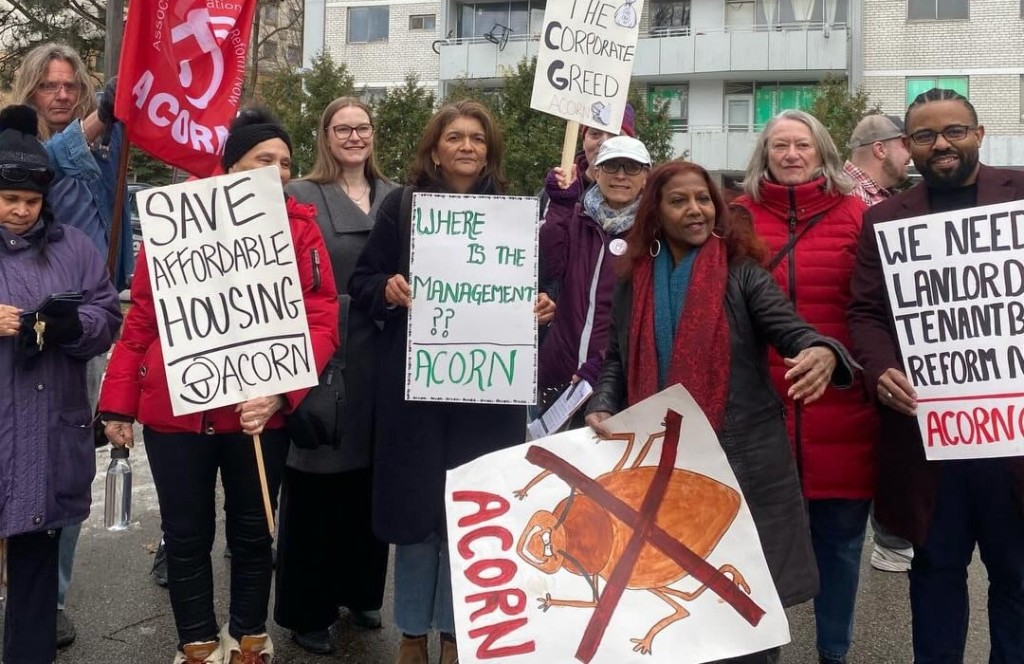
This is part two of a two-part series on the future of multi-tenant housing in Toronto. Read part one here.
While some Toronto housing non-profits say they’re having trouble licensing their rooming houses due to new code standards, private operators may also struggling to align their properties.
A land economics study commissioned by the City of Toronto has found that, in current real estate conditions, rooming houses, or multi-tenant homes, are not financially viable or sustainable businesses.
Citing “high land acquisition costs across the city, construction costs, and significant development related fees and charges,” the study speaks to the experience of both non-profit and private owners and operators of Toronto’s multi-tenant homes.
“Development costs often cannot be recovered through rents, particularly at affordable levels,” the study found, adding that multi-tenant homes would have to be acquired below market value or heavily subsidized, or that the room cap would have to be increased to allow projects to recover their costs.
In 2024, the City of Toronto introduced a new licensing framework for multi-tenant homes (MTH), wherein any property with four or more tenants – all on separate, individual leases – needs to be licensed.
Included in the framework was a new cap on the number of rooms a single multi-tenant home can have, and a requirement to bring properties up to the relevant provincial building and fire codes.
Although the City of Toronto has introduced a renovation fund to support private and non-profit housing providers with some costs, housing advocates are concerned that private landlords, in particular, might circumvent licensing requirements or sell their properties, displacing tenants.
At housing charity Ecuhome, executive director Kate Bird said that it is unlikely they would sell the multi-tenant homes they have just to acquire the same type of accommodation. Instead, the group would favour self-contained apartments.
At the moment, most of Ecuhome’s portfolio consists mostly of units in multi-tenant homes, which, Bird said, might make sense for those coming through the shelter system that might not have the capacity to live entirely on their own yet.
“But I think we have so many people living in these rooming house units who might be ready to move into a self-contained apartment,” she said, “We don’t have the apartments ready for them.”
Many of Toronto’s housing advocates pointed to the opacity around private providers of multi-tenant homes.
Non-profits are more likely to take a loss and navigate the new system, while private landlords – many of whom are operating in areas of the city where multi-tenant homes are newly legalized – might decide not to go through with the onerous processes at all, said Pablo Escobar, chair of the System Barriers to Housing Working Group at the Toronto Alliance to End Homelessness.
The risk, he added, falls on the tenants, as the multi-tenant homes operated by private landlords might close their doors.
Although private providers of multi-tenant homes are included in the renovation funding, the City recognizes that many might not have the capacity to take on the licensing process. Many operators are older adults, who “may rely on rental income from a multi-tenant house to offset their own housing costs and may face equity related challenges of their own.”
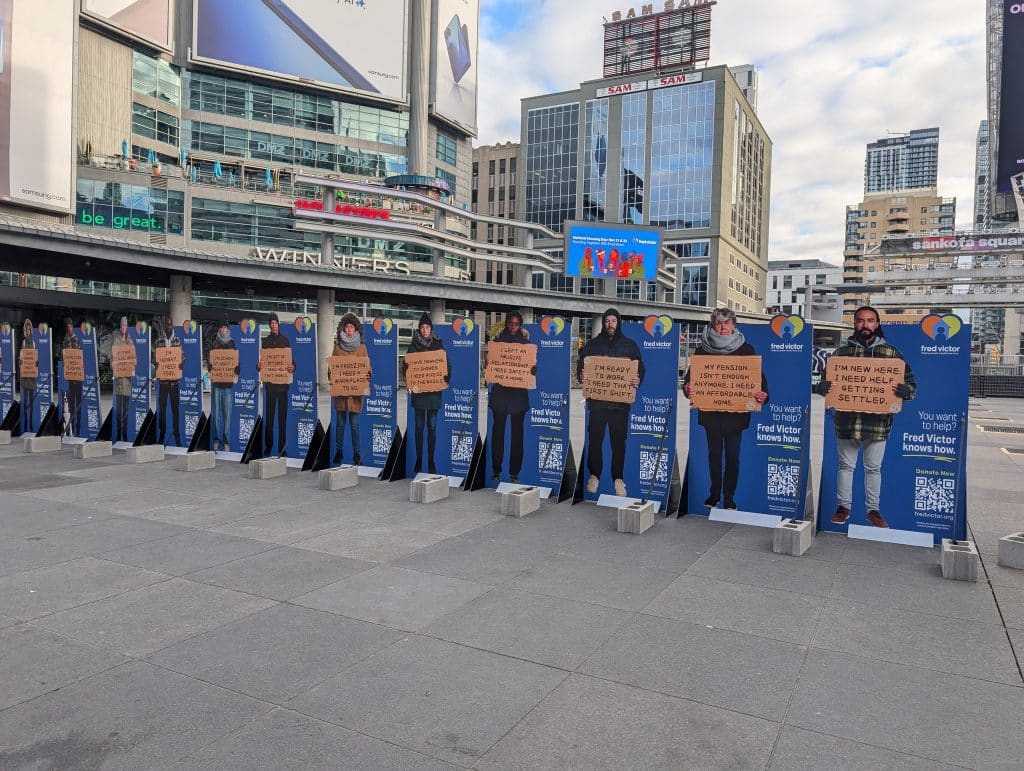
Maathulan Kajendran of Fred Victor, who runs a community of practice dedicated to multi-tenant housing, felt it was important to meaningfully bring private operators into the conversation.
While non-profit housing providers might have dedicated staff, private landlords, often working on their own, have to understand the new legislation and bring their properties up to code.
There are two outcomes, Kajendran said: “just operate non-compliantly and keep adding an income quietly, which is a risk, or to just leave the [housing] sector. Both things are poor for us.”
Private landlords, although not providing non-profit housing, are still providing an affordable housing solution by keeping and maintaining multi-tenant homes, Kajendran said.
“Why would we want to deter those lovely people who want to do that job with their properties? We need to be encouraging and supporting them,” he said, adding that non-profits might have an easier time finding clients for their homes than for-profit landlords would.
“For-profit operators have so much to lose by making themselves known, and then not being able to become licensed, that I think most of them aren’t even trying,” Goldstein said.
She added that it is very difficult to find out where they are and what they’re doing, which puts the multi-tenant house and its tenants at risk. Goldstein herself is not in touch with any private landlords.
Advocates concerned about displacement – and the lack of data
Non-compliance with the City of Toronto’s regulations for multi-tenant houses could result in a fine of $100,000.
After the community of practice advocated for a concierge service to support housing providers through the licensing process, the City launched one in September 2025, adding that “the transition has required significant one-on-one support” to landlords.
Many of the advocates and housing providers Future of Good spoke with applauded the City’s efforts to partner with the housing sector and the goals of the licensing framework.
Several, however, remain concerned that tenant displacement goes undetected, especially if those in multi-tenant homes do not know their rights.
People living in multi-tenant homes, who are more likely to be making lower incomes, will have nowhere else to go in a city that is increasingly facing a shortage of affordable housing options, said Sara Beyer, manager of policy at the Canadian Centre for Housing Rights (CCHR).
The CCHR, in a submission to the City of Toronto, said that the City should develop specific programs to support those facing evictions from multi-tenant homes, including housing benefits and system navigation.
Although some supports are available, such as the Situation Table for Housing-At-Risk, Beyer said there could be future challenges for landlords trying to comply with the new licensing framework and, as a result, displacing tenants, such as by adhering to the new room caps.
Escobar added that WoodGreen Community Services previously ran a coordinated emergency response dedicated to issues in, and closures of, multi-tenant homes.
The program has since been defunded, and the City has since taken on the responsibility of responding to multi-tenant housing emergencies through the Eviction Prevention in the Community program.
While he supports the City taking on this responsibility, he also warns that the emergency response is triggered only when the City itself is closing a multi-tenant home, rather than when a landlord initiates the closure.
There have been “11 cases where tenants understood an attempted eviction to be related to the implementation of the framework (e.g. meaning that the landlord referenced being unlicensed, reducing rooms due to overcrowding, or had referenced the framework as a reason for the eviction,” according to the City, which has worked with the Federation of Metro Tenants’ Associations (FMTA) to visit multi-tenant homes around Toronto.”
On the other hand, the CCHR’s legal services team has seen “a steady stream of MTH-related cases overall since May 2025, with spikes in June and August 2025,” many of which are to do with evictions. The organization’s research suggests that the new licensing requirement has not been the main reason for tenant displacement, though a few instances have occurred.
Renters living in multi-tenant homes are often not aware of their rights, said Mason Fitzpatrick, director of communications at the FMTA.
The City directs tenants to FMTA, CCHR, and the Centre for Immigrant and Community Services to prevent tenants from self-evicting because their landlord has told them they must leave, Fitzpatrick said. The City will provide the FMTA with a list of addresses to visit, and the MTH organizer at the FMTA will then speak with tenants about their rights and any issues they’re facing.
“There are some pretty bad situations in the city with some of the multi-tenant houses, where tenants, because they’re in a more vulnerable position, are less likely to resist being informally evicted without any sort of order from the Landlord and Tenant Board,” he said.
Many are hesitant to assert their rights despite being covered by the Residential Tenancies Act (RTA).
Beyer and others recognize that the City is generally operating in “good faith” and in partnership with providers, often responding to their advocacy efforts. However, challenges persist in bringing properties up to code.
Many of those challenges also stem from a lack of data about the stock and state of Toronto’s multi-tenant homes, many said. Although the city collects data on active and inactive multi-tenant home licences, this dataset does not include multi-tenant homes that have never applied for a licence.
“We don’t have a full picture of who these operators are, where they are operating [and] how many people are actually living in those homes,” Beyer said.
There is also no information about why certain properties have been reassigned from multi-tenant homes to other types of accommodation, nor about rental rates and how they are changing, said housing advocate Melissa Goldstein.
The data problem has existed long before the implementation of the licensing framework. Joy and Paul Connelly’s research on the economics of rooming houses focused almost entirely on non-profit owners and operators of multi-tenant homes, as gleaning financial information from private landlords was challenging.
Facilitating property acquisitions
Like the lack of clear data, the worry about multi-tenant homes being sold off predates the licensing framework. There is also a risk that homes are ‘de-converted’ from multi-tenant homes to single-family homes.
The Multi-Unit Residential Acquisition (MURA) Program has been cited as a potential solution to help non-profits buy and retain their stock of multi-tenant homes.
Launched in 2021, MURA funding has flowed to 21 community housing providers, totalling $165 million, and has preserved 1,000 rental homes across 34 projects.
Funding is only available to non-profit housing providers, housing cooperatives, community land trusts, and Indigenous housing providers.
Ecuhome was awarded $5.6 million to buy a 30-unit apartment building in 2022. That funding, coupled with liquidity from the sale of a five-bedroom multi-tenant home, allowed Ecuhome to acquire the building without any additional financing.
With 21 of the organization’s mortgages ending this year, and around $100 million in property assets to leverage, Bird is interested in tipping the balance of Ecuhome’s property portfolio towards more self-contained units.
“However, the conversations that I’ve had with the Board about this is that any property we sell, not only will we ethically guarantee we’ll replace those units, we’ll either make them bigger, more accessible [or] self-contained.”
Crucially, if a tenant moves from an Ecuhome-managed multi-tenant home to an apartment building or a self-contained unit, they would not be charged more rent, as Ecuhome only provides rent-geared-to-income (RGI) housing.
Meanwhile, the RJHO, which receives no government funding and relies only on charitable donations and philanthropic grants, is also preparing an application to the MURA program.
“Our thinking is that for our ongoing stability, we’re better to own our homes rather than lease them on an ongoing basis,” said Paul Dowling, one of the charity’s board members.
“And if we were able to get the support [and] get the financial resources to acquire properties, it will be a new direction for us.
“We will continue with the one [multi-tenant] house that we are having licensed, and the other houses we may let go after a period of time – if we’re able to replace those rooms with properties that we own,” he added.
“But again, coming up with the large amount of money it would cost to acquire homes is a huge challenge.”
Your job. Your mission. Your news.
With your support, the sector you're building gets the journalism it deserves, and you get a tax receipt.

Author

Related Articles

Deadline looms for non-profits, charities to report ‘foreign principals’ to Ottawa
Charities, non-profits and institutions must now register any arrangements with foreign principals working to effect government behaviour

Explainer: The divergent fix-it paths of Ontario and B.C.’s condo oversupply problem
Both provinces have too many tiny, shoebox condos, but both are taking different approaches to fixing it.

‘Canada must not go down that road’: More than 250 organizations demand investigation into CBSA after student protesters issued exclusion orders
The students were protesting after being denied post-graduation work permits they say they were eligible for when they enrolled at Portage College.
