How non-profits advocated for the sector in a special review of B.C.’s lobbying act
Several national and provincial non-profits appeared before the Special Committee to share their experiences of complying with the Lobbyists Transparency Act, with some of the sector’s recommendations reflected in the Committee’s final report.
Why It Matters
Research by Vantage Point, which houses the BC Non-Profit Network, has found that there is a chilling effect for the non-profit sector when it comes to advocating to the provincial government, because of the reporting requirements. Both in their submissions and during committee meetings, non-profit representatives expressed discomfort with their advocacy being conflated with for-profit lobbying.
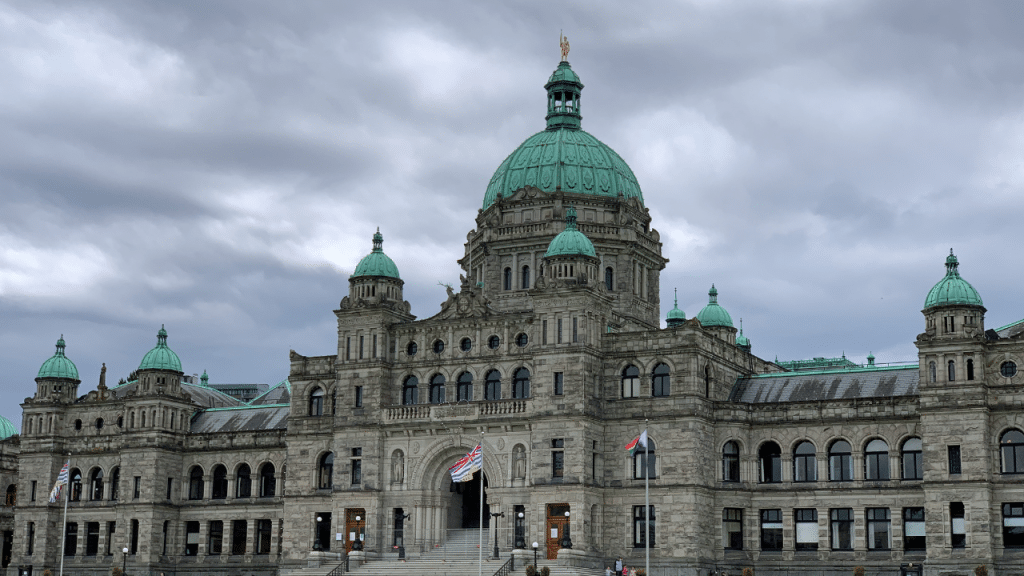
National charities, non-profit networks, and a students’ union were among those who appeared before a special committee to review B.C.’s lobbying legislation, and some of their experiences were reflected in the recommendations the committee has made.
With many non-profits sharing that reporting requirements under the Lobbyists Transparency Act (LTA) were “onerous and confusing”, the Special Committee has shared 24 recommendations in its review of the legislation.
The recommendations include reinstating the 50-hour-per-year lobbying threshold, extending the ‘designated filer’ to somebody that is appointed by the most senior officer of an organization, and consulting with federal and other provincial jurisdictions to “harmonize lobbying legislation.”
Of relevance to the non-profit sector is the suggestion to amend the LTA “to require funding returns only where funding received is related to lobbying activities.”
Currently, non-profits have to report all funding received from any level of government as part of the LTA requirements.
The report comes as the BC Office of the Registrar for Lobbyists (ORL) also announced it would implement a fine freeze until September 2026, so that those who may have just discovered their obligations under the LTA can begin registering and reporting.
Registrar Michael Harvey, who toured the province last year, spoke with the public about both the lobbying and privacy legislations in B.C.
On the fine freeze initiative, he said that organizations spoke of a stigma attached to lobbying.
“I think a better word to describe what we’re talking about is interest representation, but we also need to be honest: interest representation doesn’t really resonate with the public,” he said.
“The public feel they know what lobbying is.”
Vantage Point, which houses the BC Non-Profit Network (BCNN) and which carried out a survey on the LTA last year, said that the Special Committee’s recommendations “directly reflect Vantage Point and the BCNN’s advocacy on this issue, as well as voices from the rest of the non-profit sector.”
Prairie Chiu, Vantage Point’s director of engagement and advocacy, also noted that the recommendations are not yet incorporated into permanent, legislated changes to the LTA.
Tensions between lobbying and advocacy
Non-profits have long been expressing their fears about advocating to, and even engaging with, the B.C. provincial government because of the LTA’s reporting requirements.
Both in-house and consultant lobbyists must register any communications with an MLA, including social media interactions.
Until May 2025, organizations would also have had to report any funding that they had applied for from any level of government in Canada, even if it did not pertain to British Columbians.
Since last year, organizations have only had to report any funding they have successfully been awarded.
Even so, this presents a challenge for national charities. MS Canada and the Canadian Cancer Society appeared before the Special Committee, both describing funding they had received from other jurisdictions that were irrelevant to BC, yet had to be reported to BC’s ORL.
Several of those who appeared before the Special Committee noted that the LTA in its current form does not differentiate between advocacy and lobbying, or between public-interest and private-interest lobbying.
According to the BC Federation of Labour, this legislation means that “public interest lobbying is actually being discouraged by the current state.”
Representatives of the Capilano Students’ Union pointed out that “the Act as currently designed does not differentiate between a multinational corporation with a professional government relations team and a small student-run non-profit with limited staff and highly frequent student leadership turnover.”
They added that the reporting requirements are impacting youth civic engagement.
The Capilano Students’ Union and the BC Federation of Labour both argued for a separation in how public interest lobbyists or small non-profits report their activities under the LTA. In contrast, the Public Affairs Association of Canada’s BC arm (PAAC BC) argued that registered charities should be excluded from the LTA altogether.
“PAAC BC submits that the limited public benefit obtained by the ongoing requirement for reporting the receipt for public funding by charities does not outweigh the harm that is caused by either the lack of communication with public office holders or the diverting of donations to cover the administrative costs of tracking and reporting under section 4.3 of the LTA,” said Jay Fedorak, who appeared as a consultant expert on lobbying regulation, having previously served as the Deputy Registrar of Lobbyists himself.
Michael McKnight, CEO of United Way British Columbia, echoed this when he appeared in front of the Special Committee, adding that such transparency is much more relevant to the private sector and profit-making lobbyists than the charitable sector.
He did, however, recognize that non-profits “can be representative of industry associations or other private sector businesses.”
For instance, the Canadian Federation of Independent Business and Landlord BC, both non-profits representing private and industry interests, also appeared before the Committee. David Hutniak, CEO of Landlord BC, said that “non-profits like [LandlordBC] should not be subject to the Lobbyists Registry.”
According to Harvey, the ORL would prefer to operate with “value neutrality.”
“The implication in using these types of terms [non-profit and for-profit] is that there are two general types of lobbyists,” he said.
“There are lobbyists that are lobbying in their own discrete interests, and then there are lobbyists that are doing it as a form of altruism.
“Our Act does not distinguish between those things, and this is challenging in how this discourse is playing out,” Harvey added, pointing to the discussions during the Act’s review.
It is the Registrar’s view that the regulating body – in this case, the ORL – should not be making “value judgements” about which types of lobbying do and do not have social purpose, he added.
Appearing in front of the Special Committee, Harvey cautioned that the application of such value judgements might hinder the legitimacy of the Act itself, especially for “those who look to it to provide transparency.”
Ongoing fine freeze
Rather than differentiating based on lobbying value, Harvey recognized that organizations will have different capacities to comply with the LTA.
Along with the ongoing fine freeze, the ORL has promised educational campaigns to increase reporting and compliance across the province.
“We are certainly committed to finding everything we can do to make sure that compliance with our Registry is as administratively simple as possible, and straightforward,” he said.
“When we advocate for reform to the Act, we advocate for that reform to be simple, because we think that things that are straightforward are easier to comply with. Things that are easier to comply with contribute to transparency, and transparency contributes to democracy.”
Harvey said that since 2020, the ORL has conducted 7,000 compliance reviews, of which only 17 were found to show non-compliance.
Your job. Your mission. Your news.
With your support, the sector you're building gets the journalism it deserves, and you get a tax receipt.

Author

Related Articles

Explainer: The divergent fix-it paths of Ontario and B.C.’s condo oversupply problem
Both provinces have too many tiny, shoebox condos, but both are taking different approaches to fixing it.
‘Canada must not go down that road’: More than 250 organizations demand investigation into CBSA after student protesters issued exclusion orders
The students were protesting after being denied post-graduation work permits they say they were eligible for when they enrolled at Portage College.
Trump’s ‘renaming’ of Lake Ontario is emblematic of centuries of colonial erasure
Why a single renaming order taps into deeper fights over land and language
