Toronto’s most affordable housing is becoming too expensive to run
An update to licensing intended to improve safety and consistency in Toronto rooming houses may inadvertently lead to their eventual extinction.
Why It Matters
Research shows multi-tenant housing has been dwindling both in Toronto and across Canada. Toronto’s new licensing framework requires private and non-profit landlords to comply with a room-cap per house and, in some cases, to undertake extensive renovation projects to bring homes up to building and fire codes. With operating costs mounting, multi-tenant housing, particularly those run by private landlords, could continue to decrease. More people will be pushed to look for subsidized housing, or even into homelessness.
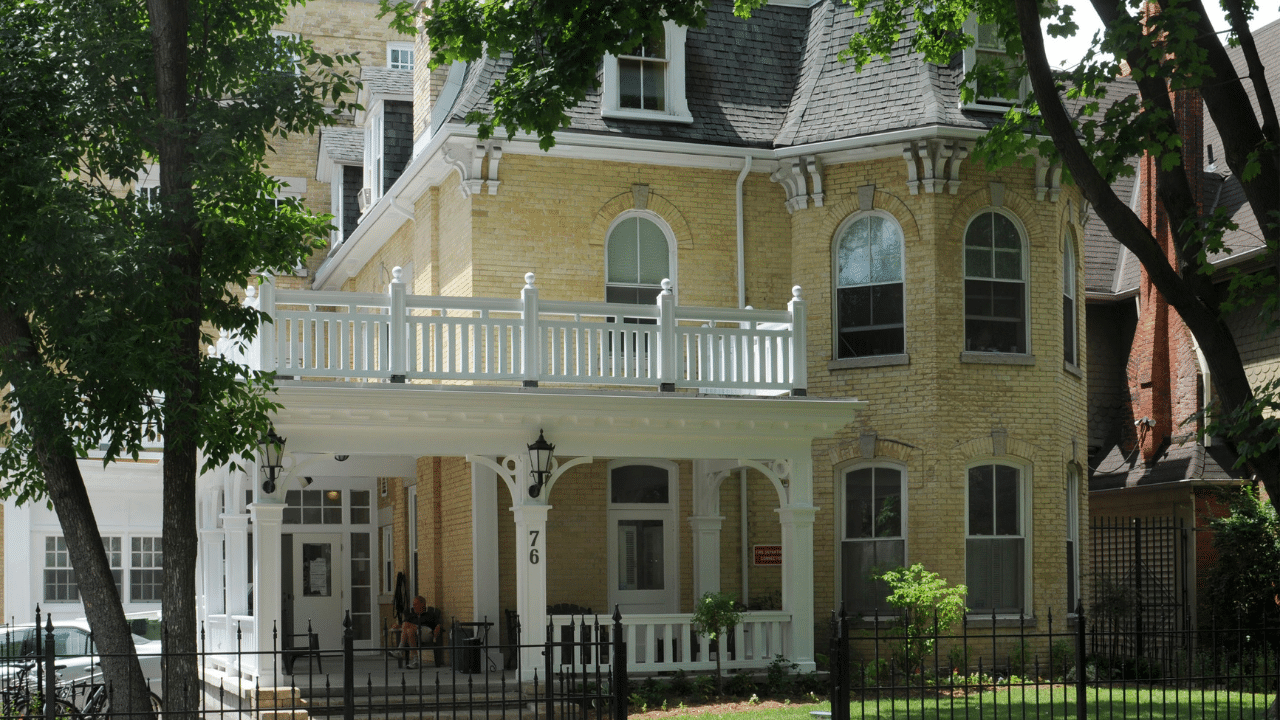
This is part one of a two-part series on the future of multi-tenant housing in Toronto. Read part two here.
Toronto’s rooming house providers say they’re already operating on razor‑thin margins. A new licensing requirement could push some to sell, putting vulnerable tenants at risk of displacement in a city already struggling with high homelessness.
Kate Bird runs Ecuhome, a Toronto-based charitable housing provider that owns and operates 63 buildings, 58 of which are classified as multi-tenant homes (MTH).
Seventeen of those multi-tenant homes were operating with licenses before a new framework came into effect in March 2024. The remainder, which previously did not need a licence, now does.
“So we’re getting up to two years now that the MTH framework is in place, and the number of houses that we’ve been successful in licensing is zero, despite a lot of time and a lot of energy trying to do that,” Bird said.
“We are really in the thick of trying to figure out a path forward to license these properties.”
Multi-tenant homes are some of Toronto’s last remaining “naturally occurring sources of deeply affordable housing.”
@futureofgood Toronto’s most affordable housing is becoming too expensive to run. #Housing #Rent #Government #Affordability #nonprofitsoftiktok ♬ original sound – Future of Good
Common across the city, MTH is a type of living arrangement in which four or more rooms in a building are rented to people through individual, separate tenancies. Tenants may share a bathroom and/or kitchen, but the critical distinction is that “they do not live together as a single housekeeping unit.”
Bird and her team had run into numerous hurdles. Despite having good, supportive relationships within the City of Toronto, multi-tenant housing and the new licensing framework are cross-departmental issues.
To license Ecuhome’s properties, the team must have them rezoned from single-family to multi-tenant use, obtain the necessary building permits, and demonstrate that the buildings comply with the Ontario Fire Code and the Ontario Building Code.
Without the building permits – a stage that the Ecuhome team remains stuck in – they cannot apply for a licence, nor for loan funding from the City to cover some of the associated costs, Bird said.
“Most of [our properties] were built in the late 1800s [and] early 1900s, and they were set up as rooming houses in the 1980s or so. Since then, building codes have changed, but we are expected to meet the building code of today,” Bird said.
“It makes it almost impossible to license some of our properties without fully gutting the property,” she said. “[…] stairs are too steep, hallways are too narrow, ceilings are too low.”
For some of Ecuhome’s properties, undertaking the necessary structural repairs and upgrades would cost the organization more than the properties are worth.
They will be impossible to license, leaving Bird with no choice but to sell the property, potentially replacing the multi-tenant homes with self-contained units or apartments.
Thankfully, Ecuhome only provides rent-geared-to-income (RGI) housing, so tenants would not see a rent increase between self-contained apartments and a multi-tenant home, Bird said.
Also known as rooming houses, dwelling rooms, and single-room occupancies, multi-tenant homes have a “long history” in Toronto. They are still among the few housing options available to newcomers, seniors, students, and people working in minimum-wage jobs.
The average price for a room in a multi-tenant house in Toronto is $1,000, according to affordable housing advocate Melissa Goldstein.
Average market rent for a one-bedroom apartment in the city is $1,763, and the average wait time for a rent-geared-to-income studio apartment is 12 years.
Multi-tenant homes can be run by for-profit and non-profit housing providers, and have been historically regulated by a patchwork of legislation dating back to pre-amalgamation Toronto. The 2024 New Framework for Multi-Tenant Houses sought to establish consistent standards for MTH operations across the city, which included legalizing multi-tenant homes in all six former municipalities.
Elsewhere, the supply of multi-tenant homes has been dwindling in favour of converting them back to single-family homes or “upscaling gentrification”.
In Toronto’s Parkdale, where there is a concentration of multi-tenant homes, the local neighbourhood land trust estimated that 28 rooming houses were lost between 2007 and 2017. Nearly 350 people would have been dehoused as a result.
Many housing providers and advocates Future of Good spoke with are in favour of the new licensing framework introduced by the City in 2024.
However, they say Ecuhome’s story is not an isolated one: compliance with the regulation, as well as a lack of funding to support renovations, might make multi-tenant homes financially unviable to manage.
The risk, advocates say, is that the supply of multi-tenant homes might decrease as an indirect effect of this policy change.
Others have praised the City’s efforts to work in partnership with housing providers to address these financial challenges, including the introduction of the Multi-Tenant Houses Renovation & Repair Program.
However, when the City of Toronto released its regulatory framework implementation update in November 2025, no funding had been dispersed to housing providers.
The City confirmed to Future of Good on Mar. 30 that funding has not yet been disbursed.
Protecting housing stock and the people that live there: why regulation now?
Multi-tenant home landlords generally do not require tenants to sign a lease, nor do they require references or last month’s rent paid upfront as a deposit. They are distinct from homes where all tenants are on a single lease.
Shelters and short-term emergency accommodation, student housing, nursing and retirement homes, religious residences, tourist homes and hotels, and refugee houses are not considered multi-tenant homes, according to the City.
A land economics study commissioned by the City found that multi-tenant homes are “present across Toronto, including in areas where they were previously restricted by zoning or licensing rules,” with concentrations in the centre of the city, near post-secondary institutions, and employment centres.
There was also a correlation between suspected unlicensed MTH operations and areas where a higher concentration of residents relied on government transfers, or were visible minorities.
Housing rights advocacy groups such as the Toronto Alliance to End Homelessness (TAEH) and the Canadian Centre for Housing Rights (CCHR) have supported the ambition to license multi-tenant homes and thus protect the people living in them.
“There was a patchwork system that existed across the city when it came to regulating multi-tenant housing,” said Sara Beyer, manager of policy at the CCHR.
“So that led to really inconsistent and sometimes really quite dangerous living conditions that a lot of those residents of those homes found themselves in.
“There really wasn’t any kind of oversight or steps that the City was taking at the time to make sure those homes were safe and in good repair, and that the tenants had all of the kinds of protections that they should have in their homes.”
Beyer added that the City government’s licensing framework also recognizes that the stock of multi-tenant housing, as some of the city’s most affordable housing options, needs to be protected.
“The framework was developed to address longstanding challenges in regulating multi-tenant houses across the city, including fragmented zoning, limited enforcement tools, and unsafe housing conditions,” the City wrote in a November 2025 implementation report.
“It established a consistent, city-wide approach to zoning and licensing, bringing all multi-tenant houses under the same set of rules.”
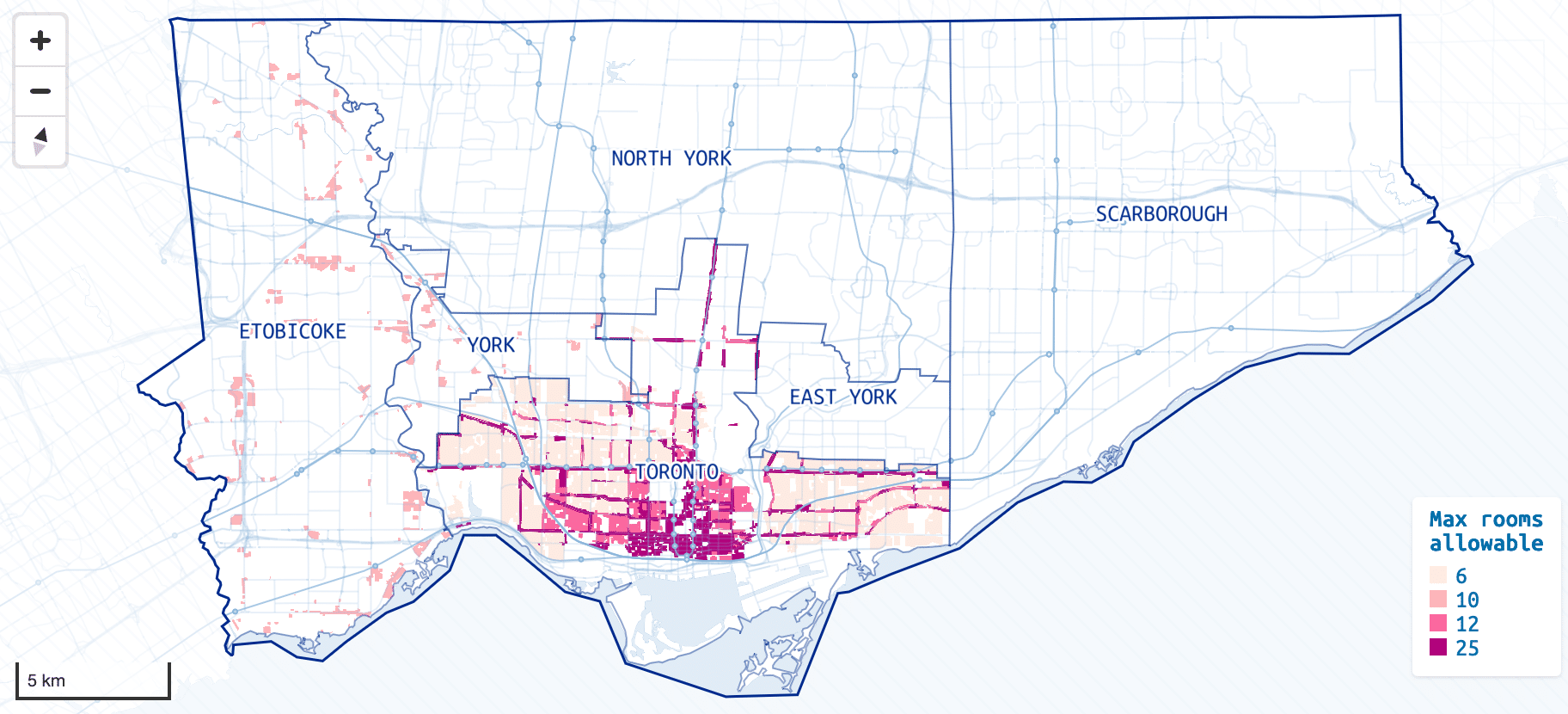
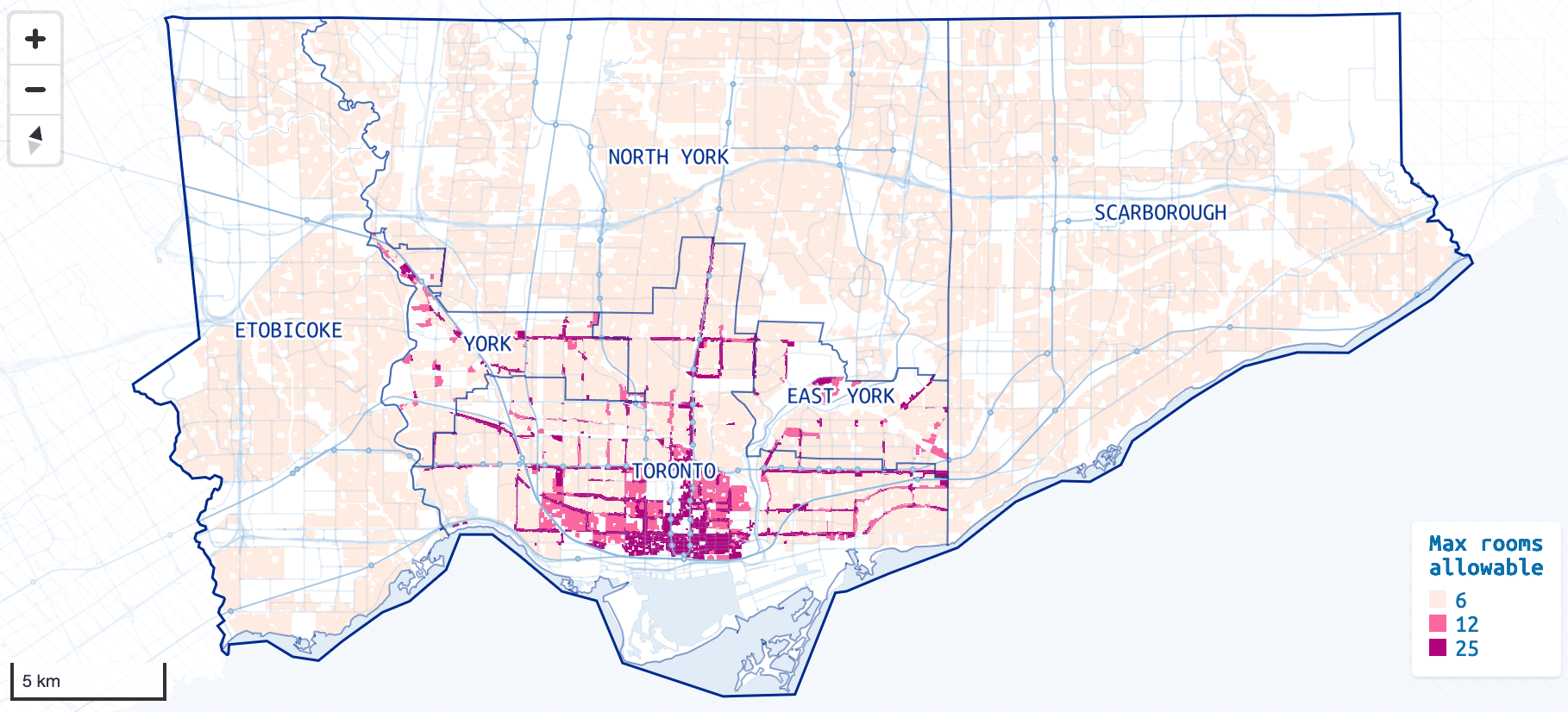
Previously, multi-tenant housing was permitted only in the former municipalities of Toronto, York and Etobicoke, while East York, North York and Scarborough did not permit it at all.
“We all know that rooming houses did exist in Scarborough anyway,” said Chris Persaud, executive director at Habitat Services. “It’s not like they’re coming up now.
“They always existed. They just existed under the radar, so to speak, and they weren’t licensed,” he said, adding that it is positive that these homes will now also be subject to inspections by the appropriate City and public health bodies.
“What we don’t want is for people to be dehoused and homes to be shut down because they can’t afford to meet the code,” Persaud said.
As of Apr. 15, the City’s open data portal showed 408 active, in progress and inactive licences for multi-tenant homes across the city. Three hundred ninety-seven of those were marked as being in Toronto and East York, six in Etobicoke York and five in Scarborough.
Of the 408 licences, 209 are active, 113 are in progress, and 86 are inactive.
To acquire a licence under the new framework, multi-tenant housing providers – whether for-profit / private, or non-profit – need to submit a number of documents, including a zoning review, a building permit and a fire safety plan. Supporting documents include property plans, floor plans, waste management plans, indoor and outdoor property plans, pest management plans, and a tenant service request plan.
“A [building] permit is also required when changing the use of a building (e.g. converting a single dwelling unit to a multi-tenant house), even if no construction is proposed,” the City wrote.
Some types of homes have additional requirements that must be met, such as medication management, meal and snack plans, laundry services, and access to urgent care response services.
A significant change in the licensing framework has been the introduction of room caps: in Etobicoke, North York, and Scarborough, multi-tenant homes can have no more than six rooms. In what was formerly Toronto, York, and East York, the maximum room caps range from six to 25, depending on the property’s zoning. The below data visualizations from the University of Toronto’s School of Cities show the expansion of where multi-tenant homes are permitted as of the new licensing framework.
Landlords and housing providers struggling with compliance
Both the City of Toronto and various operators acknowledged that previously licensed housing providers have been successful in transitioning onto the new framework, while the main challenge is bringing unlicensed operators on board.
The homes that Habitat Services operates in were already previously licensed, Persaud said, and only had to complete some additional paperwork. The same was true of Fred Victor, said Maathulan Kajendran, associate director, bridging housing and community stabilization.
A couple of housing advocates also pointed out that, until late 2025, no new licenses had been issued for multi-tenant homes in areas of the city where they were not previously permitted. Future of Good requested a breakdown from the City of Toronto on how many applications for new licences it had received across the six boroughs, and how many it had granted. The City collects this data across three districts, Future of Good was told: Etobicoke York, Scarborough and Toronto and East York.
In Toronto and East York, 395 applications had been received since the implementation of the new licensing framework, with 237 licences granted. In Scarborough, 44 applications have yielded only four successful licences, and in Etobicoke York, 27 applications have led to two licences. The City added that 243 licences issued do not include those that are in the final steps of getting their licences approved.
Several providers and advocates also cautioned that the six-room cap for multi-tenant housing in certain parts of the city could make these homes financially unfeasible to run, as rents would not cover operational costs.
Both Habitat Services and Ecuhome have had homes with more rooms ‘grandfathered in’ to existing licences, but it is still a grey area, Persaud said.
The lack of clarity around previously unlicensed homes applying for a new licence, and what might happen if their multi-tenant homes exceed the room caps, still gives him cause for concern, said Persaud.
He also gave the example of licences changing hands as landlords “age out” and pass properties on to the next generation.
There is still a risk, or a lack of clarity, about what happens to multi-tenant homes with more rooms than the cap when a new landlord or operator has to apply for a new licence, Persaud added.
Beyer said that there is a Committee of Adjustment that can support the ‘grandfathering in’ of additional rooms above the room cap. Still, the City acknowledged that operators have “expressed reluctance to seek Committee of Adjustment approval due to application costs and process uncertainty.”
As the new framework applies only to homes with four or more tenants, there have also been cases where housing providers are reducing their rental capacity.
In an example submitted to the City by the Charles Street Tenant Association, the tenants had been moved around by the landlords such that “no more than three individuals occupied any single unit.”
Restorative Justice Housing Ontario (RJHO) has, for the last six years, been providing housing for people coming out of the prison system. Their four homes are designed so tenants can share responsibility and live in a community, said board member Paul Dowling.
The City of Toronto, however, did not agree that the tenants constituted a single housekeeping unit and deemed the home to be a multi-tenant house.
Dowling describes the process of applying for a licence as a “huge nightmare.”
“We spent months and months and months trying to get things resolved at the City. Most of that time was simply waiting for them to respond,” he said.
“We would submit a request, submit information, and we would get no response for weeks or months on end.”
Restorative Justice Housing Ontario board member Paul Dowling
The RJHO needed to make some updates to one of its properties, including ensuring that windows are large enough to serve as fire escapes and physically separating the furnace room from living spaces.
The architect RJHO hired said the other three were too expensive to renovate. As a result, the RJHO has chosen not to renovate or license the three remaining homes and will reduce occupancy to three tenants, Dowling said.
“It changes our financial model completely and makes it very challenging for us,” he added.
The RJHO hopes to apply for a forgivable loan through the City’s renovation program to cover some of the costs.
“After $25,000 [in loans] the City has to register a second mortgage on the property,” he said. “I think we’re trying to keep our renovations cost down below that threshold in order to not have to register a mortgage on a home that we don’t own.”
Renovation fund is a ‘drop in the bucket’
The cost of renovations is a key problem CCHR is hearing from providers of multi-tenant homes, Beyer said.
The City, in recognition of this barrier, launched the Multi-Tenant Houses Renovation & Repair Program, but said they saw “slow take among operators.”
According to the City of Toronto’s November 2025 report, nine properties were undergoing approvals to receive funding under this program. No funding had been disbursed at the time the report was published.
Future of Good asked the City if that had changed since the publication of the report, and on Mar. 30, a representative confirmed that the City “is finalizing funding agreements for several projects, but no funding has been dispersed yet.”
The fund itself had a rocky start: initially, it promised $50,000 in renovation funding per unit/per room in a multi-tenant home, which operators would most likely exceed. That amount has now been increased to $100,000 per room. Previously licensed operators were also initially not eligible for the funding, but the City has since expanded eligibility to include those with existing licences who might be at risk of losing them due to non-compliance.
Operators had also faced capacity and financial constraints to undertake necessary due diligence before they could even begin construction, and so the City has included a pre-construction stream in its revised funding. The City here recognizes that even these feasibility assessments could determine that certain multi-tenant homes “cannot be cost-effectively licensed, despite the operators’ best efforts to move towards licensing and compliance.”
The City Council approved $2 million for the renovation fund program in Budget 2024, $3 million in 2025, and an additional $2 million annually through to 2029.
“When we hear from non-profit providers that it could be in the tens of millions for them to come into compliance, this is a drop in the bucket to what might be needed in the sector,” Beyer said.
Your job. Your mission. Your news.
With your support, the sector you're building gets the journalism it deserves, and you get a tax receipt.

Author

Related Articles

‘Foolish’ Rideau Hall Fundraiser for 24 Sussex brings in $100K over first weekend
Democracy advocates warn fundraiser launched without safeguards

Pro-Israel media ‘watchdog’ fighting CRA’s attempt to revoke its charity status
Auditors allege HR Canada Charitable Organization acted as a ‘conduit’ for HonestReporting Canada, carried out no charity work
Fundraising for Prime Minister’s residence renos called unusual, a ‘misstep’: Charitable advocates
Prime Minister Mark Carney announces competition, fundraising effort for 24 Sussex Drive
