
Alberta municipalities push province to pause new disability assistance program; advocates warn of deeper poverty
The Alberta Disability Assistance Program (ADAP) is set to launch in July 2026, and will place people with disabilities in two groups: those who are and are not able to work. The cities of Edmonton and Lethbridge, among other municipalities, have tabled motions urging the provincial government to reconsider this program.
Why It Matters
Several advocates in the disability community have long warned of the risks to financial security if disability assistance shifts to assessing an individual’s capacity to work. Municipalities are not only concerned about constituents’ wellbeing, but also about the potential for the provincial government to ‘download’ responsibility for income support to them.

Note: This is a breaking news story and will be updated as Future of Good conducts further interviews with municipalities, mayors and city councillors.
Updated on Thursday 19 March to include interview with Councillor Keren Tang.
Municipal governments in Alberta are urging the provincial government to pause the rollout of a new disability assistance program this summer.
The cities of Edmonton and Lethbridge unanimously passed motions to request that the province pause the new Alberta Disability Assistance Program (ADAP) until thorough consultation with people living with disabilities has been carried out.
Councillor Keren Tang of Ward Karhiio in Edmonton is the council representative for the city’s Accessibility Advisory Committee. She tabled this motion, adding that while it is common for the Mayor and City Council to advocate to different orders of government, it is not often that an issue arises from a citizen committee.
According to disability advocate Zachary Weeks, who also sits on the Accessibility Advisory Committee as a Vice-Chair, the City of Camrose and the Town of Claresholm have also shown solidarity on this issue.
Councillor Tang confirmed that she has also spoken about this issue with residents and colleagues in Medicine Hat, Calgary and elsewhere in the Edmonton region.
Proposed change risks financial security of people with disabilities
The provincial government is proposing a change to the way disability benefits are distributed in Alberta by introducing a “dual-track system”: people with disabilities will now be assessed and divided into two groups according to their desire and ability to work.
Currently, Albertans with disabilities receive benefits through the Assured Income for the Severely Handicapped (AISH) program. In the new system, due to roll out on July 1, a “medical adjudication process” will determine if an individual should stay on AISH, or be moved to ADAP, a program which the government hopes will help people with disabilities find gainful employment.
According to the provincial government, “this may include, for example, people who are not currently employed but are deemed to have the potential to be employed in the future, with appropriate supports.
“It may also include those who are currently employed but deemed to have the capacity for greater employment, or those with episodic or recurrent disabilities who were recently employed but it is unknown when they might be able to work again.”
Several advocates have raised concerns about the impacts to financial security for people with disabilities should this new system be implemented. Those on AISH, deemed unable to work, will receive a maximum of $1,940 each month, while those on ADAP will receive $1,740.
There is also a significant drop in the amount exempt from deductions, from $1,072 to $350 per month.
Councillor Tang shared a letter written from Edmonton mayor Andrew Knack to Jason Nixon, Alberta’s Minister of Assisted Living and Social Services. Mayor Knack warned of “significant fear and anxiety within the community regarding the potential social and economic impacts of the changes scheduled for July 1, 2026.”
In the letter, Mayor Knack made three requests of the provincial government: to pause the recent changes to AISH and the rollout of ADAP; to continue further consultation with people with disabilities, advocacy organizations and community partners; and to publicly report on the projected social and economic impacts of the policy change.
Several petitions have been launched and submitted to the provincial government, warning of the risk of more people falling into deep poverty as a result of these changes, the administrative drain of repeated assessments on the medical system, and the lack of an appeals process.
Both AISH and ADAP clients will have ongoing access to health benefits, including dental, optometry, prescription drugs and ambulance services, as well as personal benefits to offset the costs of childcare, emergencies and moving house.
Councillor Tang also pointed to other social assistance programs, like the Family and Community Support Services (FCSS) program, which is provided by the province and municipalities in tandem. However, despite advocacy efforts, the province did not increase funding for FCSS, she said.
“It’s effectively a cut, if you consider the population and inflationary pressures,” she said. “But then we’re further modifying other benefit programs, and just adding compounding pressure to someone’s livelihood.”
While municipalities can provide some support to low-income households, social assistance programs are generally outside the scope of municipal governments, Councillor Tang added. When programs change, people may turn to the municipality for additional support, she said.
“Our funding is extremely constrained through property taxes, and typically income support is not something in our realm,” she said. “So we’re very concerned about the downloading effect of this policy change onto municipalities.”
A public consultation on the new program took place in late 2025, but critics have argued that the disability community should be invited to shape and design the program instead.
Future of Good reached out to Minister Jason Nixon’s press secretary on Mar. 18 and did not receive a response before publication. This story will be updated if a response is received.
Author

Related Articles

Manitoba to remove provincial taxes from groceries
Premier Wab Kinew told media before the budget dropped Tuesday that Manitobans would no longer pay provincial taxes at the grocery store on prepared foods.
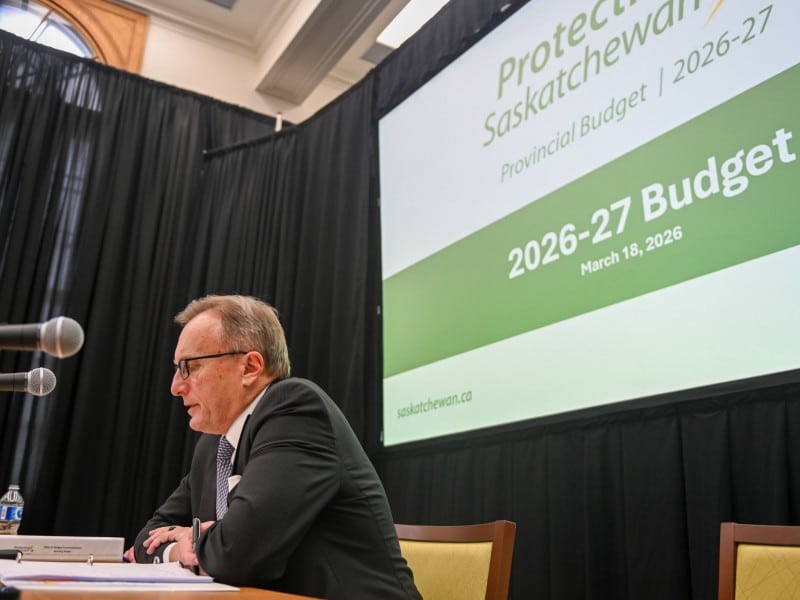
Saskatchewan social services sees budget boost; advocates unconvinced
Increased government spending in social services could improve services for residents in Saskatchewan.
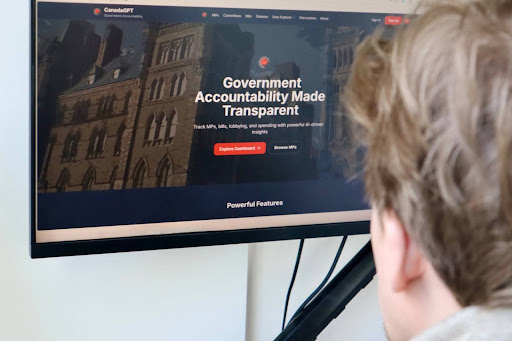
New AI tool aims to make federal politics easier to track
“CanadaGPT” is designed to simplify complex government activity by giving users a clear understanding of what’s happening in Ottawa.