
This article was produced in partnership with GreenShield. You can read our full editorial standards here.
Partnered Partnered content At GreenShield’s signature event, leaders map out vision for equitable, accessible health care
Experts across non-profit organizations, policymakers, industry leaders, and people with lived experience gathered at GreenShield’s Innovating with Purpose: Closing Canada’s Care Gap to tackle barriers and highlight innovative approaches that advance accessible care.
Why It Matters
Canadians from underserved populations face challenges when trying to access equitable and accessible health care. Experts recently brought together in Toronto argue that continuing to ignore these gaps is a choice that puts lives and livelihoods at risk across generations.
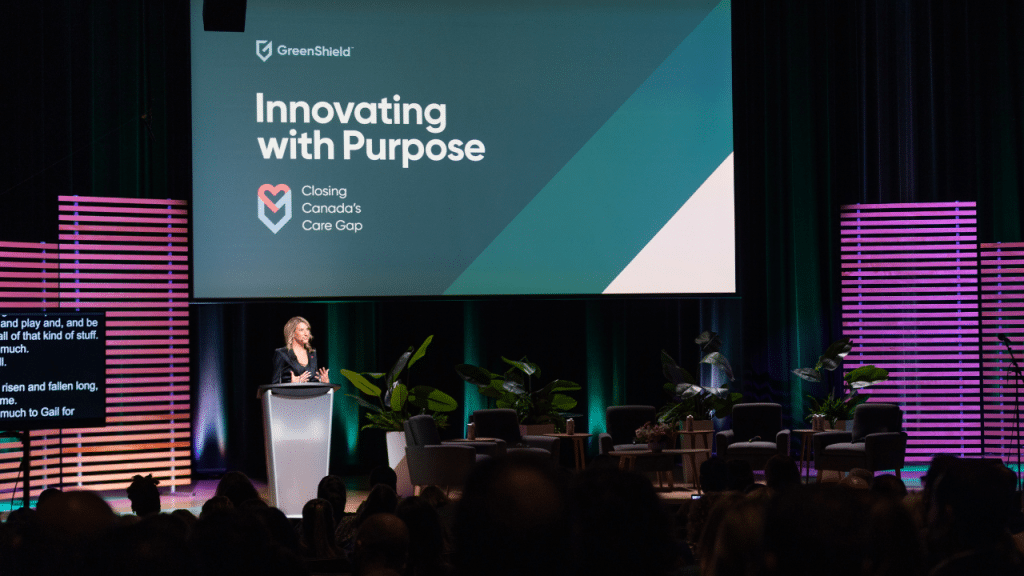
Leaders are rethinking what healthcare delivery looks like in Canada, demonstrated by a rising focus on culturally responsive care, integrating social supports, and meeting youth where they’re at.
Conversations about this forward-looking perspective on care took centre stage at GreenShield’s Innovating with Purpose: Closing Canada’s Care Gap event.
As Canada’s only national non-profit health care and insurance organization, GreenShield focused their event on how cross-sector collaboration, community partnerships and long-term investment can help scale important solutions.
Attendees learned that one million Canadians need mental health support, yet 60 per cent aren’t getting the care they need.
Making a system-level impact depends on the scale of the changes, Randi Ray, the founder of Noojimo Health, said during the event.
The organization is an Indigenous-owned, culturally safe virtual counselling clinic.
Solutions must be built in partnership with communities and grounded in lived experience, she said.
“We’re just listening to what our relatives are saying. And then most importantly, our clinicians who are also gifted and talented in their own journeys … are ready, willing and excited to help our people heal,” she said.
Noojimo started with one clinician five years ago.
Through its partnership with GreenShield, it now operates with more than 50 clinicians in nearly every province, showing how cross-sector collaboration can help scale community-driven solutions.
Growth, said Ray, reflects the scale of demand when care is delivered in ways that meet community needs.
She emphasized the importance of shared responsibility and long-term thinking, especially for supporting Indigenous youth.
“How can we use our collective ways of thinking and ways of doing things to ensure that our youth, who are the future… are getting quality access to health care in a way that actually is looking at generations in the future?” she asked.
Supporting future generations
Young people are a demographic highly impacted by mental health challenges, said panellists, many of whom underscored the importance of early intervention.
Saraansh Mehta was a student at the University of Guelph when he began struggling to find mental health care.
“Being someone who was in the system for the first time, it was overwhelming in many ways,” he said, speaking on a panel to discuss youth mental health.
About 29 per cent of youth say they do not access mental health supports because they are unsure how to, according to Youth Mental Health Data Hub data, while roughly 30 per cent of students report they cannot afford care.
As a first-generation Canadian, Mehta said he struggled to find culturally sensitive mental health care when he first looked for support.
“Despite that hardship … I eventually did find care, but one of the biggest challenges I faced was that the care wasn’t culturally attuned,” he said.
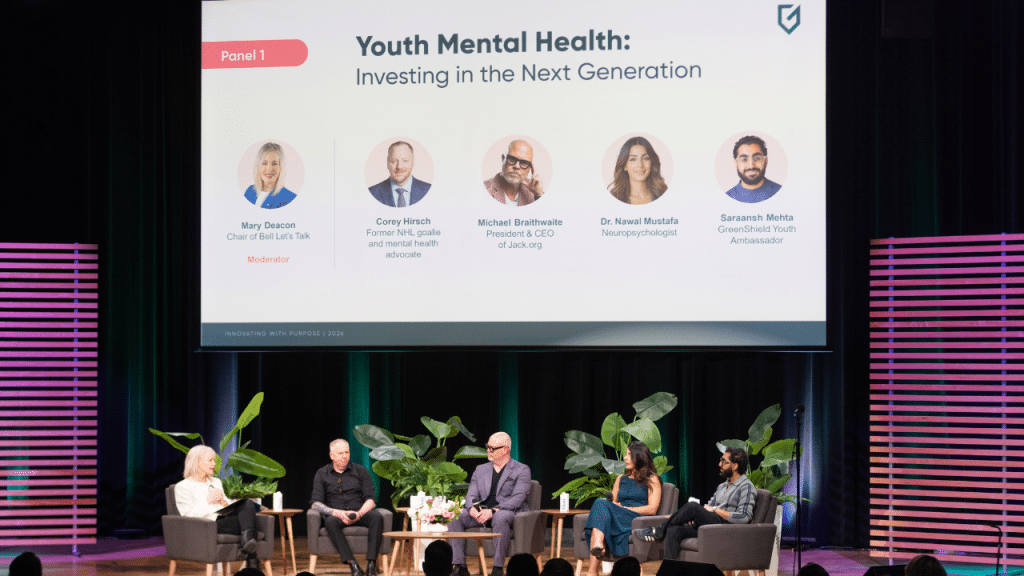
Speakers at the recent Youth Mental Health: Investing in the Next Generation panel at GreenShield’s Innovating with Purpose: Closing Canada’s Care Gap event. (GreenShield/Supplied Photo)
Eighteen per cent of racialized youth struggle to find culturally sensitive care, according to the youth data hub, developed in partnership with Mental Health Research Canada.
“As someone coming from a non-Western and a collectivist background, it often felt like parts of identity, my family, and expectations weren’t fully understood, nor did I see that genuine willingness to understand and the nuances of my experiences.”
That was until he was connected with GreenShield’s services.
“I was more recently in care again, and this time I was using this support system that I learned more about and that I had been a part of shaping, which is GreenShield, and I was able to find a therapist who is closer to my social location, closer to my cultural background and whose lived experience resonates to mine.”
Now a recent master’s graduate from the University of Guelph, Mehta is training to become a psychotherapist. He also works with GreenShield as a youth ambassador, advocating for young Canadians and sharing his story.
Neuropsychologist Dr. Nawal Mustafa affirmed Mehta’s experience and said many of the patients she sees as adults in her Vancouver practice are dealing with unresolved experiences from childhood and adolescence.
“This is why we’re seeing such complexities later in life,” said Mustafa.
Early intervention is a large opportunity to improve long-term mental health outcomes for young people, she said, adding that the fundamentals are the most important.
“We need to tell them the importance and the neuropsychology of why movement is important, or why we need to give nutrition to our body, what that actually does to our cognition, and what good sleep can do,” she said.
“That’s why targeting early on is absolutely essential.”
The uneven women’s health gap
Studies show there are similar gaps in women’s healthcare, where access to timely, appropriate care is uneven.
“What we see right now is a massive knowledge gap when it comes to women’s health,” said Dr. Kayla Osterhoff, a neuro psychophysiologist and women’s health expert.
“When (women) are studied, most oftentimes they’re not studied appropriately to account for their hormonal variability and their physiological variability, which is what makes women distinctly different than men,” she said.
Overlooked areas have included menopause, where Canadian women face challenges accessing information, diagnosis and appropriate treatment during this stage of life, according to Janet Ko.
“I’ve had people say to me, ‘menopause is kind of a niche issue,’” said Ko, president and co-founder of Menopause Foundation of Canada.
“There’s nothing niche about menopause. It’s a universal experience.”
There are 10 million women in Canada over the age of 40 in a stage of menopause, representing about one quarter of the population and the paid workforce, said Ko.
In response, some jurisdictions are changing their policies.
“In Ontario, they released a quality standard on menopause, which was a very positive step in the right direction,” she said.
“In Manitoba, they’re the first province to actually create a billing fee code so that if you’re a healthcare provider and you want to have that more in-depth conversation with a patient, you actually get paid more than you normally would.”
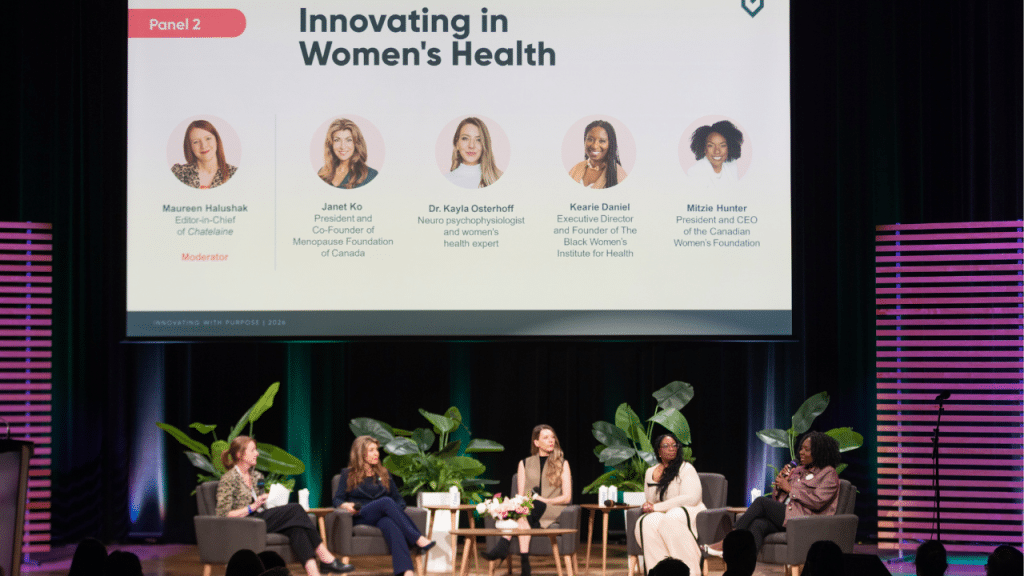
Speakers at the recent Innovating in Women’s Health panel at GreenShield’s Innovating with Purpose: Closing Canada’s Care Gap event. (GreenShield/Supplied Photo)
Progress depends on centring those most impacted, according to Kearie Daniel, the executive director and founder of The Black Women’s Institute for Health.
“If we are working towards inequities that impact the most vulnerable, that impact the most marginalized, it serves everyone,” said Daniel.
Meaningful change requires shifting whose experiences shape healthcare systems in the first place.
About one-third of healthcare workers are Black women, and about 19 per cent of Black healthcare workers of all genders in the greater Toronto area reported suicidal ideation, according to The Black Women’s Institute for Health.
In addition, 27 per cent of Black women say they have or are dealing with suicidal ideation.
“We are carrying and upholding the health-care system… while also navigating it ourselves,” said Daniel.
“We have these statistics, and so now what we need to do is look in the way forward, because it’s not enough to say we don’t know anymore, we do know,” said Daniel.
Speakers agreed that closing those gaps is an opportunity to improve access, strengthen culturally responsive care and better support women across different stages of life through early intervention and a more equitable health system.
Scaling solutions
Speakers at GreenShield’s event highlighted that many programs don’t reach the scale needed to make a system-level impact.
“It requires a fundamental shift in how we’re partnering, how we’re addressing and delivering various dimensions,” said Andrew Boozary, executive director of Gattuso Centre for Social Medicine, at the University Health Network.
“I think there continues to be skepticism of how we deliver this in the right way that actually centers on human-world experience,” he said.
Boozary has long argued that healthcare systems must address the social conditions shaping health, including poverty and homelessness, rather than focusing solely on treatment within hospitals.
“Two hundred and thirty-four patients were coming to our emergency department over 50,000 times in one year,” said Boozary, who works in Toronto.
“It’s a major moral failure for us as a country.”
However, panellists pointed to what scalable, integrated, community-led care can look like in practice.
“We’re not trying to take over what you have created, but what can we do to help build that together?” said Ray of Noojimo.
“That’s really powerful when we can walk alongside each other,” Ray said. “I think that’s really key to innovation.”
Your job. Your mission. Your news.
With your support, the sector you're building gets the journalism it deserves, and you get a tax receipt.

GreenShield and Future of Good are taking a deeper look at the health and wellbeing of those on the front lines of care. Changemakers say they are burned out, stressed and under-resourced. We’re looking to find solutions to help those who care, care for themselves. As a non-profit health and benefits company, GreenShield is committed to investing $75 million towards social impact initiatives with an aim to impact 1 million people by 2025. These stories and discussions should be highlighted, celebrated, shared and amplified across sectors to spark awareness, knowledge, inspire change, and empower changemakers to address health and wellbeing disparities in Canada.
Related Articles
Redesigned Canada Housing Benefit could reduce homelessness by more than half: Report
End Homeless Canada’s new report shows if Canada’s Housing Benefit is redesigned, it could dramatically reduce homelessness in the country.

Partnered Partnered content Mental health support must better reflect how young men seek care: GreenShield report
New data reveals how stigma and traditional expectations of masculinity are shaping young men’s mental health, and why care models need to evolve.

School forest initiative set to expand outdoor learning in Ontario
Many students in Ontario will head outdoors under a new classroom and forest initiative.
