The advocacy lessons that informed Zohran Mamdani, occupied Wall Street and stopped a pipeline
Three advocates on the long, unglamorous work of making change stick.
Why It Matters
North American non-profits, community organizations and civil society are facing a harsher political climate than they have in years due to funding cuts, a pushback against environmental protection, and a backlash that frames equity and climate work as too costly or slow. The old playbooks aren't holding up, so the organizations still winning are the ones willing to rebuild their strategy mid-fight rather than stick to the one that worked last time.
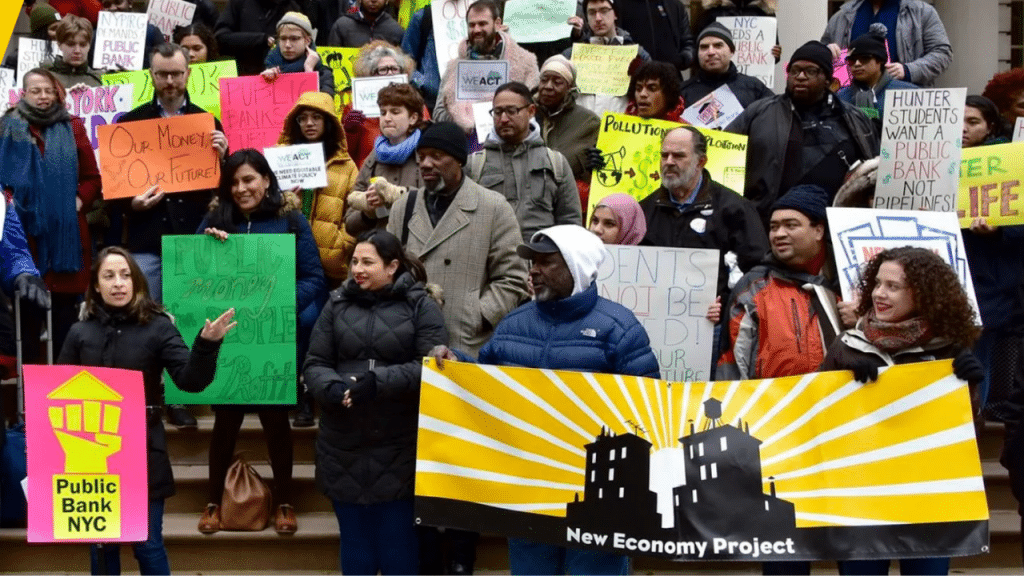
We recently sat down with three people who’ve spent years doing the hard, slow work of transformative advocacy, and who are clear-headed about how much that work keeps changing shape.
We started with Micah Bornfree, who helped launch the Occupy Wall Street movement with a single slogan.
He was a senior editor at Adbusters when he co-launched the 2011 call for Occupy Wall Street. These days, he’s building Outcry, an AI agent that runs locally on your device with no internet connection required — designed for sensitive organizing conversations that can’t risk being logged anywhere. He was a panellist at the Montreal Sustainable Finance Summit last month.
Mélanie Busby helped kill a pipeline project, then had to figure out what came next.
She leads community engagement for the Front commun pour la transition énergétique, an 85-organization-strong Quebec coalition that helped stop the Energy East pipeline in 2017. The coalition has spent the past year fighting the same battle, this time against Marinvest, a Norwegian company proposing a roughly 1,000-km pipeline from Ontario to a floating LNG terminal in the Côte-Nord region of Quebec
Meanwhile, Deyanira Del Rio leads a 30-year-old non-profit trying to build a more inclusive economy.
She is Executive Director of the New Economy Project, a New York non-profit working to democratize the economy through financial, housing, workers’, and climate justice — including the coalition that pressed the city to ban employment credit checks and beat back predatory lending.
Last November, she was appointed to one of the 17 committees advising Mayor-elect Zohran Mamdani’s transition team. Last month, she visited Montreal at the invitation of Virage Collectif, a Quebec coalition working on democratizing the economy.
Once you’ve got people’s attention, how do you keep it and turn it into something that lasts? Here is what these three advocates said.

Make the fight concrete
Founded in 1995 as the Neighbourhood Economic Development Advocacy Project, the organization’s mission became urgent once again after the 2008 financial crisis hit Black and brown communities hardest, said Del Rio.
“It was renamed the New Economy Project to reflect our mission to build an economy that works for all. Our vision implies structural, transformational long-term change,” said Del Rio.
NEP action is grounded on four pillars.
Financial justice means fighting banking deserts and redirecting money from Wall Street to Main Street. Housing justice means taking land out of the speculative market and placing it in community ownership. Workers’ justice means financing cooperatives and small businesses. Climate justice means redirecting fossil fuel investment into community-owned clean energy.
“The common thread is to create affirmative solutions that can democratize our economy and give communities shared ownership and control,” said Del Rio.
Unlike the NEP, Le Front commun pour la transition énergétique did not begin with a transformative vision. It was born to stop one single project: Energy East.
“In 2014, groups of citizens mobilized all along the planned route of the pipeline,” said Busby.
“Environmental non-profits, activists, unions, First Nations and some politicians joined in a historic process of collaboration,” she added.
“Between all of us, we were everywhere, all the time. Our coalition was impossible to ignore.”
The coalition attracted allies like the Quebec Federation of Municipalities, she said.
“We also had a few MPs on our side. The combination of tactics – citizens’ mobilization, public interventions, and behind-the-scenes political action – led to a victory,” said Busby.
On Oct. 5, 2017, TransCanada withdrew its demands to the National Energy Board and to the Quebec Ministry of Sustainable Development, Environment and the Fight Against Climate Change.
The coalition had won. Now what?
“People were asking: we got rid of this project, but how do we get rid of oil and gas?” recalled Busby.
For two years, 200 coalition members, including academics from 12 universities, worked on a roadmap for Quebec’s transition to sustainable clean energy. The groups identified 650 actions across sectors such as housing, transportation, education, and energy. It’s called Project Quebec Zero Emissions.
“These years of working together have allowed us to realize that no energy transition can happen without transforming power structures and institutions,” said Busby.
“We started as a resistance movement against a pipeline project that evolved into a coalition for socio-ecological transition.”
Having a concrete, tangible and attainable plan has been key in moving progress forward.
Occupy Wall Street: the movement that broke all the rules
The New Economy Project rose from a vision: to rewire the economy.
Le Front commun pour la transition énergétique had a goal: to stop a project.
Occupy Wall Street had a slogan: “We are the 99 per cent.”
“That slogan weaved us into the moment, focusing on the victims of the financial crisis and the unpunished architects,” said Bornfree, author of The End of Protest.
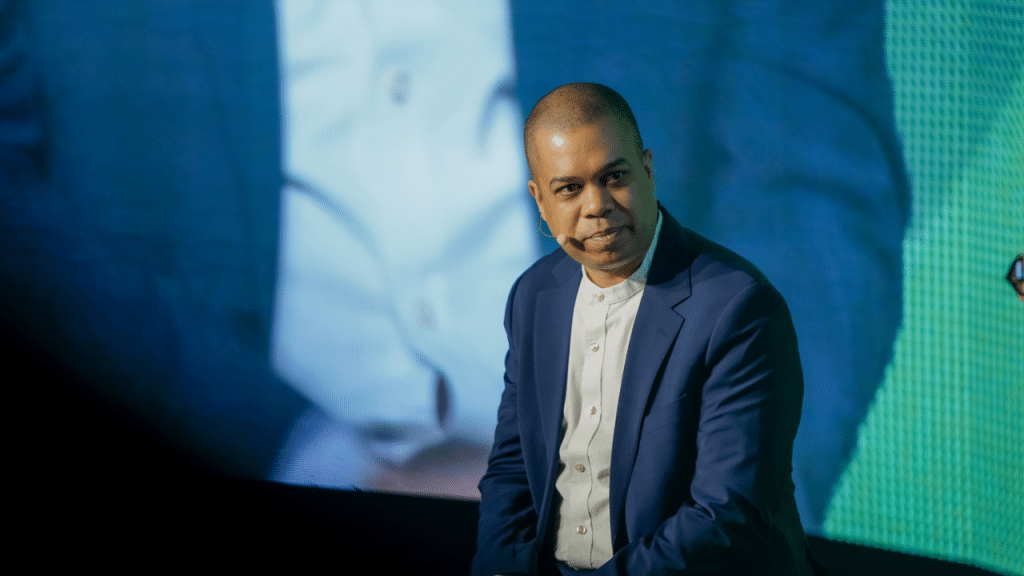
At the time, Bornfree was the senior editor of Adbusters, a Canadian anti-consumerist magazine with a mostly American audience. He and co-founder Kalle Lasn provided the spark and the brand that launched the Occupy Wall Street movement, and they used their 90,000-subscriber lists to get the word on the street.
Subscribers received an e-mail asking: “Are you ready for a Tahrir moment?”
“We linked Occupy Wall Street to the Arab Spring and Cairo’s Place Tahrir uproar, and the Spanish Indignados movement,” said Bornfree.
“You must anchor your action in the history of the social movement,” he added.
“No matter your cause, the challenge for all changemakers is the same: how can we work together individually? How does our ask fit into the bigger picture of the contemporary struggles?”
Occupy Wall Street was like no other social movement before it. It was leaderless by design; it did not march in the streets; it did not publish a manifesto; it was just a series of unofficial lists.
However, the movement spread fast. Within weeks, there were Occupy encampments in hundreds of cities worldwide.
“The model was contagious precisely because it required no central coordination,” said Bornfree.
Losing the battle, winning the argument
By 2012, all encampments were cleared. By traditional advocacy metrics (legislation passed, institutions changed), the Occupy movement largely failed. But the longer-term impact is telling.
The movement is credited with returning inequality to the centre of American political discourse after decades of relative silence.
U.S. politician Bernie Sanders’ 2016 and 2020 presidential campaigns, the mainstreaming of concepts like the “billionaire class” and the 1 per cent, the momentum behind a $15 minimum wage, the rise of figures like Alexandria Ocasio-Cortez, and the recent election of New York City Mayor Mamdani all drew on the cultural and political soil that Occupy helped till.
“Change begins with words,” said Busby. “The Front commun [has advocated] for energy sobriety since its early days. At first, some members of the coalition hesitated to use the word in their letters to MPs, thinking it was ‘not sexy.’”
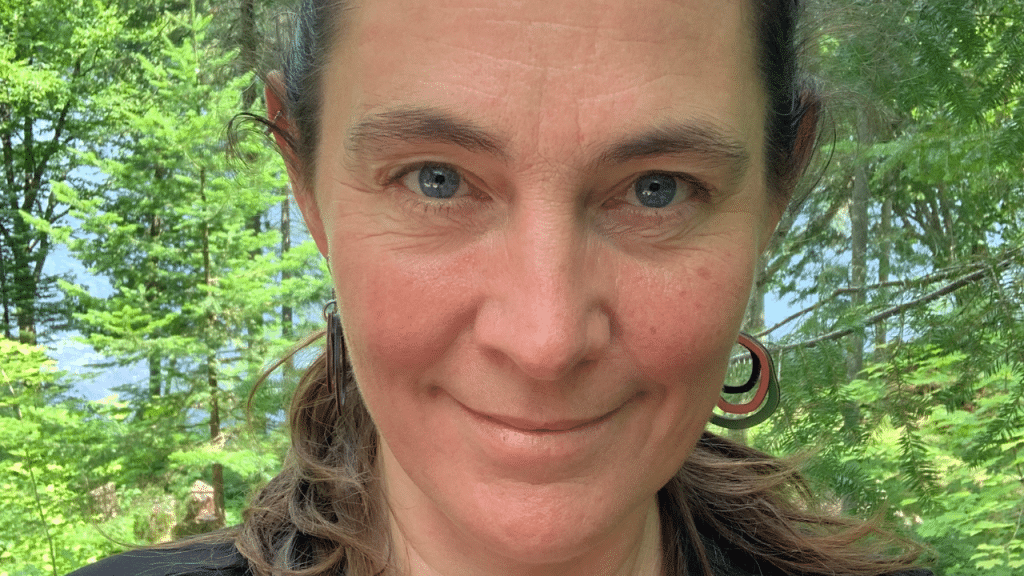
Over time, the hesitant members came to terms with the language. “Sobriety appeared all over our written and oral communication. And now, the word is included in the new Quebec Integrated Energy Resource Management Plan. It is quite a step.”
Busby notices a shift in the collective psyche.
“There is a consensus on the necessity of a transition, even though definitions vary. The connection between transition and social justice is becoming more mainstream. Are we moving fast enough? Certainly not. However, social dialogue around complex issues takes time. It is hard to advocate for a problem when people don’t fully grasp it.”
Doing the hard work: preparing the ground for advocacy
The New Economy Project is grappling with four complex issues, so it was critical to connect them and make them concrete.
“Financial, housing, workers’, and climate justice may appear to be separate challenges with distinct streams of solutions,” said Del Rio. “We made community wealth-building the common thread, framing our advocacy around it.”
Once you’ve identified your organization’s common thread, how do you turn it into action? For NEP, part of the answer runs through public banking.
A public bank is a financial institution owned by a government — federal, provincial, or municipal — rather than by private shareholders.
There are two main types: public development banks — like the Business Development Bank of Canada or the Canada Infrastructure Bank — that finance specific sectors, and retail public banks like Alberta’s ATB Financial, a full-service bank that’s publicly owned instead of privately held.
The core argument for public banks is that they maximize mission rather than profit — directing capital toward public goods (affordable housing, clean energy, rural infrastructure) that private banks underfund because the returns are too low or the timelines too long.
“It sounds like a very technical solution, but public banks have a transformative power for a community,” said Del Rio.
“It could provide capital to community-based lenders, invest in community land trusts, in community co-ops, and support local renewable energy projects. We spent a lot of time doing outreach and education for citizens, policy makers, at the city and state levels,” she added.
NEF organized numerous town halls and neighbourhood presentations, walking through the role of banks and taxes, and how taxes could be redirected into communities.
“Then, we asked citizens what they would want from a public bank. And help them explore what this institution would mean for their family and friends,” said Del Rio.
Education was paired with coalition building.
In 2018, NEP launched the Public Bank NYC Coalition. It includes community-based financial institutions, small and worker-owned businesses, and community and labour organizations. Since 2020, the Public Banking Act has been pushed to become a law or be included in another bill.
Why do people actually join in
“Education and groundwork build support; however, people give their support when they think the action proposed has potential,” said Bornfree.
“When people don’t believe it is possible, they don’t join. Joining means making a sacrifice, and you make a sacrifice when you believe change is possible.”
Asked if now is a good historical moment to believe change is possible, and if history is working against it, Bornfree said that’s a difficult question to answer
“Think of Russia in 1917. Bolsheviks came on the record saying this is not a time to protest. People protested anyway. The government was overthrown, and the world’s first communist state was established.
“I think movements tend to emerge at a time when we think they are not possible.”
When the fight you won comes back around
Le Front commun pour la transition énergétique is experiencing first-hand the Bornfree challenge: convincing people to believe in the exit from fossil fuels when political tensions and energy sovereignty are moving in the opposite direction.
Over the years, the coalition had pivoted toward socio-ecological transition. The resurgence of pipeline projects, however, forced the group to refocus on the energy transition, said Busby.
“This time it’s more challenging than when the coalition was created. We deal with the rise of conservative forces building a case against environmental protection, arguing that it is costly and undermines job security. Fear and polarization complicate our actions; we must find ways to untangle the fear connection and the isolation it creates. Social change hardly happens in isolation.”
“Status quo is very hard to overcome,” said Del Rio. “We need to be able to stretch our imagination about what is possible. How can we paint a more powerful picture and make the case to get others to buy into this vision of a really transformed economy?”
Working with politicians, in good and bad times
Advocacy’s challenge is making single stories into collective storytelling, said Del Rio.
“You do not believe it is possible to change a situation until you realize that others are experiencing the same problem. The same goes for political action: it is the collective weight that catches the attention.”
NEP works with maps as a visual tool. Its team collects data about a problem and transforms individual stories into dots on a map. NEF created a map of banking branches in the Bronx and the Upper East Side to show that the Bronx is a banking desert. It also created a clock that counted the money New York City citizens paid through predatory lending.
“You don’t know what you don’t know; it goes for citizens and for politicians,” said Del Rio.
NEP organized a three-hour walking tour of New York City’s Lower East Side cooperatives: the first public housing in the U.S., community land trusts, credit unions, and food co-ops.
“This tour made the concept of community wealth building concrete for these politicians. They better understand what we advocate for, and that it already exists and works.”
NYC has a progressive government now with the Mamdani administration — but that wasn’t always the case.
Organizations have to build the relationship in good and bad times, Del Rio said.
Sometimes it’s oppositional – you’re holding politicians to account – and sometimes it’s collaborative. “Either way, you keep the channel open by being rigorous, with evidence, data, and reports.”
“Whatever you advocate for, make sure the politicians don’t get ahead of the communities. First, you build the coalition and frame the change you advocate for. Then you meet with the politicians,” she added.
Groundwork is exactly what Bornfree has spent the past two years trying to make easier. He’s developing Outcry, an AI agent that runs locally on a device, with no internet connection required. Its website describes it as a tool for planning campaigns and pressure-testing tactics.
“I built Outcry to be the strategist I wish I had during Occupy. ”
Your job. Your mission. Your news.
With your support, the sector you're building gets the journalism it deserves, and you get a tax receipt.

Author

Related Articles

Fires and floods: How Canada’s non-profits are responding to summer disasters
Several organizations have set up ways Canadians can help as more than 900 wildfires burn across the country
New “endings” hotline to help the social sector with closures, insolvency and succession
Ever / Was is run by a collective of navigators seeking to destigmatize closures and endings in the Canadian social purpose sector.

Should B.C.’s condo buyout be an opportunity to grow housing through non-profits?
The federal and B.C. governments plan to buy thousands of unsold condos to expand homeownership, but some housing advocates say the units would have a greater long-term impact if they were transferred to non-profit providers.
