
Coralus is a self-organizing global community that continuously reimagines self and systems. Since 2015, we have been freely flowing resources toward a world where everyone thrives.
Partnered Partnered content Beyond profit: Building businesses that create better communities
Sonia Strobel built Skipper Otto around the idea that doing business well can also mean creating meaningful change. Her story, along with dozens of other entrepreneurs, will be featured at Coralus’s Illuminate 2026, where participants will explore new ways of doing business.
Why It Matters
Businesses are often encouraged to grow, scale and create large financial returns. But Coralus believes the challenges facing our world make it necessary to rethink the traditional business playbook and build new models for the future.
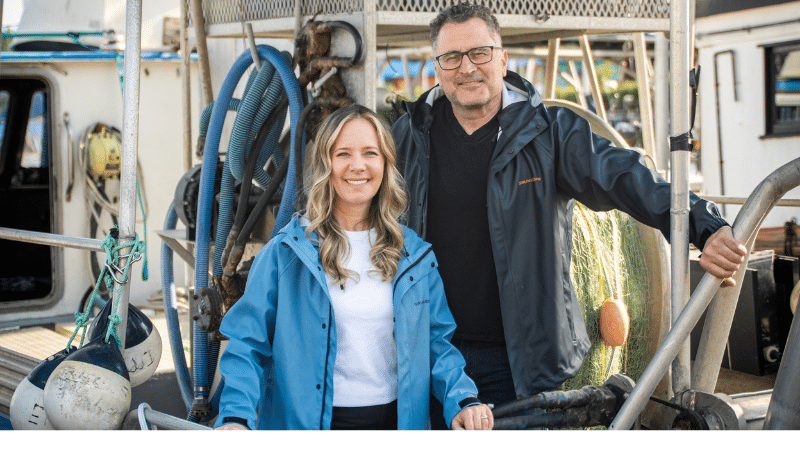
When seafood company Skipper Otto couldn’t get enough halibut for its customers, co-founder Sonia Strobel had to make a decision: switch suppliers or solve the problem?
Usually, a seafood company would look to suppliers beyond its community to source the fish it needs if it were unavailable locally. Instead, Strobel decided to explain to her customers just why there wasn’t enough halibut, encouraged them to support advocacy efforts to change the fishing system, and then suggested an alternative fish.
Not only did their customers stay, but it also kick-started a fundamental shift in the local industry.
“Our members didn’t leave. They didn’t say, ‘Oh, well, we’ll go get halibut somewhere else.’ They said, ‘Yes, let’s sign your petition. Let’s join you in this advocacy work,” said Strobel, CEO of Skipper Otto Community Supported Fishery.
That response is part of the type of business she has worked to cultivate for nearly two decades.
Skipper Otto is Canada’s first community-supported fishery.
Members pre-purchase seafood at the beginning of the season, providing harvesters with a committed market while giving customers a relationship with the people behind their food.
“What’s always been a priority for us is the impact,” Strobel said. “One of the hardest things is dealing with the pressure to be a more typical, normal business.
“There’s enormous pressure to take investor capital and to grow, grow, grow at all costs and to grow quickly. I think that’s been one of the challenging things, to resist that temptation.”
“But we don’t change the system by looking like everyone else,” Strobel said.
For her, success isn’t about selling more fish; it’s about building a business that she believes can help change the system.
Challenging the status quo of conventional entrepreneurship is something Vicki Saunders has been championing for more than a decade.
“You can do business differently that puts humans at the centre, relationships at the centre, that creates a better world for all,” said Saunders, founder of Coralus.
Coralus supports women and non-binary entrepreneurs with capital, connections, and resources to build businesses that create a different future.
Since founding Coralus in 2015, the organization has helped more than 260 ventures led by women and non-binary people, including Skipper Otto, helping entrepreneurs find alternatives to conventional business, capital and growth.
That means questioning some of the assumptions entrepreneurs are often encouraged to follow, including that a business needs to grow quickly and scale to be successful.
“We’ve shown that you can do things differently,” Saunders said.
In some cases, smaller businesses can create meaningful change through their communities and relationships, she said.
Beyond the bottom line
Challenging the status quo also means challenging the idea that money is the prerequisite for making change, according to Saunders.
“We have this narrative that you need money to do anything,” she said.
Instead, she believes entrepreneurs need to think about capital more broadly, recognizing networks, expertise, relationships and credibility as capital resources.
That mindset is especially important for small businesses navigating an increasingly difficult financial environment, according to Cindy Warner, founder of Lightbulb Finance.
Traditional bank financing has become more difficult for small entrepreneurs to access, with banks tightening their underwriting requirements, she added.
“The way to scale right now is to be able to fund your own operations through your own internal cash flow,” Warner said.
There are ways to build a financially sustainable business without losing sight of its broader purpose, she added.
“You can absolutely scale, but I would say on a different time horizon,” Warner said. “And you can absolutely be serving your market, having an impact.”
Profitability can give a business more freedom to pursue its social impact, she said, whether by employing people, serving a particular community, or reinvesting profits into the business.
Growth can still be part of the picture, she said, but it doesn’t have to be the measure of success.
“If you are doing that and able to have profit at the end of the day, that gives you flexibility to invest that profit towards your mission, donate some of it if you choose or have the flexibility to make decisions as to what you want to do with that with that profit and and how you have an impact,” Warner said.
Strobel’s business, Skipper Otto, is one example of that in practice.
Rather than treating growth as the end goal, Strobel built a profitable business around a model designed to strengthen the livelihoods of fishing families while connecting customers directly to the people behind their food.
Skipper Otto is one of the business models that will be shared during Coralus’s Illuminate 2026: Doing Business Different conference.
The four-day virtual event will bring together entrepreneurs to share how they changed the systems around them, challenged conventional approaches to business and built new ways of working.
“Everyone has a PhD in what’s not working,” said Saunders.
“But focusing on what is working and who is moving things forward and how things are transforming, we then start to remind ourselves that we are powerful. We can create change together,” Saunders said.
Register for one or all four days of the conference here.
Your job. Your mission. Your news.
With your support, the sector you're building gets the journalism it deserves, and you get a tax receipt.

This story was produced thanks to a partnership between Future of Good and Coralus. See FOG’s editorial ethics and standards here.
Author

Related Articles

Partnered Partnered content Report: Youth need consistent mentoring to help navigate the job market
Sometimes the hardest part of starting a career isn’t knowing what you want to do, it’s knowing how to get there. Mentor Canada’s newest report explores how mentoring can help young people build skills, connections and confidence as they navigate the transition to employment.

‘Canada must not go down that road’: More than 250 organizations demand investigation into CBSA after student protesters issued exclusion orders
The students were protesting after being denied post-graduation work permits they say they were eligible for when they enrolled at Portage College.
Partnered Partnered content How construction contracts became the blueprint for social change in Manitoba
Manitoba is a leader in social procurement, with decades of partnerships among government, businesses and social enterprises that have shaped a model other communities can learn from.
