Partnered Partnered content A new Oskâpêwis: Indigenous-led philanthropy takes shape in Saskatchewan
Ahead of its public launch this fall, the Saskatchewan Indigenous Community Foundation builds on a growing movement of Indigenous-led philanthropy in the province, showing what’s possible when philanthropy invests in the relationships and infrastructure needed to change how resources reach communities.
Why It Matters
One in six people in Saskatchewan are Indigenous, yet Indigenous communities have historically had limited access to philanthropic funding. Community leaders are now building new pathways to bring philanthropic resources into communities while developing Indigenous-led infrastructure to sustain that work for years to come.
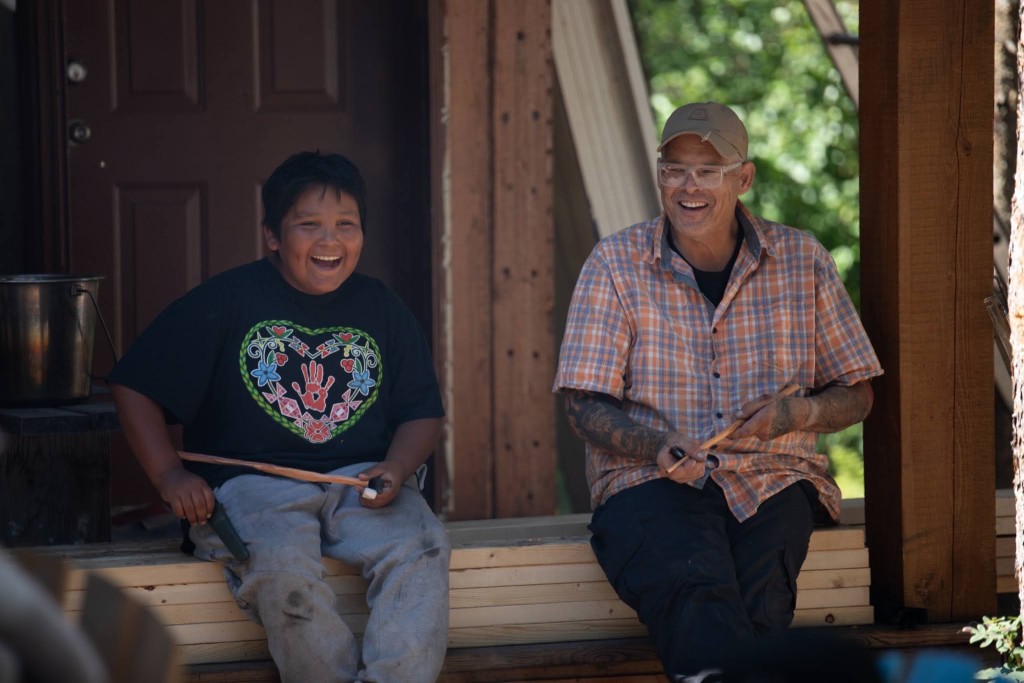
When a community member of Onion Lake First Nation in Saskatchewan wanted to start a community garden, he had the vision but no way to fund his idea.
He connected with the Sîhtoskâtowin Program, an Indigenous-led philanthropy program whose name means “lifting each other up” in Cree.
The program’s team encouraged him to meet with the local healthcare centre’s nutritionist and together, they secured philanthropic funding to bring his vision to life.
Today, his idea has become reality, with cherry trees, raspberry bushes, carrots, and potatoes now growing for Onion Lake First Nation members to enjoy.
The garden is an example of what can happen when Indigenous communities are given resources and the trust to lead their own ideas.
But projects like this have historically been difficult to fund in Saskatchewan, where philanthropic support for Indigenous communities has been limited.
“At the end of the day, we are just a really underserved population and we are here to change that,” said Taylar Belanger, (nitisiyihkâson Sakitawak ohci niya) community engagement lead for the Sîhtoskâtowin Program with Makeway.
“There absolutely is a way to streamline funding to Indigenous communities. It’s just a matter of who cares enough to help a community dream become a reality,” she said.
Saskatchewan has historically had fewer pathways connecting Indigenous communities with institutional philanthropy, particularly in rural and remote parts of the province, despite no shortage of ideas, leadership, or generosity in Indigenous communities.
In response, the Saskatchewan Indigenous Community Foundation (SICF) will soon launch, to strengthen Indigenous-led philanthropic infrastructure.
By bringing together Indigenous leaders, communities, and philanthropic partners, SICF is working to build new pathways for philanthropic resources to reach communities, alongside programs like Sîhtoskâtowin.
Rooted in reciprocity and generosity
Indigenous philanthropy itself isn’t new, said Nicole McDonald, CEO of Indigenous Philanthropy Advisors. Indigenous communities have long practiced generosity, reciprocity and sharing.
“What’s changing in Saskatchewan is the growth of formal Indigenous-led philanthropic relationships and infrastructure that can help connect philanthropic resources with community priorities,” said McDonald.
“We want to show funders that there are vehicles and ways to get philanthropic support flowing into community, and that this Indigenous-led philanthropic infrastructure is growing,” said McDonald.
Indigenous people make up about 17 per cent of Saskatchewan’s population according to the 2021 Census, one of the highest proportions among provinces.
Yet the philanthropic infrastructure needed to connect funders with Indigenous communities and community-led priorities remains relatively underdeveloped.
The lack of philanthropic infrastructure has been a barrier, said McDonald, who has worked in philanthropy for more than ten years.
“Most of my experience in working in the philanthropic sector, a number of foundations have said, ‘We do want to fund in Saskatchewan and we would love to fund Indigenous communities, but we don’t know how’,” McDonald said.
The partnership between the Sîhtoskâtowin program and SICF is focused on getting resources into communities now while also building Indigenous-led infrastructure to support them over the long term, McDonald said.
“Oftentimes I think communities grapple with the idea of having to pick between getting resources in the community now, or taking the time and building the infrastructure that we need for tomorrow. This partnership is doing both at the same time,” said McDonald.
That approach begins with relationships and trust, according to Belanger.
“We don’t walk ahead of anybody, we don’t walk behind them, we walk with them,” said Belanger.
That means working with the community to turn ideas into action even when they don’t have an organization or conventional funding structure behind them, she said.
“The most important thing that comes out of that is building trust,” she said. “When we allow communities and leadership the ability to lead in their own way, it gives energy and power back to our people.”
Building Indigenous-led philanthropic infrastructure
Max FineDay, chair of the SICF board, describes the role of the SICF through the Cree word oskâpêwis.
“In the Cree tradition, the First Nations tradition, oskâpêwis, a helper, is someone that facilitates a ceremony or a cultural event, or has that role in community to be called upon to support our people,” he said.
“We’re simply the conduit or the helpers to make sure that our people have what they need.”
The SICF role will not be to decide what communities need, but to help them with the ideas they already have.
“Communities shouldn’t have to wait for a government program or corporate sponsorship every time somebody has a good idea,” he said.
SICF is being built around Indigenous priorities, knowledge and leadership, creating another pathway for communities to access philanthropic resources without having their priorities filtered through the mandate of a non-Indigenous organization.
“We have the opportunity to take the dreams and aspirations of First Nations people from all across the province and build that into an organization that understands the First Nations worldview,” FineDay said.
On Oct. 20, Indigenous community leaders, funders and philanthropic organizations are invited to the Growing Indigenous Philanthropy in Saskatchewan gathering.
It will create space to explore how Indigenous-led philanthropy can continue to grow across the province and will also mark the public launch of SICF.
It’s an opportunity to move beyond the idea that philanthropic resources are inherently scarce, and that Indigenous organizations and communities must compete with one another to access them, McDonald said.
The opportunity emerging in Saskatchewan isn’t rooted in a shortage of ideas waiting to be solved. Indigenous communities already hold the leadership, knowledge, and aspirations to shape their own futures. The work now is to build the relationships, pathways, and institutions that can bring more resources.
“We are a people of abundance and we have no shortage of incredible ideas,” FineDay said.
Your job. Your mission. Your news.
With your support, the sector you're building gets the journalism it deserves, and you get a tax receipt.


The Saskatchewan Indigenous Community Foundation (SICF) is an Indigenous-led public foundation working to grow Indigenous philanthropy in Saskatchewan. This partnered series explores the relationships, community leadership and Indigenous-led infrastructure helping to create new pathways for philanthropic resources to reach Indigenous communities across the province.
Author

Related Articles

Food-rescue groups turn to processing facilities to respond to waste and insecurity
New facilities in Ontario and Manitoba aim to turn surplus food into repurposed products while expanding access to food assistance.

Food bank vending machine launches in 2 Vancouver SkyTrain stations
A new food preservation system is helping the Greater Vancouver Food Bank turn excess fruit into new funding.

Partnered Partnered content How construction contracts became the blueprint for social change in Manitoba
Manitoba is a leader in social procurement, with decades of partnerships among government, businesses and social enterprises that have shaped a model other communities can learn from.
