Black Gold: Salish Soils ensures your kitchen compost returns to the land
Indigenous-led company reclaims land with profitable company
Why It Matters
Municipal compost programs still see vast amounts of waste head to landfills. Smaller, Indigenous-led efforts to improve soils and provide rich fertilizer could be a key to more effective programs.
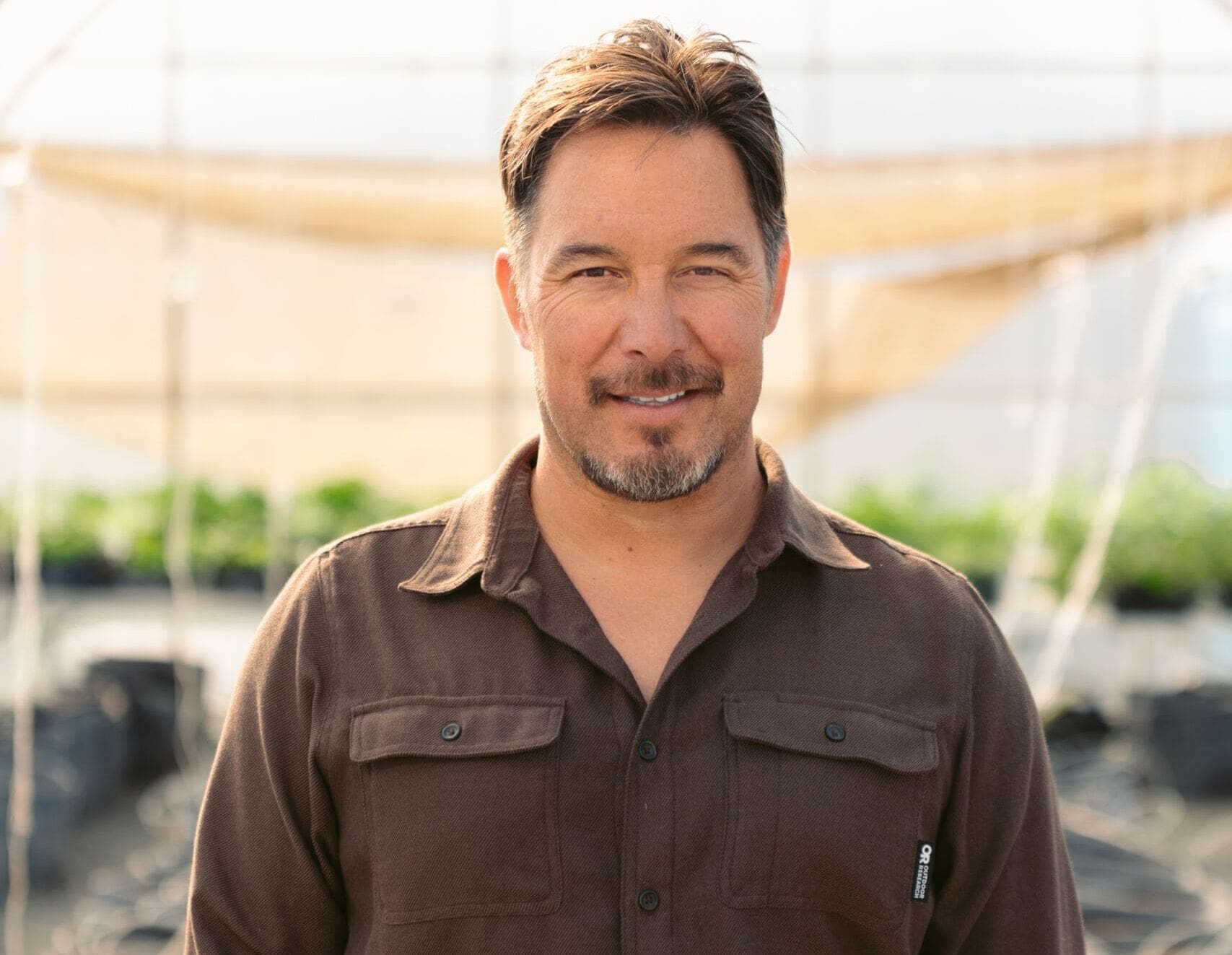
Aaron Joe is the owner of Salish Soils. (Supplied.)
Aaron Joe wanted to improve and grow his life. He found a way to improve and grow his community while he was at it.
In 2010, Joe launched a company on B.C.’s Sunshine Coast with three employees: himself, his wife, and his brother, when he “was working towards cleaning [his] own life up as a young man.”
Now, Joe’s company, Salish Soils, has 35 employees and annually diverts about 100,000 kilograms of organic waste that would otherwise go to landfills, returning it to the land as precious “black gold” – cleaning up far more than just his own life.
Joe, who started his career in the mining and forestry industries, said he witnessed firsthand how much valuable material was headed straight for the landfill and wasted.
As a mining contractor, he explained, he would help clear hundreds of acres of trees off the land, and then burn all of the cleared trees right there on the territory, prompting him to come up with a better solution for wood and other waste.
“We started a pilot 15 years ago, and started making compost from there,” Joe said, adding their products are used by community members and local institutions in various ways, many geared toward reconciliation and self-sufficiency.
“We use it to reclaim our land. We use it to grow food for our community, for our elders, we grow food for the local food bank.”
Separate from its non-profit farm, Indigenous-led Salish Soils also has contracts to pick up food waste and garbage from the shíshálh Nation, the Sunshine Coast Regional District, and the nearby town of Gibsons. From there, it’s ready to get a new life, creating a closed loop, transforming waste back into a resource.
What they do is speed up the natural biodegradation processes that occur in nature. For example, when a tree falls down in a forest, over time it degrades into the ground, creating nourishing soil and compost. While that would take several years organically, Salish Soils can recreate the steps in a number of weeks.
Most Canadians assume tossing kitchen scraps into the green bin means they’re doing their part, and their banana peels and apple cores will be breaking down in a farmer’s soil in no time, said Joe.
The reality is more complicated.
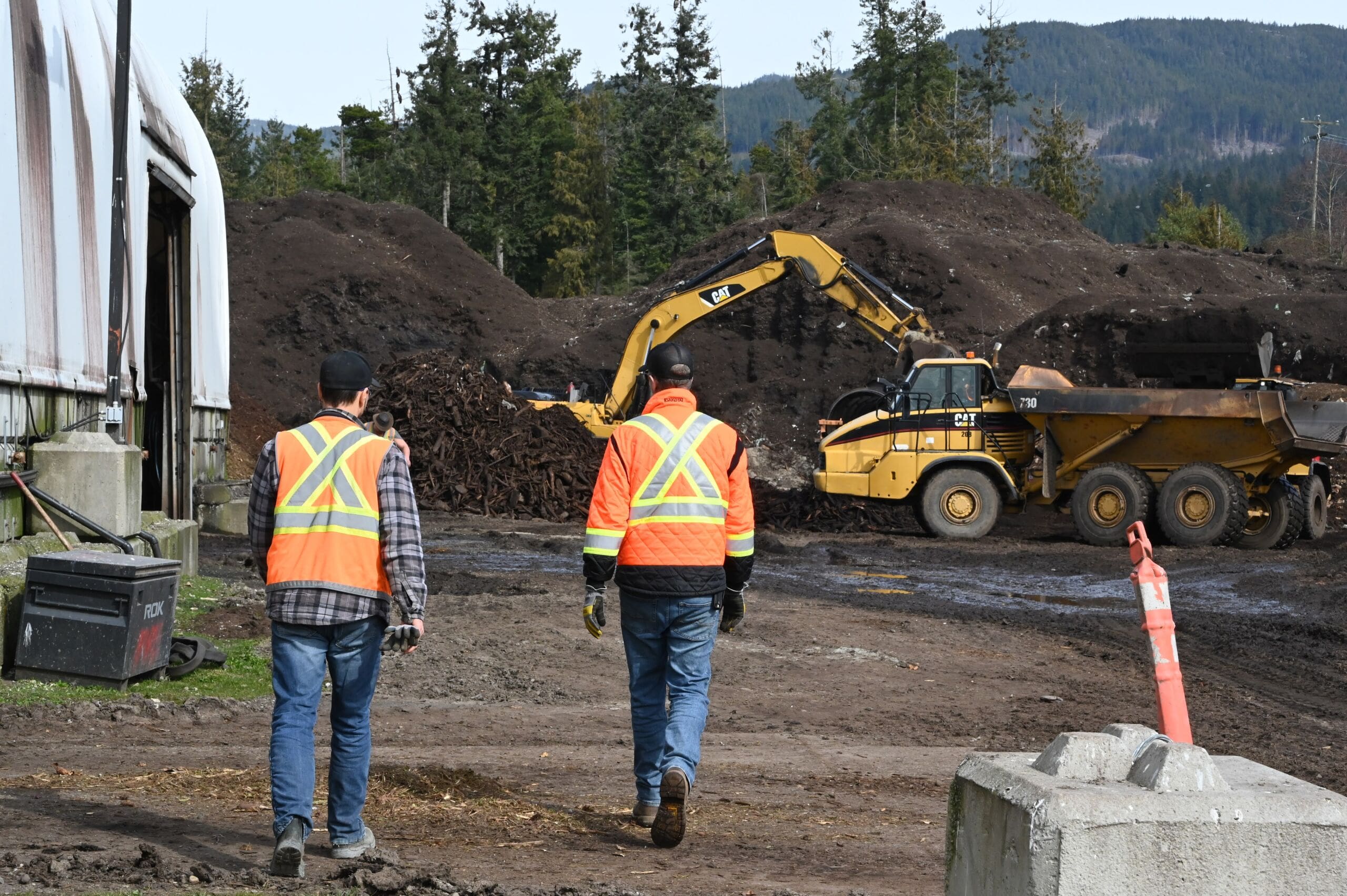
Workers on the lot at Salish Soils. (Supplied)
Much of household organic waste collected across the country still ends up in landfills. In Ontario alone, 60 per cent of the 3.6 million tonnes of food and organic waste is sent to landfills, instead of returned to the soil, despite more than 90 municipal green bin programs in the province.
In B.C. where Joe is based, organic waste represents 40 per cent of material sent to landfills, which the provincial government says “generates a significant level of greenhouse gases.”
“I think about the future a lot, and I think it’s very important to have food sovereign communities,” Joe said, adding it’s important to him that the business is financially sustainable, too, not just environmentally.
“We do a lot in our community … but we also, we also understand the value of being a profitable, prosperous business as well.”
Per their contracts with local government, Salish Soils collects wood, food, fish residuals, and other green waste either picked up or dropped off at their facility and then turns it into soil, mulch, compost, and gravel. These products are sold on their website, and they profit from both ends of this waste management process.
The kind of compost Salish Soils produces is known as “Class A” compost – rich, fertile, and safe for growing food crops. When it’s done right, this process helps build food security and reduce emissions, helping Canada reach its lofty federal goals of reducing its greenhouse emissions by 45 to 50 per cent by 2035.
There is also a byproduct to sell on the other end to hobby gardeners and professional farmers alike. “Anyone who’s looking for a bag of soil on the coast, we sell to,” said Oliver James, chief operating officer of Salish Soils.
“We have this two-sided business model … where we get paid for the waste that comes to us, and then we get paid for the soil and compost that we produce,” James said.
“What we’re building, it’s a very recession-proof business in many respects, because waste will always happen.”
The process is scalable, said James. But across Canada, municipal approaches vary widely.
In Montreal, household compost is trucked to processing centres more than 100 kilometres from the city, generating greenhouse gases in the process, which has been controversial. Other cities, including Winnipeg and St. John’s, still don’t have curbside compost pickup systems in place, only allowing households to drop-off compost at designated stations.
Winnipeg has launched a “Soil Fabrication” program, instead, using biosolids (i.e. sewage sludge) and street sweepings to bulk up parkland and fill degraded soils. But, while this technically checks the composting box, it’s not the kind of material people want in their vegetable garden. Street sweepings are frequently contaminated with heavy metals and biosolids, for example, often contain harmful “forever chemicals” like per- and polyfluoroalkyl substances (PFAS), raising concerns for public health and farmers.
For the cities that do offer a compost pick-up station for residents to pick up with shovels from designated locations with strict schedules, there’s often a limit, like one cubic metre per vehicle in Toronto – even though cities generally have a green waste surplus.
Likewise, residents also frequently have little to no information about what went into this municipal compost. All this leaves lots of room for improvement with solutions we can learn from better, already-existing models, said James, adding they hope to help others expand on their idea
“We do already have First Nations reaching out to us in other areas, who are very interested in areas of our business, and they’re looking for advice,” James said, adding that they’ve thought about the opportunity to replicate their business in other locations.
“Right now we’re focused on … getting the blueprint ready.”
Your job. Your mission. Your news.
With your support, the sector you're building gets the journalism it deserves, and you get a tax receipt.

Related Articles

New donation platform to help communities directly pay down mosque debt
Own Your Masjid is a project of boutique marketing agency Process Plus Marketing

Explainer: The divergent fix-it paths of Ontario and B.C.’s condo oversupply problem
Both provinces have too many tiny, shoebox condos, but both are taking different approaches to fixing it.

Elbows up: Spring Impact Capital calls for a giant spreadsheet of available early-stage Canadian capital
The Vancouver impact investor wants to crowd-source a free, national directory
