Canadian charities are on the frontlines of disaster management—will climate change force a rethink?
Nearly 40,000 Canadians faced evacuation in May alone.
Why It Matters
As climate change accelerates, so too do the number of environmental crises non-profits respond to. Rethinking the charitable sector’s role in prevention could change that.
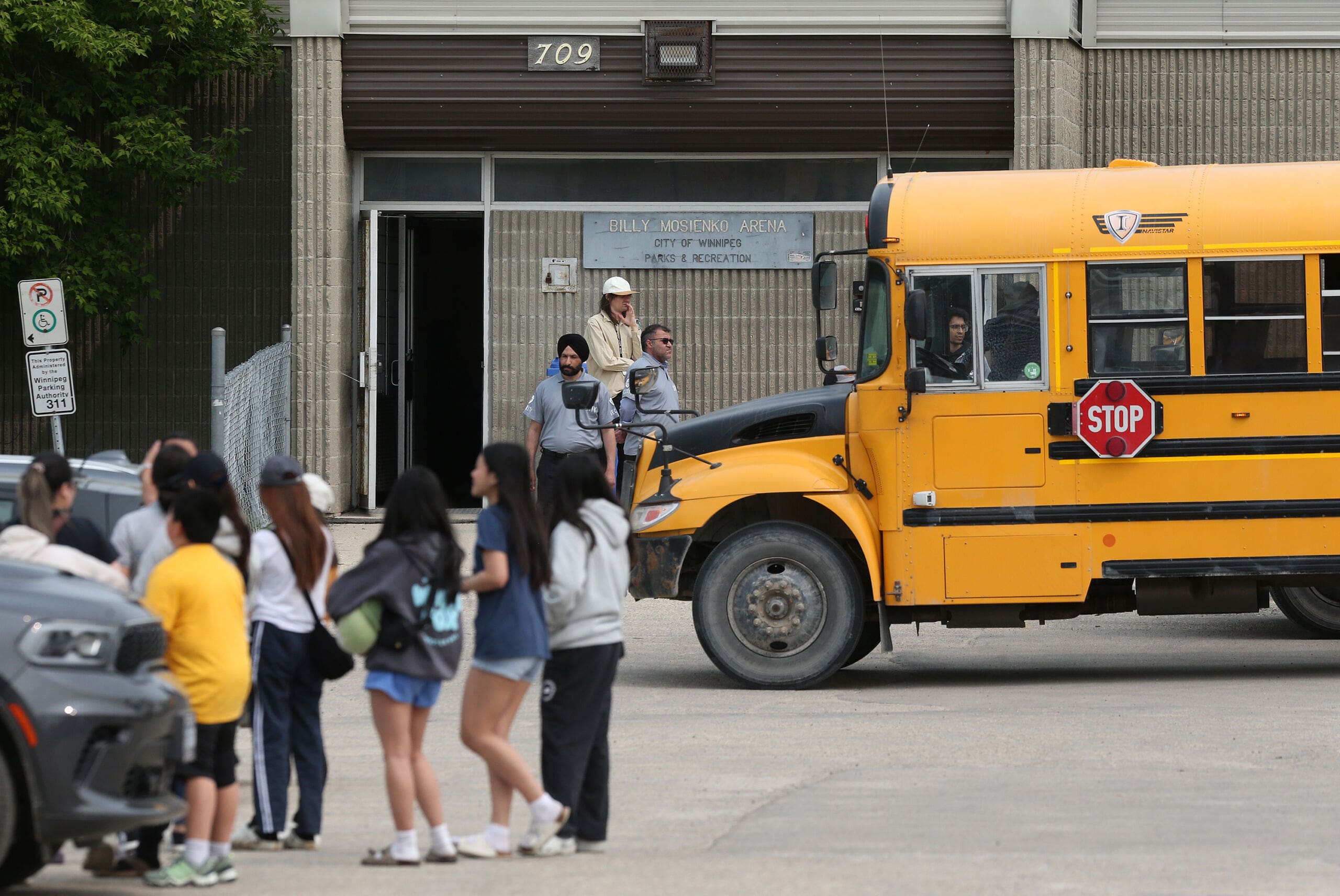
Evacuees from Flin Flon, Man. arrive at Winnipeg’s Billy Mosienko Arena on May 29, 2025. (Shannon VanRaes/Future of Good)
Leonard Daniels couldn’t see the flames as wildfires approached his home in Flin Flon, but his wife, Mary Daniels, described to him a wall of ash and a hail of glowing embers as they fled Northern Manitoba with their family.
“The smell of the smoke was everywhere, and I could just feel that the fire was getting really close,” he said.
Originally from Mathias Colomb Cree Nation, also known as Pukatawagan, the 73-year-old worked as a northern firefighter for 33 years before health concerns, which eventually took his eyesight, forced him to relocate to a community with more amenities.
“But I still got a functional mind and a good memory,” he said. “I remember everything.”
That includes a childhood with fewer wildfires and fewer evacuations. Now, the cabins and hunting camps he remembers from his youth have all burned, something he attributes to climate change, as well as a lack of resources.
Statistics Canada data confirms that climate-driven disasters are occurring more frequently nationwide, destroying more property and displacing more people than ever before. Last month, wildfires forced nearly 40,000 Canadians out of their homes, and, like Daniels, most evacuees turned to charities and non-governmental organizations for assistance.
However, as the impacts of the global climate crisis accelerate, some believe now is the time to transform not just how the charitable sector responds to disasters but also how it works to prevent them.
“In Canada, we’ve always had this connection with the volunteer sector and with the charitable organizations,” said Jack Lindsay, an associate professor at Brandon University’s department of applied disaster and emergency studies.
“And following the 1997 flood in Manitoba, a lot of those organizations came together and started working more collaboratively, more effectively.”
Canada’s climate refugees
Still, coordination could be improved, he said, noting non-profits serving vulnerable communities are often excluded from standard disaster responses, even when they have much to offer.
For example, when fire evacuees from remote northern communities get stranded in cities, they may end up unhoused and using homeless shelters or relying on food banks, he said, an issue falling outside the scope of most disaster response strategies.
“It’s interesting how when we look overseas, maybe to a developing country, and we see these poor refugees and we’re saddened that they’re living in tents or they’re living in cobbled together shelters,” Lindsay said.
“But in Canada, we just treat them as the unhoused and we don’t see them as social and economic refugees, because we think we’re ourselves as a developed country that doesn’t have internal refugees.”
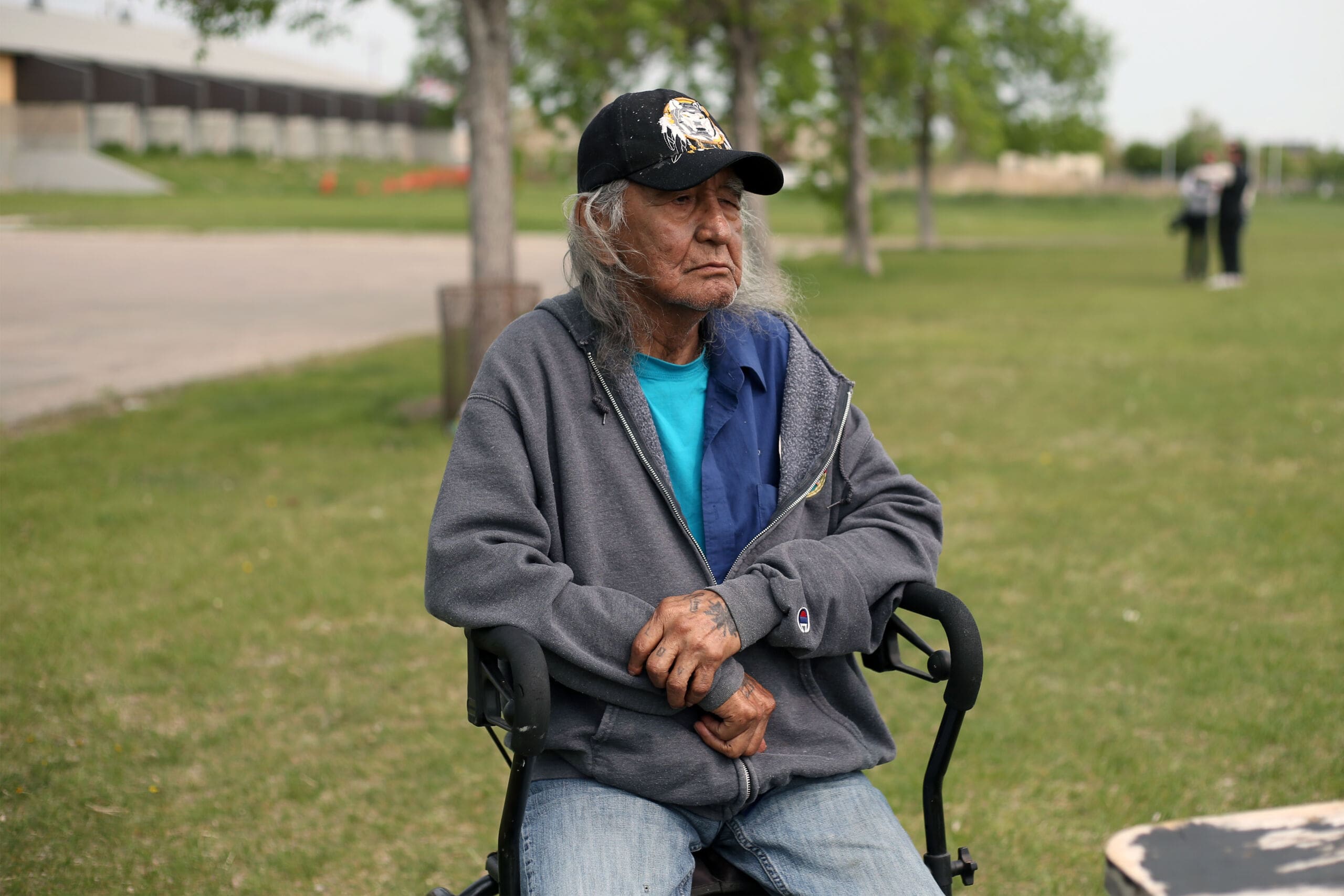
Leonard Daniels fled wildfires in northern Manitoba, eventually making his way to Winnipeg’s Billy Mosienko Arena, one of several evacuation centres set up by the Canadian Red Cross. (Shannon VanRaes/Future of Good)
Acknowledging Canada has internal refugees, climate and otherwise, could help civic planners recognize systemic issues and create solutions by collaborating with a broad cross-section of social purpose organizations.
“We haven’t really reached out to the volunteer and charitable sector that’s not normally associated with disaster relief, and I think we need to do more with social organizations that have established networks of people, who are organized.”
That might look like collaborating with service clubs like Lions of Canada or even local refugee settlement services, he said, stressing that emergencies are not an equalizing societal force.
“If you’re affluent and well off, as a community or as an individual, you get through easier than if you are already living on the edge of disaster,” Lindsay said.
Many northern and First Nations communities are disproportionately affected by climate change, while also being disadvantaged by colonial legacy issues and economic challenges, according to data provided by the Indigenous Climate Hub.
“They’re already suffering, and when they have to get evacuated for a fire or if they lose an employer or they don’t get the ice roads because of the changing climate, the effects on them are just amplified compared to a bigger city like Winnipeg, where we have more resources,” he said.
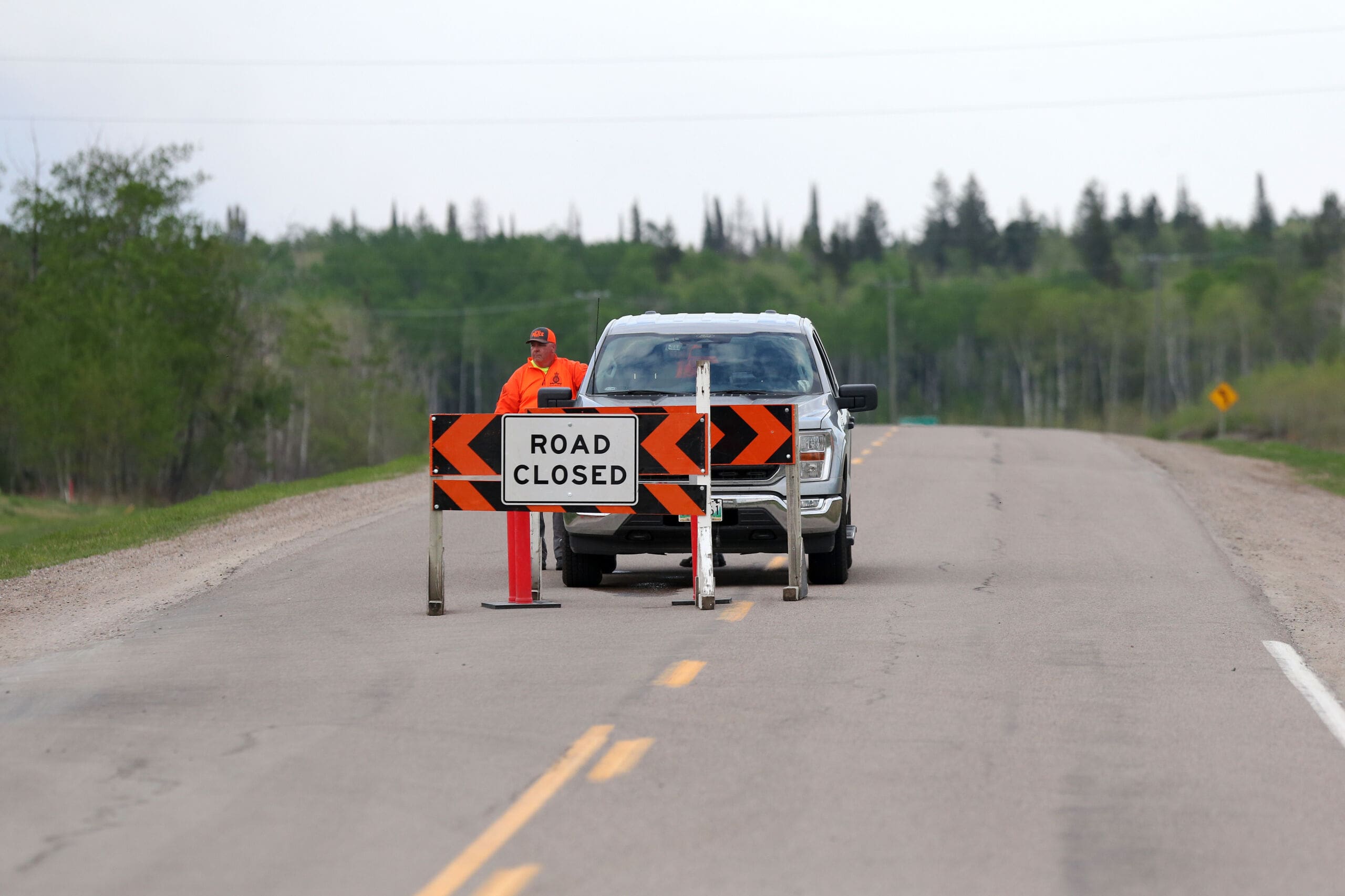
Members of the Royal Canadian Mounted Police enforce a mandatory evacuation order north of Lac du Bonnet, Man. on May 15, 2025. (Shannon VanRaes/The Globe and Mail)
Daniels wants Ottawa to provide Indigenous communities like Pukatawagan with the resources to prevent and fight fires more effectively.
“The federal government has a fiduciary obligation to all First Nations people in any community,” he said.
“They need to come to the table. They could set aside a pool (of funding) for this, so engage us, talk to us.”
At a recent press conference, Chief Gordie Bear said people in Pukatawagan were fighting fires with “nothing but hoses for our gardens, rakes for the lawns.”
Pukatawagan’s residents have now evacuated to the south, but a shortage of hotel rooms has sent some as far away as Niagara Falls, Ont., thousands of kilometres away from their support networks, raising concerns they could be targeted by bad actors or face intense culture shock.
Sitting at a picnic table near Winnipeg’s Billy Mosienko Arena, one of several evacuation centres set up by the Canadian Red Cross, Daniels said he’s thankful for the volunteers providing food and drinks, but what he really wants, more than even a good sleep and a hot shower, is to go home.
“People are worrying about their pets, worrying about the food in their deep freezers and refrigerators, because if you lose power, all that meat’s gonna spoil,” he said.
Long road to recovery
Canada’s Disaster Financial Assistance Arrangements program provides cash assistance to provincial and territorial governments for response and recovery costs related to large-scale natural disasters, but for people like Daniels, the charitable sector will also play a substantial role.
“Often people have lost a significant amount of food in these types of situations, because they’ve been gone so long, so that’s one way we support them,” said Meaghan Erbus, senior manager for advocacy and impact at Harvest Manitoba, a food bank serving nearly 400 community organizations across Manitoba.
The organization is working with Food Banks Canada to distribute emergency hampers as needed. Other organizations, like the Mennonite Disaster Service, will help people repair their homes and properties in the coming weeks and months.
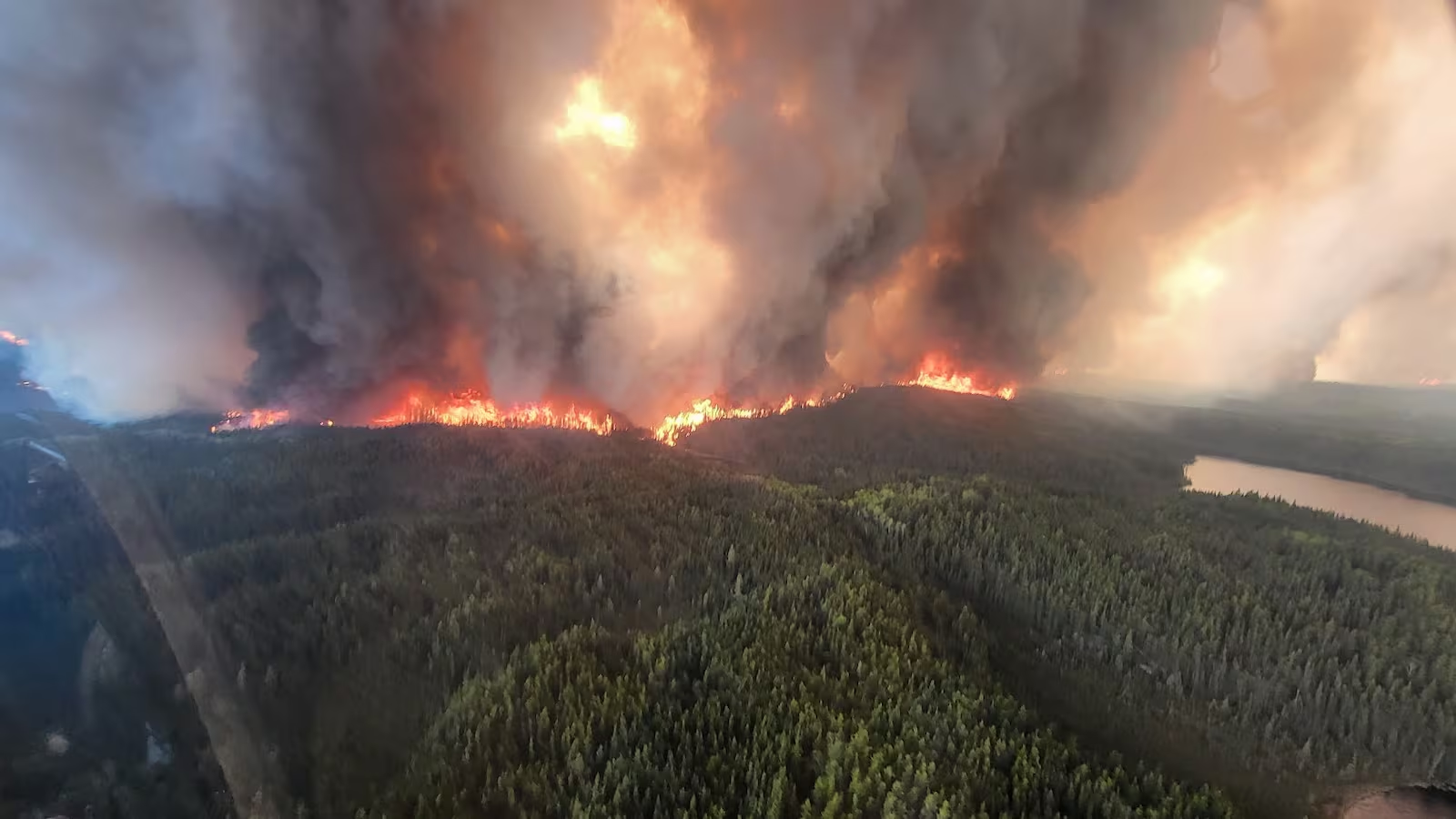
Fire WE017 near Sherridon, Man. on May 27, 2025. The fire has combined with the inferno blazing near Flin Flon, Man., making it the largest in the province and more than seven times the size of Winnipeg. (Province of Manitoba/Supplied.)
However, not everyone is able to return home after a disaster.
“We have First Nation communities that have been away from their homes for nearly a decade,” Lindsay said. “And there were many of the communities that burned in B.C. a few years ago that haven’t even really started making significant recovery efforts.”
The tandem problem of more frequent disasters and longer recovery periods means non-profits working in the disaster relief and recovery sector face capacity challenges.
There are also fears of donor fatigue setting in, although Lindsay said in recent years the federal government has started funding some agencies, like the Canadian Red Cross, using more of a humanitarian relief model.
New model, old problems
Some provinces are rethinking the roles charitable organizations play in emergency response and recovery, while also working to build government-led volunteer networks.
In 2023, Ontario released its first Provincial Emergency Management Strategy and Action Plan. It included the creation of a government-led volunteer organization called Ontario Corps, which coordinates with non-governmental partners, like non-profits, but also registers, vets, and dispatches volunteers.
According to the province, “volunteers can be trained to perform a variety of duties, including sandbagging, debris removal, serving meals and more,” and “will be assigned duties based on their skill level, interest and availability.”
Nova Scotia created a similar government agency called the Nova Scotia Guard in 2024.
“As we’ve seen time and again, whenever an emergency happens, the first thing Nova Scotians do is step up and help their neighbours,” said Premier Tim Houston when the guard was announced last spring.
However, Lindsay questions how keen people will be to volunteer for the government.
“It will be interesting to see how this formalization goes in Nova Scotia and Ontario,” he said. “In the long run, does this approach undermine the community spirit side of things? Because this is going to be the government running this.”
Lindsay noted organizations like the Salvation Army, St. John Ambulance, the Red Cross, and Mennonite Disaster Service are all facing volunteer recruitment and retention challenges.
Volunteerism does tend to spike when disaster strikes, but enthusiasm without coordination can lead to unintended consequences.
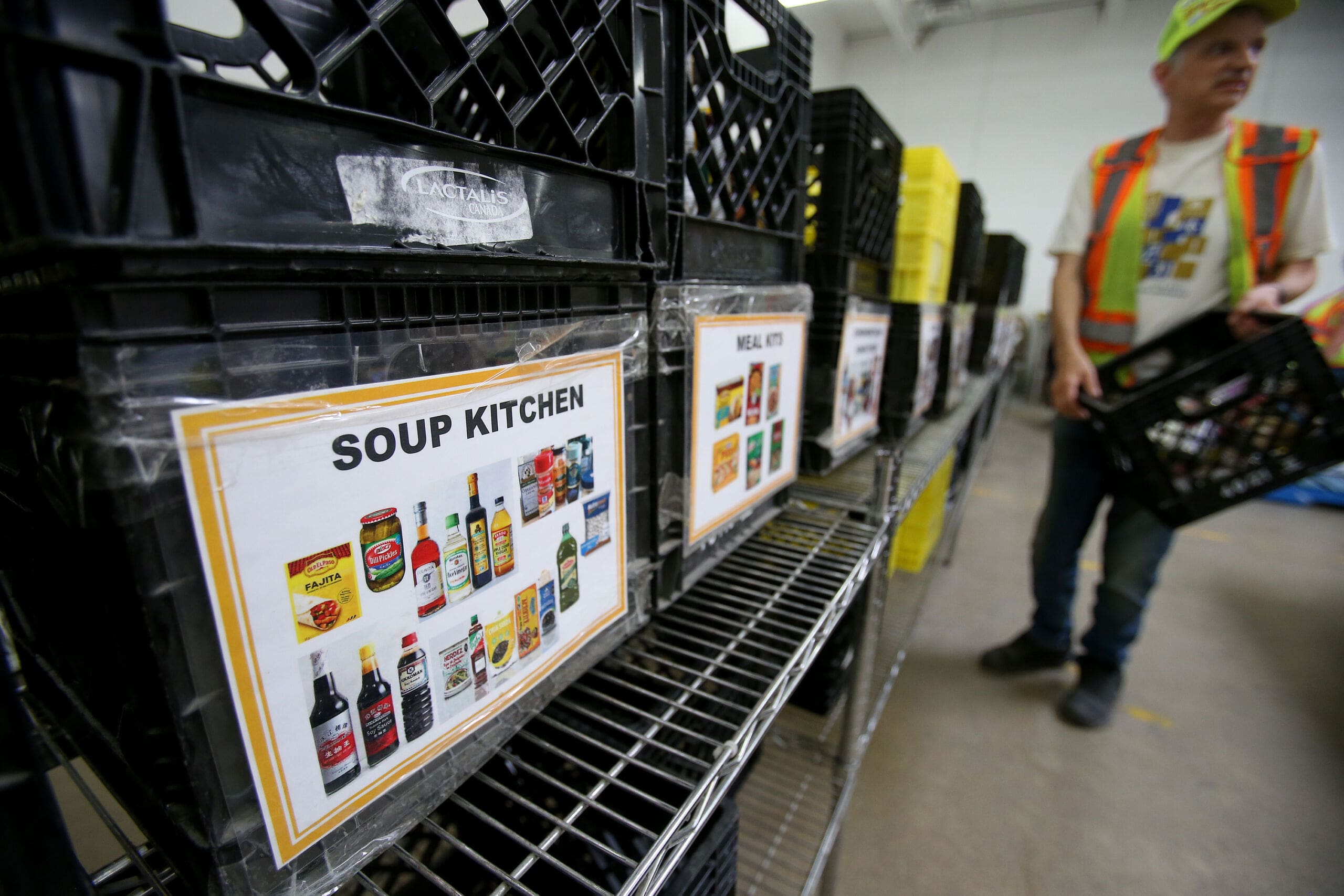
Volunteers sort donations at Harvest Manitoba. (Shannon VanRaes/Future of Good)
“If you suddenly have hundreds of people showing up at a flooding river, volunteering to throw sandbags, and some of them are elderly and some of them can’t swim and some of them haven’t worn proper clothing, then your sandbagging site suddenly becomes a second disaster site as you’re trying to help and support the people who’ve come out to help you,” Lindsay said.
An ounce of prevention
Once the immediate threat of this year’s wildfire season passes, Lindsay said Canadians would benefit from a big picture discussion about prevention and resilience.
“We need to really start respecting that difference between the crisis solution side of things and the long-term community recovery, and how that blends across into risk reduction,” he said.
“We keep seeing this over and over and over again, and we keep not taking that lesson on. So I think we have to really be asking … not just how is this response going, but even why was this response necessary?”
On April 1, Ottawa enacted new disaster assistance guidelines requiring funding recipients to invest in prevention.
“Quite frankly, if we weren’t having to donate to organizations like the Red Cross to provide disaster relief, we could be donating to those organizations to serve our society on a day-to-day basis,” Lindsay said.
Your job. Your mission. Your news.
With your support, the sector you're building gets the journalism it deserves, and you get a tax receipt.

Related Articles

Federal court rejects Ottawa’s bid to quash youth-led climate case
Federal Court says youth climate advocates deserve a full hearing on whether Ottawa weakened Canada’s 2030 plan.
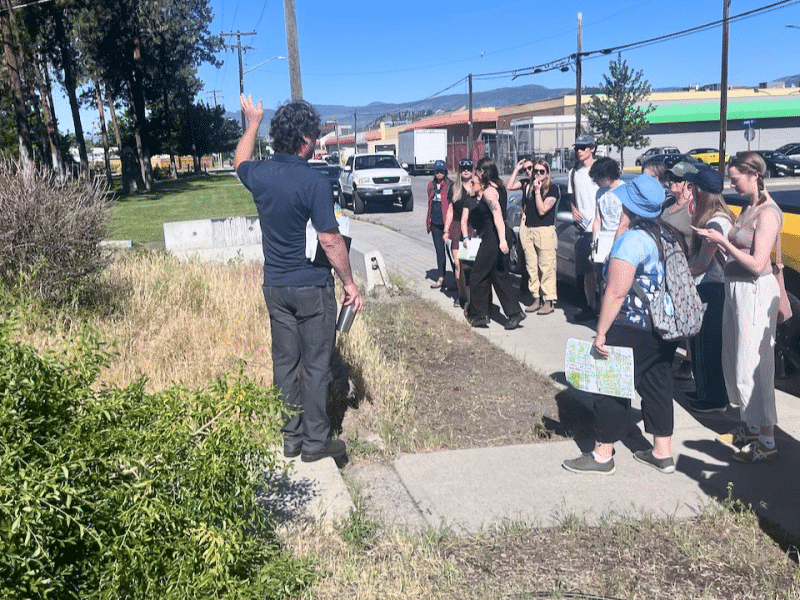
New UBC-Kelowna tool helps cities plant trees where they’re needed most
CanopyFit maps physical barriers alongside heat and equity data to maximize shade and cooling.

Canada’s Sustainable Finance Taxonomy: What it is, what is happening and what’s coming next
Canada’s sustainable finance taxonomy faces big challenges, from oil and gas, Indigenous rights and the real meaning of the word ‘transition.’
