Canadian foundations back non-profit networks to help fix “piecemeal” core funding
Nine funders, led by the Lawson Foundation, announced that they would be providing multi-year general operating support to non-profit networks and associations.
Why It Matters
Provincial and territorial non-profit networks advocate for policy change and conduct critical sector research. Examples include the Community Sector Council of Newfoundland and Labrador and the Alberta Nonprofit Network. Several of these networks do not seek funding from certain sources in order to remain neutral in their advocacy work, which can make future planning and sustainability a challenge.

Impact Organizations of Nova Scotia – IONS – is one of the non-profit networks that will be receiving funding through a new collaborative fund designed to sustain networks and associations in the sector (Impact Organizations of Nova Scotia / Facebook)
Nine Canadian foundations have come together to pledge $1.5 million to non-profit networks and associations to combat what they describe as a “piecemeal” approach to core funding.
Eleven networks across the country will receive general operating support through The Charitable and Nonprofit Sector Infrastructure Collaborative Fund. Each will be supported with core funding for three years.
“One of the hardest things for networks like ours is that we don’t do direct service delivery,” said Pamela Uppal-Sandhu, director of policy at the Ontario Nonprofit Network (ONN).
“We do a lot of intangible systems change [and] advocacy work. And so to make the case that you should get funding can be really difficult.”
The nine foundations co-developed the fund with grantees – the non-profit networks themselves – and have been transparent about how much each organization will receive to keep the fund non-competitive, said Cathy Taylor, president and CEO of the Lawson Foundation and former executive director of the ONN.
“We came up with a funding formula that we tested with them, to make sure they truly felt that it was not competitive between provinces and territories,” she said.
Among the non-profit networks that have received funding are established groups like Impact Organizations of Nova Scotia and Vantage Point in B.C.. Others, like the Yukon NGO Hub Society, the Manitoba Network of Networks, and the Saskatchewan Nonprofit Partnership are emerging networks.
The Lawson Foundation has partnered with the Benefaction Foundation, the Catherine Donnelly Foundation, The Counselling Foundation of Canada, Definity Foundation, Laidlaw Foundation, McConnell Foundation, RBC Foundation and Tiny Foundation. Interested funders are also welcome to join.
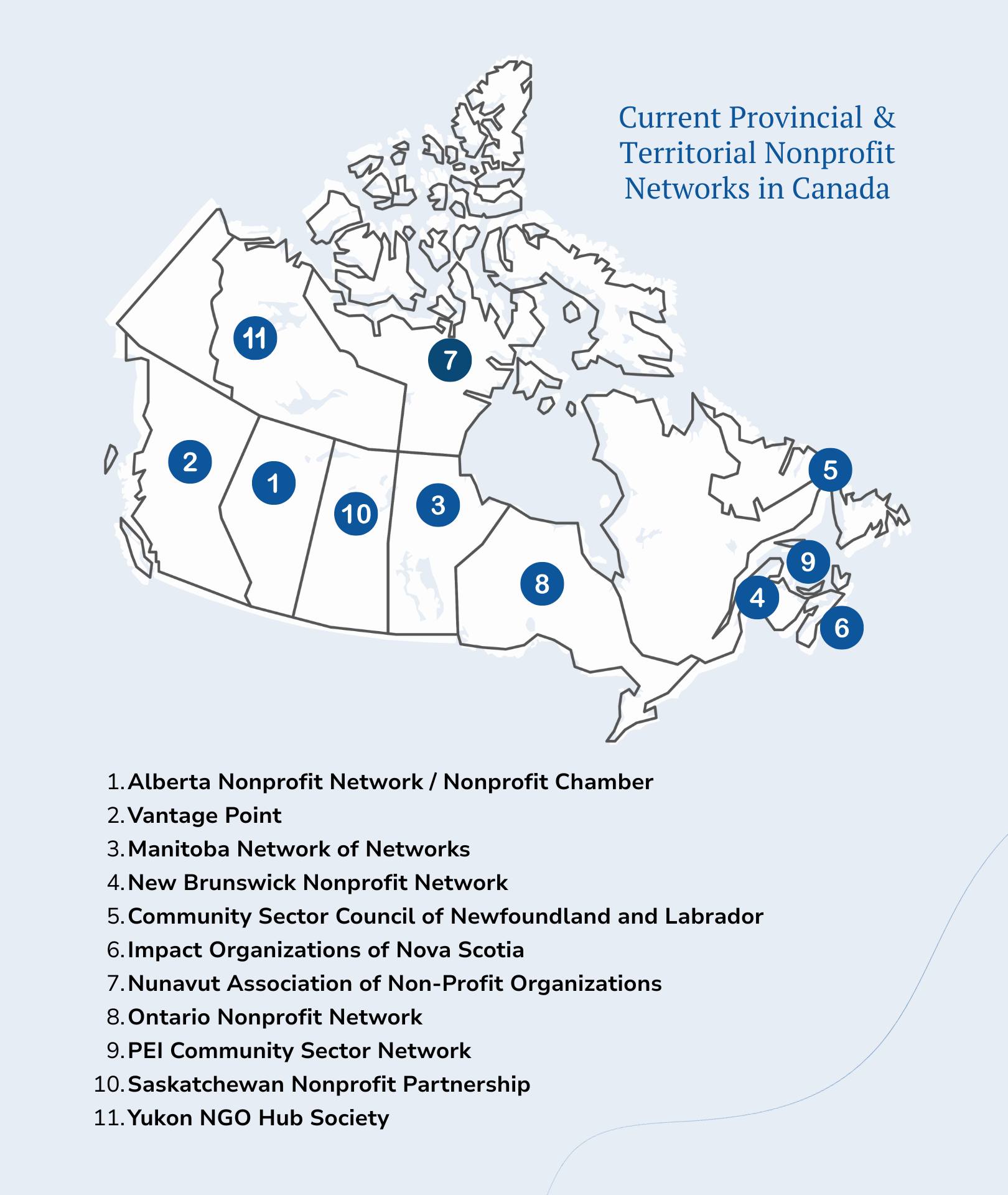
Current provincial and territorial non-profit networks that will be receiving funding as part of this new collaborative fund (Lawson Foundation / Facebook)
No core funding for policy advocacy
For non-profit networks and associations, recent policy changes around giving to non-qualified donees and disbursement quotas have allowed for more capital to be unlocked, Uppal-Sandhu said.
While some of that funding has since flowed to non-profit networks and associations, most are still relying on project-based funding, she added, noting that earned income from memberships, sponsorships and fee-for-service programs are also common routes that non-profit networks take to sustain themselves.
Although networks and associations “rely a lot on membership, conference and training revenues, […] when the [non-profit] sector is stressed and trying to keep their own doors open, those types of expenditures aren’t their top priority,” Taylor said.
The ONN has shifted away from applying for and accepting funding from the provincial government, to avoid being put in an awkward position around advocacy, Uppal-Sandhu added. Any financial agreement, she said, could jeopardize the organization’s advocacy position.
The ONN receives no core funding for its policy and advocacy work.
On the other side of the country, Vantage Point, which houses the BC Non-Profit Network, also does not receive ongoing provincial or federal funding, confirmed CEO Zahra Esmail.
Vantage Point will receive at least $200,000 per year through this new fund, she said, “allowing [them] to maintain the research, advocacy and policy work that has started to build momentum over the past few years.
“These funds are essential as we have seen reductions in other funding for 2026,” Esmail said.
In its announcement of the fund, the Lawson Foundation noted that non-profit networks and associations are vital in conducting research on the sector, providing professional development opportunities, and offering collective access to employee benefits and insurance programs.
The nine foundations plan to co-develop an impact measurement framework with the non-profit networks and associations, Taylor said.
Your job. Your mission. Your news.
With your support, the sector you're building gets the journalism it deserves, and you get a tax receipt.

Author

Related Articles
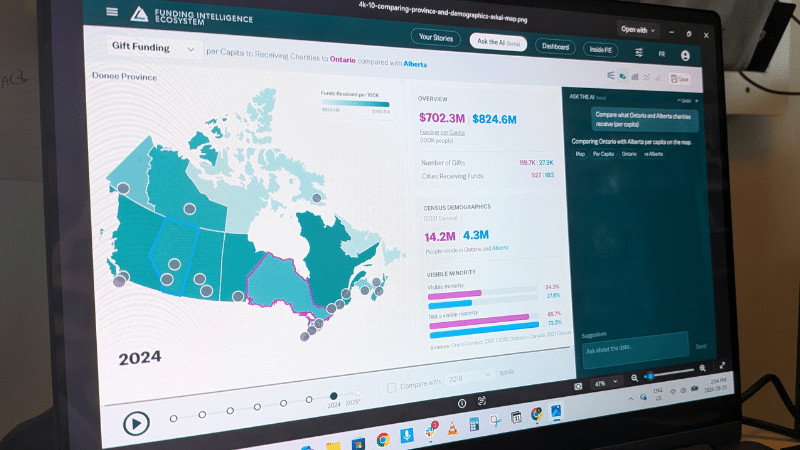
Imagine Canada launches visual tool to ‘see’ non-profit funding landscape
A new data visualization tool designed to let funders, non-profits and researchers understand the entire non-profit funding ecosystem

Deadline looms for non-profits, charities to report ‘foreign principals’ to Ottawa
Charities, non-profits and institutions must now register any arrangements with foreign principals working to effect government behaviour

Non-profit housing org pilots $20 million loan guarantee pool
Specifically developed for Nesting Ground’s portfolio of affordable housing properties, the non-profit is looking to grow the loan guarantee pool to $50 million in its second round.
