City of Vancouver calls for festival federal funding return
Vancouver’s city council plans to push the federal government to restore and expand federal funding for major festivals and cultural events.
Why It Matters
As inflation drives up costs, festivals and events across Canada are under growing pressure to survive. Free events like these help keep cities vibrant, inclusive and accessible.
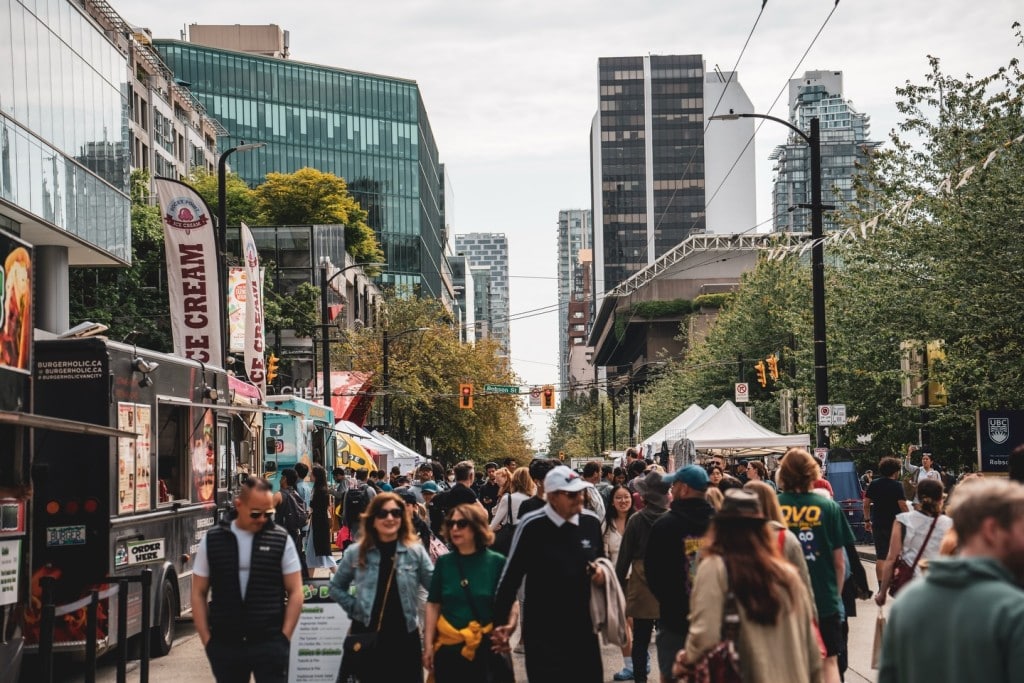
At a recent council meeting, Vancouver city councillor Pete Fry invoked Joni Mitchell’s famous lyric — “Don’t it always seem to go, you don’t know what you’ve got until it’s gone” — to underscore the city’s mounting struggle to keep free festivals and events afloat.
The city has seen numerous events cancelled or scaled back in recent years.
Last week, Coun. Fry brought forward a motion to create a City of Vancouver Festival Support Fund.
While cities like Toronto offer dedicated programs such as the Cultural Festivals Funding initiative, Vancouver currently lacks a comparable, stable multi-year funding stream for festivals and events.
“I was quite surprised that Vancouver did not have a fund yet,” Martin Roy, executive director of Festivals and Major Events Canada said.
“Every major city in Canada should have a fund like that and should make sure that there’s enough of a fund.”
The fund has never been more important, he said, as Canada’s arts and culture scene has faced repeated challenges since the COVID-19 pandemic, followed by escalating inflation.
In 2025, it cost roughly 40 per cent more to host comparable events than it did before the COVID-19 pandemic, according to Roy.
“It’s a totally new game in terms of providers, artists and every single expense that we have,” he said.
“That’s a challenge even more for events that are free of charge because you cannot pass the increase to festival goers. You have to find new sponsors, new public funding and basically that’s a very simple mathematical problem.”
Vancouver’s budget allocates roughly $2 million to events annually, compared to Montreal’s $7 million.
“We have all of the ingredients [in Vancouver]. We have a beautiful city. We have gorgeous indoor and outdoor venues. We have incredible local talent. We have top-tier production staff,” said Nina Horvath, executive director of Coastal Jazz in Vancouver.
“You’re trying to fight off this reputation as a ‘no fun city’, and it can be a bit frustrating.”
The organization hosts the Vancouver International Jazz Festival and has previously appealed for public donations, pointing to a 41 per cent budget decline since 2019.
“Non-profits and many arts organizations and festivals, we’re all running on a shoestring. So it’s kind of like the equivalent of living paycheck to paycheck,” said Horvath.
Similar free events have seen financial strains in Vancouver.
Vancouver Car Free Day was initially cancelled this year, with organizers citing rising operational costs, changes to grant funding, and uncertain financial support, until city council stepped in with $30,000 in emergency funding.
Last year, the Vancouver Pride festival struggled to go ahead, after losing half of its corporate sponsorship.
This year, the city’s Celebration of Light Festival pulled the plug this year, pointing to unsustainable costs.
But the financial strains are not unique to Vancouver.
“Operating costs have gone up in a way that nobody expected,” Roy said.
In Regina, the Folk Festival permanently shut down last year and in Winnipeg, ManyFest, the city’s biggest arts and culture event, was cancelled in 2023 due to rising costs.
Why free festivals matter
Arts and culture tourism has nearly three times the economic impact of other types of tourism, according to Canada Council for the Arts.
Free community events benefit not only economic activity and tourism but also social cohesion, neighbourhood vibrancy, reconciliation, and cultural expression, according to Coun. Fry.
One amendment to his motion calls on the mayor to advocate to the federal government, including the Department of Canadian Heritage, for the restoration and expansion of programs that support major festivals and cultural events.
We reached out to the Department of Canaidan Heritage for comment, but did not hear back by deadline.
Roy noted that current funding for Canadian festivals is stretched thin, with budgets largely unchanged since 2008 and only adjusted for inflation in 2019.
Federal programs like the Building Communities through Arts and Heritage program, support cultural and social impacts, but he said there’s little recognition of the economic and tourism potential of events.
“As we see it, event tourism worldwide is a new phenomenon,” said Roy.
He’s proposing a new federal fund to help festivals attract visitors, boost tourism, and drive local economic development, to complement existing programs.
“Tourism events are so much more important now than it was,” he said.
“There’s a market for that and that if you have festivals and events that are attractive, not only to locals but to Canadian and international tourists, then you’ll create a tool for economic and tourist development. And that’s what we should be doing.”
It’s something Horvath can also get behind.
“Cities are becoming increasingly more expensive to live in, they’re also becoming increasingly more isolated,” said Horvath.
”Free community-based events and arts-based events are incredible balms to that.”
Your job. Your mission. Your news.
With your support, the sector you're building gets the journalism it deserves, and you get a tax receipt.

Author

Related Articles

Partnered Partnered content Report: Youth need consistent mentoring to help navigate the job market
Sometimes the hardest part of starting a career isn’t knowing what you want to do, it’s knowing how to get there. Mentor Canada’s newest report explores how mentoring can help young people build skills, connections and confidence as they navigate the transition to employment.
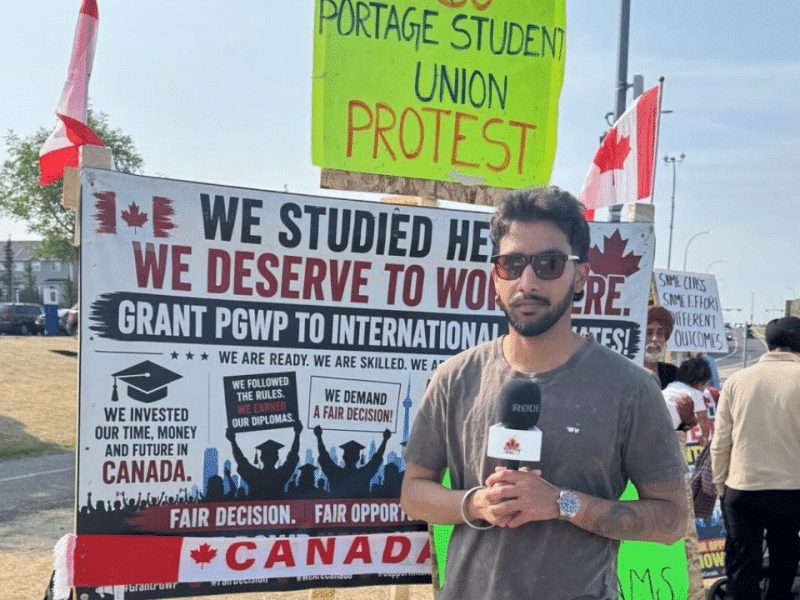
‘Canada must not go down that road’: More than 250 organizations demand investigation into CBSA after student protesters issued exclusion orders
The students were protesting after being denied post-graduation work permits they say they were eligible for when they enrolled at Portage College.
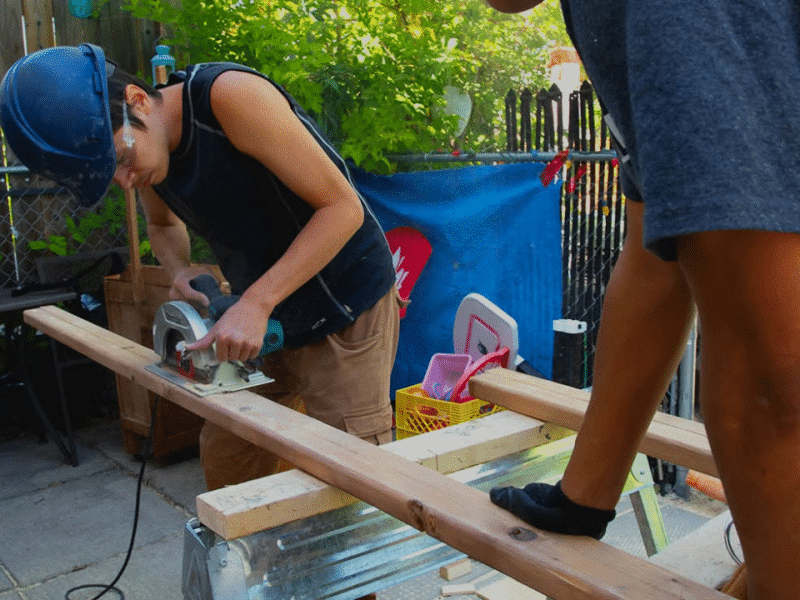
Partnered Partnered content How construction contracts became the blueprint for social change in Manitoba
Manitoba is a leader in social procurement, with decades of partnerships among government, businesses and social enterprises that have shaped a model other communities can learn from.
