Deadline looms for non-profits, charities to report ‘foreign principals’ to Ottawa
Charities, non-profits and institutions must now register any arrangements with foreign principals working to effect government behaviour
Why It Matters
Fines, penalties and even imprisonment could result if non-profits and institutions fail to comply with the new regulations regarding arrangements with foreign principals.
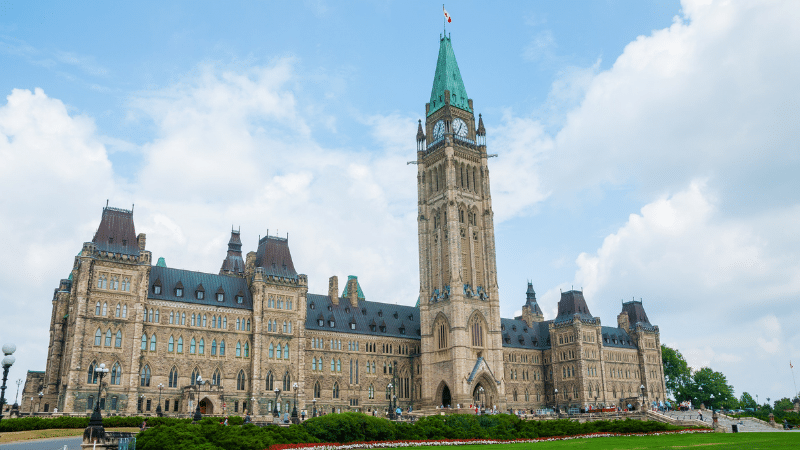
With an Oct. 3 registration deadline looming, charities are being warned to ensure that any arrangements they have with foreign principals, or people working to advance the causes of foreign governments, are well understood, and—if necessary—reported to the federal government.
On Aug. 4, the provisions of the Foreign Influence Transparency and Accountability Act came into force. That’s after the act was originally introduced in parliament in 2024 as a part of Bill C-70.
“As of today, individuals and organizations that have an arrangement with a foreign principal to conduct activities intended to influence a Canadian political or governmental process are required to register this arrangement,” said Gary Anandasangaree, Canada’s public safety minister, in August.
To protect Canadian democratic institutions from foreign actors, the act has established a publicly accessible registry listing foreign nationals “who may be seeking to influence Canada’s civic and democratic institutions and processes” and the businesses, organizations and institutions that have arrangements with those individuals.
And, as legal experts are pointing out, “there is no general exemption for charitable, academic, research, or cultural activities.”
That cautionary note was included by the law firm McCarthy Tétrault in a post on its website about FITAA, but it’s not alone in sending out an advisory to the non-profit sector.
The Canadian Centre for Christian Charities also has a notice on its website explaining to its members “when charities may need to register, and what is required when registering.”
John Boscariol, a partner at McCarthy and co-head of its international trade and investment law group, said. At the same time, charities and non-profits are likely aware of the rules governing lobbying activities and registration; FITAA goes beyond those rules.
John Boscariol (McCarthy Tétrault/Supplied)
“This is broader than that legislation. It’s a different piece of legislation, really. There are additional obligations here [non-profits] would need to think about, and it extends beyond lobbying,” he said.
“It does cover public-facing communication, so there is a risk that that creates a bit of a blind spot, particularly for non-profits that may not be tracking this that carefully.”
Who and what is a foreign principal?
FITAA defines who counts as a foreign principal and outlines the type of activities that are subject to regulation under the act.
Specifically, it names “communicating with a public office holder; communicating or disseminating information; [or] providing money, items of value, a service or the use of a facility.”
Under the communication umbrella, FITAA lists activities such as lobbying, sending correspondence to government officials regarding regulations or bills, running social media campaigns to influence Canadians regarding relations with foreign states, attempting to sway referendum voters via articles or videos, making financial donations to campaigns, subsidizing travel for Canadian officials visiting foreign representatives abroad, distributing teaching materials that advance a foreign national’s agenda, or conducting get-out-the-vote activities during an election.
As for who counts as foreign principals, they are people or organizations that “are acting at the direction of, for the benefit of or in association with a foreign power” as defined by the Foreign Interference and Security of Information Act.
Determining who or who may not be a foreign principal may not be the easiest task in the world, especially if there is deliberate deception involved by the foreign party.
Deina Warren, CCCC’s director of legal affairs, said that even if the government has yet to provide “good guidance on how to conclusively determine” that a person is working for a foreign government, there are steps an organization can take to protect itself.

Deina Warren (Supplied)
“It’s a matter of what due diligence was conducted: what sort of records have you kept to show those efforts have been taken? Was there some independent investigation, or was it simply a verbal confirmation? What is there on the public record? These are things that a charity would probably want to be doing in any event, in terms of ensuring that their funds will be put toward the charitable activities that they’ve agreed upon and are being used responsibly,” she said.
Failure to abide by the new regulations puts the non-profit at risk, as the act allows for both criminal and civil liability to be imposed.
On the more serious criminal side, this could lead to a “fine of not more than $5 million or to imprisonment for a term of not more than five years, or to both.”
Civilly, those breaking the rules could be subject to administrative monetary penalties, ranging from $250 to $1 million.
Additionally, the Foreign Influence Transparency Commissioner will publicize word of each violation, which Boscariol said is another deterrent.
“When we’re talking about a national security issue like this concerning foreign influence, the fact that your non-profit has been subject to an administrative monetary penalty, even beyond the amount of the penalty, the reputational exposure could be much, much more significant… so that’s another reason why non-profits and charities should be sure that they’ve got all their ducks in a row.”
While reputational concerns are real, Boscariol is quick to stress that charities that aren’t breaking the rules have nothing to worry about.
“The arrangements are not illegal. [FITAA] doesn’t outlaw the arrangements. It’s just a matter of disclosing them,” he said.
How many non-profits does this affect?
To date, it’s hard to estimate just how many non-profits have or are planning arrangements that would fall under FITAA’s three-part registration test—a test which requires that all three elements are present:
- that they have an arrangement with a foreign principal;
- that the goal of the arrangement is to influence a political or governmental process in Canada;
- and that the arrangement involves any of the influence activities already mentioned in the article above.
Warren said that because of how new FITAA implementation is, nobody has a good sense of how many non-profits will be required to register.
“My best guess is that really this is not happening a lot. But I think what it does is it requires charities to pause and just really closely examine what they’re doing.
“They should be already doing their due diligence in terms of whether they’re operating with direction and control or through qualifying disbursements, but it’s an extra layer of awareness and specificity that the organizations just need to be cognizant of and to look for in terms of the arrangements that they may have with international organizations,” she added.
If an organization finds that it has any arrangements with foreign principals that were in effect prior to Aug. 4, it has until Oct. 3 to register them.
Any arrangements entered into after the act came into force on Aug. 4 must be registered within 14 days of signing the agreement.
Your job. Your mission. Your news.
With your support, the sector you're building gets the journalism it deserves, and you get a tax receipt.

Author

Related Articles

Explainer: The divergent fix-it paths of Ontario and B.C.’s condo oversupply problem
Both provinces have too many tiny, shoebox condos, but both are taking different approaches to fixing it.
‘Canada must not go down that road’: More than 250 organizations demand investigation into CBSA after student protesters issued exclusion orders
The students were protesting after being denied post-graduation work permits they say they were eligible for when they enrolled at Portage College.
Trump’s ‘renaming’ of Lake Ontario is emblematic of centuries of colonial erasure
Why a single renaming order taps into deeper fights over land and language
