Earth Day Q&A: Happiness in a finite world
Over the last ten years, Canada’s per capita footprint has declined, but so has Canadians’ life satisfaction.
Why It Matters
Canada is going full speed on big projects, giving them a fast track to prop up an economy trying to detangle itself from the U.S. The aim is to bring prosperity to Canadians, however, the planet's resources are limited. How do we use them wisely?
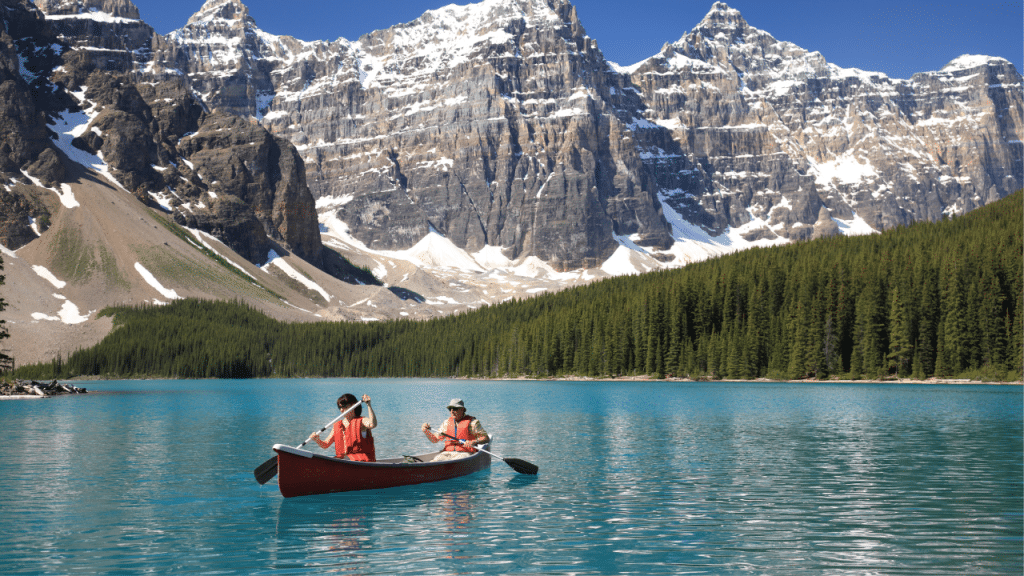
Since 2018, economist Eric Miller and his team at the Ecological Footprint Initiative at York University have been monitoring how different countries and regions are juggling human demands and nature’s capacity.
On Earth Day, April 22, the team released its most comprehensive dataset.
It provides statistics up to 2025, which is impressive from an environmental perspective, as governments typically lag by several years.
The report was generated by integrating about 91 million rows of input data to measure our relationships with the lands and waters that sustain us.
Future of Good discussed with Eric Miller what this environmental data is telling us when matched with data on happiness across different countries. How should these findings influence public policies?
Questions and answers have been edited for brevity and clarity.

Q: What is this report monitoring?
A: We track the capacity of lands and waters to provide us, on a renewed basis, food, forest products, and products from the sea that either we catch or we culture through aquaculture.
We also track how much of the planet’s surface and oceans are needed to absorb our carbon dioxide emissions.
Then we integrate that demand from a net-zero perspective, together with our use of land for agriculture and animals, the area we already occupy for forest products, etc.
Q: How do you define the ecological footprint?
A: We call the ecological footprint the impact that we have on the ecology, the natural system, with our way of living.
Q: What is biocapacity?
A: It is the capacity of any unit of area of the planet to sustain an ecological footprint.
Q: How is Canada’s relative biocapacity?
A: Canada is the sixth most biocapacity-rich country in the world. Its biocapacity amounts to 4 per cent of the world’s total, which might seem like a small number. However, if you compare that to our portion of the world’s population, which is less than half a per cent, then, you know, that is very impressive.
We should better appreciate, though, that this is a very important national natural asset, and we should put more attention to quantifying it and understanding what we are giving up.
Q: Why is it important to have high biocapacity?
A: It allows Canada to have a very high standard of living. And it allows us to feed more of the world than the rest of the world feeds us.
Q: Canada has high biodiversity, but Canadians are not satisfied with their lives, as are other high-ranking biodiversity countries. What does it tell us?
A: Over the last ten years, Canada’s per capita footprint has declined, but so has Canadians’ life satisfaction. Meanwhile, other countries have achieved way more life satisfaction per unit of ecological footprint than we have in Canada.
It raises some questions from a public policy perspective and political choices.
We’re going through routes that are locking us into very big and expensive infrastructure projects, honestly, with questionable societal impact.
For example, there’s a question of improving mobility between the Quebec City-Windsor corridor. We all agree that Via Rail’s current standards aren’t very impressive. But between that, the solution is something like a $30 billion expenditure on a massive amount of different routes and a massive amount of concrete wire and all that sort of stuff for a very elite train that’s going to carry us really fast, but be very expensive.
What’s the dividend for that?
There seems to be this sort of atmosphere around big, bold projects, and shame on those who question them or who raise questions and say, “ Let’s think about this some more.
But there are many more things we can do much more easily.
Q: How can Canadians get more life satisfaction while minimizing their ecological footprint?
A: Let’s take the example of consumption. Some is what we would call positional. We get the advantage because fewer people have the alternative or can share it. For other forms of consumption, my consumption doesn’t limit someone else’s consumption, for example.
That involves a lot of public spaces, accessible public events, etc. In many Nordic countries, during long daylight hours, people spend more time outside enjoying nature. We are biological beings connected to the planet, so it is important for us to have our brains relax in the presence of greenery and natural capital around us, and so on.
That should be the focus at all scales: household, neighbourhood, city, and regional, provincial, and federal levels. We need more public investment in shared goods and services. That is one way to achieve the good life with a minimum ecological footprint.
Q: What is limiting Canada’s capacity to invest in raising its citizens’ happiness?
A: The lack of data is a significant barrier. The United Kingdom, for example, has readily accessible data on life satisfaction and happiness. Try to find that in Canada, through Statistics Canada, for instance. And it is the same at the provincial, city, or postal code level.
We should have this data, and we should be asking how it is that some postal codes are associated with a higher quality of life?
Sure, some postal codes have more affluent residents, so that does contribute in some way.
But also, different postal codes have different amounts of, for example, tree cover, beauty, and a sense that the environment is something you want to be in or something you want to run away from and go inside quickly.
Actions are possible once we pay attention to the importance of quantifying, measuring and mapping natural capital and also the outcomes associated with that, whether there’s a presence of it, an absence of it, life satisfaction, relationships and so on.
But that requires a different sense of priorities and imagination, I guess.
Your job. Your mission. Your news.
With your support, the sector you're building gets the journalism it deserves, and you get a tax receipt.

Author

Related Articles
Indigenous people bear brunt of climate change disasters: StatCan
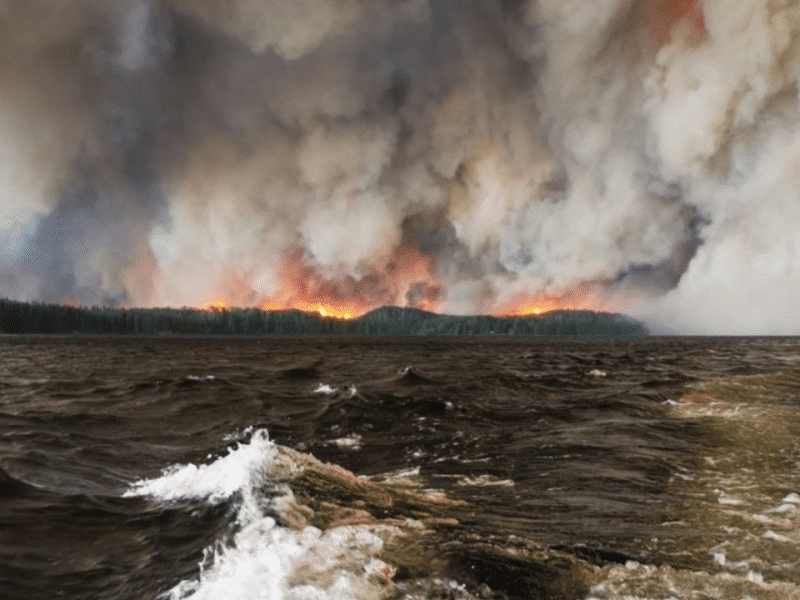
New data from Statistics Canada shows that, despite only representing five per cent of the population, just under half of wildfire evacuations in 2023 were from communities where more than half the population was Indigenous.
Fires and floods: How Canada’s non-profits are responding to summer disasters
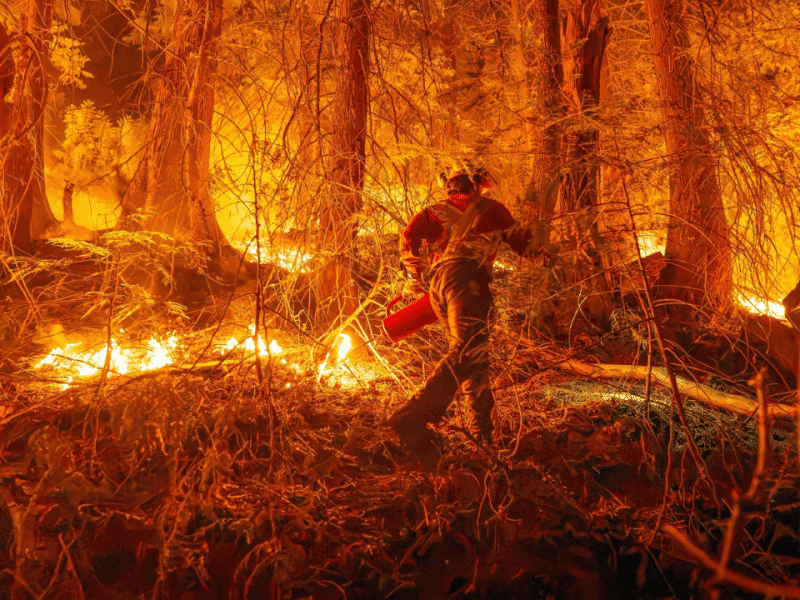
Several organizations have set up ways Canadians can help as more than 900 wildfires burn across the country
Nova Scotia approves Indigenous-owned, largest-ever wind farm to power hydrogen production
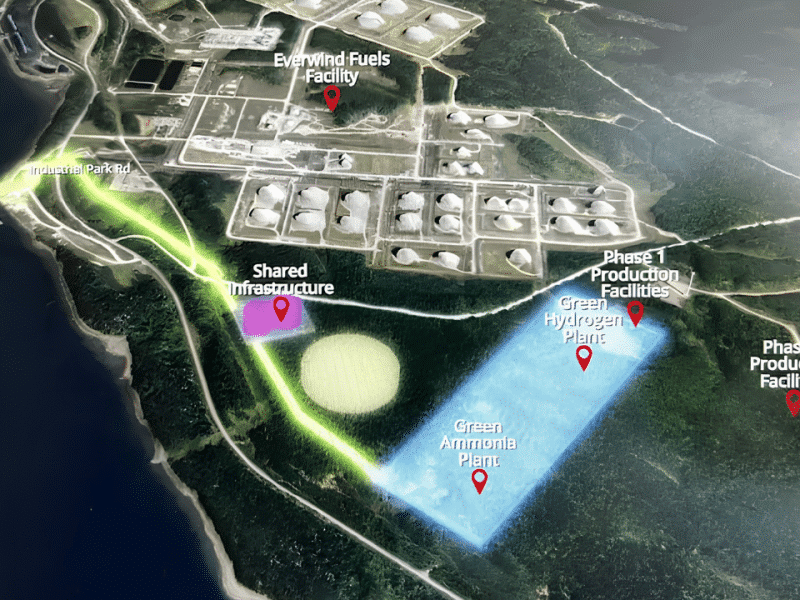
The massive 1.2‑GW wind farm locks in Indigenous-led ownership and will power Canada’s biggest proposed green hydrogen export hub.
