How foundations responded to the 2004-2005 disbursement quota reduction – and why it matters now
Research from Carleton University, based on foundations’ T3010 data between 2000 and 2017, tells a story of how foundations adjusted their disbursements when the disbursement quota was reduced from 4.5 per cent to 3.5 per cent.
Why It Matters
While this analysis is not related to the most recent increase to the 5 per cent disbursement quota for charities with assets above $1 million, it does demonstrate how foundations writ large might be shifting their giving in response to policy changes.
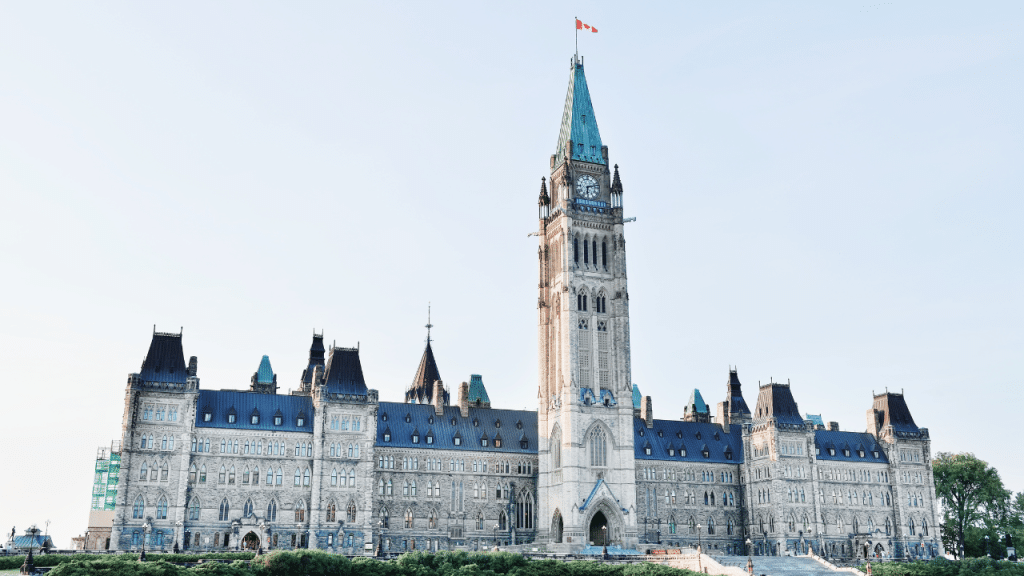
New research authored by Carleton University academics shows that foundations adjusted their disbursement behaviour in line with a policy change in 2004 that brought the disbursement quota (DQ) down from 4.5 per cent to 3.5 per cent.
“Foundations tend to disburse more than required, but reduce these disbursements, as a percentage of assets, when allowed,” the researchers wrote in a 2026 paper published in the Public Administration Review.
The researchers also observed a “clustering” of foundations giving at the required disbursement quota both before and after the change, which went into effect in 2005.
According to one of the researchers, Carleton University Associate Professor Nathan Grasse, it is unsurprising that foundations that were disbursing just at the threshold would reduce their disbursements because they were allowed to.
However, there were also reductions among groups that were not giving at the threshold but rather above it. According to Grasse, this finding has implications for both academic research and policy.
“This effect would be akin to lowering a speed limit to slow the fastest drivers, but the change causes each and every driver to reduce their speed by the amount of the reduction,” the researchers wrote.
“In the same way, our results are consistent with all organizations in a policy area responding to regulatory signals.”
Why analyze a previous DQ change?
Since the beginning of 2023, Canadian charities and foundations have been required to meet an increased DQ of 5 per cent on any assets held above $1 million. Although this was one of the impetuses for this research, Grasse said there is not yet enough data to make a statistically significant suggestion about how foundations are reacting.
On the other hand, for this analysis of the 2004 change, the researchers used T3010 data between 2000 and 2017.
“With fluctuating market returns, in 2004, a coalition led by the national association for private foundations, Philanthropic Foundations Canada, successfully lobbied the federal government to reduce the rate to 3.5% to ‘be more reflective of historical long-term real rates of return earned on a typical investment portfolio held by a registered charity’,” the researchers wrote.
Statistical analysis was then conducted across numerous hypotheses, including the different reactions of public and private foundations, the impact of association membership, the impact of geographic concentration of philanthropic foundations, asset size, foundation age, and professionalization.
Analysis focused on foundations with assets of more than $500,000, excluding those launched or sunset in the 2000 to 2017 period, in order to fully understand the impact of the policy change with precision, Grasse said.
“The good news was that this previous [DQ] change was in the centre of some data that we had collected,” he said.
“The disadvantage is it’s obviously an older policy change and maybe not as relevant to the current discussion.”
The analysis found that private foundations reduced their disbursements when the policy changed to reduce the DQ, including those that were very close to the regulatory quota and those disbursing above it. Public foundations also decreased disbursements, but continued to give more than their private counterparts.
As for the clustering pattern around the minimum disbursement quota, the researchers said this raises the question of whether foundations would react in the same way when the DQ is increased, as was done in early 2023.
“Of course, we can’t map these [behaviour changes] on clearly to what might happen, but I would say generally, our results suggest that foundations broadly were responding to the policy change,” Grasse said.
“Even if they weren’t near the regulatory threshold, broad groups of foundations of many types did seem to be reacting to the change.
“It doesn’t mean every foundation in Canada reduced their disbursements or anything like that,” he added. “But when we look at these average disbursement percentages across a number of categories, we consistently saw a shift.”
Researchers would need several years of reported income tax filings and data to feel comfortable making estimates about the latest DQ policy change, Grasse said.
More recently, Imagine Canada published research on early indicators following the 2023 DQ increase, finding that 1,190 foundations were affected by the change and that an additional $711 million was released into the sector as a result.
Your job. Your mission. Your news.
With your support, the sector you're building gets the journalism it deserves, and you get a tax receipt.

Author

Related Articles

Elbows up: Spring Impact Capital calls for a giant spreadsheet of available early-stage Canadian capital
The Vancouver impact investor wants to crowd-source a free, national directory
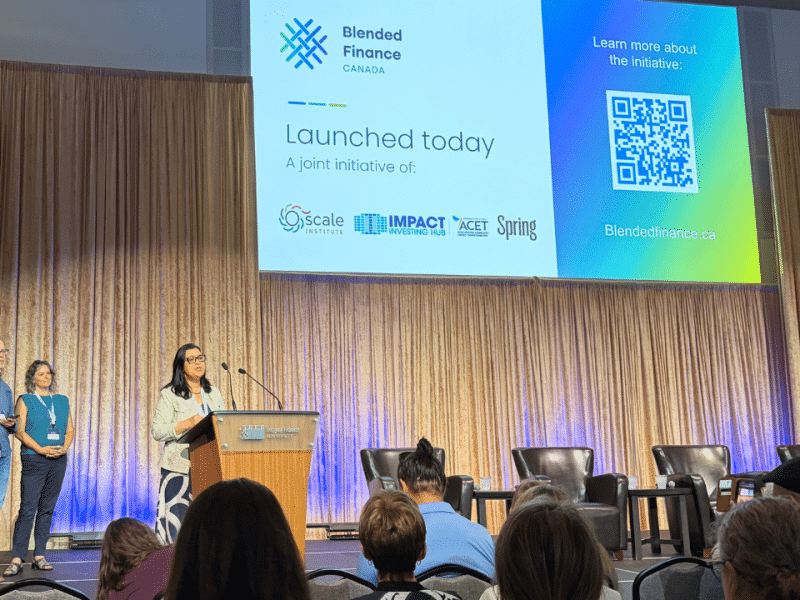
Blended Finance Canada launches on West Coast
The new initiative is supported by the University of Victoria, Scale Institute and Spring.

Canada’s Sustainable Finance Taxonomy: What it is, what is happening and what’s coming next
Canada’s sustainable finance taxonomy faces big challenges, from oil and gas, Indigenous rights and the real meaning of the word ‘transition.’
