Indigenous Clean Energy now delivers 10 per cent of Canada’s generated electricity
Indigenous Nations now co-own or hold commercial stakes in enough clean energy projects to power more than 1 in 10 watts generated in Canada.
Why It Matters
This scale of Indigenous-led and co-owned clean energy—20.8 GW and counting—shows that the energy transition is already being built through Indigenous rights, leadership, and long-term economic participation. With equity stakes rising and hundreds of new projects underway, Indigenous Nations are shaping Canada’s decarbonization pathway more profoundly than governments or utilities have acknowledged.
By Staff, the Energy Mix
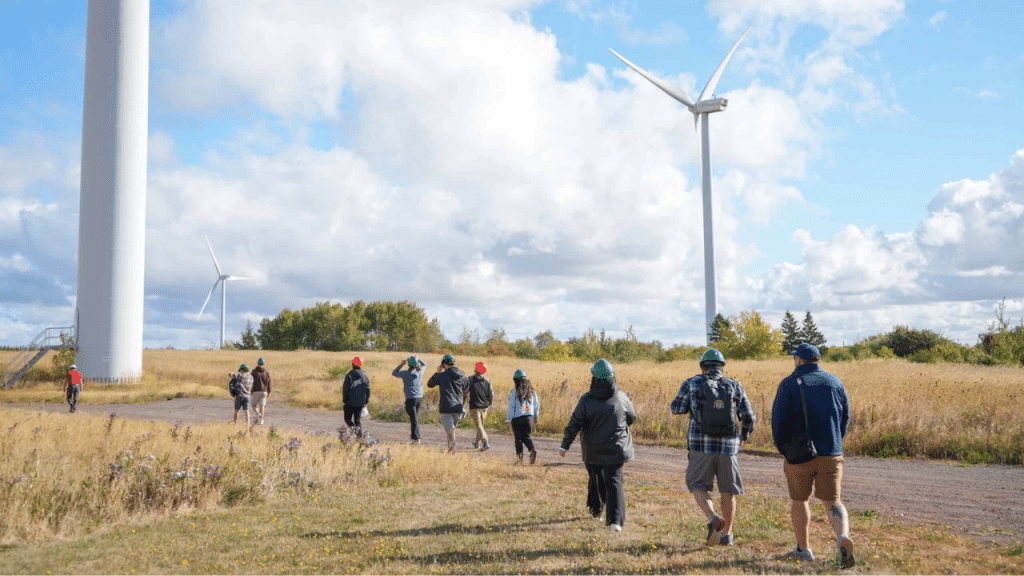
A list of 251 clean energy projects with Indigenous participation, each of them capable of generating at least a megawatt of electricity, now account for more than one-tenth of Canada’s installed generating capacity, concludes a new national survey released by Indigenous Clean Energy (ICE).
“Electricity generation projects with Indigenous co-ownership or defined commercial interests, such as royalties, totalled 20,848 megawatts in installed capacity” in 2025, ICE states in its third national survey, titled Regenerative Energy. Some 62 projects totalling 6,120 MW are under construction or in the process of being commissioned, and another 39 are in the planning stages.
Statistics Canada’s latest estimate put total installed capacity at 156,388 MW in 2024.
“Indigenous leadership is well-positioned to catalyse decarbonization through renewable electricity, transmission infrastructure, energy storage, energy-efficient homes, and community-scale projects,” ICE Executive Director James Jenkins states in an introduction to the report. “The scale of Indigenous clean energy participation is in a stage of dramatic and impactful growth, building on over two decades of Indigenous clean energy participation in every region of the country.”
The concept of regenerative energy “affirms that fairer, more just, and more equitable relationships must be the foundation for clean energy development,” the report says.
“Project partnerships must be collaborative, co-created, and jointly led, with the intention of generating benefits and outcomes for Indigenous Nations.”
The approach honours Indigenous rights and treaties, is consistent with the UN Declaration on the Rights of Indigenous Peoples (UNDRIP), emphasizes energy efficiency to reduce overall energy needs, and “discusses reducing fossil fuel reliance to address climate change with renewable power and energy storage, along with transmission and electricity grids that have a low-impact ecological footprint.”
The report traces the beginnings of the “clean energy growth era” to 2010 in First Nation, Métis, and Inuit communities that were previously treated as stakeholders for large hydropower megaprojects.
The database of 251 projects includes 87 in British Columbia, followed by 59 in Ontario, 27 in Quebec, and 26 in Alberta. A timeline in the document suggests that an era of Indigenous-led generation and energy-efficiency projects will dawn by 2030.
The inventory of operational projects includes 103 hydropower, 64 wind, and 53 solar installations. The full database takes in 352 medium to large-scale power projects, 28 transmission lines, 78 energy-efficient housing projects, 76 bioenergy projects, and 34 energy storage installations, as well as 1,250 “community-scale” installations under a megawatt that are “vital for community livelihoods, energy sovereignty, and affordability, for both power and heating.”
The full project list accounts for $27.1 billion in capital investment, $441.4 million in annual returns to Indigenous communities, and 51,756 person-years of employment, with Indigenous equity averaging 37 per cent across the full portfolio of operational projects and 46 per cent for newer agreements.
The Regenerative Energy reports identify four key success factors that make Indigenous clean energy projects a “remarkable facet of a just and more equitable energy transition”:
• Community engagement when projects are in the initial stages of design and development;
• Reliance on “community clean energy capacity and Indigenous-led frameworks to take projects forward”;
• Federal and provincial/territorial policy, funding, and power procurements; and
• A mutual interest in “beneficial partnerships between Indigenous communities/organizations and governments, utilities, project development companies, and financing sources.”
In January, Calgary-based Indigenous Energy Monitor (IEM) identified 523 projects with at least 500 kilowatts of capacity and some degree of Indigenous ownership across five categories: oil and gas, carbon capture and storage, power and utilities, mining and critical minerals, and chemicals and fuels. Some 452 of the projects were in power and utilities, and 75 per cent of those were renewable energy developments, with energy storage accounting for another 11 per cent and transmission lines 6.6 per cent.
In May, the Pembina Institute said renewable energy projects in more than 210 remote communities across Canada had replaced 140 million litres of diesel fuel since 2016.
This story is part of The Energy Mix’s partnership with Small Change Fund. This story is published under a Creative Commons licence, and the original story can be found here.
Your job. Your mission. Your news.
With your support, the sector you're building gets the journalism it deserves, and you get a tax receipt.

Related Articles
New UBC-Kelowna tool helps cities plant trees where they’re needed most
CanopyFit maps physical barriers alongside heat and equity data to maximize shade and cooling.
Canada’s Sustainable Finance Taxonomy: What it is, what is happening and what’s coming next
Canada’s sustainable finance taxonomy faces big challenges, from oil and gas, Indigenous rights and the real meaning of the word ‘transition.’
Q&A: Climate action, community resilience begins with who owns our economy, Jon Shell says
Canada can’t tackle climate resilience until it confronts who owns its economy, and how inequality is rising.
