Is the definition of fiduciary duty outdated?
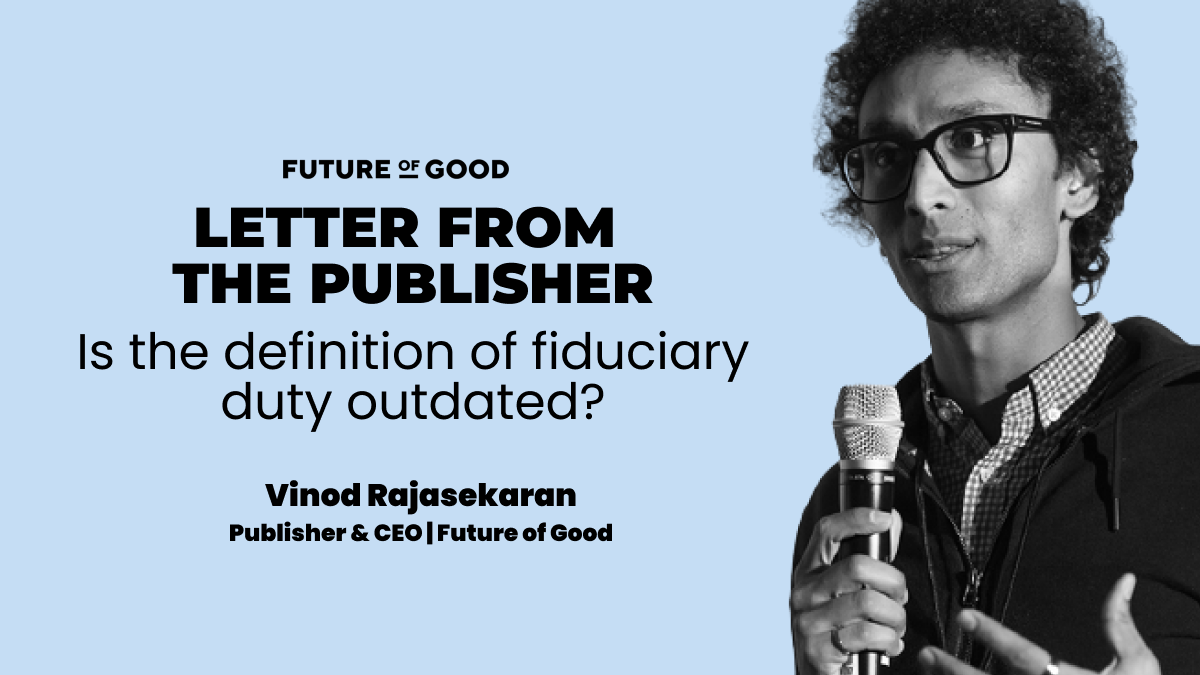
Bear with me as I talk about something boring. But this boring thing is actually instrumental to creating lasting social change.
If you’re not familiar with the term fiduciary duty, it refers to the fundamental (and legal) responsibility of board directors, which is to act in the best interests of an organization’s financial health at all times such that it is always in good standing. In practice, this has meant that if directors make decisions that can minimize or compromise the financial returns or financial health of the organization they serve, they can be held legally responsible. And that’s because, according to the law, board directors are first and foremost fiduciaries.
Is today’s definition of fiduciary duty fit for addressing tomorrow’s societal needs?
A landmark legal breakthrough in the U.K. gives charity and philanthropic board directors in England and Wales, who collectively steer about $240 billion CAD in assets, the new responsibility to prioritize the climate change outcomes of their investments — even if it risks financial returns.
It’s a game changer.
This legal ruling turns fiduciary duty upside down. It makes fiduciary responsibility fit for the 21st century.
In my new biweekly video segment the #MostInterestingThingInImpact, I dive into how it came about, what this means for boards, and what Canadian organizations can learn from the U.K.’s legal breakthrough.
Vinod Rajasekaran
Publisher & CEO
Tell us this made you smarter | Contact us | Report error